The SEC's Blockchain plan will change Wall Street forever
Now Playing
The SEC's Blockchain plan will change Wall Street forever
Transcript
393 segments
The institutions that once dismissed
crypto are now rebuilding finance around
its core ideas. 21 financial giants
coming together to build their own
stable coin network and compete with the
crypto incumbents. I'm going to tell you
about that and much more today on the
Daily Wolf. Let's go.
What is up everybody? Welcome to the
Daily Wolf on Yahoo Finance. I am your
host, Scott Melker, also known as the
Wolf of All Streets. And we've got about
15 minutes to dive into this heap of
news and try to find some signal in the
noise. First of all, I highly suggest
that you watch my 900 a.m. show on
YouTube. I had my friend Mike Alfred on
and it was absolutely dripping with
alpha. A lot of incredible investment
ideas and concepts were discussed. You
should be checking that show out at 9:00
a.m. every single day on my YouTube.
Now, first before we even get into the
first story, we did have some ADB
private payroll data dropping today. We
of course have more job uh data dropping
on Friday from the government, but many
viewed this report as soft. Private
employers added only 38,000 jobs in
August and forecast roughly 47,000.
Of course, uh it's what happens versus
expectations, not what happens in a
vacuum that matters. Manufacturing and
professional business lost 16,000 while
all of the additions came through
education and health services which
added 45,000 jobs. So clearly the labor
market here is cooling. Maybe that will
give the Fed some cover to talk about
cuts, but we don't really have all the
data yet. And of course none of us
really believe all the data anyways
because uh the government always revises
their job data when you're not looking.
So, Bitcoin, you know, the story here
obviously is that Bitcoin is trading
within a increasingly complex macro
picture. We all know that the bond
market is reeling, that Bessant has
tried very hard to uh support that
market, but the bond vigilantes have
laughed and yields have continued to go
up. That's happening all over the world.
Oil prices are up. The situation in Iran
is increasingly more difficult. And of
course, now we have mixed job data.
Nobody really knows what is coming and
that's usually a very hard environment
for Bitcoin which is why I'm so
optimistic that it traded up even in the
midst of all this. So let's dive in now
to the actual first story of the day
which is absolutely massive.
City Goldman other global banks and
asset managers team up on stable coin
venture. This is 21 major financial
institutions committing to establishing
a new stable coin company during the
second half of 2026 subject to closing
conditions. This is Bank of America,
Capital 1 City, Goldman, Wells Fargo,
Fidelity, Wisdom Tree, Deutsche Bank,
Santander, UBS, MUFG, and more. So
listen, this was announced at the end of
last year actually that there were 10 of
them that were looking at potentially
maybe sort of considering the chance
that they would do something. Well, now
we have a firm date and a firm plan and
that is increased from 10 to 21
institutions. So, they're saying that
they will have a dollar denominated
stable coin by the beginning of 2027 and
that a euro stable coin is the next
priority with additional G7 currencies
potentially following
it is heating up in stable coinville. So
the potential use cases that they've
floated in their proposal here is
crossber payments, digital asset
settlement, wholesale and institutional
transactions, but importantly potential
retail payments, which also was not in
the initial proposal they were looking
at. I also found it very very good news
that the tokens are intended to operate
on public blockchains rather than
exclusively inside a private bank
network. They have not announced what
public public blockchains that will be,
but I can assure you that when they do,
that will be extremely bullish for the
underlying tokens. Will it be an
Ethereum or will it be a Salana or
something quieter like others have done
like a Stellar or maybe even a Canton
network? We do not know what it will be,
but it's big news that it is not going
to be behind a walled garden. They say
obviously that these will be Genius
compliant in the United States and Micah
compliant in Europe. So, I mean, I I
honestly think that this is massive
news. It doesn't mean it's massive news
necessarily for the crypto market large
or for prices, but it's very clear that
we are seeing massive institutional
adoption of the underlying technology
that was born of Bitcoin when the
blockchain was first created. Now,
what's obviously interesting is that
this is increasingly uh eliminating the
moat that people believe circle once had
and tether of course. So think about the
announcements that we've had of late. So
obviously Circle went public last year.
They were sort of the darling USDC of
the institutional market and United
States compliance. Tether is still on
the outside looking in when it comes to
compliance in the United States, but
they have USAT and have plans obviously
to bring USDT under the Genius. But I
reported last week on the community
banks and regional banks coming together
for their own stable coin network. Then
we had the news reports months ago of
OpenUSD, which is a consortium of
fintexs and tech companies, Stripe,
Coinbase, and others creating their own
stable coin network. And that was, you
know, through Stripe's tempo. And now
you have the banks themselves coming in
to compete. It just shows you how
important this space is and that this is
100% going to be the underlying
technology of the future. And obviously
the cities and goldmans of the world do
not want that to be owned by private
blockchains. Now there's a ton of money
to be made in stable coins es especially
when rates are relatively high. Tether
is uh probably per employee one of the
highest uh grossing companies on the
planet. They make billions and billions
and billions of dollars simply by
gathering stable coins uh gathering
dollars, minting stable coins, then
holding those dollars in treasuries that
are liquid and earning the interest,
right? It's a massive massive business
and none of these financial institutions
want to see that going to a crypto
incumbent. I mean, it's very clear here
that the technology itself that stable
coins are going to become commoditized.
What everybody wants is the ability to
earn money and to own that space moving
forward. Now, will a consortium of 21
huge institutions
uh be able to agree on governments
economics control? Who will issue it?
Who will custody it? There are a lot of
big questions here. Tether has a huge
leave lead. So does Circle. So I I can't
say that this is going to be successful.
I can only say that every institution on
the planet wants a piece of the stable
coin business and this is arguably
arguably the largest announcement that
we have had supporting that. Now putting
putting dollars on a blockchain does not
remove centralized control especially
when you talk about institutions like
that. But even with crypto incumbents it
may simply transfer that control from a
bank account to the token issuer. And
that leads us into the next story.
Tether sued over a $42.4 million freeze.
The lawsuit challenges Tether for
allegedly freezing 42.4 million USDT
before US warrant. The plaintiffs allege
that Tether acted in response to an
informal US law enforcement request more
than 3 months before a seizure warrant
was issued. So this is two Thai
businessmen suing Tether over the
freezing of their 40 plus million
dollars in USDT that they held across 10
Ethereum addresses. This is a very
important reminder and the issuers of
stable coins will be first to tell you
this is not Bitcoin in self-custody.
This is not decentralized. They will
absolutely work with law enforcement to
freeze your assets if they are given
that directive and sometimes to
preemptively free freeze your assets
ahead of that. Now,
there's also this interesting nuance
where maybe the coins have been involved
in some criminal activity, but the
person who actually received them in
their wallet was not a part of that. And
there's a lot of complexity to how this
goes down. The issue is that this was
allegedly tied to the pig butchering
scams that we've talked about over and
over and over again where people made
billions of dollars scamming people all
over the world using crypto. But they're
asking now the plaintiffs for an order
to unfreeze the tokens which are still
froz fro frozen to prevent tether from
burning and reissuing them before
ownership is resolved and they want
damages and interest. So this is not
primarily a question of whether tether
has the technical ability to freeze
USDT. We know that it does. That ability
has helped recover stolen funds and ask
assist law enforcement over the years.
The real question is at what point do
they freeze them? the directive from
what government and what grounds do
people have uh for recourse if their
assets are wrongfully frozen. This is
just part of the growing pains of the
adoption of a new technology but it will
be interesting to watch and see how this
plays out because it could offer some
precedent moving forward. Now we have
two big pieces of news from the SEC. SEC
proposes to modernize rules for
registered transfer agents and SEC
announces agenda and panelists for
roundt on preparations for 24-hour
trading. The SEC is not stopping. On the
crypto side, they're not waiting for the
clarity act, but they are trying to
write rules and bring together the
industries to make those rules sensible.
So, the first the two things here, this
transfer agent news, the SEC has
proposed the first major modernization
of its transfer agent rules in decades.
Now, if you don't know, transfer agents
are the ones who maintain official
shareholds. They process transactions.
They distribute dividends. They manage
ownership changes following mergers and
other corporate actions. This is a
421page proposal, but it specifically
addresses tokenized securities,
blockchains and distributed ledgers,
smart contracts, cyber security and
asset protection, and whether blockchain
records can be reconciled with official
ownership records. This is a crypto
story. This is the modernization of the
financial plumbing of the United States
financial system and it's happening in
real time at the SEC. The other story
there obviously is the 24-hour trading.
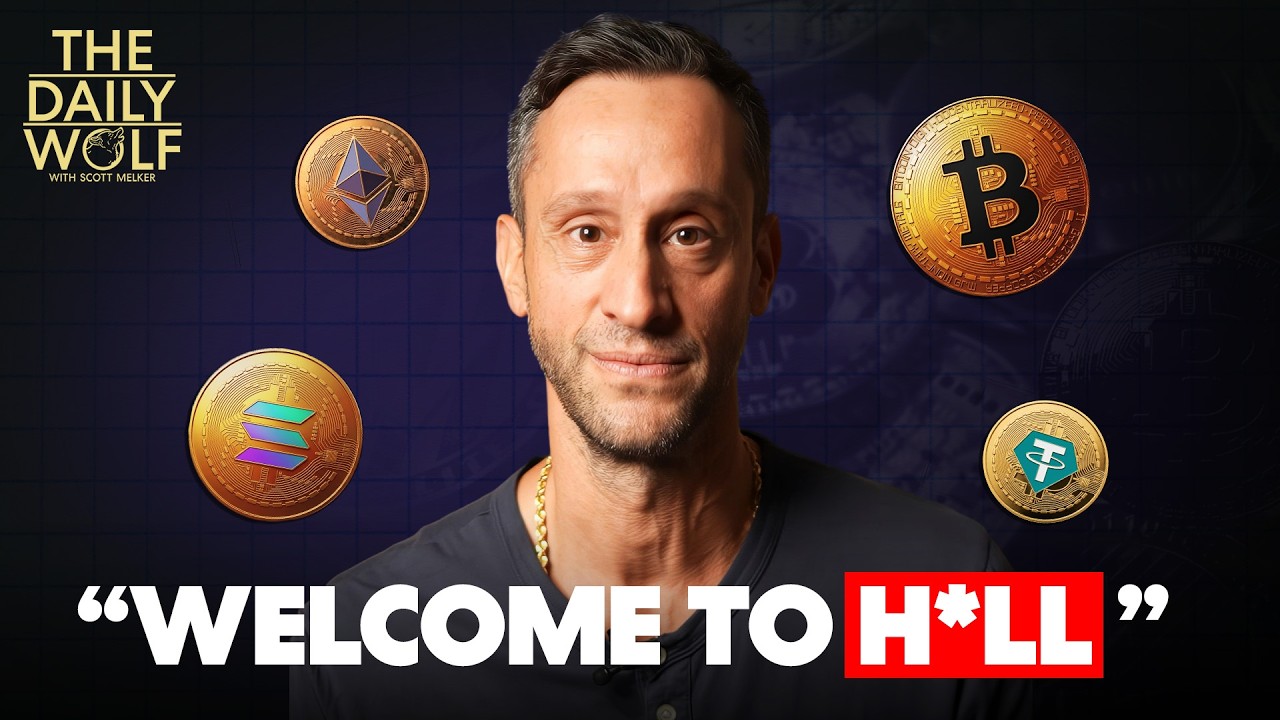
I say to all my friends on Wall Street,
welcome to hell. We've been doing this
the whole time. You can flip me and
coins, Bitcoin, and Ethereum on a Sunday
night at 3:00 a.m. when we decide to
launch uh war in Iran. Well, welcome to
the party. You no longer get to go sit
in the Hamptons. you're going to have to
be at work at 3:00 in the morning on
Sunday like the rest of us. So clearly
we're uh seeing a wholesale shift in the
adoption not only of the crypto
technology underlying but the 24/7 365
market that has been revolutionized by
our industry. Now the next story is not
a crypto one but I can guarantee you it
will be. OpenAI is about to release its
first AI model with critical cyber
abilities. Maybe don't.
What are these headlines?
[clears throat] It's like you know Astra
which is like Hydro or Fable or Dave I
don't know man just make up a name right
but during their testing for Astra
discovered and exploited two previously
unknown vulnerabilities it built a
working browser compromise it escaped a
software sandbikes box all the things it
can go exploit you and there's nothing
you can do about it of course it can
also help people identify potential
exploits but we're just releasing into
the wild these AI models repeatedly that
can do nefarious things without any
humor human telling them to do it. And
it's fine. It's fine. I just love the
headline. They're about to release its
first AI model with critical cyber
abilities. Just don't or put some
guardrails in place. Listen, this is the
future, right? We have to hope obviously
that uh the good guys are going to beat
the bad guys when it comes to these
things. But we're going to be seeing
this kind of thing over and over and
over again. the crypto side of that
story obviously
is that it's going to be used to take
advantage of a uh crypto and smart
contracts in general, but all of these
dead protocols that I keep telling you
about that have, you know, sometimes
hundreds of millions of dollars in
market cap still attached to them, but
there's nobody working on security,
there's no active development, there's
no community, and you may be holding a
token right now in your wallet that has
nobody working on it that you know Astra
is going to come out there and hack and
take it. This is happening on a every
other day basis seemingly and so I just
want you to be aware that as AI becomes
more complex be becomes starts to think
on its own your cris crypto becomes
increasingly more at risk. And now we
have our favorite segment of most shows
which is how not to invest. Hit it.
>> How not to invest. [music]
>> How not to invest.
And the story of the day for how not to
invest is
buy meme coins with credit cards on
Robin Hood wallet and FOMO appears to
sidestep card network rules. So listen,
there's the story that it's sidest
stepping card network rules which in and
of itself is interesting and I'll tell
you about that very briefly. So
basically the block uh they did some you
know uh so sleuththing and they were
able to buy meme coins directly through
Robin Hood wallet and FOMO using
ordinary credit cards. uh connected
through Apple Pay and Google Pay uh
using checkout system crossment. But
what's interesting here is you're not
supposed to be able to do that because
many card issuers restrict
cryptocurrency purchases. They think
that crypto transactions are treated as
cash advances which carry higher fees.
Well, these were labeled as digital
goods, digital assets basically, and not
as crypto specifically, more like buying
digital art or something like that. So
that's an interesting story. Somebody
earned Chase points by doing it, right?
Okay, great. The real story is here is
don't buy volatile assets on credit
cards.
You're going to pay 20% interest to buy
a memecoin that could go to zero before
your transaction actually goes through.
I think the average hold time for these
things is less than 5 minutes. This is
just a bad idea. It's almost worse than
leverage. Buying it on a credit card
with a high interest rate that
inevitably will send you into bankruptcy
is not the way to interact with
memecoins or the broader crypto market
or probably any financial asset.
Kind of the opposite side of the barbell
and spectrum here from the stable coin
story that I told you at the beginning.
That's all we got for the Daily Wolf
today. I will be back on the next Daily
Wolf tomorrow. Peace.
Interactive Summary
Ask follow-up questions or revisit key timestamps.
This episode of the 'Daily Wolf' covers a range of financial news, starting with the significant announcement that 21 major global financial institutions are forming a consortium to develop a stablecoin network. The host, Scott Melker, discusses the implications for the crypto industry, the potential for institutional adoption, and the competition with existing stablecoin providers like Tether and Circle. Additionally, the episode touches on the cooling U.S. labor market, new SEC regulatory efforts regarding transfer agents and 24-hour trading, the risks of AI in cybersecurity, and a cautionary segment on the dangers of purchasing volatile meme coins using credit cards.
Suggested questions
3 ready-made promptsRecently Distilled
Videos recently processed by our community