Altman says the world should accept 'some bad things happening' with AI, plus China and earnings
Now Playing
Altman says the world should accept 'some bad things happening' with AI, plus China and earnings
Transcript
1702 segments
Hey, welcome to Market Hang. I'm Dan D.
Franchesco. I'm joined with Lauren,
Luke, Shai. We're here to chat about a
bunch of different things, but um happy
Monday, first of all, if if there's such
a thing as a happy Monday. I don't know
about you guys. I'm a little bit like
Garfield. Not a big fan of them. Uh but
let's jump right into uh AI safety,
right? We have to wait a couple months
for Avengers Doomsday, but the Avengers
taking on the AI Doomsday is already
here. Uh the White House announced that
there's an AISAR. um a lot on their
plate from you know concerns about AI
safety to potential doomsday but I want
to start with an even broader question
happy to open it up to the group is this
even a solvable problem is this a
possible test is this a fool's errand
because this tech move so quickly the
people who are building it don't seem to
know how to unpack how to you know build
safety guard rails how is the US
government going to figure it out
>> I mean I think if it was a solvable
problem the kind of current people who
are being put in charge of it might not
be the best place to do so. Like uh when
I when I think of people who would be
very well placed to solve this,
unfortunately, they're probably the same
ones who are either developing the
technology or screaming about the fact
that you know there's a 10% chance it's
going to kill us all. So I I think that
uh you know is a is a bit of a a hangup
here in terms of getting to a solution.
I remember last time I was here at Yahoo
was Caleb Silver who said you know we
didn't really put seat belts in cars
until there were deaths. We didn't get
you know drunk driving laws until there
were deaths. So it probably means the
best deterrent after a certain point of
time is, hey, here's how badly we're
going to punish you if things go wrong.
But I think, you know, that would need
the things going wrong part to happen
first,
>> right? Lauren, what do you think?
>> I think technology always moves way
faster than government. And I think Jay
coming in and making this binary rule of
120 days. What happens after the 120
days? The 120 days, that doesn't mean
that anything will be enforced. That
doesn't mean that regulation will be an
oversight. So really what what is the
120 days and do we need regulation over
AI to a capacity but we also know that
AI always just moves a lot faster than
what government could ever do.
>> As a journalist key to setting deadlines
is make them a little bit loose and
ambiguous so that if you don't hit them
you know it's fine. Sh I want to bring
you in. What's your what's your take on
the AISR and and the task ahead?
>> Listen the AI principle stepped in.
Nvidia, Nvidia is a perfect example of a
company trying to turn the problem into
uh an actual infrastructure opportunity
and you saw that last week. OpenShell is
going to create this kind of software
boundary around the agent while Sentry
is going to run on Bluefield 4. But
regardless, you're seeing that all
right, Jensen knows this is going to
become an issue and rather than just
waiting for someone else to create these
guard rails, we're going to create the
opportunity for everyone else. And
that's why you're seeing cyber security
companies just continue to go up to the
right. But yeah, like you guys
mentioned, I mean, we have to make sure
the narrative doesn't stick on slowing
the AI buildout, just making sure it
becomes more secure and letting the
progress continue. I think that Jetson
stepped in at the right time.
>> Oh, yeah.
>> Right. Like there's so far from from
what I've seen, this is like the first
uh real steps or things we're taking
towards in terms of trying to regulate
the the outputs. So far, like it seems
everything's been controlling the
inputs, people not liking data centers
in their community and so forth. So this
seems like it's a really kind of nent
tiptoeing into an area that's so far
kind of been wild wild west which means
you know we're probably going to get
things wrong but also means I think uh
mostly what we've seen from the
president is there's absolutely no
desire to fall behind. If you had to
kind of pick one single message from the
president and not I think would be you
know leadership and anything that
threatens that is bad. Well, also I
think that right now for AI like all the
AI issues have crossed the boundary of
like that shouldn't have happened.
They've been oopsies. They haven't been
intentional. So I think that's where
like you have to make sure you have some
guard rails before it becomes real
external threats where someone's
actually trying to attack these systems
and these autonomous systems are getting
more advanced. Like I think it's really
important right now to do it before uh
whatever financial health care system
all of a sudden gets violated and now we
have to go back five or 10 years and who
knows who was behind that attack aka
>> some other country or
>> I love AI oopsies. I love it. I can just
picture the open AI blog. We had an
oopsie. Sorry. But I think that gets to
a bigger question right about this like
what level of comfort do we have
sacrificing some safety in for the sake
of of innovation? Luke, you brought up
like the the the um seats, you know,
seat belts with cars. Um you know, and
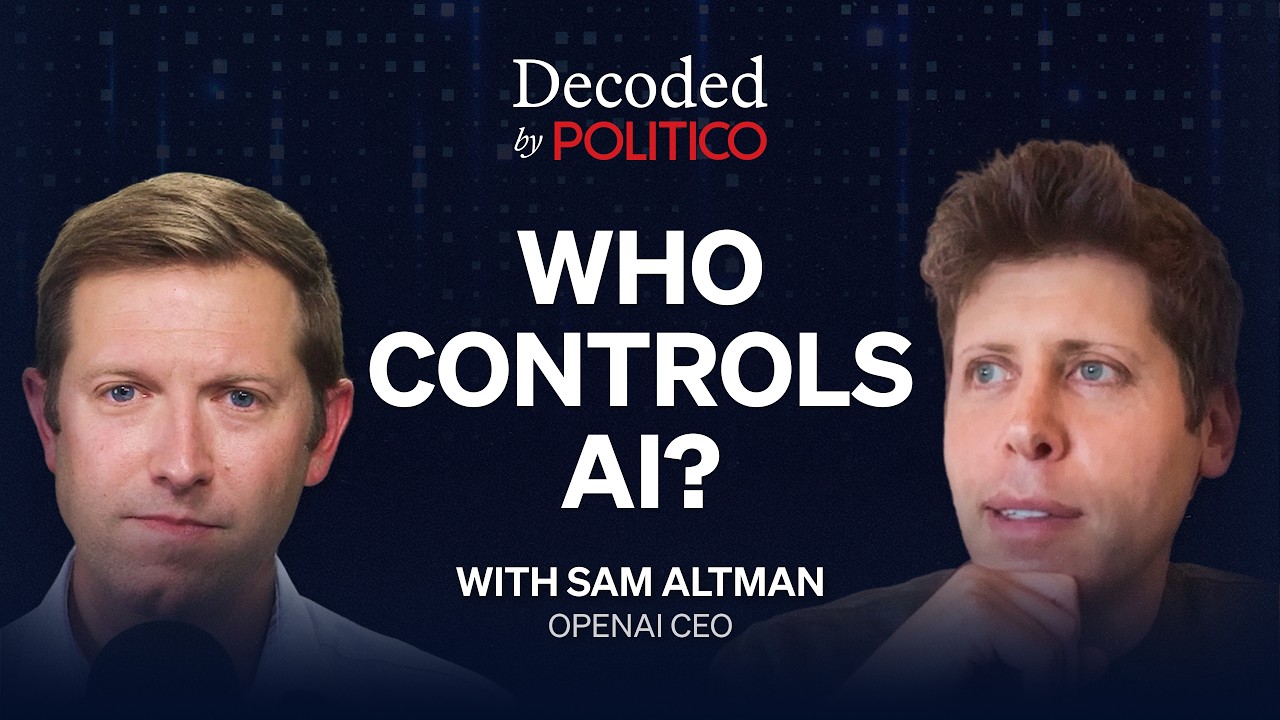
I'll bring in Sam Alman here. We could
talk a lot about him. He had a big
Vanity Fair piece, um today, but kind of
one of the many things that he said
recently, um you know, is you need to
accept some bad things happening to reap
the benefits. So, it's the old like you
got to crack a couple eggs to make an
omelette. I I I do agree with that, but
at the same time, if you know, way back
when when they were building the Model
T, if Henry Ford was like, "Listen, some
of our cars are just going to blow up.
It's, you know, it's gonna happen." I
think a lot less people will be in cars.
So, I guess, you know, Lauren, where
where do you see the balance as far as
an acceptance of taking some amount of
risk versus not kind of throwing the
baby out with the bath water, so to
speak?
>> I mean, I think the question is what is
considered bad,
>> you know, and and how do we go from
there? Because is it bad?
Is it bad for the consumer or is it bad
or or is it good for the investor
>> but but the consumer is the one that
reaps the the terrible not even terrible
benefits but gets the the bad things
happening to them,
>> right? Well, is it bad if if is it bad
if my like my address my data gets
exposed from someone who's doing a
search on me or something like that?
Like I I would consider that bad. If an
agent did that, I would say, "Hey, we
should probably punish that agent or I
should get some kind of remuneration
from that agent." So, like, yeah, like I
I see the scope already for things that
have been, you know, bad and yet still
the underlying technology might be, you
know, very useful from a consumption
point of view. You know, Muse is the one
who, uh, you know, let me know when my
emails comes in of the of the topics
even for for what we're discussing
today. So, you know, kind of always
useful having the the personal
assistant,
>> right? Yeah. SH, I don't know if you
have thoughts on like where what's your
comfort level as far as taking a risk
taker.
>> Listen, I think AI AI has such a PR
issue and the unfortunate part is that
the two speakers are children. Like Sam
and Dario are just children. They should
not be like the figures of this once in
a generation movement. But
unfortunately, it is. So I think that
for Sam's comment for example
specifically like he was just talking
about zerorisk AI versus manage risk AI
but the way he presented it was just so
poor and the standard is just like not
he was like people are going to use AI
for scams. Nobody's going to ever hack
something with it. Of course they're
going to. So I think that there is going
to be case studies but it's going to be
the minority stake. Like it's not going
to be the bulk of them like fire. like
are we not going to create fire just
because someone might uh launch
something that's going to cause a
catastrophic boom? No. You just have to
contain it and make sure there's things
in place in order to make sure it
doesn't become catastrophic. So, I want
to um to the regulatory aspect of it and
and how we kind of manage the risk. I'm
going to do a little uh jump in the in
the time machine. Go back to 2010 and
I'll make this story quick, but there's
this thing called the flash crash. Some
of you might be familiar with it, might
have remembered it. market kind of drops
and then comes back in a couple seconds.
To make a long story short, people
freaked out. They were like, "Oh, what's
going on with this algorithmic training
and a lot of regulation, a lot of things
happen. Michael Lewis wrote a book about
it." But specifically, this thing came
called regulation at came out by the
CFTC. And part of it was we want all the
source code for all the algorithmic
traders and we want to be able to hold
it so we can understand who are these
people playing in these markets. Now,
the reason I bring this up is because
people had big issue with it at the
time, right? This is proprietary stuff
that these firms were making a lot of
money on. How this relates to AI is if
there's some type of regulation and the
regulation becomes well we need to
really look inside your models. We need
to understand these black boxes. I
wonder how comfortable especially some
of these people that have been screaming
to say we need more regulation are going
to be to hand over the keys to what are
according to their investors trillion
dollar valuation type companies. I I
that's where I think you know what I
brought up in the beginning. I think
there's a real issue as far as being
able to actually regulate this stuff
because ultimately you're going to have
to give the keys to the castle to people
that are the castle's worth trillions
and trillions of dollars. But I don't
maybe I'm not looking at it right. What
do you think?
>> Isn't isn't this kind of what they're
asking for though? Like isn't this what
isn't this the point of Dario's pacing
the frontier like please please invite
someone in make it someone you know
independent but probably third length
kind of at least government sponsored in
some way or who's looking for government
backing of this to to come in and
basically say like give us give us the
all clear serve as the red team
effectively in terms of you know testing
any new models we might want to come up
with poke holes in what we've done be
embedded it seems like you know to a
large extent this is what they're asking
for whether or not they'll they'll get
it from Jay Clayton another remains to
be seen,
>> right? Yeah. I don't know, Shai or
Lauren, you have your thoughts on on how
to kind of manage this risk or how to
regulate this.
>> Well, I I think uh Jensen's doing it for
us, acquiring hugging face, pushing on
open source. Like again, Sam and Dario,
I don't want to pick on them, but like
they're doing this out of defense. Like
if the open source narrative gains
momentum, like they have a duopoly right
now in a frontier model that has no
ceiling. So I think that right now it's
really important to put more focus on
technical standards that make these
companies actually implement these type
of um AI issues because if you can
create rules around agent permissions,
cyber security testing, external
enforcement layers for example like
doesn't matter about giving up the juice
that anthropic open AI has all that
matters is we cannot slow down American
companies from moving quickly on an AI
race. That's the number one northstar
across the board. But Dario and Sam,
they're they're doing a road show right
now for their IPO. So they are saying
some more self-fulfilling uh prophecies,
but Jensen stepping in again uh and
making sure you can see the smoke
between the fire.
>> So is your your pitch is that open
weights the future, open weights the way
to kind of avoid a lot of these these
issues. Basically,
>> it will be because we're going to see
the weight and parameters of these
models. There's going to essentially you
can customize it per enterprise use
case. You're going to see all the
nitty-gritty of it. And that's how every
revolution has gone by anyway like
software specifically cloud like
everyone starts with open source then
creates these managed source
applications that's benefit for your own
company. But right now there's the
exponential rate of AI anthropic and
open AI have gone from 0 billion of
revenue to hundred billion in a couple
years. That's never happened in
existence before in any revolution. So I
think that right now things are
happening too quickly and there is
somewhat of a prisoners dilemma that's
happening that they aren't caring as
much as they should as the
simplisticity of what should be good for
AI or not and I do believe that the open
source is a solution and you're seeing
the progress already this year. I do
wonder though with on the on the openw
weightight side the business model is a
little bit harder especially with the
valuations that a lot of these companies
are at when you're essentially opening
up the distribution right and you're not
necessarily gaining that revenue capture
that you would from a proprietary model
how does that work at the same time when
these companies are saying yeah we want
to go to market with a $2 trillion
valuation
token usage it's all tokens usage you're
going to start seeing you these comp
you're going to start seeing software
companies for example start being less
SAS and more utility the more they use
them, more that you see agents running
continuously, these the inference
consumptions are going to become outcome
based and then you're going to see all
these companies start charging based on
outcomes. And guess what? If you're a
client, you're going to love that
because you're only paying for what
you're actually using at the end of the
day. And it's going to just be a cut of
your whatever money you're saving on top
of whatever you're doing on your capex
and opex. So, I think that
>> yeah, it's going to be it's a different
lens. We all know yet things are
happening quickly. Luke, you I know you
mentioned talking about Muse and I don't
if you want to talk about token usage or
how you're kind of seeing value from the
AI usage you're having.
>> Well, I I think more to to Shay's point
like a lot of the things we've seen in
Agentic Finance at the enterprise level
like that's been at the sandbox or
testing point up until this time and I
think Q3 in the back half of this year
is is really when you're going to see
more of that actually accelerate in
practice. So I think kind of like the
next nine months are the kind of the
rubber hits the road moment. So far in
the AI boom, the the profitability
question has mainly been driven by
effectively capex beneficiaries and and
not having to realize much of the
depreciation yet. Uh whereas now I I
think we're in a bit of the phase where
you should see to the extent that agents
do improve ROI, you should start to see
that more and more and more in the
numbers. And you know, in terms of my
personal AIUS, it's a great um it's a
great fight me bro. It's a great, you
know, you you put in whatever you think
just um sometimes in the workplace it's
it's difficult to even engineer
constructive criticism back and forth.
Uh you can you can make this thing fight
with you and tell you why the thing
you've just written is absolute nonsense
and and pick apart and pick holes in
your argument. So I uh I I don't know,
maybe I'm a little off that way, but I
love having someone do that for me.
>> Yeah, Lauren, I want to um utter a very
scary phrase, but I promise it's not
that scary, which is I'm going to pull
up an old tweet of yours. Um, but it's
from a few months ago or a couple month,
I think last month where you said, "I
still believe we need to utilize AI
more." Um, you know, since then we've
had a lot of these agents come out, you
know, Muse and and Instinct and whatnot.
I'm just curious how maybe even that
short time, have you found utilizing AI
more? Do you still think there's room to
run? What's your what's your
perspective?
>> I mean, AI isn't going anywhere. I I do
think we should absolutely lean into AI.
But what I think the distinction is is
understanding that AI doesn't replace
humans. It doesn't replace risk. We
humans are the ones that put risk and
judgment into place. We should not just
be relying on a third party anything uh
to to make those judgment calls. So I
think as long as we understand that we
are the brains, we are the controllers,
we get to set the data points, we get
to, you know, strategically make the
next moves and not rely strictly on AI,
I think we'll be fine. I think the
problem is is that there are so many
people that think AI can make human
decisions. And I I don't know why people
feel so safe and comfortable doing that.
>> Yeah. And I also worry too about just
the deterioration of skills that come
from that, right? Like if you're going
to continue to outsource things to AI,
sure there's certain things maybe you
don't want to deal with, but like
ultimately you're going to lose the
ability to do that or it's going to
deteriorate. And that to me is is a big
issue, right? This like AI atrophy
that's kind of happening across the
board. Um I don't know does anyone here
like are there certain things that
you're like absolutely not that I'm I'm
keeping AI away from or or you guys all
in like I'll I'll throw it on whatever I
can. I mean writing I have to like I I
have to rate I have to rate myself right
or else uh you know what are what are
they paying me for. So that's a that's a
big thing I got to keep to me but uh you
know that's one place where there'll be
a hard hard fast wall. I I don't know
about you any place.
>> Um I mean not for me person I guess what
immediately comes to mind for me is
education. I think that there is a lot
of utilization in education and we're
seeing the impacts of it when it comes
to this younger generation and how they
are not as uh financially or um
as smart as the older generation when it
comes to their reading and and writing
skill set levels. I think there has to
be a balance and I'm education probably
was not the answer that you probably
thought I was going to come up with but
I just I'm hearing it more and more and
I think people are just relying too much
on the technology. Yeah, I think to your
like underlying point though, right?
Like most of our jobs if you had to like
distill them into basic functions, it's
either sales or quality assurance or
some kind of mix thereof. But like
there's a base of skills upon which
those rest and are built. And that's
that's probably where we are like
potentially seeing some more atrophy cuz
like hey, you know, at one point we were
all, you know, we were first we were you
welding parts, then the machine is doing
it, then we're just watching the widgets
come on the assembly line. And I feel
like we're at kind of the watching the
the knowledge widgets come off the
assembly line phase of AI. And it's, you
know, up to us to kind of hang on to to
what we have,
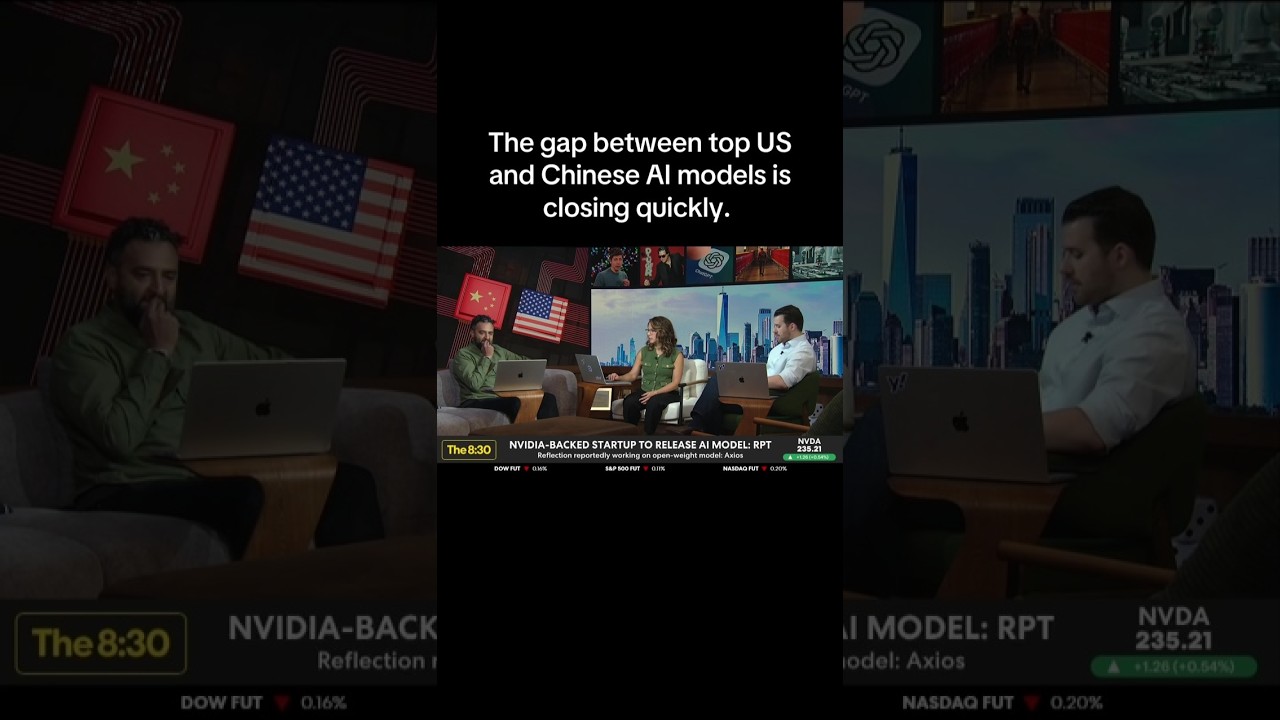
>> right? Yeah. So, I think um and and Shai
maybe interested to hear your
perspective on this. There was some
there was a report recently about deep
sea kind of closing the gap, right? And
and you talked a lot about the
importance for us to kind of maintain
pole position. Um h what's what's your
sense about how quickly that is closing
and whether you know us in the US need
to be a little bit nervous about them
catching up?
I actually fully believe they're closing
in on um the model part of the AI race,
but again I think models are probably
the easiest parts of the stack for
competitors to compress as research
spreads globally. Like I don't think
that's kind of really a differentiation
on the US dominance for us like we have
a much better durable advantage
underneath those models. When I say that
I mean compute, networking, memory,
cooling, power like all everything
that's required to deploy intelligence
at massive scale is a dramatically
harder problem than closing a benchmark
gap on some model on the latest and
greatest. So I think from that point
point of view, we are so far along and
China will not close the model that gap.
But on the model front, yeah,
absolutely. But go for it. It's a commod
that's the most that's the plumbing of
the entire stack is the model front. And
if they're uh closing the gap on that,
great. we have everything else.
>> I Well, I guess I I definitely
understand what you're saying about how
it's completely been commoditized now
and and the the value isn't necessarily
in there, but I imagine if we we don't
want to completely punt on it, right?
>> No, not at all. But I also think
Qualcomm like the Qualcomm example is a
perfect one for like you it's a great
reminder that tech leadership is isn't
permanent. So I think that we we kind of
we used to think about China as the
country trying to work around American
restrictions while here you have
Qualcomm essentially licensing IP tied
to a Chinese architecture that was
itself developed partly as a response to
manufacturing constraints. Like I think
there is a world where things are
happening so quickly that you just can't
like sit back and like know that this is
going to be a permanent thing. But we
have I sound like the biggest Jensen
fanboy, but like Nvidia just is helping
us have that gap with China. We also
have Broadcom like Brocom's huge for us
on AI networking. Micron's going to be a
much better bigger beneficiary on our
memory front, but the there's SK Hunx
obviously on that part of the world, but
and also we're not even talking about
power. Uh we have Vertive G, Verova,
like Constellation, like we have so many
US companies are going to help us
maintain this lead, but it's something a
mantra for sure.
>> I love it. All roads for you lead back
to Jensen and Nvidia. No matter what
it's Well, let me All right, let me I'll
give a little bit of the counter take.
The one thing that I found interesting
about Nvidia the past, you know, few
months is that it's definitely gone
from, okay, we're just we're not pock
committed in this, you know, gold mine
race. We're just selling the picks and
shovels to now it's okay, we're going to
own a hotel by the mine and okay, we're
going to transport the miners to the
hotel and okay, we'll maybe manage the
outside of the mine. Like, it's it's
getting more and more to just we're just
selling picks and shovels now. like
we're really banking on this whole thing
whether it's through the financing or
the funding or the investments. Does
that make you more you you I guess
ultimately view that as that's still
more bullish because they're becoming a
bigger part of the ecosystem. But I
don't know why why is that a good thing
that they've evolved from the pure play
of picks and shovels to now kind of a
little bit of everything.
>> They had to I think there's so many
competitors now all of a sudden like a
couple years ago was probably a handful.
Now there's dozens. There's going to be
hundreds. Like uh I think that for them
they had to kind of start selling the
narrative of full stack systems like the
most efficient way of getting the most
out of what you need for AI. And in
order to do that do that they had to
sell everything around just the actual
chip. Unfortunately the market is seeing
through it a bit and now they're like
we're not going to give you more than a
20 times earnings multiple which is the
market average until we see the bare
argument is wrong. And unfortunately
that takes time and time and doesn't
matter if aentic AI is taking off this
year, physical AI is taking off next
year and Nvidia is essentially going to
be picks and shovels of all these
graduating themes of AI.
>> Sure.
>> But it's but I think it's a little bit
more of just building around. It's also
like keeping it up, right? I mean this
point has been made obviously time and
again, but the circular financing I mean
it got to make you a little bit uneasy,
right?
>> Well, well the question is as a
shareholder, what do you want them to do
with all this cash then? Because they
can't acquire. They're going to get
blocked on any acquisitions they make.
So, in order for like them to have this
much cash, which they're producing a
stupid amount of cash every single
>> fair. No, they got a lot on the balance
sheet. Yeah. I mean, Luke, what do you
think?
>> Well, they they just did boost the
buyback authorization by what, you know,
135 billion. So, you know, jack that up
to 225 probably nobody's uh complaining
and you take the uh effectively the
circular financing concerns out of the
window. But no, I I think to SH's point,
one thing that's not only changed is
just the competitive environment for
Nvidia, but also just the financial
environment in general. If you're a a
borrower right now, uh given how both
just interest rates risk-f free have
gone up and also spreads have widened,
especially hyperscaler spreads, it's,
you know, it's getting a little tougher
to kind of clear hurdles. I think, you
know, nothing, you know, nothing crazy
when we're talking about some of the
revenue growth that a lot of these
companies are seeing. But uh to your
point and Dan, I I think you know for
the speed to continue in topline growth
across the industry, it does almost
require Nvidia to open up its its loving
arms, embrace everyone in this credit
wrapping and say, "Hey, actually these
risky companies, they are no longer as
risky as you think they are because
they're using our products and those
products have residual value." So, you
know, again, where do profits come from
in this? They're coming from, you know,
very large government deficits and very
large uh borrowing binges and capex from
the hyperscalers. Those are two very
very like safe blocks upon which to
build. But then you get into that kind
of Minskian realm of the safer something
looks. Every crash, every financial
crisis we have ever had, it's been based
on a safe product that looks safe for a
long time and then suddenly doesn't.
>> Mhm. Sure. I don't know, Lauren, do you
want to weigh in at all on Nvidia?
>> No, I think they they they've said it
all.
>> Perfect. Uh let's uh we can pivot here
for a little bit. Um we are now less
than a month away from midterms. Um as
crazy as that sounds. Uh so you know
affordability is a big thing on the uh
on the agenda. We wrote a big story
about how in all the swing states a big
focus has been affordability. From the
investors perspective, right? What what
do we think as far as trying to game
plan this? It seems like a lot of the
polling I'm seeing maybe split, maybe a
complete blue wave. It seems like a, you
know, the the red wall, so to speak, is
is a little bit of a um a pipe dream at
this point. Um, you know, maybe, uh,
Shai, we'll start with you on the
investing side. Is this something that
has already been priced into the
markets? Is this something that you need
to wait? We have so much more data than
we did maybe a decade ago as far as the
polling and the prediction markets. So,
it seems like we have a better sense of
where these races are going. What's how
is the market already or not yet pricing
out what could come in uh in November?
I think there's so much chaos that's
happening right now on the macro front
that it's not playing as much as I
thought it would. I think in back in
March uh future we dropped a note that
said that enjoy the summer because the
fall is going to be brutal with the
midterms essentially because what's the
lever that every politician is going to
pull uh heading into the midterms. AI is
too progressing too quickly. We need to
slow it down. Data centers, we need to
scrutinize it. That's the easiest lever
being pulled and that's what happened.
But the market's not caring as much as I
thought it would. Maybe because we're in
war mode with Iran still. Either way, I
do think that because there's so many
different aspects of the macro fund,
like I don't think investors should try
to predict one party winning, then
reposition your entire portfolio around
that result because the best takeaway is
like you mentioned, affordability is
going to become a constraint on policy
regardless of who wins. AI is a PR
problem, especially with electricity.
That's going to be one of the sleeper
issues because AI data centers, they
need enormous amounts of incremental
power while households are reading the
headlines. They see this. They don't
want their electricity bills going up
because the hyperscaler decided to build
a 2 gawatt campus 20 m away that's like
near their high school, middle school,
groceries, whatever it might be. So, I
think that there's a lot of political
pressure that's not going to go going
away from just the midterms. So, I think
just take take that bump along the way.
Know that's going to happen. But guess
what? power scarce and there's a way of
playing this that if data centers are
going to become harder and harder to
build the power theme the these data
centers whoever can make them the most
efficient will be the winners.
>> Sure. Yeah. Lauren, we were just talking
about uh electricity before but I know
as a you know trader, you know, youngest
on the stock exchange floor, what's your
what's your take? I mean, you've kind of
seen these these things before. How do
you kind of see it all playing out a
month out?
>> Um I think it's still a little bit
unpredictable. I don't think anything's
a shoe in. But what I am seeing or not
seeing enough of or what I'm looking for
is the private markets. What is going on
in the private markets? Because I think
a lot of what the information that is
being baked into uh where the market is
sitting has to do, you know, with
quarterly earnings and future quarterly
earnings. And you know, they're
projected to be doing well, but really
the private markets really tell a
different story as to what is going on.
And I don't think we are seeing enough
about you know the fallout of you know
energy oil
consumer spending you know what what is
actually going to happen and while there
are a lot of headlines of oh you know
consumer spending is is great and you
know people are spending you know more
money than ever in September um all of
that is is is noise because we know that
they're using debt to do a lot of their
spending.
>> Credit card bills are going up. Yeah.
So, what what is the what is it going to
look like when we actually are facing
reality, not when people are getting
supported by by
>> debt? What specifically stands out to
you in private markets that feels like a
real like, oh man, this is this is a
red.
>> It hasn't stood out at all. It hasn't
the story hasn't unfolded. And so,
that's what I'm trying to see because
we're just hearing only about the stock
market. We're only hearing positive
headlines and really the private markets
I think always kind of share more of a
story and that hasn't been told yet.
>> Right. Luke, what's your take on this?
more difficult story to tell, right?
That's the the liquidity does does some
damage both ways or helps you sometimes.
So, um something I'm watching for in the
the run to midterms is, you know, I
think we can agree no matter what side
of the political spectrum you you're on,
uh the past, you know, 10 12 years,
let's call it, they've uh coincided with
some uh more severe partisan rifts in
the United States. Uh, one thing that,
you know, this tells me is that the odds
of, you know, passing meaningfully
meaningful legislation, uh, after the
midterms, they generally go down,
particularly when there's been a change
of power. And, you know, the only thing
that might stop that is, you know, a
crisis in the event of, you know, a CO
2.0, which, you know, God willing, uh,
not not going to happen. So, one thing
that I've noticed after the past couple
midterms is they've been pretty pretty
big uh bonds over stocks events, which
is kind of not something that I think is
in the cards uh for, you know, for
everyone right now, especially given how
battered bonds have been. And, you know,
looking at two samples, a sample size of
two there. So, you know, this time is
always different and this time it just
happens to coincide with one of the
largest capex impulses of all time
starting to rely on external financing
about 6 months uh 6 months before the
tea date for the midterms. So, but you
know that's kind of something I keep in
mind as you know fiscal stimulus
probably just the impacts of you know
bills that have been passed in the past
are are waning. So, you're going to have
less of an impulse there and kind of
less scope to see growth there going
forward. So, you know, in terms of this
rally being built on a couple legs,
that's one of them. And you know that
one probably a little less supportive
for stocks, maybe a little more
supportive bonds going forward.
>> Yeah, I mean we got the Treasury yields
right there behind you. Um it's been
such a wild ride, right? I mean I think
someone compared it it's trading like a
meme stock, which is crazy to say, but
it it kind of feels that way. Um yeah, I
mean there there's so much to unpack
between now and November. I mean the the
private markets aspect is so
interesting, too, because the other kind
of big um elephant in the room is this
anthropic IPO, right? That's reportedly
coming, but we don't know. It's maybe,
you know, I I think the last report I
said is they're eyeing for
pre-Thanksgiving.
Um, that just feels like such a big
thing because one, obviously, it's it's
a massive AI player coming to market.
So, does the IPO open? How do investors,
you know, uh, digest that? Also, is
there a little bit of a is it almost
serving as a dam? Like we saw the other
day, um, one of the IPOs kind of delayed
like, you know, you don't necessarily
want to move around such a big whale.
You want to kind of give them their
space. So, you know, to your point about
the private markets, I'm really
interested to see like when that does
come to market, what's the kind of
knock-on effect across a bunch of
different um lanes.
>> Yeah. I mean, I think um I mean, it
it'll be an interesting story to see
what unfolds. I mean, I the one of the
things that I love about when companies
go public, we really get to see their
financials. We really get to see the
heart of the company. And I think
Anthropic will tell a really big story
of what potentially is going on in other
AI companies and especially ones that
are not public and what that
conversation looks like outside of just
having conversations about circular
money and and how that is, you know, I
feel like the topic of conversation. So,
I don't know. I'm curious to see will
they push that deadline? I don't know.
We'll see. But, you know, we'll see.
>> One thing Yeah. One one thing we can
kind of peek at there is like what
happened in the runup to SpaceX, right?
That's been the the biggest IPO so far,
you know, ever. And and this year, of
course, so what the data I've seen was
ahead of that investors sold
SpaceX likes like like companies. I
don't know how many companies there are
like SpaceX, but you know, they sold
mega cap tech in the runup to that and
to make room effectively for that. And
they also sold the biggest losers year
to date. You know, that we weren't too
deep in the year by that point. So I
what I find it very interesting about
the timing is kind of how it coincides
or doesn't coincide with tax law tax law
selling season which we are now for
mutual funds in the midst of this is you
know October should be the heart of it.
So, you know, I'm kind of looking to see
kind is there any pressure on, you know,
anthropic adjacent names in public
markets as you're kind of selling to
make room for this if you anticipate
getting an allocation in uh early to mid
November. And do the like the likes of
Nike continue to get pummeled, you know,
a stock that's been down every quarter
of of this year and, you know, continues
to set I think lowest since 2013 now.
So, I think those are some interesting
things, but so far this year, I'd say
the main thing the market has a problem
digesting is not equity supply, it's
bond supply. And that's cuz year to
date, if you look at hyperscaler
issuance and IG markets, that's 150
billion give or take in the US. And if
you tally up the two biggest IPOs in the
AI space, Sarah Bruss and SpaceX, you're
running at a little over 90 billion. So,
we we really had to digest a lot more
debt. We actually have that equity.
>> A lot of debt. Shai, what's your what's
your take on kind of anthropic? Will
they, won't they, and the impact it's
having on everybody else?
>> Yeah, I mean, I think the SpaceX IPO is
a great case study. I will say it's a
little different because a lot of the
space proxy names, the Rock Lollabs, AS,
Space Mobile, Plan Labs, like you can
see their charts. They're all down 50%
since the uh SpaceX IPO Halo effect. But
the difference in that uh ecosystem than
the AI ecosystem is a lot of people sell
those companies because they want the
category leader in SpaceX. They want
same theme, same exposure, but SpaceX
does connectivity category leader,
launch category leader. They do
everything. Anthropic, they don't really
do everything in the AI ecosystem. They
just do the model components. So I do
think that there is going to be somewhat
of a heartburn, I guess, in the AI theme
around the IPO just because capital's
finite. If you want to participate in
Enthropic, which I think a lot of the
big books out there, institutions are
going to want to, it's gonna have to
come from somewhere else. However, I
don't believe it's going to be as
disruptive as a SpaceX IPO was for the
whole space theme. Also, uh I do think
that like we get see what's under the
hood now finally on their frontier
models. Like what's the real margins?
Are they going to create something from
thin air of like, oh, this is a adjusted
frontier blah blah blah KPI that we're
going to use or is it going to be
somewhat real and we can actually judge
if there's a real ROI now on this AI
spend. And for me, I'm going to geek out
on that. I'm sure a lot of people will
do that as well.
>> Are they going to use the wei workbook
of accounting where it's like, well, if
you take out this and this and this and
this cost, then actually we're super
profitable. Uh Lauren, you you what
what's your you you kind of seemed to
make a sound there when he was talking
about anthropic not being as as hyper
involved. Do you see it as a little bit
different than that or
>> I mean no I mean AI is it's part of the
infrastructure. So I think there are
other companies out there that are that
are absolutely in the same realm of
space as well. So I don't know I for me
I just really want to collectively like
see what's under the hood, see what
their financials are looking like and
kind of assess from there what is
actually going on within the AI space.
It's going to be some fun. I I imag
>> I also think like the what's not being
discussed, which is the elephant in the
room, is Anthropic's going to have a
white check uh like a blank check they
can use now once they go public. They're
going to dilute like no one else. And
what's that going to do for the whole
environment, it's going to it's going to
improve it. They're going to spend so
much money across the board, across the
whole ecosystem. So I think that
semiconductors are a really interesting
angle on capitalizing and anthropic IPO
because they're going to spend a ton on
the whole ecosystem. Same with the cloud
computing companies. So I just think
that there is going to be you can make
the circular financing argument which I
I I agree it's kind of like
uncomfortable because we're in the first
stage of this big buildout. But I do
think it's going to lift the market a
bit more than people think. I one thing
that really sticks with me and and I use
the SpaceX comparison is so you look at
SpaceX right from where it opened to now
it's basically up about 4% give or take
right not from its IPO price from where
it opened to the the public right and
that's a business obviously that you
said does a ton of stuff I mean there's
I think the majority of satellites in
space right now are are are from espec
essentially SpaceX um and then you look
at anthropic and sh to your point like
just those miles pretty straightforward
now they're looking I the reports I saw
was a $2 trillion market cap. I like you
know now maybe I can't fathom how big of
a company is going to be and maybe my p
human brain can't understand the impact
AI is going to have but to think as an
investor when SpaceX again has like a
bunch of thriving businesses or or much
more mature businesses and open at a
much lower valuation is still kind of
holding steady who I guess I'm not
asking you guys to say buy or sell but I
guess do we think there's going to be a
massive appetite to buy in at such a
high price point it just feels like you
know to your point about the private
markets the VCs and the the private
investors have sucked all the value out.
There's nothing there's there's not much
left on the bone. I don't know but maybe
I'm missing something.
>> I I can tell you this stylist fact and
shy pointed out that you know might be a
lot of institutional demand for
anthropic. I can tell you the single
biggest day on Robin Hood of net
purchases of stocks was the SpaceX IPO.
The single biggest day. So will there
will there be appetite from place? I can
you know based on recent history I'm
counting there there will be one in
particular. Yes.
>> All right. That's fair. Also, also like
don't don't discount the doomer exposure
you need in your portfolio. Like if if
the world does turn uh oopsie, anthropic
is probably going to be the biggest
beneficiary off that. Uh but I also I
don't know. I I really do believe that
if you invest in Anthropic at $2
trillion, you fully believe that they
are going to be the ones that conquer
super intelligence or RSI for example.
And I think that if you do invest, don't
believe the 2026 numbers cuz like like
Robin Hood for example, like they were
kind of in the experimental phase with
AI oric AI. I think a lot of enterprise
usage on anthropic was experimental.
They heard the FOMO. They read it. They
want to implement it, see what they
could do with it. Nobody knows the
stickiness yet to it. It's not like
agentic AI where the more you put into
it, the more it remembers you and then
you're going to stay there forever. Like
not really for for claude. can just jump
between the models by copying and
pasting the memory. So, I think that I'm
curious on what the retention is going
to be in those metrics going forward
more than the actual revenue.
>> Lauren, do you have any thoughts on uh
>> I think for me as an investor or I guess
for novice investors, I personally
never, you know, when it comes to IPOs
immediately and looking to buy the stock
cuz the reality is most of the time it's
going to go down anyway. So, let the
numbers come out. let there be a
celebration and then maybe in a month or
two months, you know, before the new
year, decide if you want to if you want
to pick that up and put that part of
your portfolio.
>> Yeah, there is definitely a a risk
though always in not owning particularly
when things get added to indexes like at
a certain degree. It's not just
believing in the story. It's just not
wanting to be super super underweight
anthropic that can actually force a
little bit of buying. So, you know, and
I you can buy a lot of anthropic and
still be a complete unbeliever and
underweight it from from a lot of
perspectives. So, you know, I I think
that's kind of another underdisussed
part of the story of where IPO demand
kind of has to come from at the end of
the day. I look like you
>> also Yeah. Also, how funny would it be
that if Dario is the reason we have no
Santa Rally this year because he went
public end of November, like he would
just be the permanent Grinch forever.
>> The the timing is really interesting. I
mean the other obviously is is the
counter right is open AI has said we're
going to wait till 2027. I I do wonder
like on the one hand you get the
hindsight of seeing and you know how the
public receives anthropic and where it
makes missteps and what its S1 says and
all those different things. The downside
though is you don't get like you're not
the first mover advantage. So if you
know people are invested and it starts
performing really well are they really
going to want to pull out their money
from anthropic and go into your IPO? I I
don't know if there's a a right answer
there as far as being the first or
letting someone else blaze the path and
then kind of coming in behind them.
>> Yeah. I I don't know how to at all deal
with that horse race. Just that idea
because I think there's there's a lot of
confounding variables. You could be, you
know, very happy you've stayed on the
sidelines. However, I think, you know,
revealed preference is a thing. And I
don't think Open AI, if you, you know,
gave everyone truth serum in Q1 of this
year, did they want IPO this year? Did
they want IPO before Anthropic? Yes,
completely. So, the fact that they're
not is, you know, quote unquote bad.
That's kind of as far as I can go in
shaping up. It certainly doesn't seem to
be according to plan. Obviously, there's
been uh a lot of good reporting on
potential seuite battles over the
appropriateness of a potential OpenAI
IPO this year. And, you know, obviously
the kind of more financially uh savvy in
the group have have come out ahead, it
seems.
>> Yeah, sure. Um, I want to talk a little
bit too about just AI budgets in general
because that's like the big the big
overarching theme of all this is they
can build all these models, they can
build all these tools, but if people
aren't comfortable with the budgets that
they have or aren't feeling that they're
getting the ROI on it. Um, interesting
story in the journal a couple days ago
about um the fact that cheaper models
are actually more expensive because they
take more time to figure things out. Uh,
which I think is an interesting dynamic.
kind of reminded me of the idea of like
you buy a cheap pair of shoes versus an
expensive pair of shoes and you end up
going through three pairs of shoes
before your expensive pair of shoes
wears down. But um feels like a CFO
nightmare. I don't know. I'm I'm glad
I'm not in in that role. Uh Lauren, I
don't know if you had thoughts on the
the kind of continuations trying to find
the ROI on on AI and managing these
budgets.
>> Yeah. Um I do, but I'm going to let them
speak first and then I'm going to I'm
going to jump in. Luke,
>> yeah,
>> I think uh the the CEOs that have done
the best job of, you know, detailing
this and I I think J might agree are the
the ones who have focused on both
outcome based pricing and a lot of it
comes in the enterprise space where I
think even at Salesforce like Benning
off had a bunch of compete like a bunch
of customers you trotted them out on
their on their earnings call be like
this is what we're using it for these
are the results we've seen so on and so
forth. So, you know, on on the one hand,
I think we've had some kind of bad
examples like Google Sundar Pikai kind
of stumbled through an answer on like
what is it that you say that you do here
type of stuff on the AI ROI. the the
ones a little a little more downstream
seem to have no problems detailing,
okay, here's at least what our best
customers, our biggest adopters are are
getting from this kind of one thing that
I think though is is interesting is
that, you know, I'm reminded of a piece
that Matt Zaitlin wrote in 2022 about
why US productivity was bad because it
was everyone's first day on the job
effectively. That was, you know, hiring
was very high. that was the, you know,
the ratio of unemployed to job openings
was, you know, at a at a record low,
that kind of thing. And it seems like we
have the same thing in corporate America
of, you know, one reason productivity,
measured productivity might not be going
gang busters is because it's everyone's
first day triing an AI program and we're
trying to figure out, you know, what the
hell to do with it and make us a little
better,
>> right? We do forget like, you know,
really I for me, I don't know, and Chai,
I'm interested to hear your thoughts. I
feel like things really turned end of
last year, beginning of this year where
it was like, okay, this is I mean, it
was always interesting and powerful, but
this is really, you know, certainly from
I'm not an engineer, but on the coding
side, it seems like a flip really
switched. Um, but what's your
perspective on like kind of the ROI
you're seeing companies get on some of
their AI spend?
>> Yeah, so at Future, like we talked to
the tons of CFOs and CEOs of the biggest
companies in the world, and the
sentiment has changed drastically over
the year. I think a lot of CFOs are
starting to care less about what a
million tokens costs like and much more
about like what it costs to complete the
actual work outcome based like it's
going outcomes is probably the biggest
wording that we've heard uh in the past
couple weeks and I think it's going to
continue in 2027. If one agent costs
twice as much but resolves 10 times more
tickets, they're going to be much more
willing to spend. And like you mentioned
earlier, like the trial and error aspect
of AI, it's becoming a lot more costly
than a lot of the CFOs thought it would.
And that's going to start being more
intentional now go in 2027. And that's
why you're going to see like the Service
Now, for example, that they're going to
be one of the big biggest beneficiaries
of the next layer because they're going
to start selling businesses around the
outcomes rather than software seats.
You're seeing Palanteer literally
they're getting a cut of how much money
they're actually the companies are
actually saving in their in their actual
contract. their CRO at Palanteer. He
used to be a lawyer. That's not on
that's not on accident. That's on
purpose. These contracts are meant to
create outcomebased results. And I think
you're seeing Palanteer just kill it in
the application front. You're going to
see everyone else doing that too because
they're the only ones that really
produce an ROI and enterprise AI spend.
And you're going to see everyone else
follow suit.
>> Really interesting development for uh
the consultants of the world, right? to
switch from you know billable hours and
all that to now you got to put your
money in your mouth is uh Lauren I want
to come back to you on you any what's
your high level thoughts there
>> um I I think the question or what I
would like to be answered is okay we
we've seen enough of of the spending and
the AI where where is it actually
where is their productivity you know
where is the ROI and I think we have to
stop asking the question of okay yes
spending is going to help and what is
the actual return? And I think we are
just not seeing it enough. And so I
think when it comes to corporations or
these next earning calls,
>> where where is the money going? Like I
actually want to see the flow of it and
does it actually make sense? Because if
these cheaper models are supposed to be
cheaper and they're not,
>> then what what questions are actually
being answered and and I guess we'll
have to find out what what they say from
there. Shai, in the conversations you
have with the the CEOs and CFOs, what
about the idea of like when to upgrade
or when to make a switch because so many
of these developments are happening so
quickly and these new models are being
released. You have to kind of be nimble
as far as like, okay, we're bought in
now with this and this is working, but a
month later it could be someone else,
right?
>> I can tell you this, this past summer,
everyone was overspending on AI. I think
that you saw a lot of budgets budgets
get kind of ballooned up a bit. Uh end
of the year obviously everyone that's
when you can really tighten down the
upcoming year's budget so you realize
what do you actually want to spend
that's fixed. I think that right now
you're you're going to see AI behave
much more like a utility. I mentioned
that earlier on in our show where every
time an agent re reasons through a task
and decides what's wants to do do it's
going to have to do it 10 times 100
times over again. It's going to consume
so many more tokens. So, ironically, the
better the product becomes, the more
employees actually use it, then the
harder the bill can become to forecast.
And I think right now there is somewhat
of um it used to be like twice a year we
put together a budget for capex or opex.
It's becoming a monthly conversation now
that we've we've started noticing. I
think that you're seeing a lot of open
AI momentum the past month and anthropic
momentum. I think there is a left brain
right brain which is like a game of hot
potato between its duopolies of models
but also people are counting out Gemini.
Gemini 4 is actually was actually pretty
darn good and I think that a lot of
people already are in the workspace of
Google that they're going to care a lot
more about spending because inference is
just beginning. They're going to care a
lot more about the economics of it. So I
I do believe that it's the spending is
going to be tamed. I think right now
just everyone's overspending so it looks
way worse. Yeah, Google's an interesting
one because it was kind of they they
definitely had a moment there for a
while where everyone was kind of talking
them up and very very excited about it
and then it kind of drifted back which
kind of gets to u you know our quarterly
earnings right that are coming up. Uh
they're starting to trickle in now and
then big banks report next week and and
then the big ones the big tech. Um
anything standing out to you? It feels
like to me my perspective is every
earnings there's kind of one scapegoat
that gets the brunt of like all the
anger or or of you know uh questions or
pessimism about AI and that one stock
gets dinged and then everybody else does
better. You know for a while it was meta
there because of what they were trying
to push and they didn't have the cloud
infrastructure then you know sometimes
it's Microsoft. I do you see a similar
thing? do you think because it it feels
like always one is the one that gets hit
and then everybody else kind of is able
to escape by and this kind of also
speaks to how topheavy the market is but
I don't know is there anything Luke
we'll start with you anything top of
mind that you're thinking you know
looking at coming out
>> well it it almost speaks to the
dispersion that's been so important to
keeping the market at a high level like
if you had told me 3 years ago that hey
like some of the biggest companies in
the world are all going to be kind of
pursuing the same goal spending on the
same things to continue their dominant
positions in their markets and they'll
trade with extremely low correlations to
one another. I'd go like, you know,
that's crazy. No, there's no way that
happens. This is what has happened for
the entirety of the AI boom. So, you
know, it's almost like the same way in
which when uh, you know, Claude was
putting out a press or Anthropic was
putting out a press release about a new
cloud capability every day in Q1 and
software stocks, we get killed or more
recently how Muse has invented the
category of consumer inertia stocks,
which I don't think actually really
exists at all. We have to find victims.
like when one company does well to your
point, we almost have to find a loser in
the AI theme because that's almost just
how money moves around on a short-term
basis. But like when it comes to the the
broader story of earning season, I'm
more looking at like we have, you know,
pretty good nominal growth economy right
now. You a lot of it, you know, is
juiced by AI capex, but still even, you
know, median S&P 500 revenue growth has
been pretty pretty great. And right now
the equal weight S&P is further from its
record high than equal weight Europe
with you know diesel prices skyhigh,
food prices very high, yields high. I
this is a very unique environment for me
as an investor to see like the US
consumer stocks really be the outlet of
investor angst rather than you know
Europe in this kind of backdrop. So I'm
just looking to see if if it's enough
for companies to say hey like things are
pretty much the same as they were last
quarter and those stocks to to kind of
recover and bounce back. That's kind of
what I'm more looking for to see what
investor appetite is to embrace the many
given that the economy is still holding
up pretty darn well.
>> Sure. Lauren, what's what's your take
heading into earning season?
>> Um, you know, I there there's just so
much. I mean, I I think to say that the
economy is doing decent is interesting
take. Um, only because I I just I don't
know if the numbers are really
supported, right? like a lot of these
earnings are baking in the tariff
refunds that happened earlier in the
spring and so I don't to me I don't
I don't really have forecast for the
rest of the year. I'm looking to see
what 2027 holds. I mean a little bit
about you know with the midterm
elections and things like that but I
just don't think these numbers in my
opinion are realistic.
>> What does any sector in specific stand
out to you as a a better bellweather to
look at because obviously big tech is
kind of its own little animal.
>> Yeah. um consumer discretionaries that
that's where I look healthare uh seeing
>> where that goes. I just I I just don't
>> Yeah, tech is in its own space and I I
really don't know what I'm looking at
2027. Maybe we'll have a refresh and
we'll get way more clean numbers and
we'll go from there.
>> Sure. Shai, what's your take?
>> Yeah, I just think that everyone knows
AI demand's there. Infrastructure is
booming. I think that the cost required
to satisfy that AI demand is just moving
so much higher. I think a lot of people
are just doesn't matter what revenue
growth you have like you have Google
cloud AWS just producing like video game
like numbers on this scale is just like
it's unheard of like if you told me this
two years ago be like these are $5
trillion companies that's not the case.
It's disappointing investors cuz why is
that? free cash flow is not following
because they're just investing so
aggressively to build these AI cities
like they know it's going to uh be the
center of all the economy for decades to
come. They want to build as much real
estate as possible right now to benefit.
I do think that you're seeing names like
Micron being the beneficiary side of
that equation. Same with like uh
networking. But I think that like for
Metam Muse for example like everyone's
going to be hyping up that stock heading
up to that earnings. Why is that? first
Chad GBT moment in three years.
>> Guess what? Their capex, you think their
capex was high before they had an
application that would satisfy the
market. It's gonna balloon. Like Zuck is
the one of the few CEOs that could care
less about what the public thinks cuz
guess what? You can't fire him. Like
he's going to do whatever he feels like
he needs to do. Capex will balloon.
We'll see if the the street is satisfied
enough with the metrics they say on Muse
to justify the the bump. But again, like
I just think that big tech is kind of
dead money a little and I think that's
why semiconductors are kind of the
better place to be. They've gone
penalized due to some macro environments
like the tenure yield for example is
kind of really hitting the semiconductor
space due to funding these data centers
becoming more expensive, but that's
still the beneficiary.
>> Yeah. Uh so Mark's always going to do
what Mark's going to do. You know,
that's that's how he rolls. Uh we'll end
here on a fun one which is we had an
interesting story about this new concept
called loud working. Uh the idea that
job market as the most recent jobs port
still a little shaky still a little
uncertain. People are very uneasy. So
when you're at work you got to be loud.
I don't mean volume. I'm I talk with my
hands. I'm Italian. I always talk loud.
I mean more so just kind of letting your
achievements show through. Um and really
standing out. So uh you know we are all
in the media space. We're all loud
working constantly. This has been a, you
know, a thing. But, uh, what's your
take, Luke, on, you know, this idea of
people now trying to tout their
achievements and talk very loudly. Is
this something that you think has always
existed or or is really popping up now
more?
>> I mean, I'm happy it's spreading. Like,
I came in I came my first ever job, we
had a scoreboard with how many page
views you had up on up on a wall and how
many posts you had written that day. So,
like that's the environment in which
I've always worked. And so, the idea of
of loud working of saying like, "Hey,
this is what I've done. you better catch
me. It's like I I think that kind of
like healthy competition and as long as
it's kind of, you know, in the service
of teamwork and not putting down other
people's achievements, but constantly
racing to do more, do better. I think,
you know, that's how great organizations
operate. It's when people feel pride in
their work, pride in their
accomplishments, they're putting them
out there and others are following suit.
>> Mhm. Lauren, you cut your teeth on the
trading floor, right? Obviously, then
kind of continuing to go in in the
content game. What's What's your take?
>> I I love it. I mean, especially starting
in an environment, an allmile
environment such as the New York Stock
Exchange, um, it it is really healthy
competition and I and I think it only
motivates you to want to do more. So, I
I'm all for it.
>> Shai, what do you think?
>> It's the new age of Hunger Games. It's
going to be just intense and intense and
I think it honestly it it it's justified
because the we're in the stage of AI
where it's replacing the jobs of the old
economy in order to make room for the
new jobs of the new economy. So what I
would tell people is just to become more
leveraged. Like if you're in fear, like
don't scream it. Just over the next
couple years, like find ways to automate
repetitive workflow in your department
and make yourself irreplaceable because
guess what? You show the initiative and
you ended up winning the Hunger Games of
your department.
>> Yeah, I think it's it's definitely true
that the idea of, oh, we'll just put
your head down, work really hard, and
things will work out. Like those those
days are gone. It's it's it's long gone.
You have to be a self-starter. You have
to be willing to kind of jump in the
fray. And and I think Shay to your
point, you have to be real or sorry, you
have to be really uh specific about
finding sweet spots in your
organization. Like what's a problem that
I can fix that my boss or my boss's boss
will really notice? And then that kind
of puts you on the fast track as far as
like getting noticed and and getting
really thought out. So yeah. No, I mean
a lot to uh to chew on. What's uh you
know, anything you guys want to tout
>> shout? Has there has there ever been a
time where putting your head down and
just doing good work paid off? Like is
that is that a far gone time or does
that just never exist?
>> I don't think so. It seems like from the
movies.
>> Yeah, maybe that's me being too
nostalgic. Well, on that note, um
Lauren, Luke, Shay, thanks so much for
joining us. This was an awesome market
hang. And uh yeah, until next time.
We'll see you tomorrow.
>> All right, that was fun.
Heat.
Hey, heat. Hey, heat.
Heat. Heat. N.
Down.
Down.
Down.
Down.
Ah.
Heat. Heat.
Hey,
hey, hey.
Interactive Summary
Ask follow-up questions or revisit key timestamps.
The discussion on Market Hang covers several key topics related to technology and markets. The panel first delves into AI safety and regulation, questioning if it's a solvable problem given the rapid pace of technological advancement versus government oversight. Nvidia's proactive approach in creating AI guard rails and the potential for open-source models as a solution are highlighted. The conversation then shifts to the upcoming midterm elections, discussing market reactions, the affordability agenda, and the potential impact of AI's electricity consumption as a sleeper issue. The anticipated Anthropic IPO is analyzed, comparing its potential market influence to that of SpaceX and raising questions about its high valuation and impact on capital allocation. The panel also examines AI budgets and the return on investment (ROI), noting a shift towards outcome-based pricing and the increasing cost of trial-and-error. Finally, the concept of "loud working" is introduced, emphasizing the need for self-promotion and continuous skill development in a dynamic, AI-driven job market.
Suggested questions
10 ready-made promptsRecently Distilled
Videos recently processed by our community