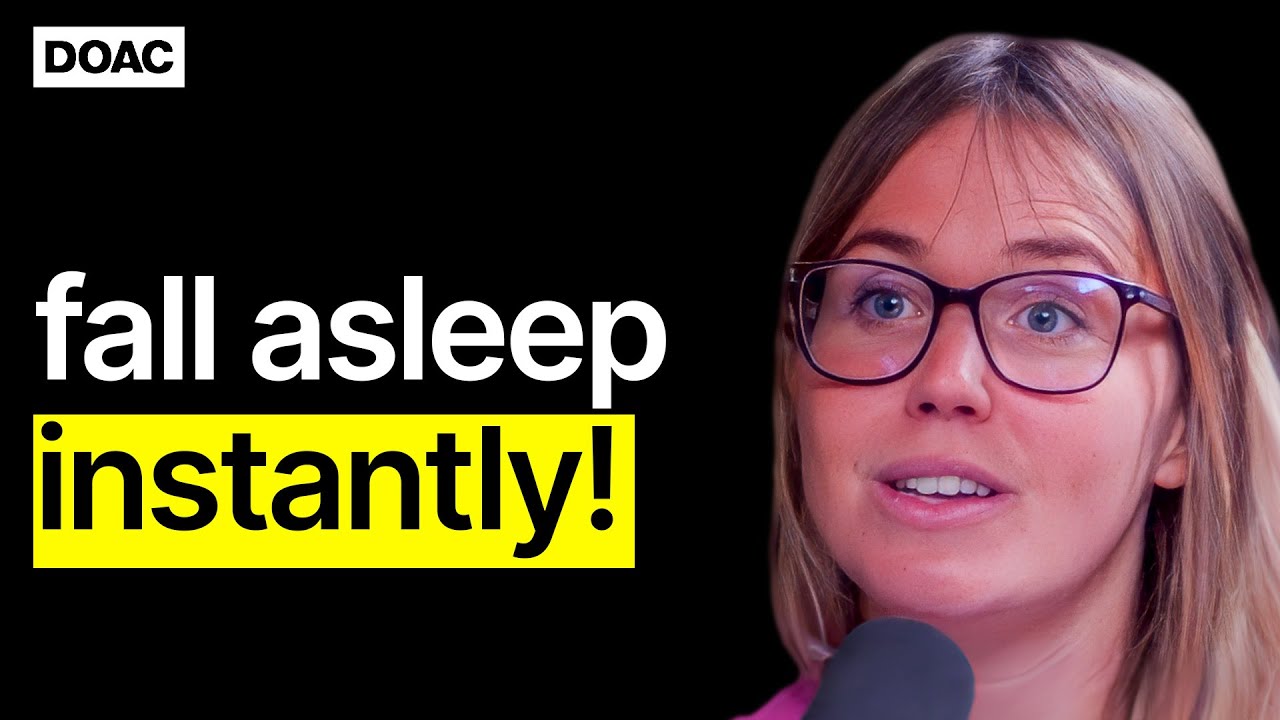
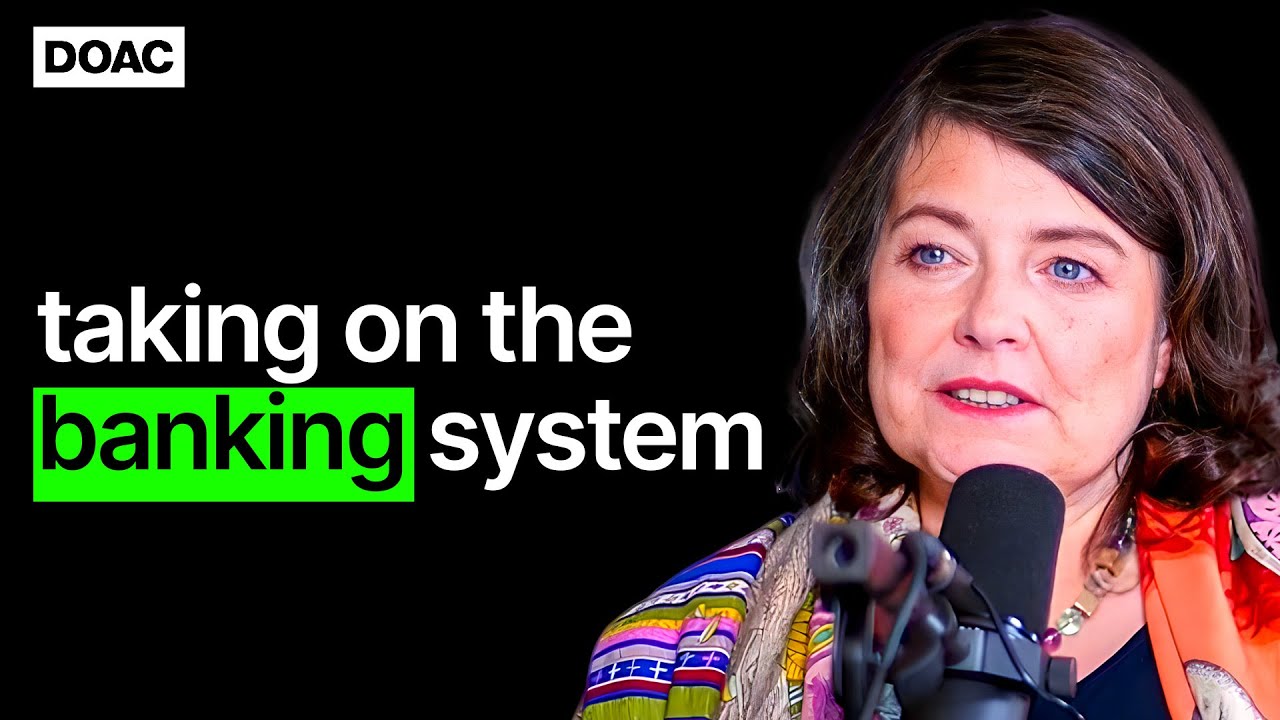
The Secret To A Good Nights Sleep with Stephanie Romiszewski | E64
Now Playing
The Secret To A Good Nights Sleep with Stephanie Romiszewski | E64
Transcript
1866 segments
They just don't have the education. So
our own doctors do not have enough
education is something that we do a
third of our lives. If you are waking up
in the middle of the night and it's been
happen to you over and over again to
resolve the habit, you're going to have
to
[Music]
sleep. It's a thing that we all do every
day, but for some reason in our society,
it's still a little bit of a mystery.
How many hours should we be sleeping?
What is sleep debt? Is there a perfect
sleep routine? Should I wake up at a
certain time? Why do I get sleep
paralysis, insomnia? Why do I have these
dreams? My next guest, Stephanie
Ramoski, worked with NASA and Harvard
Medical School to understand these
questions. Stephanie currently works as
a sleep physiologist, helping people
cure and understand their insomnia and
sleep disorders. So, without further
ado, my name is Steven Bartlett and this
is the Diary of a CEO. I hope nobody is
listening, but if you are, then please
keep this to yourself.
[Music]
Stephanie,
the first question I wanted to ask you,
and I've got millions and millions of
questions to ask you because this is a a
topic which I, as I said before we
started chatting on air, um has really
piqu an interest over the last three
years. I've never had so many of my
friends in my sort of close circle ask
me questions about sleep, send me
articles about sleep. And I don't know
what's happened, but as a nation and as
a as a species, I think we've got really
really curious about this idea of sleep
and also its importance. The first
question I wanted to ask you was how
important sleep is. But I think a better
way to understand that and the answer is
to actually look at the consequences
you've seen in your line of work um for
people that have bad sleep or that have
insomnia. Um so could you speak to that
a little bit?
I can. That's a big big question. Um,
what I have seen over the last 16 years
of my career is not people coming in
dying because they aren't sleeping or uh
with really really significant
illnesses. I've seen people very
anxious, very stressed, very low because
their sleep is poor and they are
extremely worried about it. And I've
seen people who are, you know, at the
top of their game and doing really well
in life but are completely crippled by
these sleep problems. But it is the fear
of bad things, worse things happening to
them that is keeping them as stressed
and upset as they are. So it's quite
interesting because I think the the
things that bring people to me to get
their sleep treated are exactly that
that fear is actually what I'm trying to
alleviate rather than um fixing their
sleep because I think they're going to
get so sick that something terrible is
going to happen to them.
Um so it's a really interesting question
to ask. How does sleep affect us? The
reality is we actually we or why do we
sleep? We don't know actually why we
sleep. We know what happens when we
don't sleep. But I think we're getting
very very confused between those of us
that struggle with sleep and those that
are actively depriving themselves of
sleep like the CEO who says, "I'll sleep
when I'm dead," for example.
Sure. Um, but you know, those of us who
are actively trying to sleep when we
can't and we will do anything and we we
we make our sleep opportunities larger
and we still can't get sleep. We're not
depriving ourselves of sleep. We're
doing anything we can to get sleep. So,
I I worry about the amounts out there
about sleep at the moment and the way
that it's the information is being
disseminated because I think that's
where we're going a bit wrong and all
the tracking of sleep and all the tech
that comes out. I'm not saying it's it's
a bad thing. I'm just saying that it's
almost like we haven't quite caught up
with all the information that we have
and we can't cope with it quite the way
we need to. So you you speak about the
tech that we have now, Apple watches,
all these little, you know, smart
devices that are telling us how many
hours a day we're sleeping. And also,
there's, you know, books. There's
probably a couple books on the shelf
behind me about the perfect night's
sleep or the perfect morning routine or
the perfect time to wake up. Where is
the [ __ ]
Oh my god. Again, another massive
question. Um, there is so much of it.
It's it's all it's so nuanced. you're
going to have to ask me some specifics
because there is so much there that
actually is I mean well the first thing
the biggest thing I would say is you
know going to bed at exactly the same
time every night dictating your bedtime
is probably the worst piece of advice
I've ever heard and sends people off on
all sorts of different tangents which
does not help if anything it makes their
insomnia worse because they go to bed in
the dark not able to sleep getting more
anxious heart rate going up
what should they do instead
stay up until they're sleepy. Don't
worry about it. Enjoy yourself. Relax.
Do the things that you probably don't
get time to do because you're busy doing
all the other things during the day.
Is the problem I have with that
approach, which is the approach that I
think I've adopted maybe a little bit
too much or incorrectly is if I stayed
up doing the things that I want to do.
What happens is I'll stay up till 7 a.m.
just looking at YouTube videos and
learning about rockets and looking at
like stocks to invest in and stuff.
That's that's me to a tea. At some point
I have to put my laptop down and be like
Steve just you're going to feel awful
tomorrow if you carry on looking at this
investment fund that you think is
interesting.
Yeah absolutely to to a degree you can I
mean we can manipulate our bodies to do
anything in a lab I could manipulate
your body to sleep when I wanted it to
sleep. Um but that's taking away all the
environmental factors all the behavioral
factors of your life.
Um and what you're doing now you know
what it's not the end of the world. You
know you're obviously coping with it and
you're healthy. Um the problem is you
probably won't be able to sustain that
and unfortunately we are built in such a
way that kind of goes with the the light
dark cycles on this planet. Um and so to
a degree you are sort of going against
that and unfortunately we've got lots of
other we've got lots of research showing
that after a while you just can't do
that forever without implication.
Um so it's not I mean if you think about
it insomnia is just a different pattern
of sleep. You've just trained your brain
to sleep differently and you're still
surviving with it. It's just that most
of us don't like that because it's not
the rest of society in the way that
they're sleeping. Um, and our friends
are sleeping and and and it feels like
we're the only ones awake in the night.
I bet if you didn't have all those
things to do and you weren't the way you
were and you were up at night and
everybody else around you is asleep, it
would start to feel like a very lonely
um, anxious place. We're not very
rational at night. We're not really made
to think in the middle of the night. So,
we're not incredibly rational. So, I
don't think it's the end of the world
what you're doing. But at the same time,
put it this way, I treat a lot of
entrepreneurs when they've retired and
they're still fairly young but not in a
good place because they have not
followed anything that was fairly going
along with what our physiological
processes want to do. Our bodies are all
about regulation. We have clocks in
every cell in every part of our body.
Um, and they like regulation. They like
time. They like the timing of things to
be ready. um and and regular. And when
we keep changing those goalposts, it
might seem like we're being uber
flexible, but actually the reality the
reality is is that later on down the
line, you'll probably find that you
won't be able to cope with it as much.
And how how how does that manifest
itself for me? So
So for you, if you just carried on the
way you were, then unfortunately, yeah,
we probably would see that um maybe you
were getting less sleep than you needed.
Um it probably would be harder for you
maybe when you settled into a routine
where you were working at around the
same hours every day. Say you got a
certain kind of uh role that you had to
do which made you know you had to have a
certain schedule. You might find it
quite difficult after a while to stick
to that schedule. Um you might find that
you aren't able to sleep as much as you
want. The duration and the quality will
be impaired. And so you might start all
the research around sleep and and how
important it is for you. You might start
noticing things like your cognitive
abilities are less. So your memory,
things like that. Um your ability to uh
produce cytoines, so the proteins that
help us with um uh keeping ourselves
healthy and uh keeping uh inflammation
at bay and things like that, all those
kind of things will be reduced. your
healing. So when you go and weight
training or something like that or you
go to the gym and you want your muscles
to repair, they're not going to be able
to do that so well. And of course that
over time, short term, it's not a
problem. Over time, long term, that's
when we start worrying about more
significant illnesses and um disorders
that are happening as we get older. And
so that's why we see lots of research
showing that as we get older, maybe some
of these things like Alzheimer's might
be related to how we treated our sleep
when we were younger. However, I hate
it. I hate mentioning things like that
because I think it frightens people. And
the problem is with frightening people
is that they go into what they think is
most logical things to do. So, they
might go away after this podcast and
think, "Oh my god, I've just got to go
away and get my 8 hours because the rest
of the information is telling them out
there that they've got to get this 8
hours of sleep every night." Um, and of
course, they can't just get that. You
can't dictate to your body how it
sleeps. There is a process. It follows
it. And so, unfortunately, you can never
force yourself to sleep. You can force
yourself not to sleep. And that is
partly how you fix a sleep problem, but
you can never force yourself to sleep.
But you can induce anxiety and stress
and depression through that and lack of
sleep. So yeah,
in um well if you're an expert in this
field so you must as you kind of spoke
to there you must get pretty I can feel
it when you're speaking get pretty
pissed off when you see unhelpful
information um being pushed on I don't
know social media or online or through
books these sort of simplified
narratives. What are some of the most um
common misconceptions that you speak to
your patients about? You mentioned one
there about this like eight hours of
sleep being the optimal. Yeah. And even
when I put out on my Instagram earlier,
what are the key questions you want to
ask? Um I'm speaking to a sleep
therapist expert today. Um I'd say the
vast majority or at least the medium
question was uh do I need to get exactly
seven or eight hours sleep
every single night? Um yeah, so that is
definitely the biggest one we get. Um
you do not that perfection is the enemy
of the good. Have you ever heard that
term? Because at the end of the day it's
true. Yes, your body loves consistency
and regulation, but that does not mean
you have to get 8 hours of sleep every
night. Think about it differently. Think
about it over a month, for example. We
love this idea of the way the way we
look at time is slightly different to
the way your body looks at time. And
over a month, you might actually be all
right. So maybe one night you get six
and a half hours, the next night you get
seven and a half, and then the next
night you might get slightly different.
As long as it's fairly consistent and
maybe 80% of the time you're doing
fairly well and you're you're giving
yourself the right opportunity to sleep,
that's okay. Your body's going to do,
you know, it will do what it needs to
do. And and with that, a caveat to that
is this understanding of sleep debt. So,
we don't understand sleep debt properly.
People think it's an eye for an eye. I
lose 4 hours, I must gain 4 hours. Well,
what happens when your body being as
efficient as it is doesn't actually need
you to gain an extra 4 hours of sleep to
recover you? your expectation is that it
should. And when your expectation
doesn't get met, you get upset about it
and you change your behavior. And that's
when you start getting sleep problems.
When the reality is your brain is so
smart that even in the certain amount of
hours that you get normally at night, it
can recover you from that sleep
deprivation by just improving or
increasing the sleep stage that it
thinks you missed the most, for example.
But because we have a lack of education,
we believe we don't get some sleep, we
need to regain that sleep. And when we
don't regain that sleep, that's when the
anxieties and the stresses over not
sleeping start. So that's a big one, the
sleep debt one. The other one is this
idea that fatigue and sleepiness are the
same things. So yes, when we don't sleep
well, we get a lot of fatigue. So
fatigue is anything from feeling like
your body needs to rest to needing to
shut your eyes to pain to your brain
buzzing because you've been working so
hard for like 48 hours straight and you
don't know what to do with yourself. But
the only definition of sleepiness is the
ability to shut your eyes and within a
few minutes you're falling asleep. So if
you were saying to me right now, Steph,
I am so so sleepy. I'd probably say to
you, well, you don't look it
because right now you don't look tired
in the way that I would expect you to be
falling asleep. I mean, you wouldn't be
able to sit still. You you would be sort
of probably your eyes would be shutting
all the time, dozing off, having little
micro sleeps. That's sleepiness. And
that's what we should really be
understanding as a cue to sleep. So in
the evenings, if you're not feeling
that, then don't be don't be worried.
Give yourself permission to stay up
later because you can't dictate what
happens to you during the day. And there
are so many variables that affect your
sleep. You are never going to be able to
control of them. Having good sleep
hygiene. How many good sleepers do you
know have it? So good sleep hygiene is
all these things that we get told we
should do. So, the 10 top things that
you should do, have a warm bath, never
drink coffee ever again, um never have
alcohol, you know, all these things that
you're supposed to do. But if you look
at good sleepers, are they following all
those things? No, they're not. And
they're still sleeping really well. And
that's to show that most of the time
sleeping poorly comes down to brain
training and the patterns we get
ourselves into. you start going to bed
early, you might be able to get to sleep
earlier, but you're probably not going
to be able to uh have that sleep all the
way through the night because at some
point or another, your body's going to
be like, "Well, you've had enough now."
But your expectation is you should be
able to sleep till 7 and why didn't I
sleep till 7:00? Or if you lie in, you
keep changing the goalpost of your wake
up time, which is the most important
thing that you should be looking at, not
your bedtime. Um, if you keep changing
that goalpost, your body doesn't know
when to feed you. It doesn't know when
to make you feel alert because you
you've changed everything. And so, of
course, you're not going to be sleepy at
the right time in
the time you wake up is the the a much
more important time to be focused on.
Yes. The things your morning routine is
going to be way more important than your
evening routine when it comes to your
sleep at night. But be-c because people
see that as a far away time compared to
when you go to sleep, they don't really
focus on it. In fact, haven't we been
taught in this society that lying in is
a luxury? I can't believe that we have
made it okay at the weekend to lie in so
much, but during the week, one of the
only things that gets us up is work. It
makes absolutely no sense to me. I'm not
saying it's the worst thing in the
world. I'm not saying I never lie in,
but I don't use it as a compensatory
method for a bad night's sleep because
that's when you're going to get into
trouble
cuz that's kind of throwing your your
your schedule off. Is that what you're
saying? Yeah. So if you lie in on the
weekends and you're going to pay for it
at some other point, right?
Yeah. Why are we not looking, you know,
if you have to lie in so significantly
every single weekend, why are we not
looking at during the week and thinking,
why am I doing this to myself at the
time when I need it the most, I will
choose to get less sleep and then at the
weekend I'll just compensate.
And people and you much of the
conversation around sleep in society
talks about the amount of hours and it's
almost like the amount of hours that I
was in the bed. M
um what what's your sort of rebuttal to
that? Cuz
quality over quantity every single time.
Every single time. And if you have good
quality and you need longer, your body
will tell you and you will get more
sleep. But people are so obsessed with
duration. And I I think people don't
understand what I mean by sleep
opportunity. I mean every single night,
most of the time, so about 80% of the
time, I will give myself a 7 to eight
hour sleep opportunity, sleep window.
But I do not mean that if I'm not
sleepy, I take myself into a dark room
and shut myself down. I just know that
it's there. I've got a bedroom, a place
I really want to be to sleep that is
available to me during those hours and I
will not sleep outside those hours. And
that's the that is the big thing is you
can dictate to your body when you don't
sleep but you cannot dictate when you
do. And by doing that you will force
your body to be in a nice regular cycle.
It's actually really really simple once
you know how to do it. And every time I
fix someone of their insomnia there and
honestly 50 60 years of insomnia they
often turn around to me they're like I
don't know why I wasn't taught this um
when I was younger. And I do believe if
we taught everyone how to sleep
properly, give them a proper sleep
education when they're little, I
wouldn't exist. Insomnia wouldn't exist.
You talked there when you referenced
your own bedroom. I think you you spoke
about it quite lovingly. Should I have
this place I like to sleep? How
important is that? How important is it
to sleep in the same place and for that
space to be is there a certain way I
should be designing my bedroom? Is there
like a bed that's good or like a pillow?
You know, because there's lots of fads
around.
Yeah. Yeah. Yeah. There's a lot of fads
around. I think your environment is
important, but I can't dictate to you
what that is because we're all so
different. Um, yes, it's true. You don't
need loads of technology in your bedroom
to sleep. I'm not saying technology
can't aid our sleep because I think in
the future we're going to come up with
some crazy cool things that are going to
really help us. I just think right now
we're not quite there.
I think the least you have in your
bedroom that remind you of the day is
really important. So obviously screens
and light uh is very important when it
comes to sleep. But I think people miss
are missing a trick when when we say
don't look at your phones. We're not
just saying don't look at your phones
because of the light exposure. We're
saying it because it's reminding your
brain of something that you did during
the day. And so your brain being the
smart thing that it is is thinking okay
well I'll um I'll I'll I'll increase
your cortisol and I'll reduce your
melatonin which is your stress and your
sleepy hormone uh hormones. um and I'm
going to help you be more alert because
you clearly want to be alert right now.
And so your brain thinks it's helping
you. And then you're thinking, hang on a
minute, I just looked at my phone for
like 3 seconds and now I'm buzzing. Why?
And it's just because your brain is your
your behavior is so much more
influential on your physiology than you
realize.
What do you think about the snooze
button?
Um I think if you have to use it on a
regular basis, you need to start
questioning why you always need to
snooze. Unfortunately, the research
shows that snoozing does not benefit us
at all. And actually, if you think about
it, if if if you are a snoozer, you
know, how many times does it actually
make us feel better?
Doesn't
Exactly.
delays.
Sorry.
No, I I think it's nonsense as well. I
did I one of my modules when I was doing
psychology in school was about sleep and
um understanding the different phases of
sleep made me realize that the snooze
button is I think totally pointless
because it's you have to be in a certain
phase of sleep for you to get real
benefits and
within 15 minutes it's get to that phase
right
absolutely
um a lot of people when they you know
when they knew that I was speaking to
you today um they want to know how they
can sleep better in the short term
tonight
they're looking for some kind of quick
fix to the to a problem they've had for
a long time.
What would you say to those people?
Okay, so the first thing I'd say is that
you're never going to find that reactive
very quick method. It's never going to
happen. And even if you find it, I
promise you it won't work in the long
term. It might control your condition in
the short term, but not in the long
term. I can teach you how to re to
sleep, but it's going to take you a few
weeks, not a night. Um, but in the
meantime, don't worry. It's okay. like
part part of this is I just there is a
solution. So what I do is called
cognitive behavioral therapy for
insomnia. It is not the same as CBT for
depression or anxiety or anything else.
Um and it is just about retraining
yourself to sleep and building up that
strong sleep drive. You have to do that
over time. Um but in the short term I
usually tell people that they do not
need to worry. Nothing bad is going to
happen to you. And the reality is that
it's more your mood that will affect
your day when you wake up in the morning
than the bad night's sleep you just had.
So I know we've got evidence to show
that when you have a bad night's sleep,
your cognitive abilities, etc. are going
to be um reduced. However, if you think
about how you generalize that, you're
not you're not going to lose your job.
You're not going to perform horrifically
in that meeting because you didn't get a
good night's sleep. It would be far
better for you to go to bed later and
make sure you're lovely and sleepy and
only get four hours than to go to bed 8
hours before that meeting and toss and
turn and be fidgety and stressed and
anxious all night. That's what I do. I
still get nervous when I have to do like
a lecture in front of 500 people. Of
course, I get nervous, but instead of,
you know, focusing on my notes just
before I go to bed, I'll put everything
aside. I'll go and enjoy myself, do
something I really love to do. I'll get
ready for bed a bit earlier than usual,
just so that I do not have to think
about anything when I get sleepy. And
when I am sleepy, even if it's 2 3 4
hours later than usual, I know that I'll
go and have a really lovely 3 or 4 hours
sleep. And then I'll wake up and I'll be
like, great. I know I'm going to be a
bit sleepy today, but that's only going
to help me sleep tonight
and I'm going to have an epic day. I
don't care that I'm a bit sleepy.
Sleepiness is amazing. Sleepiness is
such a good thing for you. Why are we
teaching people that sleepiness is a bad
thing? You need sleepiness to sleep.
I've got two questions there. The first
I'm sure is it feels like a very um
related sort of question to what you've
just been talking about there, which is
do you sleep well? I'm sure you get
asked this all the time at every party,
every time you It's like asking a
comedian to tell a joke, right?
It's like, how is your sleep?
Okay, so most of the time my sleep is
fairly good because I've been lucky
enough to be educating myself through
this for the last 16 years. But it's not
good all the time because it's totally
normal after some kind of life stressor,
new illness, some dramatic change in our
society like we're seeing right now
for your sleep to change and for it to
be poor. Okay, it is totally normal to
have sleep problems. We will all get
them. You will never find someone who
does not have a sleep problem at some
point in their lives. But there is a
difference between somebody who has a
short-term sleep problem. And when the
initial issue resolves itself, the sleep
problem goes away and the person who has
now unfortunately got a long-term sleep
problem.
The difference is the behavior. It is
not the person. It is not some trait
that you have over someone. It's not
something genetic. There are there are
all of those things that do feed into,
for example, insomnia. But the reality
is the thing that seems to perpetuate
sleep problems is not usually the
original trigger. So we cannot blame the
divorce. For example, 20 years ago, I'm
not divorced, but I'm just making an
example. So 20 years ago, we get
divorced and it's a really stressful
situation and it stops you sleeping for
a month. Okay? But now you're remarried
and you're perfectly happy, but you've
got a 20 year insomnia problem. We
cannot blame the divorce for that
anymore. And also somebody else who's
gone through the same situation, same
illness or divorce or new medication
would not have had that sleep problem 20
years later. So what is it? And I
believe and we know that most of it is
your behavior. After a few weeks of a
sleep problem, most people will freak
out and they'll start changing their
behavior. So they might start lying in,
they might start going to bed early.
that's trying desperately to improve
their sleep opportunity because they
believe the mere act of lying in a bed
for longer is going to miraculously give
them a stronger sleep drive and make
them get through whatever it is they
need to get through when the reality is
and this is usually how we treat
insomnia or one of the ways we actually
deprive you of your sleep opportunity.
So we don't deprive you of sleep but we
do deprive you of your sleep
opportunity. So we only allow you to be
in bed for a certain amount of time and
that fixes it. That's frightening
because with teaching people that sleep
is so bad or not sorry not sleep is so
bad but sleepiness is so bad that they
don't feel that they can build up that
strong sleep drive without something
terrible happening to them. So the way
we are disseminating knowledge right now
is not working and we have got to find a
way to change that.
You talked about the the type of therapy
you offer cognitive behavioral therapy
for insomnia. One of the elements you've
described is this sleep deprivation
which is in essence you're stopping
people sleeping I'm guessing throughout
the day to focus them on their sleep
opportunity.
Um yes so it's less about restricting
their sleep and more about restricting
their bedtime. So often when you come
across somebody who's had a sleep
problem for a fair while enough to come
to see me they're usually spending more
time in bed than they are sleeping. So
for example, they might be in bed for
around 10 hours, but they're only
sleeping for say 6 hours. And so what I
would do is I would restrict them in the
first instance only. So it's only mildly
to 6 hours in bed because or 5 hours in
bed, whatever they're sleeping for. I
would we would we would never really go
lower than 5 hours because at the end of
the day, we're only um uh sort of guess
it's all a bit of guess work here. Um
and that's important that it's like that
and we're not overtracking sleep because
that's has its own issues. Um, and then
for a week or so, I'll keep them on that
schedule and try and get them to
strictly stick to it, which is quite
scary for somebody who thinks the total
opposite way is going to fix them. Even
though they've got no evidence that it
works, it doesn't matter. They've been
doing it for a long time. So, it's quite
hard to get someone to do this. And then
once we can get them to sleep for around
90% of that five or six hours, whatever
they spend in bed, then we can start
increasing their sleep time out very,
very slowly. But people sort of get very
overeager about this. It's called sleep
restriction therapy. Um or there's lots
of different ways of calling it. Um
people get over excited about it and
they're obsessed with reaching that 90%
efficiency so they can move on and add
time. But I try to always explain to
people and indeed I do online courses in
sleep that they can do themselves. And
I'm always trying to explain to them
it's not about adding more time. Imagine
if you are getting to 5 or 6 hours sleep
efficient every every night for 7 days
as an average. That's really good.
That's so much better than the broken
sleep you were getting before. Think
about the new quality that you have
built. How amazing is that? When's the
last time you went for a week and you
had that consistent sleep? And when they
start thinking about it that way,
they're like, "Oh my god, yes, this is
so much better. And I'm even able to add
more time now." And we slowly
incrementally start adding sleep out.
And that's how you fix it. I mean it's
not everything because you've got to
work on the mindset. You've got to work
on the re-educating people.
What are those other pieces of the
therapy? So mindset.
Yeah. You got to So first
one is the the sort of sleep restriction
as you called it.
Yeah. One area is you we need to you've
got to be re-educated on sleep much like
we've been chitchatting away today.
That's how I will talk to someone and I
will try to help them understand um I'll
try and pick out a lot of the things
that they talk to me about. Um, but it's
trying to help them understand where the
myths are and where the facts are with
sleep because a lot of their ideologies
around sleep will be directly
influencing their behavior. And so as
soon as you can change that and it it's
not as simple as just saying that's
right and that's wrong, you got to keep
doing it and they need to trust you and
and you've got to find a way and the
right language to speak to that person.
Once you've done that, you can start
with the sleep restriction. And then of
course, whilst there is no evidence that
relaxation or anxiety reduction is going
to directly and reactively fix a
long-term sleep disorder, after you've
started improving your sleep drive and
using the sleep restriction therapy to
do that, then yes, we do need to start
looking at how do you bring yourself
back to balance during the day. Is it
stress and anxiety that got you here in
the first place because you're working
too much and you got yourself into the
wrong patterns? How are you going to
process more during the day? How are you
going to balance more during the day? We
need to look at those things, but we
need to look at them with the right
expectations, which is that they are not
going to make you sleep because once
that expectation is not met, you feel
really inadequate and then you feel like
nothing can help you and then you get
hopeless and out of control and lonely
about your problem. So all this lots of
different sort of elements like a
pyramid to try and help someone with
their sleep
and you know people um c caffeine has
become a huge part of our you know we
live in a society where people take
caffeine to wake them up and then quite
often they'll take certain supplements
to shut them down again like sleep
supplements or um various nol I think is
one of them right I don't know
um what's your take on all of all of
these chemicals we're using to kind of
regulate our alertness and then our
tiredness
they they can't work over time. So, all
the research shows that eventually you
either get used to them, they stop
working, they make you feel really
uncomfortable. I don't think there's
anything wrong with, for example,
sleeping pills or using caffeine in the
short term, things like that. Um, but
starting to use them long term, they
have their own all of them have their
own side effects and over a long time of
use um aren't very good for the body.
Um, but in general, they're just not
going to they're not going to suddenly
miraculously reset your sleep button or
anything that people seem to think
they're going to do. So, I don't think
relying on these things in the short
term is a bad thing every now and again.
But, if you're relying on them every
single time you have a sleep problem,
you're effectively making it worse
because your brain isn't learning
anything. It is literally just being
giving a cheap method like a fake sleep
almost. And that is what you get from a
lot of sedatives is seditive sleep which
is not the same as the cycles that you
go through usually to sleep well. So
you're not getting but psychologically
we believe that sleep is better than no
sleep. And actually I don't necessarily
agree with that. In a way I'd rather get
no sleep than a really rubbish sleep
knowing that my body will like build up
a really strong sleep drive and help me
later. But people are so terrified of
that that they that psychologically they
just need to feel like they've slept.
But if they had a bit of better
education around sleep and they
understood how it worked more, then I
don't think people would be trying to
grab all these things all the time. But
we live in a reactive society. We're not
very proactive as creatures. We want we
want it now and we want it done
yesterday.
What about caffeine? That's such a huge
part of everybody's well pretty much
everybody's daily routine. People they
you know they'll say, "I have to have
this coffee to wake myself up.
I have three or four of them a day." And
then what impact does that end up having
on sleep?
So caffeine is very interesting because
genetically we are all either sensitive
or not sensitive or somewhere in between
with caffeine. So it's very hard to say
nobody should be drinking caffeine after
this time. Yes, it does have a very sort
of it's a it has a big afterlife. So it
it definitely or halflife. So what we
mean by that is that um you know it's
going to have an effect on you hours and
hours after you've had it. But depending
on how sensitive you to your to it you
are, you know, but at the same time,
there's so much more you can do. If you
started waking up at the same time every
day, you would start to feel refreshed.
You would be one of those people who
wakes up and is like, "Yeah, I'm ready
to start the day." Imagine if you just
used your body the way it was designed
to be used. I'm not saying caffeine is
bad. I definitely wouldn't say you can't
drink caffeine, but if you're starting
to use it, anything in life in anything
chemical in a in a compensatory method
because something is wrong, that's when
you need to start questioning it. But in
general, having caffeine in the morning,
I don't think there's anything wrong
with that. If you enjoy it, great. But
then there's lots of research that shows
that even your performance isn't
significantly improved by having
caffeine. You might feel like you're
able to buzz around everything more, but
your actual efficiency isn't necessarily
improved. I I I wonder, you know,
because I think I was looking at some
stats around insomnia and sleep sleep
disorders, and the stats are pretty
staggering, and
I don't know how to say this, but I just
don't tend to believe that humans after
all these thousands of years of
evolution have been born with quite an
apparent or seemingly apparent um
problem with sleep. So it makes me
think, okay, so what is it in our social
environment and society that's making us
struggle with sleep? Is it our over
obsession with the perfect sleep? That
might be one element. And this, you
know, and all the fear and anxiety
around not sleeping perfectly as you've
described and we're actually doing
pretty good,
right? And labeling ourselves as
insomnia, you know, cuz that word I'm an
insomniac or I've got insomnia is thrown
around pretty easily.
Absolutely. Or is it the, you know, the
tech in our lives? Is it the the the
over stimulation of the, you know, the
technology we have? Is it overwork?
What's your take on that? Cuz I I feel
the same about depression and anxiety as
well. I I look at the stats growing over
time um in with various sort of mental
um illnesses. And I think surely we
weren't born um with chemical imbalances
as is um said in um yeah
I love them.
Yeah. I so it's a hard question to
answer. I think that there is element
there's lots of different elements. I
don't believe that the stats are as
accurate as they probably seem. for
example, I believe that before, you
know, the industrial revolution, for
example, we had um sleep problems. I I
mean I no, I do I believe we did. It's
just that I believe we're recording
things now more. So, there's that aspect
of it. There is this aspect of we over
worry about things and you know, at the
end of the day, whilst someone keep you
know, lots of people out there keep
telling us that actually um you know, if
you sleep less than 6 hours, you will
die early, but actually we're not
actually seeing that.
Someone asked me that today. They said,
How much am I reducing my life
expectancy with my poor sleep?
The thing is, okay, so if you know
you've got poor sleep, you need to
improve it, but hopefully it's not going
to be long term. You can actually get
some support for that and get it sorted.
If you're actively keeping yourself at 5
hours when you know you're a 7-hour
sleeper, then yeah, you're going to
reduce your life expectancy. But if
you're naturally a 5hour sleeper and
they do exist then that does not mean
the same thing that you're going to be
reducing your life expectancy when they
genetically you can't you know that's
for you. Um it's really difficult to
understand. I think um you know
electricity has a big part to play. So
again I talked a little bit briefly at
the beginning about the light dark
cycles of this planet and the way that
we are designed well not designed but
you know we're built on this planet. We
we seem to have evolved that way. Um,
and so we we we definitely do need to be
in general not uh working and resting
more at night and we we work better. Our
metabolisms, our brains function, we're
more rational during the day. Um, and so
with electricity has become many
problems. I definitely think the
scareongering and the fear and the
tracking of sleep has definitely caused
in the last few years a boom in sleep
problems or at least how many people are
coming to us for help
and with the the pandemic. What impact
has that had on people's sleep? Hu let's
talk about hu for a second. I've spent a
lot of time on this podcast talking
about the ready to drink Hu bottles
which are my favorite for convenience
reasons. It means I don't have to mix
anything. But this week, as my goals in
gym and in my health and in my physique
have started to evolve, I've started
using a new product that I wanted to
tell you about. And the reason why I've
started using this product, which is
called Hule, the Black Edition, is
because there's 50% less carbs, 33% more
protein, um, zero artificial sweeteners,
and it's of course gluten-free. I wish I
had something like this to be honest
when I was a student because it's
literally £147
per meal. I think you get about 17 or 18
meals out of one bag. And if you're
someone like me that's in this phase of
my life that's trying to build a bit of
muscle, get a little bit more lean
whilst also, you know, reducing the
carbs a little bit, then give Black
Edition Hule a try and try the vanilla
flavor if you do get a chance cuz that's
um for me is the the tastiest flavor of
them all. And do you know what I'm gonna
do next week in the podcast? I'm gonna
take my top off. Okay? So, I'm gonna um
show you the impact that uh all of this
being a hu has had for me. You're going
to have to tune in next week and you're
going to have to watch it on YouTube to
see that. But um I'm going to show you
the the before and after of using Hule
and uh uh and before I used Hule. Okay.
So, that's something to look forward to.
Or maybe not. With the the pandemic,
what impact has that had on people's
sleep?
It's had a huge impact. So um in various
different ways. So the first way is that
everybody's routine changed um because
we couldn't go outside and move as much
as we once did. We couldn't get as much
light exposure as we once did. We didn't
get as much stimulation, social
stimulation. So our brains weren't being
used in the same way. Plus we all had
this sort of uh thing to look at on the
news all the time. So we're actively
sort of looking at something that is
stressing us out and making us anxious.
So various different components. No
wonder sleep changed. But it would have
been totally normal for that to happen.
Your sleep is adapting to your new
environment. And so when people start
worrying about this, I try to get them
to calm down about it because actually
if your sleep wasn't working properly,
you just wouldn't be here. Okay? So to a
degree, our sleep is doing a bloody good
job for us. Um and we need to be better
about it. We blame sleep for everything.
Um and actually there's so many other
variables that we can control in our
lives that will have an effect on us.
But yes, during the pandemic, we saw um
or we still see there's plenty more
problems with people struggling to get
to sleep. Maybe they're feeling really
buzzy and they can't get to sleep,
maintaining that sleep. So, people
waking up in the middle of the night and
they're just like, "Gh, what? Why am I
waking up?" Sometimes they they've got a
million thoughts a minute or um
sometimes they're just thinking of
nothing and they don't know why that's
happening. We've seen more dream recall,
very graphic dreams. Um, and we believe
that's because obviously when your
routine changes and you don't have to
work, and ironically I always say to
insomniacs that actually when they're
working and when they've got busy lives,
it's a lot easier to treat them than
when they don't have a routine because
routine is everything to our bodies. I
wish we understood more how much our
bodies love to be regulated. And going
to work and doing exercise and going to
see our friends and going to the gym and
eating at regular intervals is telling
your brain so many signals. The light
exposure you get is telling your brain
about how much melatonin to re release
for you. It's fascinating, but we do
need regulation. And the biggest thing
that changed during this pandemic was
our routines. Mhm. People people have a
real desire as well. You you mentioned
the the fact that the pandemic had
caused very like vivid dreams. People
have asked me so many times if they can
control their dreams or how do they stop
themselves dreaming so vividly or um and
some people having, you know, recurring
nightmares and things like that. What
what is your answer to that? What
control do we have on our dreams?
So you can you can learn to that's what
we call lucid dreaming. So you can learn
to lucid dream. The problem is it's
probably not very good for your sleep in
general. Um, so effectively when we
remember our dreams, it's because we
have been woken out of REM sleep. So REM
is actually a very active stage of
sleep. It's not your deep sleep. It's
actually quite a light stage of sleep.
Some might argue that's even a different
state of consciousness than not sleep at
all. So REM is a really strange time.
It's when we believe that more of our
memory and our psychological restoration
is happening and consolidation and
things like that. And part of REM, we
tend to have more uh graphic dreams, but
it's it's you being interrupted from
that state, which you may not remember
in the night. It could just be a van
driving past in your REM sleep, and it
wakes you into a lighter stage of sleep,
like stage one or two sleep. And so in
the morning, you think, "Oh my god, I
really remember my dreams." Or maybe
your alarm woke you up in the middle of
REM sleep, and you're like, "Oh my god,
I can really remember my dreams." As
opposed to the times when you're like,
"I didn't dream at all last night."
Well, of course you did dream. It's just
that your REM wasn't interrupted. So
that's why you're remembering your
dreams. When we try to control our
dreams, usually you have to kind of
control that interruption a bit. And so
um I haven't looked into it properly in
terms of lucid dreaming because it
doesn't really help me do my job. I
don't really want people to learn to
lucid dream because then one they're
going to be remembering their dreams
more. Um and if they're remembering
their dreams more, then their sleep is
more interrupted and that's not good for
your sleep. We want you to go through
the cycles of sleep as as uh you know as
comfortably as we can and so that you
get all the right percentages and all
the right restoration and and healing
and everything that you need from your
sleep. Um so yeah uh it's an interesting
concept. I don't think it's very helpful
to healthy sleep. Um but every now and
again especially kids I find when I'm
talking to children they seem to be able
to control their dreams a little bit
better like flying for example they
concentrate more on it that's why. So
they have more time and they concentrate
on it. Uh which is quite a fun thing.
Maybe we should all be doing more of
that daydreaming and stuff. It's
actually really good for problem
solving. Um so yeah, it's fascinating
and and and there's a lot of famous
people. I think Einstein though, don't I
mean I don't know if I'm right about
this, but Einstein and various other
geniuses would do things like hold a um
egg or or a spoon or something. Um so
that if and when they fell asleep that
spoon would drop and then they would
wake up because they felt they had all
their best ideas. I can see you looking
at me and thinking about doing this to
get better tonight and dropping it off
my bed.
But it's not very good for sleep to keep
interrupting it like that. Um, so you
can, yes, you've got the power to
manipulate sleep however you want, but
at the end of the day, if the goal here
is to keep you alive for longer and to
feel refreshed in the day and to have
your best ideas consistently and to be
healthy consistently, then you probably
want to do sleep right the way it was
designed.
And what about what I eat before I go to
bed? A lot of people talk about that.
That's another uh thing. You know, if I
order food really late, someone will
turn to me in the room and go, "Oh, you
shouldn't be eating at this time." You
know what I mean? What do I say to that?
Okay, you I've said it before, a good
sleeper does all the wrong things and
they seem to be okay, but they're
probably not doing all the wrong things
all the time. So, yes, the the later you
eat, you're basically asking your body
to metabolize and asking it to sleep and
it does not like doing both and so one
of them will be um compromised. Um in
terms of um anything that you can eat
that will have a significant effect on
your sleep, there's no real research. Um
there is research to show things like
you know if you if you eat enough
cherries or you have enough milk or
enough turkey it's going to give you
some kind of sedatory effect but at the
end of the day
it's you'd have to have a stupid amount
of those kind of foods to have any kind
of effect. It's not going to help you
sleep healthily from day to day. That's
not going to suddenly boost the quality
of your sleep um significantly. Um, so I
would argue that unless you have some
kind of deficiency in a vitamin or
mineral that is affecting your sleep,
then you probably don't need to be
looking at the food you eat. In general,
as I'm sure a lot of people will say,
but in general, eating a healthy
balanced diet where you have what you
would call naughty foods and good foods
in in balance, all that stuff is really
good for you. And probably the only
piece of advice I'd give around eating
is again regulating how you eat. So, if
it's breakfast, lunch, and dinner you
like to do, trying to do that at
consistent times every single day is
going to help your body understand when
you want to be awake and metabolizing
and when you want to be sleeping. And
then not sleeping too late at night just
so that you can make sure that your body
metabolizes well and sleeps well.
And can I sleep too much? Is that such a
people people there's this myth again in
society where people think that they
overslept and now they're knackered,
right?
Yeah. So you can it usually when people
say they've overslept if we actually
looked at them in a sleep study and
they've overslept for the amount that
they usually sleep and they didn't need
it probably the quality of their entire
sleep wouldn't be amazing. Um and that's
why they were able to have this dribble
drabby longer sleep and and and it's not
it's not going to be very helpful.
Usually when we're talking about that
research that shows that longer sleepers
actually can get sicker um is because
the quality of their sleep is impaired
by something like sleep apnnea or
another sleep disorder which is
impairing the quality of their sleep. So
which is poor quality.
Yeah. So poor quality sleep. You're
going to sleep longer. It's kind of the
same as having insomnia because you're
not really sleeping and so therefore you
feel you need to sleep longer and you
wake up and you still don't feel like
you've slept as much as you needed to.
If you're sleeping really well from
night to night, you don't need to sleep
more. So, your body won't really let
you. So, if the quality is good and
you've reached that optimal time, you'll
notice that if you do try to sleep
longer, it's quite if I looked at that
sleep for you in a polyomnography study.
So, I looked at your brain activity, the
quality of it is just like a snooze is
probably not going to be the same. It's
not going to be But it's very rare you
find someone like usually they're
deprived of something or other or they
haven't been sleeping properly and then
they sleep a bit longer. you you hear a
lot of um a lot of successful people I
think it's it's part of bragging you
know bragging about how little they
sleep they'll say I know you sleep 3
four hours a day and and I think it's
pushed this idea into society that in
order to be successful you've got to
sleep for you know just 2 or 3 hours or
4 hours or whatever but then on the
other side you have this total
contradiction which is in order to be
successful you need to wake up at 6 a.m.
and drink green juice and do yoga and
like sleep for exactly seven hours. Um,
and it and it I guess this kind of
speaks to the original point which was
um that there's so much
overgeneralization
and uh through an attempt to sell you
something whether it's a book or
um my authority or to get you to follow
me, I kind of preach this secret which
can be quite easily replicated for all
of you, right? that's causing us to be
like uh be smack like smacked with these
contradicting narratives around sleep.
Um which is making everyone a little bit
confused.
Um what's your sort of take on all of
that? Cuz you know, as when I was
growing up, I thought, you know, if I
want to be successful, I've got to just
sleep less. And I I I think, if I'm
being completely honest with myself,
I think I used to be proud of how little
I sleepd. I thought it was like more
like a badge of honor, you know?
Yeah. Yeah. Yeah. Absolutely.
Yeah. Yeah, but now I think I'm getting
a little bit older and I'm I don't
really give a [ __ ] what people think.
Good. Good for you. Um uh so yeah, I I
definitely have seen a change around in
this recently, but yeah, there has this
been this thing about like clean
sleeping. It's a bit like the whole
clean eating thing. It's it's everything
that you've effectively just said. Um
but people trying to say you need to do
this that and that to have the perfect
night's sleep. Actually, that doesn't
really exist. Once you know how much
sleep you need around, make sure you
have that opportunity most nights that
you
How do I know though?
Um, so I guess
you referenced genetics. You said there
are 5 hour genetics.
Yeah. Yeah. Yeah. So I guess um a more
relaxed way of looking at it is when you
go on holiday after the 3 4 days of
recovery from you know work life um what
happens you know left to your own
devices what happens? Um that's a pretty
good way of looking at it. If you're
looking at a really scientific way, then
sleep restriction therapy. So, what we
would put a insomniac through also will
show you how much of a duration that you
need right now because there'll be a
point where you can't keep adding time.
Your body won't get you to 90% efficient
and that's where you know, okay, maybe
this is around the right time for me.
And sleep and mental health, I feel like
it's I don't know, my guess would be
that it's somewhat kind of a a cycle,
right? I think poor sleep might lead to
poor mental health and then poor mental
health might lead to poor sleep. Is that
accurate?
You're absolutely right. But it doesn't
matter what came first, the chicken or
the egg. The main issue is, especially
in medicine, and I've just done a piece
of research um that shows that
undergraduate um medical degrees only
teach a median of an hour and a half of
sleep. So this is why this next thing
happens a lot because they just don't
have the education. So our own doctors
do not have enough education in
something that we do a third of our
lives. So historically or traditionally
when you go to your GP and you say I've
got a sleep problem, they'll tell you
you've got depression and insomniacs
will be able to relate to this and it is
because in general we look at sleep or
poor sleep as a symptom of another
condition. Now even if it is even if you
do have a significant mental health
problem and it is causing you to have
sleep issues if it's been longer than 3
months you now have a entrained sleep
disorder and you need to be treating the
sleep problem as a primary condition of
in itself and the one that I would treat
first is whichever one is most
prevalent. So whichever symptoms seem to
be more distressing for you at the time
is where I would start. But I would be
fixing for example the depression and
the insomnia separately. And the results
show that when you treat insomnia you
have less relapse of depression because
you have actually resolved one of these
things that unfortunately was
perpetuating everything. So it doesn't
really matter where sleep comes into it
but you've got to give it its own
podium. It needs to be it is a pillar of
health and you need to treat it that
way.
Mhm. You reference like good sleeper and
bad sleeper. What's the uh what were the
characteristics of each?
So everyone always thinks I'm going to
say well a good sleeper does this and a
good sleeper does that. But actually the
only difference I have seen over however
long doing this is that a good sleeper
is somebody who just doesn't worry that
much about their sleep. They are very
grateful for their sleep and they're
very you know you know they they give
themselves a fair opportunity. They
don't always sleep well. They don't, you
know, sometimes they have sleep
problems, but they don't get overly
bothered by it. And they notice that
their sleep when left to its own devices
will go back to whatever it needs to be.
About 10% of insomniacs we never see
because they don't perceive themselves
to be having a problem and they're not
sick and dying. Isn't this somewhat uh I
guess a metaphor for the for the rest of
our lives as well where typically much
of the problem is people thinking that
they have a problem or their own
perception of their reality because I'll
be honest um everyone around me doesn't
think I sleep very well. But I've always
thought that I slept really really well.
And I've just I think refused to buy
into the idea that I'm a bad sleeper.
They think that because I'm up at
strange times. Sometimes I'm traveling
at strange time. But I I I've never
worried about my sleep. When I go into
my room, eventually I'll fall asleep and
at some point I'll wake up. But I guess
the point I'm trying to make there is as
well, if you look at what's happening in
the world, um with the pandemic and you
know, people feeling certain um feeling
like they should be a certain way is
actually making them that way. People
feeling like they should feel self-pity
is making them feel self-pity. And um as
someone that's been to Rio de Janeiro
and seen the um the fllas there and
spent time in the fllas, but also I've
been to India and spent some time in the
Dharavia I think they call it which is
you know known as the slums which I
think is a derogatory term.
Um I've seen people in the in the slums
in India who were significantly happier
um than people that I know that are very
you know relatively cushy. And I know
it's all subjective living in the UK and
it just but people hate when we talk
about these the these these things
because it gets the mirror of blame and
responsibility and it just turns it back
on themselves and says maybe you're the
problem.
Maybe the way you're thinking
is the problem and maybe you can do
something about it.
Yeah, absolutely. You've hit the nail on
the head. Um, like I said, about 10% of
insomniacs we we never see. And
actually, if you think about it,
insomnia is just another pattern of
sleep. And you have a certain pattern of
sleep right now. And if it's not broken,
do not fix it. I firmly believe that.
And if you ever have a problem, well,
you know where I am. Um, but hopefully
you never will because you'll follow
your gut, follow what you feel is right.
Um, if that turns you, then fair enough.
Um, get some support. But actually you
you really have hit the nail on the head
and I really do believe with a bit more
of understanding and education around
sleep and that it's not night to your
your sleep doesn't work like that. I get
yes we do need to most of the time sleep
night to night but it can survive
without doing that. Um it is in it's
incredible. If we spent more time
understanding how amazing sleep was
rather than fearing when it doesn't
happen and then blaming it for
absolutely everything,
we would be in a much better position.
We would cherish it more and we would um
you know love it more but not overly put
pressure on it which is ridiculous.
Sleep cannot force you to lose your job.
Sleep can't do though or lack of it. It
just can't. Um but our belief that it
does is making this problem worse. So
yes, it is 100% a mindset. I spend most
of my time not training people to sleep
again, but actually trying to help
resolve that mindset. One of the last
things I do when I finished with a
client is I have to go through and help
them understand that sleep is not the be
all and end all because actually even to
treat their sleep, I have to get them to
focus on it.
And actually, I need to take the focus
away now.
And one of the exercises I do is I tell
them, look, I now want you to think that
we're in a world where sleep doesn't
exist. And when I do that, people are
like, "Oh my god, that would be awful
because it would just be one long
perpetual day. We'd never finish our
day." Just philosophically and
psychologically, how would we deal with
that? And actually, I'm like, "Yes,
that's how you should be thinking about
it because that time, even when you're
not sleeping, is beautiful and we should
cherish it." Um, and also, if you didn't
sleep, what would be all the other
variables that would affect you? And I
start getting them to think about the
rest of their lives and all these other
things like exercise and eating right.
And they're just the basics. um who you
interact with, when you watch the news,
the bills you paid that day, whether you
walked the dog, um all sorts of things,
pain, um noisy neighbors, uh your
commute to work. How many of those
things actually have a properly
significant impact on you, but you'll
still blame it on your sleep,
and then it's a perpetual cycle because
then you start compensating, well, I'm
not going to do this anymore. I'm not
going to go to the gym. I'm not going to
see my friends. I'm terrified that it's
going to do something that affects my
sleep. And then your sleep is worse
because your body's now thinking, "Oh,
so she doesn't need to get good sleep at
night because she's not doing anything
in the day anymore." And so you make it
worse and worse and worse. And that is
one of the biggest things I see in a
long-term insomniac is somebody who's
literally stopped living in order to fix
the problem. Why do we think that's
going to fix the problem? It doesn't.
What about a bad sleeper then? So we
talked a little bit about the prof like
the profile of the characteristics of a
good sleeper. What's a bad sleeper? So a
bad sleeper is somebody who really does
um they get bad sleep and suddenly they
start worrying about the lack of sleep
and then what they'll do is they'll look
up how do I fix my sleep? They'll come
up with 10 regimented rules and they'll
start becoming obsessive and ritualistic
about those rules. They'll stop going
out in the evening and they'll start
having the hot warm bath, the the herbal
tea and every single thing that they
have um they think and they know it
doesn't work, but they're so terrified
of not doing them because that's all
they've got to hold on to now that they
are um you know they they they they
can't go away from it. And actually
trying to take teach those people to
sleep better is is harder than somebody
who's a bit more relaxed around their
routine because they've built these
things up so hard. Do you know what's
really funny is um what you've described
there is a person who is so
keen to solve a problem that probably
isn't that much of a problem that they
they're they're in search of these
techniques and tips and secrets and
shortcuts and whatever. Probably a lot
of the people that felt compelled to
click on this podcast today to listen to
it and you see the same within
uh success and ambition. you see this
like this certain group of people that
I'm going to be honest, okay, are almost
never really successful,
but spend the most time trying to be.
And when I when I think about my
success, so when I read these books
about, oh, the the perfect way to be
successful, here's 13 tips that all
successful people share, I think this is
total [ __ ] nonsense because my sleep
is I sleep whenever I feel tired, as you
say. I eat blah blah blah, you know? I
don't do yoga. I don't like meditate
every day. I don't I don't follow any
script or blueprint. I just kind of go
with the flow and do my best every
single day and show up and try and be
better tomorrow. Like if that that's as
far as it goes for me. There's no
looking in the mirror and saying,
"Steve, you're going to be a
millionaire. Steve, you're going to be,"
you know what I mean? All of that feels
like nonsense to me. But the people that
seem to um do those things, the
visualizations in the mirror, the mood
boarding my future, like they are never
the successful ones. All of my
successful friends don't do that. Yeah.
Yeah.
And I I I maybe I think what I'm saying
is it sounds like the same applies to
sleep.
Yeah.
Where like the the people that get
addicted on techniques and tips and
tricks end up having the worst sleep
overall.
Yeah.
What have we missed? I'm asking you this
question because there's so many unknown
unknowns. I don't I don't know a ton
about sleep again because I've never
really cared that much about it. Right.
So,
is there anything that you think we've
missed? any specific topics or
I think I would love it if people came
away from this podcast and gave their
sleep a little bit of a break and in the
same sort of with the same idea I'm sure
there'll be people out there thinking
yes but when I wake up tonight in the
middle of the night what do I do about
it so I guess this is one thing we
haven't covered to understand that if
you are waking up in the middle of the
night and it's been happening to you
over and over again this has become a
habit and therefore to resolve the habit
you're going to have to do something
consistently ly you're not going to be
able to solve it in one night. It's just
not going to happen. However, if you're
waking up and you're getting stressed
and anxious, do not lie in bed. It's not
going to help you. You've got a
different problem now. You've made
yourself anxious and stressed and you
need to alleviate it. Leave the bedroom.
Go and enjoy yourself. It is not going
to wake you up. You are already awake.
Your sleep drive clearly isn't there to
take you back to sleep. So, go do
something else. Make sure you get up in
the morning. Do not lie in. Go and have
the epic day. Enjoy yourself. Go and see
your friends or talk to them over Zoom
or go and do some exercise. Get outside.
Get some light exposure. Be happy and
content in your life. Focus on other
things and go to bed when you're really,
really sleepy. And when it happens again
the next night, do the same thing. And I
promise you eventually you will be able
to get out of it. But if you lie there
and you get anxious and stressed and you
try and force yourself to sleep, you
already know this doesn't work. You're
trying it over and over again. So don't
do it. So, that's the thing that I would
say. I I hope that when people listen to
this, they come away and they're like,
"Do you know what? I'm not as worried as
I was about my sleep. I'm actually going
to chill out and I'm I'm going to be all
right about it.
But if I do want to improve the quality,
I've listened to what she said. There's
some key things there. I'm going to I'm
going to try do those few things." But
it's about the little things. So, it's
not about doing 20 different things. It
is just about literally get up at the
same time every morning. Stop
overcompensating. Stop diluting your
sleep opportunity when you don't get
good sleep. Make it smaller. build that
sleepiness. It's actually good for you.
Don't freak out. Nothing bad's going to
happen.
And you talked one particular point I
wanted to come back on there because I I
when I asked my audience about the
questions they had for you again about I
say 15 20% of them were all about
I keep waking up in the middle of the
night. What to do? So you're saying get
out of bed.
Get out of bed and go and do something
that you love. Do not Yeah. Do not
go and do something like clean the
bathroom or do something boring. Go and
do something that is going to be
distracting. For God's sake, we're
always going on about how little time we
have. You've got more time now. So, go
and use it. Go and do something fun. I'm
not saying get up and go to work. I'm
not saying that because I still think
this is your sleep opportunity. And if
you want to retrain your brain to sleep
during this time, then you've got to
sort of do things that are I'm not
saying you need to relax, relax, relax,
because I think people get stressed at
that term and they're like, I can't
relax. I don't know how to relax. Don't
make me do this.
So, I think what makes you happy? Do
some things that just make you happy.
Whether that's looking at old photos or
just doing something that you love, it
is okay. Okay? It's not going to be
forever. Like I said, you cannot force
yourself to sleep. But you can dictate
when you don't sleep. So, as long as
you're not overcompensating by lying in
or going to bed early because you're so
worried about the sleep that you've
lost, forget it. It's gone. There's
nothing you can do about it. So, just
move on and do the right things. And I
promise you, you will start sleeping
better. But the more you freak out and
you're worried about what is going to
happen to you if you don't sleep another
night in a row, the more you won't be
able to fix the problem.
Great. Where can people find you?
Uh, so I'm at sleepyheadcl clinic.co.uk.
It's gone pretty international now
because of the co is literally I'm
online now. Um, and
sleepyheadprogram.com.
If you have no time to speak to me or
you just want to do it yourself, um I
have set up this online course that you
can do, uh which I'm very excited about
with two awesome business partners who
are just as crazy and passionate about
sleep as I am. And hopefully we can
start seeing more people um and and and
build on it and make it an even better
experience. So yeah,
listen, thank you so much for your time
today. Um, sleep is a a thing that I
think has been, as I said at the start
of the podcast, has been in in increased
in relevance um, in our society and in
my personal conversations online,
through Instagram, through books that
aren't, as you say, necessarily very
helpful. So, it's been um very
refreshing to to hear a almost a
counternarrative to the kind of very
binary specific um quick um secret
orientated like hacks that people push
online and that's uh I think will do a
ton of people a lot of good. So, thank
you so much for coming.
Thank you so much for having me.
Thank you. Thanks.
[Music]
Heat. Heat. N.
[Music]
[Music]
Interactive Summary
Ask follow-up questions or revisit key timestamps.
The video features sleep physiologist Stephanie Ramoski, who discusses the misconceptions surrounding sleep, the dangers of common 'sleep hygiene' advice, and the importance of mindset in treating insomnia. She emphasizes that sleep quality is more important than quantity, warns against the pressure of needing a perfect eight-hour sleep, and explains how to address sleep problems like insomnia through behavioral changes rather than quick fixes or supplements.
Suggested questions
4 ready-made promptsRecently Distilled
Videos recently processed by our community