Most CEOs have never built an AI agent
Now Playing
Most CEOs have never built an AI agent
Transcript
966 segments
I have an AI workforce [music] with 34
AI agents that are working around the
clock for me.
>> 34 agents?
>> And I'm [music] now saying, "Actually,
that was two chapters." There are AI
super users, they have higher risk
tolerance, and [music] they are going to
sprint past you.
>> The majority of CEOs I talked to
>> They might actually show up pretty well
on these shareholder calls, but that's a
speech that was written by someone else.
The pace of change is going [music] to
be faster than I think it is. It is
always faster.
>> Should this be forced on workers?
>> [music]
>> the heck out of your workforce and
inspire them and motivate them and make
sure that they're seeing positive
examples so that they want to do this.
>> How has this changed corporate America?
>> Ooh, so many things. One [music] that is
starting to happen right now
>> All right, welcome to new episode of
Power Players. I'm really excited for my
next guest here. We're going to talk
about all things AI and how I'm probably
using it totally, absolutely, completely
wrong. Allie K. Miller is here, Open
Machine CEO. Good to see you.
>> Good to see you. I That is the purpose
of this podcast, actually, [laughter]
to make fun of you.
>> Well, also too, like like you are real.
You're not your AI agent. You're real,
I'm real,
like
>> There are a lot of social comments
asking me if I'm AI. This is real.
>> [laughter]
>> So So, for those not familiar with the
company, talk to me about Open Machine.
>> I work with a lot of Fortune 500
companies, private financial
institutions, AI labs, AI startups, and
just help everyone transform into the
business that they're meant to be
leading or career that they're supposed
to be leading in the AI age. So, it's a
lot of There's some education, there's a
lot of advising,
uh it's a lot of conversations behind
closed doors that I try and bring the
learnings onto chairs like these.
>> What did you What got you to Open
Machine? Where did you start your
career?
>> Oh, I started in AI almost 20 years ago
and was doing
>> Yeah.
>> [laughter]
>> Just more acronyms.
Uh so, I started doing uh ML research in
college and I was doing stuff in natural
language processing and um about 10 more
than 10 years ago decided to a like the
rest of my life to AI and every single
day for the last decade plus I've been
working in it. So I was at IBM, launched
the first multimodal AI team there, was
at AWS, was the head of
AI for startups and venture capital,
built that into a multi-billion dollar
business. And then summer 2022, I was
like the next model is going to blow our
minds, right? Because GPT
3 had come out end of 2020 and it was
just so obvious what the scaling law was
looking like. It was so obvious to
people in the space every day. And so I
quit my job to build a startup and then
the next thing that came out was ChatGPT
and not a model. And I literally burned
our business model, like took the
business plan, lit it on fire on a
stove, moved to New York 5 days later
because I was on a road trip and from
that point on I don't think I've slept.
>> [laughter]
>> Like I know it goes like that. I feel
you. I feel you. So I feel as though a
lot of people that are watching this or
listening to this, they
still not very familiar with like where
did AI even come from. Someone who's
been doing this for decades, like
decades like 20 years like what 20 years
um
how's it changed over that time period?
>> So we've had the term AI for 70 years
and for the first many decades it was
a lot of rules-based systems hoping to
make computers look and behave like
humans would. But a lot of it was you
take this in and every time you see
this, please give me that. And it was
again meant to appear as if it were
doing human tasks. Um starting really
around like I would say 2012,
we started to have some big shifts
around very large data sets where
we started to have a lot more learnings
around deep learning. And so you could
take these really really large data sets
and start to extract some interesting
patterns which then when faced with
brand new data, you went wait a second,
I've seen stuff like that before.
Let me jump in and help. And so maybe it
was in spaces like image understanding
or maybe reading comprehension. And
really in the last couple years we've
seen an explosion in image generation,
video generation, video editing, uh
coding for certain
um and so that that generative AI has
been around for decades, but like good
generative AI because of the scale,
because of algorithms, because of how
much data we have and cleaning process,
all that stuff really only in the last
couple years. I would say since, you
know, GPT-2 have we been able to see
this like really big hockey stick
moment. And then basically we've had a
hockey stick moments every 6 months
since. Like ChatGPT, I think so many
people thought of ChatGPT as like, "Oh,
that was the thing." And now it is
mid-2026 and now it's changing again.
No, we had a really big change end of
2024 and another really big change end
of 2025. And the average consumer and
the average business leader did not
notice that.
>> What changes should they expect next?
What are you seeing?
>> So, it's it's easy when we think about
what has happened up until now and then
you can kind of predict the future a
little bit more easily. Uh and for what
it's worth, I do uh publish my AI
predictions every year. I've done it for
the last 8 years. So, you can see what I
predicted.
>> They've all been right. I they've all
been right. I Listen, my batting average
is actually really strong. I look, I was
doubting you
I WAS DOUBTING
>> WANT to draft me.
>> [laughter]
>> I WAS DEFINITELY not doubting you at
all.
>> Um okay, so so end of 2022 we get
ChatGPT, which is also getting new model
in there. It was GPT-3.5
and all of a sudden you have this model
that can yap back and forth with you for
thousands of tokens, doesn't forget
every single thing you've ever said, has
some guardrails where it's not telling
you how to make bombs, whatever. And so
it's it's decent.
End of 2024 we start to get reasoning
models. These are models who would kind
of be like, "Thank you, Brian, for your
question." And would kind of go off
here, start to think through
step-by-step things on its own, um then
would come back to you with uh hopefully
a better answer. Because of those
reasoning steps, as these models got uh
were able to take on more information at
once and were able to kind of paralyze
out different workflows and bring it
back to itself. We got the ability for
AI agents to actually perform, because
you would give me a very vague task, me
being the the AI. I would go over here
and I would go, "Okay, Brian wants me to
plan for this interview with Ali." which
I'm sure you did it on your own, but
let's just say this. So, once me to plan
for my interview with Ali, first thing I
got to figure out who Ali is and so
therefore I might fire off a research
task. Then I should figure out what
episodes have performed well. So, I'm
going to look at the YouTube and see all
the ones that got over 100,000 views,
whatever.
And so, that end of 2025 was really
taking the harnesses that we have, which
is like the cloud code codex of the
world,
combining it with very, very strong
reasoning models and the combination of
those two now gets us to
I have an AI workforce with 34 AI agents
that are working around the clock for
me. Right? I I literally, even if I had
had that idea 2 years ago,
>> I couldn't manage 34 agents.
>> So, I only have to manage one,
technically. Like the the whole thing
that people should be doing right now.
If you want to be the most up-to-date in
2026 in AI, what should you be doing?
You should be building the system that
allows for work and tasks and goals and
whatever to be optimized. And so, you
should be thinking, how am I putting
goals into this system? That's a really
big one. How am I connecting the system
into context? So, for the example with
you, does it connect into YouTube and
can it see all your previous things?
Does it connect to your desktop and can
it see all the upcoming shows that are
not yet published on YouTube, but that
you're working on? Does it have access
to your email so that it can see all the
conversations that you've had with your
producers to see what shows are getting
delayed or what topics are really hot if
it's looking, you know, at Reddit or
online forums to be able to see what's
trending.
So, as you're thinking about giving it
goals, gathering context, that is really
that system that I'm building up. So, I
manage just my AI chief of staff, who is
my AI chief of staff.
>> I do.
>> You're You're badass as
>> You can't You can't hire him.
>> I'm trying not to curse. I like have to
realize like I'm not in a bar right now.
Like I mean I don't want to curse.
>> I I curse.
>> That's effing awesome. That's just
really cool.
>> And and I think what is cooler, because
any anyone can have that like single AI
agent that's doing
um
uh wide tasks for them. I think where it
gets interesting is that so Simon has
six directs that are named after the
Friends characters.
>> Simon's your chief of staff.
>> Simon's the AI chief of staff. Yeah. And
then underneath Simon, there's Chandler,
Joey, Monica, Rachel.
>> From Friends for you folks out there.
>> Rachel does the client work because she
handles clients very well. Monica is
obviously operations. Phoebe is just
like the wackadoo in the corner just
like dreaming. Ross is education. Joey's
product. Chandler's marketing. And
underneath them, they have
to like task-based agents.
The coolest person, AI person, that I
brought into the workforce
is not anyone that I've already named.
I've named 33 now. The 34th is that I
gave Simon an AI assistant. And so this
AI assistant's entire job is just to be
like a watchdog looking over the whole
system going, "That's wrong. That's a
lot of friction. How come every single
time we do this task, she keeps giving
us feedback like this? Every time we do
this task, how come we're missing memory
on this?" And so it's like a gap
analyzer. It's a watchdog. And I think
what people are realizing now is that we
used to hire jobs like marketing manager
or producer or whatever. And because of
AI, because at the margin you can
basically hire any AI agent you want.
All of a sudden you can hire for any
role ever.
Right? Maybe you're only getting 5% of
the value.
>> I love you all. You're all you're all
human and you're all my favorite.
>> to have
>> [laughter]
>> this. Love you guys.
But but in addition to that like human
producer, maybe that human producer
wishes that they had this research
watchdog that could look over all of
your competitors or contemporaries to
see what they're doing. They wouldn't be
able to hire a human for that, right?
Because maybe the revenue didn't make
sense or the time for how long a human
would take to do that task didn't make
sense. But now you can just bring that
in. And then by the way, if there's no
value behind it, you can spin it down.
But all these things are fractions of a
dollar to be able to test out all of my
agents run within my $200 a month
subscription. So this is not like the
stories, you know, tokenomics of like,
"Oh my god, she's burning million." No.
Everyone in my company, we spend about
like 6, 7K per head. And all of the
workforce stuff that I'm talking about
is within that subscription.
>> one agent, let's say I'm new to AI
today, how do I create an agent?
>> Yeah.
Like like truly new, you've never opened
up Chat GPT.
>> know anything about really technology.
Let's say
>> god.
>> Let's say I'm my mom. I'm not going to
give my mom the age away Let's just say
she's older than me for obvious reasons.
How would she go about creating an
agent?
>> Okay. If I am Mrs. Sassy.
>> Yes.
>> Um which what a dream.
>> [laughter]
>> I
I thought she was amazing. Okay, I'm
going to step one, open up my laptop.
>> Okay.
>> Uh I'm going to probably navigate to
something like Claude.ai or
chat.openai.com as a default just to
create an account. Then I would download
the desktop app for either of these
things. And for, you know, ease of the
rest of the example, let's just say it's
Claude. So you download the Claude
desktop app. There's going to be tabs
that you can switch between. You switch
into Claude code. Now basically you're
sitting in the agentic platform. Instead
of sitting in chatbot land, you're
sitting in agent land. You're sitting in
task land.
The next thing that I would do if I was
your mom or someone like that is I would
open it up and I would literally just
say into that black box, white box, tan
box, whatever, "What do you do?"
Right? I think a lot of people jump in
and they think that they should prompt
with like, "Build me an AI agent that
every morning at 9:17 a.m. tracks my
daily morning briefing and summarizes my
count."
Like, the average person, the best first
step that you can do is open this and
just rant about a problem. Like, switch
to dictation mode, rant about a problem,
and then end it with, "Help me think of
something really creative, interview me,
ask me questions, learn about me, you
know, don't jump into action, take your
time, plan." And the way to build an
agent is literally in any of these
systems, you say the word "build me an
agent that".
I had a a session with some CHROs
yesterday. So, heads of HR of companies
that have tens of thousands of people.
And I showed them a screenshot of a
prompt where I said, you know, "Build me
an AI agent that." And I literally got a
text afterwards going,
"I have heard the term AI agent for now
over a year.
No one told me that I just open up this
thing and say, 'Build me an AI agent
that.'"
All these things are very natural
language-based. And again, in the
absence of your mom knowing exactly what
problem she wants to solve, I just tell
people complain. And then ask the AI how
you can be supported.
>> you keep your 34
employees, including your chief of
staff, your AI chief of staff, how do
you keep them current? How do they stay
updated?
>> So, when that assistant finds faults,
then I'll jump in. But I also, again, at
the margin, you can hire anyone, I have
constant watchdogs look AI watchdogs
looking over my workflows. So, at the
end of every single week, it's tracking
all the things that I worked on and
comparing it to my goals.
And saying, "Did we just get closer? If
not, why not? What are the gaps? What
should we be solving for? What could
solve for that? Should we redo a
workflow that isn't working anymore? Did
she used to use this workflow five times
a week and now she hasn't used it in the
last month and we can spend it down.
So, it is constantly analyzing that on a
weekly basis. And so, my Fridays are
actually kind of crazy because I get all
this influx from my AI systems. I get a
readout of how goal-aligned I am, a
readout of every single urgent email I
haven't replied to. I have a revenue
engineering workflow where every single
week, I think on Tuesday mornings, I get
a readout of how much money is waiting
for me in my inbox. And it tracks where
every single dollar is in my business.
And it is calculating likelihood of
close, likelihood of joy, right? I'm not
just chasing revenue, I'm chasing
whether that revenue is ally-aligned.
>> to be joyful.
>> Yes. Yes.
>> How do you Do you unplug at all? How do
you like Do you ever pull yourself out
of this AI digital world?
>> so um what what I have learned that as I
talk to more people that are, you know,
these AI superusers, which I would
absolutely put myself in that category.
Um what I've heard from them and what I
feel too is that as our work lives
become very, very, very AI-enabled, it
is actually allowing us to completely
separate when we want to separate. So,
like I went on a 1-month expedition to
Antarctica and didn't have internet that
entire time and had technically for that
I had AI like posting for me while I was
gone.
>> Your team is still working hard for you.
These 34 AI this this team of AI.
>> And so, I think like I, you know, again,
I'm going on hikes, I'm stepping away,
and things like AI on my mobile phone,
AI through dictation, I am able to now
walk like I feel like I'm more
physically fit than I was a couple years
ago because I'm able to bring this stuff
away from my laptop. Like I think if you
had looked at me working at a very large
tech company, you know, a couple years
ago, I was glued to my chair until 2:00
a.m. and now I can bring that work, not
that I, you know, always want to bring
my work out, but I can get outside, I
can be more active. So, I think that
that's helpful.
Um and the the bigger change, which um
is, you know, you can decide whether to
have a good work-life balance or not,
but the bigger change is in 2026, the
really, really intense superusers
are not actually delegating work off to
AI.
>> [clears throat]
>> This is a really weird thing, right?
Because most people haven't even built
AI agents. And I'm now saying,
"Actually, that was two chapters ago."
So, build AI agents, build multiple AI
agents, run it as a workforce, delegate
stuff to the workforce. The next step
that almost no one has gotten to is that
actually you're building the system
where the AI agents are going, "Let me
check on that. Let me take this off her
plate. Why did this just come in? Let me
go ahead and handle that for her."
And I am managing the escalations that
come back to me.
So, I might have four or five parallel
workstreams happening, and then I might
be on a walk, and my AI agent is going
to say, "Hey, we just found these five
things. We went ahead and drafted these
four replies. How do you want to manage
this last one?" So, it feels a little
bit less like I am the direct manager of
this system, and more that I'm like the
SVP above the system.
>> were having this conversation
40 years ago, your 34
>> 40 years ago?
>> I'm just saying 40 years. 40 years.
>> Your 34 agents would have been humans.
Like, when you're inside these big
companies,
>> My 34 agents would have been humans, and
I only would have had a couple of them
because of how much I could afford, of
how much I could manage, of how many
resources they had. So, I wouldn't have
had 34.
>> does this what does this AI agent world
mean for the future of the workforce?
Especially as you're talking to HR
departments, these in in a lot of cases
where these layoffs are coming is HR,
it's backroom technology, it's support
functions.
>> Yeah, and I don't believe that the
layoffs are attributed to I don't
believe that they're actually caused by
AI. I believe that they're heavily
attributed to AI because it helps stock
prices, but um I think that if I were to
look at the AI agents and conversations
that I've had with people and HR leaders
and also finance leaders, marketing
leaders. The the general sense that
people have right now is that we're
going to have a hybrid workforce. And
that if you look at systems today like
the ability to run something called
dynamic workflows inside of cloud if
anyone wants to look it up,
it's kind of the ability to run massive
parallel workflows that can spin up
thousands of agents.
So right now I told you that my AI chief
of staff has a name and his directors
have names.
Within that they, Rachel or Ross, might
fire off a request for a thousand agents
to all run in parallel to all search,
you know, different forms, different
websites.
Um maybe like
uh if you're going to a conference and
you have 500 names that are attending
the conference,
you could ask ChatGPT to look up name
one. Wait, wait, wait. Look up name two.
Wait, wait. Or you could ask Codex and
say, "Here's the list. Fire off 500
agents and you get back the answer in 30
seconds instead of waiting an hour for
everything to finish."
So that hybrid workforce, some of them
are are named and shared entities where
you and I are teammates, human
teammates, and we are both
uh enabled and supported by AI and I
want to talk more about that.
And also there's these temporary agent
support systems of thousands of agents
that are being spun up to help on coding
projects or whatever.
>> Where
you know, I think I really do believe
this is going to require a massive
retraining of the workforce.
>> Yeah, and not just the tool part. It's
so much more on the mindset should
>> Should should this be like should this
be forced on workers? Like you need to
know how to make a freaking agent or you
shouldn't be here because I'm listening
to you and these agents are driving
massive productivity and if I'm the CEO
or the CFO of a company, I'm like
everybody needs to know how to create
15,000 agents.
>> Yeah. If it were forced on you, would
you do it joyfully?
>> I
Well, if I want to keep my job, yeah. I
mean, force on me. I I want to I want to
learn. Because if if it's not forced on
me, I me maybe I don't try it.
>> Yeah, so I think here here is So, I I am
blessed with, you know, millions of
followers, and what that means is that
they DM me with what they're feeling.
>> Sure.
>> General sentiment is that when you come
from a work culture that has never
required any training other than like,
you know, don't bribe the government
type
>> type training.
>> Yes.
>> Good training.
>> Great training. Very important.
>> [laughter]
>> What happens in those workforces is that
they go, "Whoa, whoa, whoa. Why are you
requiring this? I feel like I'm being
forced into it. You're not letting me
move at my own pace." And there tends to
be a stronger hesitancy. Um and so, in
cultures that have never had that
requirement, I I actually don't
recommend that it gets required. I
recommend that you incentivize the heck
out of your workforce and inspire them
and motivate them and make sure that
they're seeing positive examples so that
they want to do this. Right? And then I
think you'll be able to inspire them,
and I can give tips there. The um the
other piece though is that I have worked
at companies like Amazon, we were
required to take quizzes, tech quizzes
every single month. Our VPs were
measured on that. If we finished it
earlier, they might have gotten a bonus
from it. Like, that was part of the
culture. Was like, hardcore test-takers.
And of course, you would have required
that sort of training at a company like
that cuz it was already baked into the
culture. So, I wouldn't need to take
advantage of that. Vast majority of
companies are not going to fully require
it, but they might incorporate it into
their performance management system,
where they say, "Part of the way that
you're getting evaluated is how you're
using AI to multiply yourself or to
improve the quality of your work or to
improve the morale of other people
around you or to
grow the revenue that your team is
pulling in or to decrease churn rate."
Like, whatever other metrics matter, but
you would expect that they make it easy
for you to get the actual training, make
it easy for you to see great examples,
make it easy for you to access agentic
platforms and not just chatbots.
And make it easier for you to do the
right thing. And that means also having
good governance in place. But most
companies have not given all those
things on a silver platter. And so they
still have low low high-quality
adoption.
>> How do you see this these agents or this
technology changing the role of the CEO?
>> Well, okay. So right now, well, forever,
this the role of the CEO is I set the
vision,
I am corralling the system, right? Which
largely is people to be able to drive
toward this, and I am responsible for
shareholder return or stakeholder if
it's more privately held.
If I'm the CEO, the first thing that I
have to think about is how does my
vision change or how does the velocity
of that vision change with AI in mind?
And that is a very
uh uh not a hollow view, but it is a
very like uh blind blinders view, where
I am wholly focused on what I do as a
company, me me me.
What I think the majority of CEOs are
not paying enough attention to is the
fact that if you have AI and you're
enabling everyone and everyone just got
10% more productive and you feel really
good about that,
what you're forgetting is that there are
AI superusers who are much higher, you
know, they have higher risk tolerance,
they are way deeper into these tools
than your workforce is, and they are
going to sprint past you. So the threat
of smaller businesses against incumbents
is higher than it has ever been and will
only continue to increase. The motes of
what that CEO is thinking of are
plummeting.
And so if you're only thinking about
this in CEO vacuum, and you're only
thinking about how do I make my
workforce more effective so that we can
drive more shareholder value, how can I
think about our customers and how to
serve them more efficiently or
effectively, you are going to lose the
the bullet train like flying by you. Um
and you're only going to focus on like
the very slow bike that you're on. So if
I'm a CEO, one of the most important
things is actually to test out these
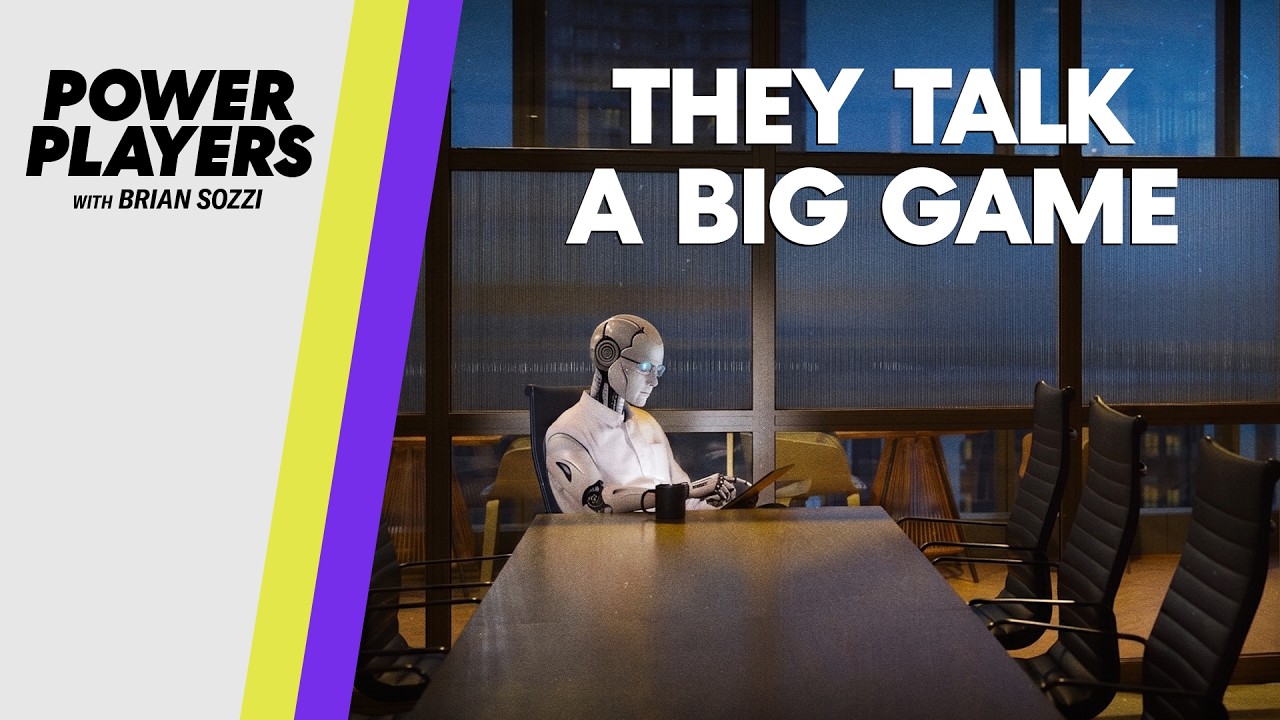
tools. Majority of CEOs I talk to have
never built an AI agent. And they talk a
big game like they're in these
boardrooms and
>> I think they're still stuck in the a
decade, you know, past. You know, they
they have at least a public company.
Earnings calls this way, they're going
to meet investors, they're going to do
they they still have not
adapted to this day and age. And they're
not going to.
>> And they might actually they might
actually show up pretty pretty well on
these shareholder calls and talk about
AI and talk about how they're using it,
but that's a speech that was written by
someone else.
>> That's correct.
>> And so if I'm presenting I speak in
board meetings, I speak with execs and
exec teams. If I sit down with an
executive team,
I might hear, "Oh, we're all in. We
can't wait." And then I pull them into
one-on-one meetings and I learn two
things very very quickly. Number one,
they have or three things I guess.
Number one, they have not yet caught up
to 2026 AI. And enterprises are always
going to have a little bit of a lag, so
that's to be, you know, expected. So
they're not yet at today's AI levels.
Number two is at least one person in
that excom on the leadership team, the
executive committee, is definitely not
using AI and probably a detractor and
doesn't want their department using it
and they think their whole department's
going to go away if they don't use it.
>> And the third is that it's probably
it's probably the case that the point
person or one of the point people,
again, assuming they're it's outside the
CTO role, but a non-technical executive,
I pull them aside and they go, "Friend
to friend, what the hell's an AI agent?"
Right? And these are brilliant business
minds that are running
companies that are making tens of
billions, a hundred billion plus
dollars,
and they are brilliant. They just are so
busy that they're looking for that
signal among noise. And so, one of the
things that I do as an advisor is I go,
"Let me summarize the last 5 months for
you and give you the three things that
you actually have to know. Let us build
this thing together so that you I can
watch you have that aha moment, and then
you can go back to leading in the way
that you need to lead."
So, I think a lot of CEOs, again,
they're not using the tools. If they
are, they're not using it at 2026
levels. And if they're even doing that,
then they haven't figured out how the
motes and competitive advantages have
completely flipped toward compounding
gains. Right? My AI system and your
future AI system, cuz obviously we're
going to get you to build one out as
well.
>> you.
>> Of course.
>> [laughter]
>> As they say, we'll take that offline.
We'll take that offline, yeah.
>> Okay. You're going to have an AI system,
I have mine, and the the glorious part
of this, the delicious amazing part as a
business techie when I look at this, is
watching that system improve without me
whipping the hand of every single AI
agent going, "Uh, can you make this 2%
better?" It is improving without me
having to constantly jump in. Much in
the way that a human workforce does as
well, that a CEO doesn't have to
constantly jump in, that VPs and
directors and senior managers take that
on.
If you can imagine running a very, very
large enterprise, and your challengers
have these systems that are not only
allowing them to do the work of a
thousand people with only 30,
but that system is improving every day
or every week,
you are at a greater disadvantage with
every single coming week.
Like, it's crazy to me that people have
401ks and they can't figure out the idea
of compounding gains with AI.
>> Yeah.
One more for you. Um, and I'm going to
lean into your expertise at really good
predictions. Five years from now,
how has this technology changed
corporate America?
>> Ooh, so many things. Um
So, I think one that is starting to
happen right now is the blurring of
lines of jobs.
And so, there was a recent OpenAI report
that is fascinating that I encourage
everyone to read, where OpenAI they
looked into 800,000 ChatGPT messages.
And remember, this is standard chats,
not Codex, whatever. But, they looked
into 800,000 messages. And they looked
at the work-related messages. And what
they found is across the board
that nearly half of people's messages,
so like if I'm in whatever sales, nearly
half of my messages were not related to
sales, and they were related to other
functions.
And if you look at this graph, designers
are using AI more for engineering than
they are for design. Finance, they're
using AI more for marketing than they
are for finance. HR, they're using AI
more for finance than they are for HR.
So, all of these lines are getting
blurred. I have a really hard time
imagining that anyone is going to want
to hire someone with as niche of a title
as like SEO specialist or something in 5
years. Because what you're actually
trying to do right now, what workforces
are trying to aim toward, is getting as
many A players as possible and giving
them wider scope and giving them these
growth-oriented tasks, right? Not just
productivity. And that is kind of what
the the work of the future looks like.
I have very strange predictions around
voice. I think voice AI is actually the
interface of the future. I have a hard
time picturing that open offices are
going to work when you have a lot of
people yapping to their AIs. I went into
the headquarters of WhisperFlow in San
Francisco. All of them have gooseneck
microphones, and they're all just
whispering into their
>> Really? So, no more keyboard?
>> It's a I mean, they still have one. Um
but
>> I would I could chuck my mouse across I
like I just I use VR still. And like I
just want to like pinch, I want to do
the Minority Report, like zoom in, zoom
out. That is all I want. And so I think
I think in 5 years I can imagine there
a lot more voice
on subways, in the street, at work,
which I think has negative consequences.
Like I don't want to walk around hearing
people yap to their AIs all day. Um and
so companies are going to have to think
about that. I think we'll have a good
early sense of what an AI-first device
looks like. Right? So OpenAI has shared
that they're going to show what the
device looks like in 2026 and start
selling it in 2027. So
>> It's going to be a pendant. It's going
to be a pendant.
>> We'll we'll see.
>> One of the two.
>> Um So I think we'll get some senses of
device, a lot happening in voice,
blurring of jobs. Um those are those are
some of the stronger predictions, but my
my louder prediction that I hope every
single person feels is that
if I'm a CEO or CFO or or a busy parent
of five and I'm just trying to survive
my work day,
the number one thing that I would be
paying attention to is the pace of
change. Right? How fast are these models
getting better? How fast are new models
getting rolled out? How fast are we able
to add on new features inside of these
AI tools, etc.
And I would be looking at that pace of
change. And I would be thinking, how can
I build a little bit more flexibility, a
little bit more adaptation into my work
day, into my career plans? And I would
be
assuming that the pace of change is
going to be faster than I think it is.
If you had If we had had this
conversation 10 years ago, I would have
said that we would have been here in
like 2040.
And so even all of my friends where we
worked in AI every single day,
I have not talked to a single person
whose timeline [clears throat] has had
to get longer. Right? Maybe in a like
weeks, months sort of trade-off, fine.
But in terms of AI capabilities on an
annual let's check in with each other
basis.
It is always faster.
Things like robots, hardware, I think
it's way far off.
We should expect that these systems are
going to be very reliable
at a quarter's worth of work that it
would have taken an entire team to
accomplish and that it'll be able to
complete all of that in hours.
>> Sorry team, I know we're going to go
over time, but I can't help myself. Did
you have your agent like research me
before you came on here?
>> No.
>> No, I was just curious. I'm just
curious. I had to I had to It's like you
just like
>> I had to assume and I think that human
you say that.
>> [laughter]
>> I feel as though you just took me to
clue school on all of this.
Let's go create that AI system stuff.
>> [laughter]
>> Good to see you Ali. I appreciate it.
>> Thank you for having me.
>> That's it for this episode of Power
Players. Appreciate all that love.
Interactive Summary
Ask follow-up questions or revisit key timestamps.
Allie K. Miller, CEO of Open Machine, discusses the current landscape and future of AI, emphasizing the power of building systems of autonomous AI agents. She explains how she manages a 'workforce' of 34 agents to automate complex tasks, increase productivity, and enable compounding gains in business. Miller also outlines how these technologies are blurring traditional job roles, driving the need for a shift in mindset regarding workforce training and adaptation. She concludes with predictions on the rapid pace of AI evolution, the shift toward voice as a primary interface, and the importance of leaders actively engaging with these tools to maintain competitiveness.
Suggested questions
4 ready-made promptsRecently Distilled
Videos recently processed by our community