HomeVideos

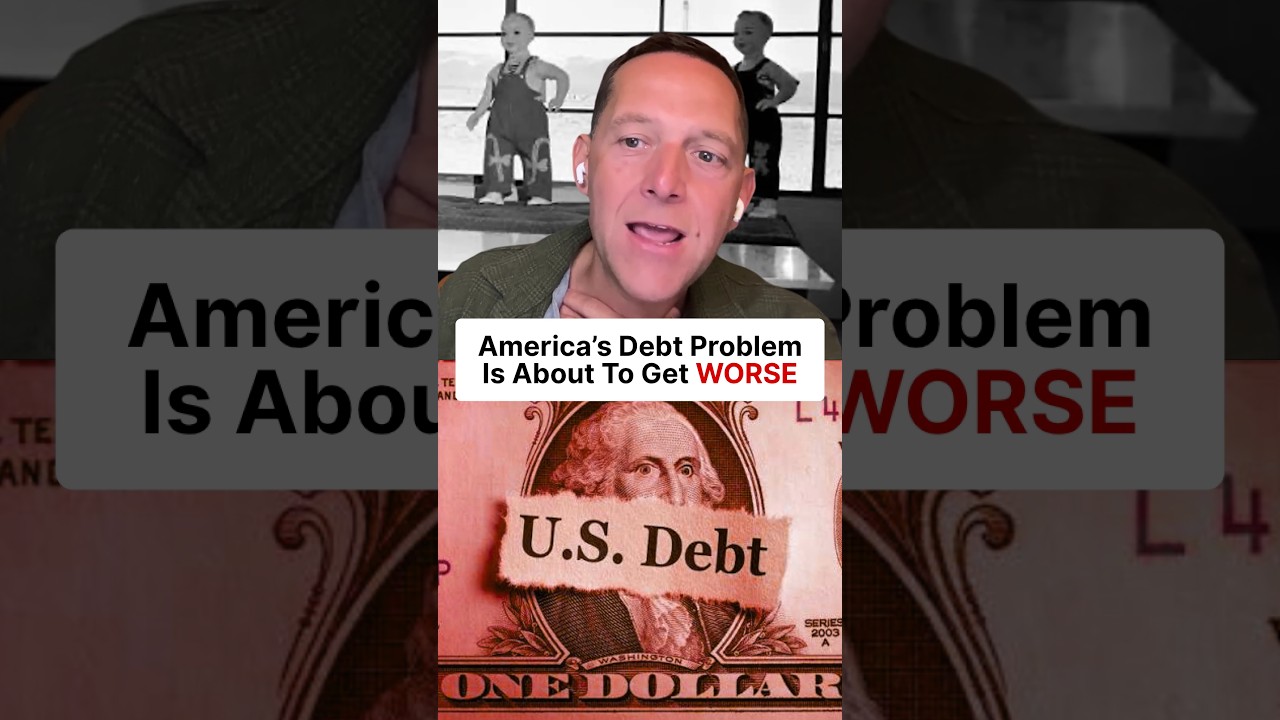
David Friedberg: America’s $40 Trillion Debt Problem Is About To Get Much Worse

Now Playing

David Friedberg: America’s $40 Trillion Debt Problem Is About To Get Much Worse

Transcript

58 segments

0:00

This federal government has a problem

0:01

because over the next 12 months, they

0:03

have to refinance $10 trillion of

0:05

dollars of debt. That debt is coming

0:07

due, those bonds are now due, they have

0:09

to pay the principal back to the bond

0:10

holders, and they got to go back to the

0:12

Treasury market and sell more Treasuries

0:15

to borrow more money to refinance. So,

0:17

the borrowing cost now is going to climb

0:18

up, and when that borrowing cost climbs

0:20

up, the federal government's burn goes

0:22

up, and the fiscal deficit goes up. So,

0:26

my theory and my argument on this is

0:28

there is no action that the Fed can take

0:30

that's actually going to have a

0:31

meaningful effect on the long end of the

0:33

curve. We have fundamental fiscal

0:35

spending problem with the federal

0:37

government right now. It is very

0:38

expensive now to borrow money if you're

0:42

the US federal government. And the

0:43

reason is persistent inflation, I would

0:46

argue because of excess government

0:47

spending on social programs and other

0:49

things, and the big problem at this

0:51

point is the federal government is

0:52

spending so much that if the federal

0:54

government were to cut spending

0:55

aggressively, the argument and the

0:57

concern is it would hit unemployment,

0:59

and it would cause a recession because

1:01

the federal government is such an

1:03

intricate part of the economy now.

1:04

That's the argument. But, it's causing

1:07

inflation, and it is causing deficit

1:10

spending. So, this year, the deficit

1:13

will be roughly, call it $2 trillion,

1:15

and as a result, the market is saying,

1:19

"We are worried about the US fiscal

1:20

solvency over the long run, or there's a

1:23

higher risk. As a result, we're going to

1:25

charge you a higher interest, 5.2% on

1:27

the 30-year." What does this mean for

1:28

the federal government? Well, today, the

1:30

federal government's average cost of

1:31

debt is 3.4%.

1:34

That's what we're paying on interest on

1:35

average on the $40 trillion of dollars

1:37

of debt that the federal government has

1:39

outstanding.

1:40

For every 1% change in the interest

1:43

rate, the US government has to pay 1.25%

1:47

of GDP

1:49

in excess interest each year.

1:51

1.25% of GDP

1:54

in interest each year for that 1% change

1:57

in the interest rate.

Interactive Summary

The video discusses the United States federal government's fiscal challenges, specifically focusing on the need to refinance $10 trillion in debt over the next year. It highlights how rising borrowing costs, driven by persistent inflation and high government spending, are increasing the fiscal deficit. The speaker argues that the government is in a difficult position where cutting spending could trigger a recession due to the economy's reliance on federal expenditures, while continued high spending contributes to inflation and debt solvency concerns.

Suggested questions

3 ready-made prompts