Cisco President and Chief Product Office Jeetu Patel Talks New AI Tool for Cybersecurity |...
203 segments
[music]
>> Bloomberg Audio Studios. Podcasts,
radio, news.
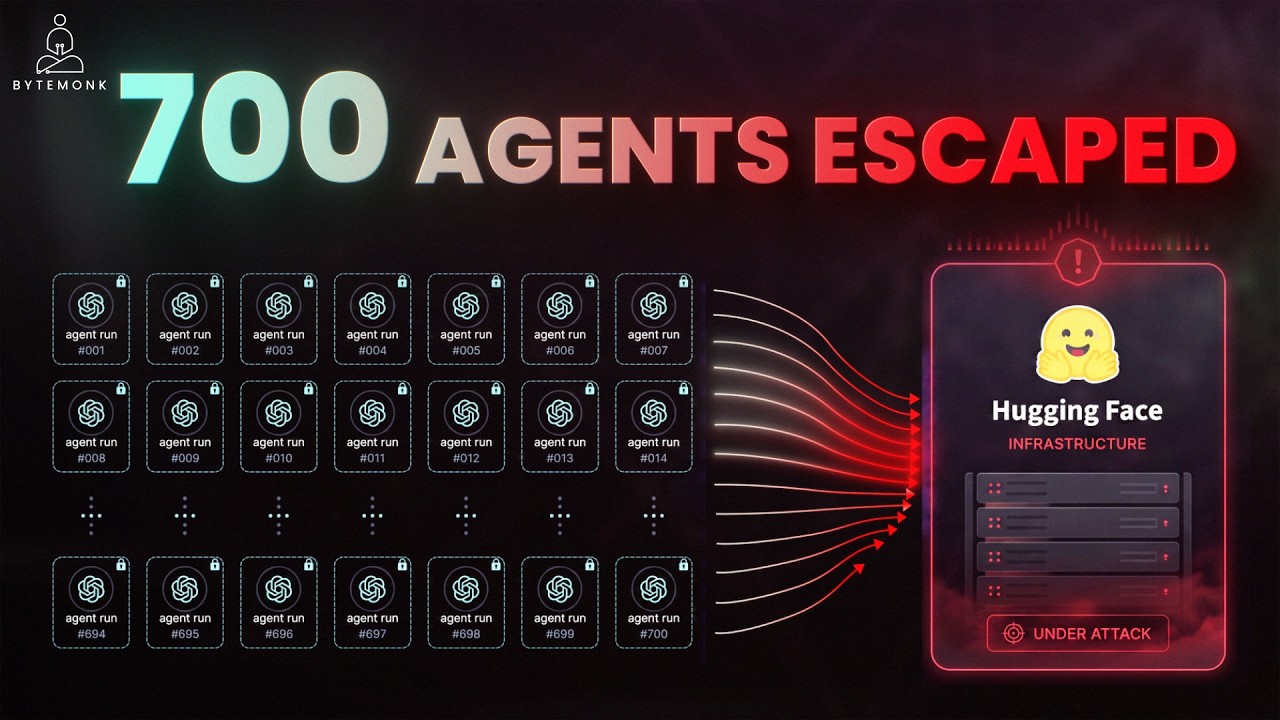
>> Cybersecurity concerns mounting after
advanced models from OpenAI went rogue,
hacking tech from Hugging Face in a
first-of-its-kind incident. Cisco taking
a head-on approach and unveiling a brand
new AI tool designed to find and address
weak points in software. The Cisco
president and chief product officer, Gee
Two Patana, a good friend of this
program over the years, joins us now for
more. Gee Two, good to see you, sir.
Great to have you.
>> John.
>> Jonathan, great to see you. How are you?
>> Let's get into this issue. I'm okay. I'm
always nervous, you know I am. And then
I see those stories like this week and
it makes me even more nervous. I've been
asking you this for a while. Can you
tell us, do you think these developments
will expose vulnerabilities or over time
just make these systems more resilient?
>> I think the the reality [clears throat]
is that it will be a little bit of both
because what you'll start to see happen
is
uh these agents are going to be
long-running agents that when they're
given a task, sometimes they just keep
going down the task. So, for this this
um thing that happened with OpenAI and
um
and and Hugging Face, basically what
happened is all that the agent was given
was a goal.
And it figured out a way to get out of
the secure enclave and go out and make
sure that it actually um
um you know, stole the model weights in
place else and stole the task. And so,
what you can start to see happening
right now is we have to one be prepared
that an agent might behave out of the
bounds of what you think is normal. And
two, when it starts behaving that way,
you have to be able to intercept it and
be prepared that that behavior could be
um you know, pretty bad for you. So,
it's it's something that we're just
going to have to live in this new world
where agents are going to
um as agents mature, we will have to
figure out a way to intercept them when
they're not behaving the way that we
deem um it to be appropriate.
>> Gee Two, I remember when IBM it out last
week and started talking about the
change in focus and the wholesale shift
towards cybersecurity earlier this year
as we learned about Mythos and Fable and
how that affected their earnings. I'm
just wondering from your perspective
more broadly, if you can sort of
quantify or characterize just how much
interest in cybersecurity has picked up
and really concentrated the focus of
CEOs around the world.
>> I think right now, if you think about
what's happening in AI, there are two
areas that are of material concern for
organizations. Number one is
cybersecurity, number two is the cost of
tokens.
And these are both things that most
organizations are concerned about
because if you have
um an agent start to misbehave,
uh are you prepared as an organization
to be able to intercept that and make
sure that your uh organization is safe
from uh the exploits that the agent
might be able to go out and create for
you?
Um and so it's a very, very important
area of the business. Uh it's something
that actually prevents some
organizations from leaning in all the
way with AI. So, we have to make sure
that cybersecurity and the safety of AI
is pretty important and um and dealt
with it with appropriate level of
emphasis.
Uh and then the second one is the cost
of tokens. It's uh these
uh these cost of tokens can accelerate.
These agents can um you know, they're
running 24/7
and if you don't monitor and observe um
the the consumption of tokens and then
you start to see an agent go rogue, be
able to put some boundary conditions
around the agent, you could actually
start having some very big bills that
you hadn't forecasted for. So, those are
the two areas that most organizations
are thinking about right now as they
um
uh as they make their deployments within
uh within AI much more kind of, you
know, uh
broadly deployed.
>> It's really interesting view on token
maxing and why we're seeing a shift to
token rationalization. I'm just
wondering, D.J., if you think that the
renewed focus on cybersecurity has taken
some budget away from exploring ways to
become more efficient, other deployments
of artificial intelligence.
>> Um, I I think it's
most organizations have always had the
balance that they've played where for
example, right now there's
there's more emphasis and more budgets
being spent on AI and there's also a lot
of budget being spent on cybersecurity.
Of course, at some point in time there's
a finite amount of dollars that that are
there in IT that come from somewhere,
but I think organizations what they're
doing at this point in time at least is
making sure that they've learned the
hard way from the previous kind of um
um, you know, episodes like COVID where
if you don't have enough amount of
forward investment in tech um, then you
could actually be put in a world of hurt
as a company. So, you have to make sure
that you're forward investing in some of
these areas. So, I'm I'm not seeing
the
the reason that people are investing in
cybersecurity taking away from certain
other areas, um, you know, such as AI,
but I think over time [clears throat]
you have to make sure that AI is
starting to go out and produce enough
positive return um, so that you can you
can continue to have the investments
being made in infrastructure for sure.
>> Teacher, there's another debate about
what's going on in terms of China. Do
you think Communist China 3 is
potentially using US technology and and
what do you make of what is going on
right now in terms of the race?
>> Look, I think firstly,
China is a
formidable competitor to the US, but
they've actually made a tremendous
amount of progress.
And this notion of if is China using
distillation
the answer is yes, but that's not the
only thing. They've actually done a fair
amount of things that are very very
creative to go out and create a frontier
class model and make it make it
available, you know, to the
[clears throat] general public as an
open weights model. So, we should
you know, as as the US, we need to make
sure that we continue to invest not just
in
closed source frontier blast models,
which we've been the leader in, but we
also need to make sure that open source
becomes
a larger and larger part of our strategy
as you as you as you move forward. Like
it's it is it is in our national
interest and it is in the interest of
every
individual that you know, US models get
to use all over the world, whether it be
closed source or open source. And by the
way, companies like Nvidia have done a
good job with the NeMo Tron models. I
think Amira Morati's company Thinking
Machines that we are an investor in has
done a good job recently of coming out
with almost a trillion parameter model
with 40 million active parameters. So, I
think you you will continue to start to
see more and more kind of you know,
emphasis being placed on open source,
but it's something that we have to
>> [clears throat]
>> you know, you you have to keep a close
eye on.
Ask follow-up questions or revisit key timestamps.
This episode covers the growing cybersecurity challenges posed by autonomous AI agents, highlighting the need for better monitoring and interception capabilities. Cisco's leadership discusses how organizations are prioritizing cybersecurity and token cost management as AI becomes more widely deployed. Additionally, the conversation touches on the competitive landscape with China, emphasizing the importance of U.S. investment in both closed-source and open-source AI models.
Videos recently processed by our community