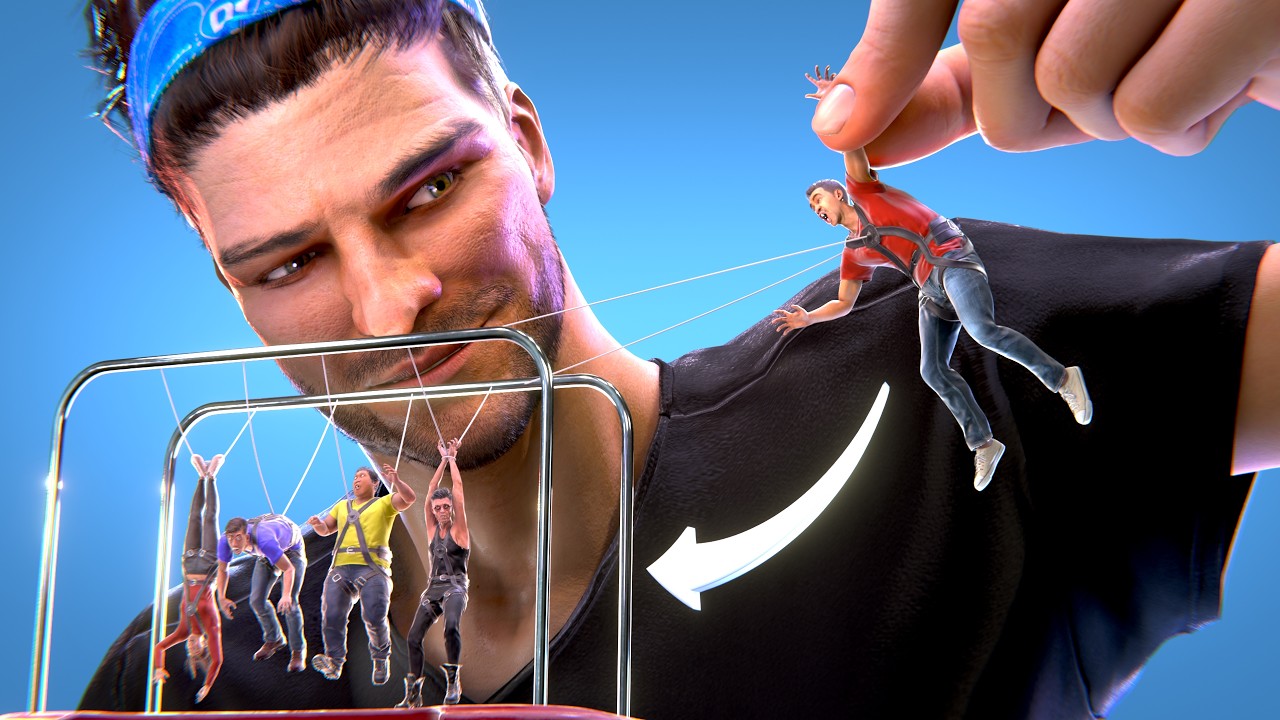
Your pull-ups are just bicep curls (sorry)
104 segments
Hang from the bar. Arms fully extended.
Feet off the ground. That position right
there. Most people skip it completely.
That's already your first mistake.
You've been switching grips for months.
Wide, narrow, neutral, maybe even that
weird hammer grip someone recommended.
Nothing works. Grip was never the
problem. until you fix all four things
breaking your pull-up. You're just
training the same mistake over and over
with more reps.
First one is the easiest to spot and the
hardest to admit. You're not doing a
full pull-up. A real pull-up starts from
a dead hang. Arms completely extended,
elbows locked, shoulders open, all the
way down. Most people start from
halfway, which means they're only ever
training half the muscle, half the
range, half the stimulus, half the
progress. Do that for 6 months and
wonder why you're stuck. Cut the range,
you cut the exercise. You're basically
doing a different movement and calling
it a pull-up. That doesn't count. Go all
the way down every rep.
This is the main reason your pull-ups
are secretly an arm exercise. Before
your arms bend, your shoulder blades
need to pull down away from your ears.
That movement loads the lats. That's
what tells your back it's time to work.
Skip it and your biceps and upper traps
take over. You end up shrugging your way
to the top of the bar, wondering why
your arms are cooked, but your back
feels absolutely nothing. One study had
subjects do pull-ups and then asked
where they felt it. most pointed to
their arms and upper shoulders, their
lats, the muscle the pull-up is
literally designed for, barely
registered.
Test it. Do a pull-up right now and pay
attention to where you feel it. If the
answer is mostly arms and the top of
your shoulders, yeah, that's the
problem. The fix is called a scapular
pull-up. Hang from the bar, arms
straight. Don't bend anything. Just pull
your shoulder blades down, then let them
rise back up. That's it. Looks like
almost nothing is happening, which is
exactly why nobody does it. 10 reps
before your regular sets. It teaches
your back to fire first. Arms come
after. That's the order.
Now, grip since that's why you clicked.
Wide grip feels harder, so everyone
assumes it's hitting the lats more.
Multiple EMG studies tested this. Lad
activation is basically the same across
grip widths. What actually changes is
how angry your shoulders get afterward.
You've been torturing your joints for
nothing. The real grip question has
nothing to do with wide versus narrow.
It's whether your elbows are tracking
properly through the movement. And that
comes down to shoulder position. Whether
your scapula are down before you pull,
which is beat two. Grip is a symptom.
You were solving the wrong thing. Use a
shoulder width overhand grip. That's it.
Stop thinking about it.
Last one. Two camps on this and people
will die on both hills. Straight body,
tucked pelvis, braced core, slight C
curve. Looks clean. Problem is, it fires
the front of your body, which works
against the back you're actually trying
to train. Arched back, chest up, slight
lean, spine fully extended. keeps your
posterior chain working the whole way
through. For lat and back development,
the arch wins. Some people say a rounded
spine is dangerous. They're thinking of
a loaded deadlift. During a pull-up,
your spine isn't under load. The arch is
fine. Cross your legs or don't. That one
genuinely doesn't matter much. What
matters is where your chest is pointing
at the top of the rep. Next time you're
at the bar, hang all the way down. Pull
your shoulder blades first. Forget about
grip. Arch your back. Five reps like
that will hit harder than 10 of whatever
you were doing before. Your pull-up
count is about to go banana. If you want
the full pull-up progression, we've got
a book. Pull-up progression. 300 plus
illustrations step by step. Link in the
description.
Ask follow-up questions or revisit key timestamps.
This video breaks down four critical technique adjustments to fix ineffective pull-up form, emphasizing the importance of full range of motion, scapular activation, proper grip width, and spinal positioning to ensure the back muscles are fully engaged.
Videos recently processed by our community