HomeVideos

SIGN YOUR MARRIAGE IS HEADING FOR DIVORCE

Now Playing

SIGN YOUR MARRIAGE IS HEADING FOR DIVORCE

Transcript

74 segments

0:00

Is there a biological divorce predictor

0:02

in terms of a specific way a couple's

0:03

cortisol syncs up or clashes that tells

0:06

you if their marriage is going to fail

0:07

before they realize it themselves?

0:08

>> I found that when couples had really

0:10

strongly linked levels of cortisol, they

0:14

reported lower marital satisfaction. And

0:16

you'd think like, okay, they've got more

0:18

similar hormones, that's probably a good

0:19

thing. We found the opposite in our lab.

0:22

And I think it's because you don't

0:24

actually want to be contagious to other

0:26

people's stress. When one person is

0:28

really stressed, it's helpful to have a

0:30

partner who can lay that, who can calm

0:32

you down.

0:33

>> This is interesting for me because I

0:34

think actually the reason why my

0:36

relationship works with my fiance

0:38

Melanie is because Mel is a little bit

0:40

more emotionally variant and I'm kind of

0:43

the like prefrontal cortex calming

0:45

board. That kind of brings us back down.

0:46

>> Yeah. Yeah.

0:47

>> Her emotional variance is super useful

0:49

because she's almost like a threat

0:50

detector

0:50

>> Right.

0:51

>> in every regard. If our relationship is

0:52

drifting a little bit or if we're

0:53

disconnected, she'll she'll know first.

0:55

However, sometimes that can mean some

0:58

things are harder to deal with.

0:59

>> Mhm.

1:00

>> And maybe she's more prone to worry

1:01

sometimes. She's expressed the gratitude

1:03

of me being able to like bring her back

1:05

to a place of calm. I've often felt that

1:07

that's kind of like my job. And I've

1:08

often thought that that our relationship

1:10

works because you do have two different

1:12

types of people.

1:13

>> It's interesting cuz you could think if

1:15

you were paired with somebody who was

1:17

super stable, life might feel boring. If

1:19

she was paired with somebody who was

1:21

really volatile, life might feel too

1:23

chaotic. So, we frequently are drawn to

1:26

people who complement something about

1:27

ourselves and who are sort of different

1:29

enough that it can sort of expand our

1:32

worldview. It's often the differences

1:35

that drive us together. They can

1:37

ultimately polarize us when things go

1:39

awry. So, you can imagine a future where

1:42

she's always the emotional one and

1:44

you're always the calm one and nobody

1:46

gets a chance to break out of that and

1:48

that becomes really entrenched in a way

1:49

that like pulls you apart. But you could

1:51

also imagine a future where you meet in

1:53

the middle.

1:53

>> Yeah.

1:54

>> Like you become more emotionally

1:55

attuned.

1:56

>> Yeah.

1:57

>> And she becomes calmer and more stable.

1:59

And that's sort of the ideal. You want

2:01

to be joining around those differences.

2:03

>> I would say that's definitely what's

2:04

happened.

2:05

>> So that's good. That's a good time for

2:06

your relationship. Time to have a kid.

Interactive Summary

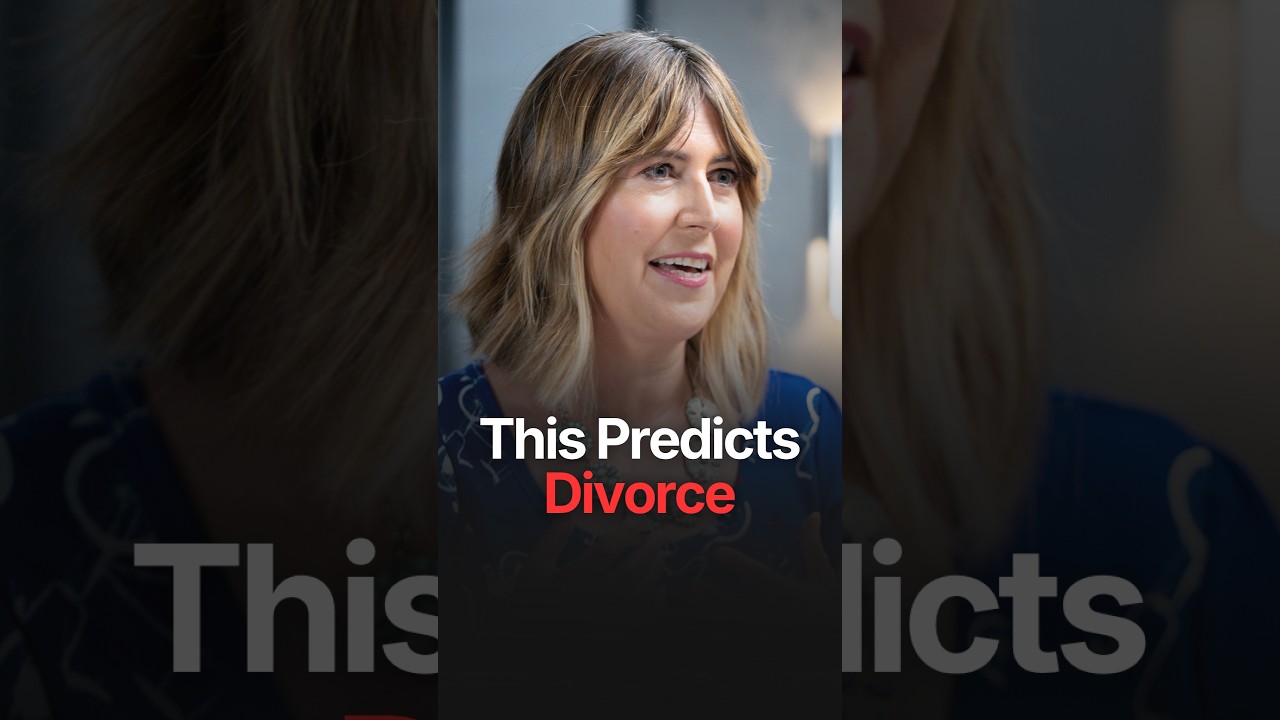
The video discusses the biological and psychological dynamics of relationships, specifically focusing on how cortisol levels influence marital satisfaction. It explores the idea that 'emotional contagion'—or having synced stress levels—can be detrimental, while complementary emotional regulation often strengthens a partnership. The discussion highlights the balance between having different emotional profiles and the importance of evolving together to meet in the middle.

Suggested questions

2 ready-made prompts