HomeVideos

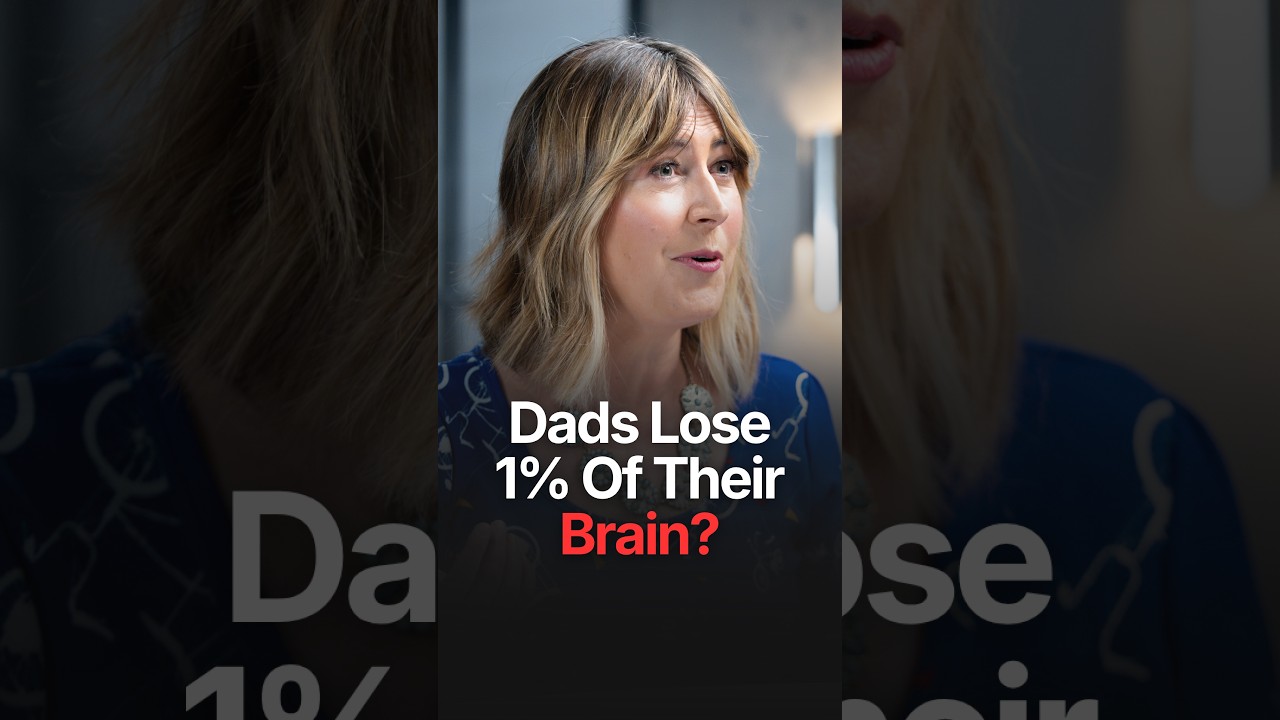
HAVING A CHILD CAN CAUSE YOUR BRAIN TO SHRINK?

Now Playing

HAVING A CHILD CAN CAUSE YOUR BRAIN TO SHRINK?

Transcript

52 segments

0:00

You've discovered something about the

0:01

brain that I think is quite surprising.

0:03

>> So, we found that in fathers, the brain

0:05

is actually shrinking, and I'll explain

0:07

why. But, also there are studies that

0:09

find that both men and women who report

0:11

having had more kids have markers of a

0:14

younger-looking brain age. And then

0:16

also, typically men, when they do the

0:18

show about a 25% drop in testosterone.

0:22

The next studies of single women have

0:24

found that, you know, if you show them a

0:26

series of body types, dad bod is the

0:28

most popular.

0:29

>> And that's proven by science. So, if I

0:31

go out and get a dad bod, you're telling

0:32

me that science says I'm going to be

0:33

more attractive.

0:33

>> Yeah, go for it.

0:34

>> See what my fiance says. The other thing

0:36

that's worth talking about [music] is

0:38

have you done any studies on that?

0:40

>> Yes, that is one of the most robust

0:42

findings in parenthood research. My lab

0:45

found actually that

0:46

>> Wow.

0:47

>> So, I've always been really interested

0:49

in families and becoming a parent is one

0:51

of the biggest [music] transformations

0:53

that you can experience. But, I'm

0:54

concerned about the declining birthrate,

0:56

and I think that we've managed to market

0:59

it as an undesirable choice.

1:01

>> According to the CDC and Pew research

1:03

data, the US total fertility rate just

1:05

hit an all-time recorded low.

1:07

>> Yeah, I mean, the transition to

1:08

parenthood can be really challenging.

1:10

You are sacrificing [music] yourself. It

1:12

can be very isolating. You're losing

1:13

your sleep. But, becoming a parent, you

1:15

are benefiting from this sense of

1:18

connection and purpose. You will

1:19

rediscover your priorities in a way that

1:21

will ultimately bring a lot of value.

1:23

>> So, if all goes well, next year I will

1:25

be a dad, and I would like you to give

1:27

me some advice on becoming a father

1:29

based on all the research that you have.

1:30

>> So, great fathers are made, not born.

1:32

There's a lot you can do. I'm going to

1:33

write it down. Love it. So, first

Interactive Summary

This discussion explores the scientific findings regarding the physiological and psychological changes experienced by new parents. It touches upon brain changes in fathers, the popularity of the 'dad bod,' and the broader societal trends concerning birth rates, ultimately emphasizing that becoming a parent, while challenging, offers significant purpose and connection.

Suggested questions

2 ready-made prompts