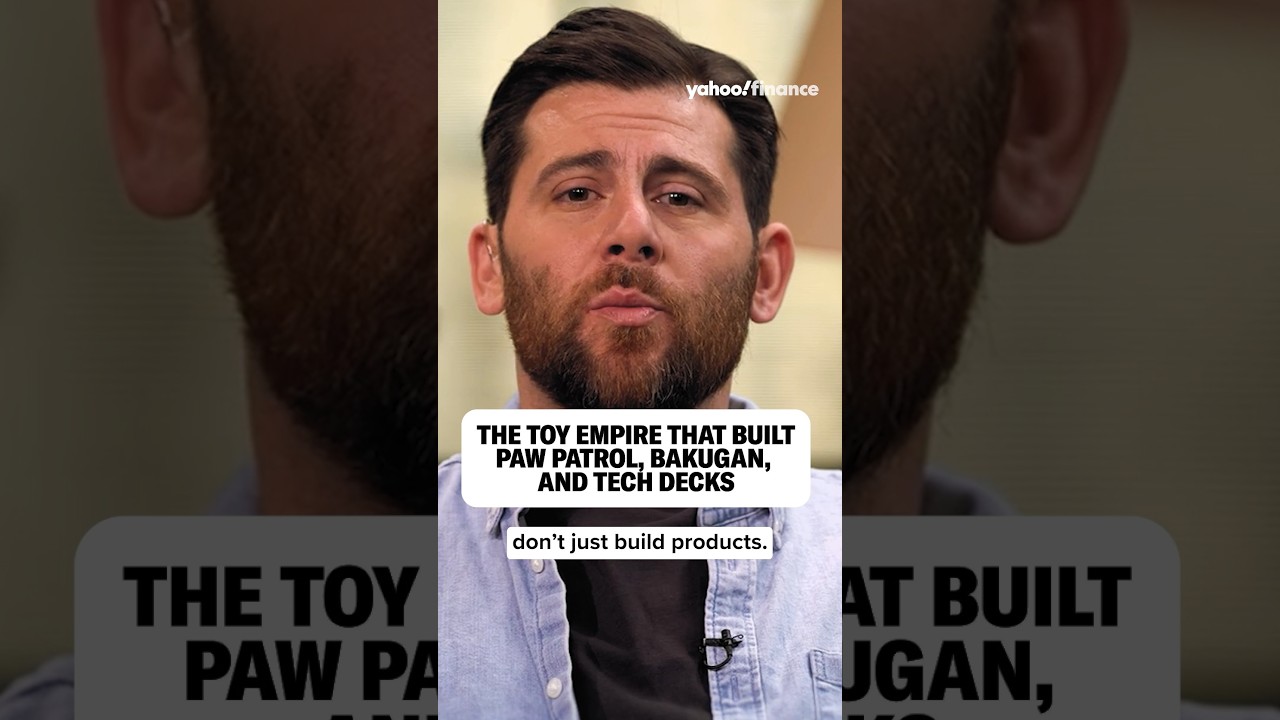
The $3B mistake that built Paw Patrol: Ronnen Harary
Now Playing
The $3B mistake that built Paw Patrol: Ronnen Harary
Transcript
1052 segments
What if I told you one of the greatest
media companies in the world didn't
start in Hollywood? It started with
three college friends. No billion-dollar
investors, no famous last names, just an
idea and the belief that imagination
could become a business. Today, my guest
has helped create some of the biggest
children's brands on Earth. Paw Patrol,
Bakugan, Airhogs, Tech Decks.
Collectively, they've entertained
hundreds of millions of kids around the
world. But this conversation isn't about
the toys. It's about building
intellectual property. It's about
creating brands that outlive trends. And
it's about why some entrepreneurs don't
just build products, they build worlds.
I'm Ian Schwarzman and this is Built
Different.
We're here with a very special guest,
Renan Harrari. Thanks, buddy. Thanks for
having me on.
>> Co-founder of Spin Master, umbrella of
incredible products, IP, toys, and
everything else that distracted me
through my childhood.
Okay, I have a real question for you.
>> Go for it.
>> You built something that's its own
world, right? And in order to create
some of these things, you have to
disappear into your own mind. And most
children with normal childhoods are
outside playing,
>> right?
>> So I'm asking is that and you don't have
to get into
>> No, I'm you know, I'm an open book. You
know, my family is actually were classic
immigrants. My family is originally
Bulgarian
>> and they were displaced in the Second
World War.
>> Okay.
>> And our family was there for
generations. Classic immigrants, they're
surviving, right? So I I grew up like as
a as a latch key kid, like a freerange
chicken. Definitely like the upgrading
in terms of like roof over your head,
you got food on the table. Uh but my
parents were classic entrepreneurs and
>> yeah, they were both entrepreneurs. My
dad had a Purden carpet gallery in
Toronto. My mom worked at the gallery.
We had dinner as a family every night
6:30 on time. Um and all the discussions
were about the business. So the benefit
was like I was you was Yeah. So, and
then the other thing that was very
impactful for me when I was a kid, I got
identified with a learning disability at
10 years old. So, I have disgraphia,
which makes it really hard for me to
write and express my thoughts and for my
thoughts to come out through my hands.
So, I was like the specialed kid and I
got extra time on my exams, but I grew
up with a lot of shame around the
learning disability and um but it was in
a sense it was a gift because I grinded
my way through school and it taught me
that basically everything's possible in
life if you stick with it. So, what made
you turn to creative at 23?
>> Listen, I was chomping at the bit to I
knew that I wanted to be an entrepreneur
at 10 years old. It was really a result
of the learn disability because I I I
knew intuitively from a young age that
that becoming a a doctor, a lawyer, or
an accountant was not going to be
possible for me.
>> Why do our parents they just want us to
be doctors and lawyers and like what is
that?
>> I don't know. Like I want to have fun.
And I I I remember when he said that to
me when I was out, I'm like, "Mom, I
want to work in music or entertainment
or something, right? I don't want to go
be a lawyer."
>> I didn't want to be a lawyer either. And
and uh that's why when I graduated, I
was like so super excited to start this
business. You know, I actually started a
business in university, okay,
>> with my business partner, Anton. It was
called Campus Faces. We take pictures of
kids during frost week, sell advertising
around the perimeter, print up 9,000
posters for free. And uh we graduated
with no debt, $10,000 in the bank. And
then
>> both of you guys paid your college
tuition selling advertising space.
>> Yeah, we did it for three years. We were
roing $100,000 at the end of third year.
>> Amazing.
>> But what 18 19 20 21 every year you were
just
>> Yeah.
>> making good money.
>> Yeah. Well, basically the craziest thing
is me and my business partner, we said
we'd never be those partners together,
so we had to be. And we were selling
fertilizer door to door for the first
two weeks after our first year at
university. Yeah. And we were like,
"This is really difficult. Better to
start a business." You didn't want to
work for anyone.
>> You know, I interviewed once in my life
and I did not get a job.
>> What What kind of jobs?
>> It was like a sales job. I did not get
it. Um my business partner Antony
interviewed at Niscoco. He didn't get a
job. And my other third partner, Ben,
interviewed seven rounds at Leo Bernett
did not get a job. So you guys, we we're
not employable.
>> You're not you're not keeping very
idiosyncratic human beings, very
eccentrics. I like that. Yeah, that's a
good thing. What
what drove you to create this universe?
I mean, I know it starts with toys,
right?
>> Actually, the first big moment was a
product called the Earth Buddies, which
a small little potato head. You put them
in water, it grows grass here.
>> Kind like kind of like the '90s version
of Chia.
>> '90s version of Chia.
>> Yeah.
>> So, Earth Buddy is your first success,
correct? That's the uh $1.5 million that
you made from that product that you then
take and reinvest into
>> double sticks.
>> Devil sticks were chaos.
>> What made you believe three college kids
could make a billion dollar business?
Did you really even think about Mattel
or any of those companies or you didn't
give a You were just creating.
>> First of all, we didn't we didn't think
like that.
>> What did you think? We were like, let's
go into business for ourselves and let's
see what happens. And then once we got
into the toy industry, we said, we're
going to be open to ideas from wherever
they come from around the world. We're
going to and we're going to grow this
company as big as we possibly can. We
put no restrictions on it. And that was
it. And so what we do is we sift through
thousands of ideas every single year and
then we allocate capital to, you know,
like 10, 15, and 20 of them.
>> You put like what the winners you
believe are going to be.
>> Exactly.
>> You're a curator. A toy curator.
>> Yeah. And so then we'll do the
marketing. We'll do the sales, we'll do
the product development, and we'll bring
it to market. But what I was going to
say to you is that we went one product
at a time, right? So we our big product
in in the '90s was the Airhogs. You know
that airplane, you pumped it up, flew
around, and then we had a string of
failures. Key Charm Cuties, Don't Free
Freddy, Tickle Secrets Baby. They all
flopped three flops in a row. But the
most amazing thing is that from the
failures came the successes. And you
don't get to the successes unless you
have the failures, right? And and so I'm
a huge believer in in you know all the
three of those products I just described
to you which we could not give away. You
know we have to mark them down, close
them out, clean the inventory out and
get on to the next thing led to future
successes. But I just wanted to just
back to your original question. It's
like it doesn't we didn't say we want to
be a billion dollar company, right? We
said we were going to grow the company
as big as we can and we took it step by
step and we constantly met ourselves
where we're at at that moment in time
where the company was in terms of its
size.
>> Okay. But I want to know what was the
biggest or most important no you gave or
received that led to the biggest yes.
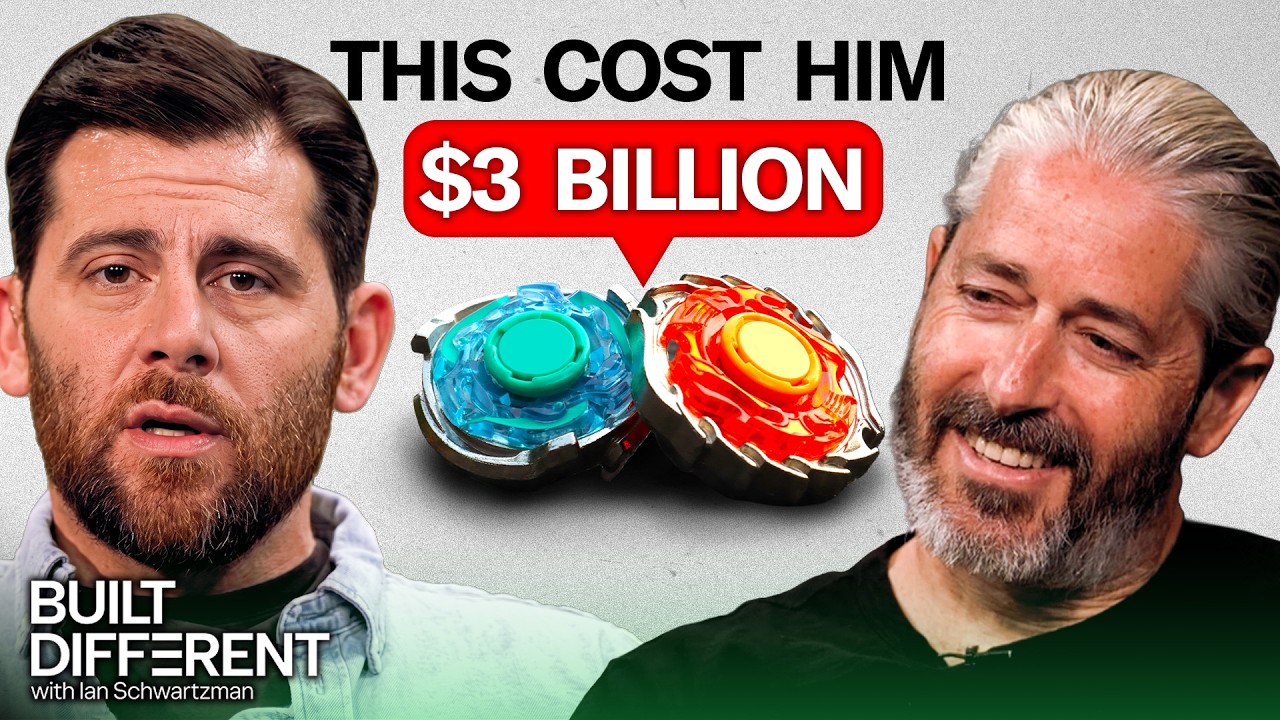
>> Great question. The biggest no I I gave
was when I went to Japan in 2001. Okay.
>> Okay. And I went to see Takara and they
showed me Beyblade. I don't know if you
remember Beyblade. I do. Okay.
>> So they showed me Beyblade and they said
do you want to distribute it for North
America? I said let me take it back
home. I went back home. I showed the
guys, the team, and everybody's like,
"Ah, Spinning Top, not so cool." Called
them up, said, "We're going to pass on
it." Okay. 6 months later, I go back to
Japan. I'm like curious. I'm like,
"Guys, what's happening with Beyblade?"
They're like, "Oh, it's going fantastic.
We're producing a TV show." Okay. And
I'm like, "Giest thing in the world."
I'm like I'm like, "Can we uh do you
think we can do it?" They're like, "No,
we just did a deal with Hasbro." I'm
like, "What do you mean?" I'm like, "You
didn't tell me about the TV show."
They're like, "It's gone." And that
moment, okay, Beyblade went on to be in
the last 25 years done $3 billion of
sales for Hasbro. It will continue and
do another $3 billion of sales for them
in the next 25 years because once you
have a perennial amazing toy, especially
a toy supported by a TV show, it just
goes and goes and goes and goes as long
as they support it.
>> And that moment for me, it it was like
imprinted in my body that pass. Okay?
And four years later, there was a
23-year-old kid that had an idea of
putting an action figure in a marble.
And he had all these pictures, just
drawings, and he showed it to Ben Durmer
and my partner Ben Barrett in our
company. And we were like, that's a
really innovative idea. And so we
licensed it from him. We developed it,
and the best we could do was like a
marble, and you opened it up and the
actual figure, you peeled them out. And
and I said to myself, this is not going
to this is good, but it's not great,
right?
>> So I went back to Japan. This is 2006.
And I went to Tommy. I said to them,
"Would you partner with us on this
product?" And they said, "No." Then we
went to Bandai and they they passed. And
then I went to Sega Toys and there was
Mr. Coco Bun there. He didn't speak us.
He didn't speak a stitch of English.
Nothing. Okay. And he said, "We'll
partner with you." Said, "Come back in 3
months." I go home, I come back in 3
months. Three months later, he his team
develops this whole pop open
transformation mechanism with a spring
with a magnet inside with cards that you
roll them onto with metal inside. Then
you flip the cards over and you battle
together. And I'm like, "This is
unbelievable." And then I said to him, I
said, "What do you think about doing a
TV show?"
>> And he said, "It's going to cost $12
million. Do you have six?" And then I
said to him, "Okay, now you got give me
three months. I'm going back and asking
the the thing."
>> Yeah. You went back to
>> I went back and we said, "Okay, we're in
for the six." and we created the show
and we ran it for four seasons. Um, it
did a billion dollars in sales over four
years. We took our company from $450
million in sales to a billion.
And if I didn't say no to Beyblade,
which was the wrong no, right? But in a
sense, maybe it was the right no, then
we wouldn't have gotten into producing
our own TV shows and that may never have
led to things like Paw Patrol in our
company. I think a lot of people rush
products out before there's like an
investment from an audience. And I feel
like you did it the opposite way. You
saw, oh, okay, a good toy can sell this,
but a good story could sell forever.
>> Correct.
>> Could sell forever. It be
reinterpolated. It could be reimagined.
It could be licensed. It's like music.
>> The the characters kids take into their
lives and they take them into their
personal lives.
>> They become influenced by them. They
become influenced and they become they
they they're aspirational to the
children and it's their wish fulfillment
and their imaginations get going, you
know. So the toys are much more play
oriented and they're all about the play
pattern, but the characters are much
more, you know, much more heady. Are you
just on a roller coaster that never
ended right now? You're But you're 55.
Hold on a second. You've achieved
something. It's not about the money, but
hasn't this like opened the runway for
you to create anything? Like isn't there
some sense of creative freedom that like
all right now I can create anything
without
>> I actually I actually feel I have more
sense of creative freedom before. I
actually think money is not related to
to creativity. You know my partner Ben
talks about he's like you know you go
you go in creative waves. I think it has
more to do with your own personal state
of mind where you're where you're at. Um
uh where you want to put your time and
energy into uh all that type of stuff.
What do you mean by it? Like
>> I just means it's like in the early days
we took a very simple product and we
brought that product to market.
>> Okay.
>> We were able to manufacture it in
Toronto.
>> We had the capital to bring it to
market. Then we did Devil Sticks. Okay.
It was an open market product. Same
thing. We had a factory. We leveraged
that. We had some relationships at
retail. Then we went on to bigger things
like Airhogs, which was a very complex
engineering type of product, right? Then
we opened up to all these inventors. It
wasn't like we said we're going to go
from Earth Buddies to producing Bakugan,
you know, Bakugan. So, it's like the
company had the resources and we had the
the relationships and and the desire to
bring different things to market at
different times.
>> Do you ever get
>> So that that's that's what I mean by
meeting yourself where you're at,
>> right? Like you you at each moment
you're at a different phase. You focused
on that product during that phase and
then you moved on to what?
>> Correct. Then you grew a body of
knowledge that gave you the ability to
do more if you're curious and you're
passionate.
>> So you IPOed,
>> correct?
>> Has that ever interfered with like how
you do business? I mean, I know the
upsides of IPOing.
What are some of the downsides of
including the public in something that
has always been your ideas and your
creations and your hands on it? I mean,
there's other people involved at that
point. And he's like, "No, no, I think I
think I I I personally think it's a
great benefit for us to be a public
company. There's full transparency as a
result of transparency. We've been able
to get some incredible licenses like
we're the master tour license for
Monster Jam which has been incredible
for our business. Um, a whole bunch of
Gabby's dollhouse with huge partners
with Universal do business with Disney.
People love transparency. before when we
were private company they couldn't see
the balance sheet and they were like you
know they didn't want to give us the
licenses um
>> because of what they didn't real they
didn't think you had the ability to move
consumership or move the needle or
>> no it was it was more about like do you
have the balance sheet to support if it
doesn't go right and pay us the
guarantees and all that type of stuff
and they they they also just want to see
like they want to they want to peek
inside the business of everyone does
yeah and That's like the most common
question I get now is like can you
explain how it works? My multimedia
business is totally independent. We've
been offered the craziest numbers 8 n
figure dates per year license our stuff
and
we're not doing it. I had a huge direct
to consumer model which I wanted to ask
you about. Yeah.
>> So you have this illustrious like three
decade plus run.
>> Did you ever umbrella all your
companies? I know licensing is a big
deal and same for us on the music and
content side, but is
uh did you ever explore the direct
consumer model with like a show such as
Paw Patrol like taking it away from all
the major networks instead of taking
carriage fees or license fees and saying
if you're a fan of Paw Patrol, go to
Patreon and pay $10 a month and you get
unlimited access to our entire catalog.
>> Yeah. You know what? We partnered with
Nickelodeon and Paramount. I knew about
Did that ever cross your mind?
>> Not so much.
>> Oh, D.
>> No. No. Not Not when it came to
television. We looked at D with consumer
products.
>> But again, like
>> we sell most of our stuff through
Walmart, Target, Amazon, and we like
that that type of model
>> because of what though. Because like
this is where you and I are different. I
want to understand the mentality. See, I
>> maybe maybe it's maybe it's because we
started earlier in like the 90 and
2000s, but that's what they do. You know
what we do is we tell stories. to create
innovative products. They create great
games.
>> Oh, you're saying that's what they do.
They sell products very well.
>> Correct.
>> You wanted to give their responsibility
so that you didn't have to take away
from what you're really great at.
>> Right. And also like like direct to
direct to consu direct to consumer the
economics are actually not that great.
It's actually much more efficient to go
through an Amazon or Walmart, Target
>> for products.
>> From products, yes.
>> Not for digital IP. I' I'd argue that
with you.
>> For digital IP, it's a different story.
>> That's what I want. That's what I want
to get into because I saw you did a
Nickelodeon deal for the US distribution
rights, but I was wondering what you did
for the rights to distribute all those
entities through the rest of the world.
>> Usually, we went through the through
Nickelodeon or Paramount and then we
gave them the the rights. But it depends
on it depends on the show. Some shows
we've actually done deals with with
Netflix and only in North America and
then we used uh other broadcasters in
Europe. It depends on the show that
we're actually bringing to market. But
we've never we've never actually done a
a show directly on YouTube, for example.
>> Why not?
>> Just not yet. Maybe in the future.
>> I would I would suggest
employs
of millions of First Can I explain
something?
>> Patreon's a direct consumer. Um,
basically look at it like a
transactional platform. It hosts video.
Yep.
>> Um, it has about 400,000 publishers and
creators on it. You sign up for a
membership, 5, 10, $25, $50, $100 a
month. You dictate and determine what
the audience member gets for giving that
subscription fee every month.
>> Mhm.
>> Um, and there is traditionally about a
9010 split in favor of the publisher.
So, it would be you. It's accessible
around the world. It's an app. It is in
the Apple Store. So you lose that 30% of
the Apple store fee, but you gain all
the data from your consumers address,
name, gender, age, location, um other
interests, things that normal platforms
don't usually provide you with. So in a
world where you've affected hundreds of
millions of people, I just find it odd
that someone in your company didn't say
we have to have YouTube for our
footprint. We have like I always look at
business like a funnel. Mhm.
>> At the top of the funnel, you have like
your curious
uh general bystanders that could be a
fan or may not be a fan, but you get
them in the funnel. You get them, oh, I
got them on Paw Patrol. They saw it with
their kids. You've messed you've helped
me. You've helped my life with my
one-year-old daughter,
>> right?
>> And she watches and it it it makes her
focus and not have a million things
going on. And it's a something great for
me, but
h why haven't you guys like I think
taken advantage of that part of a market
and in a good way. I don't mean it in a
in a monetary way only. I mean like
there's room for growth with your
franchises that you haven't explored at
all yet. And you've went the traditional
route, but in 2026,
I only question it because the
publishers and creators have all the
control. You're the you're the bargain.
Like there's no way they could overlever
you. You have the audience, you have the
product, you have the IP.
>> Yep.
>> Why not go straight to
>> Yeah. Well, first of all, thank you for
I didn't even know about Patreon, so
that's a good thing I've learned about
here. Okay.
>> And uh um I'm going to ask the team
about it.
>> You should definitely going to ask the
team.
>> I didn't I didn't rush.
>> You know what I'm talking about. Not the
money. I'm talking about the Oh my god,
you did it again,
>> right? Like I got p like in my in the
small ready.
>> No, but I the rush is the rush. The
rush. I got published in New York Times.
I'm on TV. All right. My my shit's
making right
>> tens of millions of dollars a year. I I
want to race. I want to speed. I want to
feel not literally. I want to feel it. I
want to feel something. But
>> right, but you've been there. I I'm just
learning it. I want to know what do I
do?
I think it's I think first asking the
questions is is the first step of course
>> right and then it figure out modalities
that work for you that brings you
balance in your life like for me it was
yoga meditation
um running but having a morning routine
where I had time for myself where I can
like really center myself and it was for
me right no one else and I only started
doing that like in in my 40s um and then
eventually when I hit 50. I was like,
"Okay, I got to get off the treadmill
for a while because I actually I didn't
do enough self-awareness stuff
beforehand."
>> I I'm scared of that right now,
honestly. Like, I'm I'm watching myself
in real time going, "This is all great.
It's exciting, but then I'm like, am I
not spending enough time with my
daughter? Am I am I not focusing on the
important parts of life that fulfill my
soul?" Right? Like I can tell you I feel
the greatest when I create something for
a moment and then I get all the love and
attention that I didn't get when I was
young and I feel good and then something
goes away when I go to sleep at night
cuz I and you don't have anyone,
>> right?
>> And so I want to know like have you been
in that position and go went like wow I
have everything but what I really want
even though you've done all this cool
stuff. Yeah, for sure. Listen, it only
gives you so much. It only gives you so
much.
>> So, have you had that night? Those
nights?
>> Had the mornings.
>> The morning staring at the ceiling.
>> No, I actually sleep really well. Except
for last night, I didn't sleep so well.
No, I would just say that that one has
to be careful because being a workaholic
is the most
uh recognized, not recognized, but it's
the most um it's the addiction.
>> Yeah.
>> That gets the most accolades. That's the
most accepted.
>> That's what I meant earlier.
>> But it's But it's an addiction like
everything else.
>> Are you an addict? Because I am.
>> I was I was till I was 50.
>> But for work or other things? Cuz I'm an
addict.
>> I was a I was a workaholic.
>> I'm a drug addict. I'm an addict though.
I have
>> I was a work I was a workaholic till 50.
>> Give me an example of your day just just
roughly. I just want to understand what
that means.
>> You wake up in the morning, you go to
the office, you work all day. Okay. You
come home tired and
>> no energy for anyone else. No energy for
anybody else. And then you repeat the
next day and then you go on business
trips and travel around the world and
you got the highs and you got the lows
and the highs and the low items. It's no
private virus, no commercial. You like
commercial? I geez. You ever try to
ground it? You know, it's like
>> I'm not me. I have OCD and like
obsessive com. I'm like
when something great happens, I want to
feel it. I want to feel now. It's not
monetarily. I just want to feel all the
highest of it. like we're at, oh, we
have a closing a $10 million deal. They
want to fly out private, go take the
final meet, get on the plane, smoke
stroke a cigarette on the private jet,
feel myself, but really I go home
lonely, you know, for the most part. Not
I'm just saying in general, like it's a
weird feeling. It's like fulfilling and
empty.
It's a weird duality that I'm figuring
out because I have a daughter and I need
her to look at me and go, "Oh my god, my
dad love like loves me more than he
loves his work." That's my biggest thing
right now. How do you balance it? What?
So what did you do at 50 that stopped
you? They're like, "Oh my god, I got to
stop this."
>> I stepped down from being co of the
company and then I took a sabatical for
a year and a half.
>> Where did you go?
>> I went Oh, I I had a great time. I went
to Africa.
>> My god.
>> Yeah. I spent two months in South Africa
driving around. Then I bought a 110
Defender and I drove from Cape Town all
the way to Nairobi.
>> Well, you're from South Africa, right?
So that was like a home.
>> Yeah. So that was home. But the but it
was always a dream line to go from from
uh from Cape to Cairo. It's a magical
trip,
>> right? And I'll tell you this much the
greatest thing is like people ask me
like how was the trip and stuff like
that and I was like you know what the
greatest thing about the trip was the
fact that I did it.
>> The fact that I did something I'd always
wanted to do.
>> You actually followed through
>> and I actually followed through and I
did it and I did it for myself and it
was like 5 months for me and then I
wrote a book and I
>> Congratulations.
>> It's called No Experience Necessary: Why
Betting on Yourself in Your 20s is the
best decision you'll ever make. go get
and uh I'd wanted to I'd wanted to write
it for 10 years. Okay. And finally I
gave myself the space and time to be
able to do it.
>> Was that that was because you were
stepping down and you're like now I have
the time
>> cuz I had a year and a half sole.
>> Yeah. So I didn't do any work for a year
and a half. The only thing I did was I
showed up to my board meetings and now
with even reflection I would have not
even shown up for the board meetings. I
would have just like
>> was that like your ego was that like
like guilt strong for the board? What
was it?
>> Partially. Yeah, it's a great catch. It
was partially guilt.
>> I I always feel guilty.
>> It was partially guilt and partially
like not wanting to give up 100%
control.
>> Control is a big thing for me. Everyone
in my I have like I only have like for
my specific government I have like 10
people working for me,
>> right? But there I always have like
these chief of operations that want to
come in and they work for like the
biggest and I'm like oh just
>> so can I can I tell you there's one
product we made it's called Hatchimals.
Okay.
>> Okay. Do you remember little character
he pecks out of the egg? Okay. You love
him to life.
>> It was our biggest product.
>> Love them.
>> You love them for life. Yeah. That was
the thing. You love you love them to
life. Okay. And know the craziest thing
is like you he feels the heat on your
hand and he starts to peck and he turns
360°. Okay. Inside the shell. You can
put him down for a year and nothing will
he he won't peck anymore and then you
pick him up, you continue to love him.
Eventually he'll hatch out of the egg.
It's one of the most I personally
believe one of the most exceptionally
brilliant innovative products our
company's ever produced. And it's the
thing that I'm most proud about. And you
know why I'm the most proud about it? Do
you have to take care of it?
>> No. Why?
>> Because I personally had nothing to do
with that product.
I personally from a creative
perspective, from an engineering
perspective, from a sales from every
perspective, I had nothing to do with
it. And that's the that to me is the
highest testament of success when you
can build a company, okay, that can
replicate putting out amazing products
and stories without you involved.
>> I'm figuring that out. I'm behind you.
I'm I want
>> Well, you're Yeah. You're 16 years
behind. So like that's that is when when
you're when you're able to bring your 10
people and bring those people on and
they're able to like really contribute
in meaningful ways and you're able to
let go and then you have a success like
that where stuff gets created as a
result of the culture that you built.
Right.
>> Right. It's your culture. You built it
in the company. You're attract you're
attracted. You retained uh you brought
these people along. I write in my book,
I really think that business should be
referred to more as an art, okay, than
but most people don't look at art.
>> I People always ask me, what do you do?
I'm an artist. I I But it's the art of
business,
>> right? Most people think of business as
like profit loss and it's like
>> mundane number. Yeah. All that type of
stuff. But it's really it's about
bringing human beings together to create
something that never existed before. And
you know, you're like a conductor.
You're a conductor of really talented
people. So, and basically where I'm
where I'm pushing you now is that
eventually when you if you can give up
the control and see the people that you
brought into your business
>> create and do things like you would do
them or sometimes slightly different
>> their way
>> their way but you're getting amazing
reaction from from whoever you're
servicing and bring it out to the world.
What a beautiful thing cuz then you
brought other people along.
>> It means they learn turns it into their
own version of it and it works.
>> Correct. And that's the that's to me is
the highest test. Success. Cool. That's
the highest bar you can get when you're
not involved.
>> Correct.
>> I was going to say what what what was
the one thing in your operation that you
wish you would have nicked in the butt
and said this isn't part of our culture
at all. Period. But you let it float on
too long. That that in hindsight now
you're like damn if if I would have
nipped that in the butt, things would
have been a little different. Could have
been better. Could have been stronger.
we could have been operating more
efficiently.
Do you know I I uh
I think in the in the later years a
little bit too much politics seeped into
the business. And
>> what is politics in your world? Like
give me an example. So I know I know
what politics
>> politics are are are when there's too
many unsaids in a business and there's
too many side conversations and
>> like chefs in the kitchen.
>> Traditional politic people having side
conversations about issues without
having all the people in the room
hearing the same conversation. That's
toxic, right? And I would I would say
that for a good the majority of our
company's uh history,
>> that did not happen because me and my
business partners, we met every week,
>> okay? We surfaced issues. My business
partners were able to say sorry when
there was an issue came up, which is
like the I think it's the secret to all
success is the ability to apologize.
>> Low ego. Um you know, we'd mind melt
together and whenever the best idea came
up, uh we'd run with that idea. No one.
We have a very unique thing in our
business which you'll appreciate in the
creative industry. It's like it's never
one person that brings the success. It's
really the collaboration of many many
people. And we don't have a blame
culture, right? We don't blame anybody
for a a failure. On the negative side,
we don't celebrate the successes as
probably as much as we should have. If I
have to look back, I'd probably say we
should have celebrated more successes,
but we were just like moving so quickly
all the time.
>> That that's what I was talking about
before. Like I sometimes people have to
remind me to like revel in a moment.
They're like stop the are you
chasing? Like you have everything that I
want to have. Do you enjoy anything? And
I'm like sometimes I have to pinch
myself. That's why I'm asking you. But
I'm like you've seen it all.
>> How hard is it to just stop in the
moment and just like oh my god I I did
it.
>> If you ask me it's very difficult and
looking back I I wish I enjoyed the
journey even more than I did.
>> Me too, man. I' I'm starting to now.
Okay. Spin Master is three decades plus.
Um, you've seen all the business to be
done with multimedia, intellectual
property,
toys, goods, merchandising.
Where are you today, three plus decades
into running this business? Being that
you stepped down,
how does your business and workflow in
2026 look like?
>> Oh, it's really different. I mean, I
probably spent 30% of my time in the
business, 30% of my time on my
foundation, and then the rest of my time
on my own personal life,
>> okay,
>> versus 95% on the business, right? Back
in the day. Um, and what I'm focused on
now is on chairman of the board and
trying to be the best chairman for the
company and we have a great new CEO.
It's actually a New Yorker.
>> Yeah.
>> Classic New Yorker.
>> Real New Yorker.
>> A real New Yorker. Okay. Grew up in
Brooklyn, lived in the city. She will
never leave the city. Her name's
Christina Miller. She's fantastic. She
was at Cartoon Network and uh running
sports at Turner.
>> Cool.
>> Um, amazing woman. And uh you know we're
in the process right now of seeing if
the company can actually live beyond the
founders right and the founders are not
going away but can you actually get a
company similar to what we were talking
about before but can a company actually
live and breathe and have this
incredible culture
>> that without us being there all the
time. And this is the hardest this this
I would say is the
hardest thing that I've undertaken and
my business partner that we've
undertaken in the 32 years
>> is this symbolically like passing the
torch.
>> Yeah, it's a little bit but when you
look at companies like you know look at
the iconic companies that have been
around for 100 years like Nintendo or
Sony or IBM all these great companies
like how do they do it right?
>> They're forever companies.
>> The forever how do you become a forever
company? It's It's the hardest thing
ever.
>> It is. Well, it's I I
>> And I love that I love that term.
>> What? It's the hardest.
>> No, the forever company.
>> It's a forever.
>> It's a great term.
>> There's only a few of them.
>> Yeah, there's not many.
>> If you teleported in a hundred years,
Spin Master and all your brands would
still live on.
>> It's a great question. It's a great
question. I don't know.
What brand under Spin Master do you
think will survive
>> forever?
>> It's a great question. I I I'm not I'm
not going to answer the question because
I don't want to I don't want to jinx
anything.
>> Oh, come on.
>> No, no, 100%. But I will You're
superstitious like that.
>> A little bit.
>> A little bit. A little bit. A little
bit. I don't want
>> But do you have in your head?
>> I do have a thought. Yes.
>> You're Are you sure? Don't answer me
what it is. Are you sure about it?
>> I have a thought in my head. Yes.
>> Wow. And I also would say I would also
say that the the company would continue
to replicate and bring beautiful things
out into the world. You feel like you
got the right people to do that. We have
a good core. Awesome. Good core. I love
that. I'm I'm going to learn a lot from
you. I'm uh I'm going to keep reading on
what you
designed and created. You represent so
much of what I wanted this show to be
like people that are built different.
you ran a toy company and multimedia
company independently
um like vigorously without letting the
common obstacles tear you down. You
started in college with no money. I
respect that. I did the same.
Um I relate to you in so many ways with
the obsessive work behavior with the
chasing the the next thing the trying to
figure out what is balanced and what is
unhealthy. I struggle with so many
things you do. I I you know um I can
relate to you and I don't know you but I
can relate to you and and I hope I leave
things behind that are just as special
and forever companies like you've built.
>> Um but I wanted to thank you for coming
on the show.
>> Before you leave I have something for
your special.
>> Okay.
>> Okay.
>> Now I said my show I was going to do
something Wow
>> for my guest that Wow. that Nolan Dave
did. So, one of my new companies is uh
called Center Cut Cards. And I do this
for a bunch of big hip-hop artists. I
own like rock band acts instead of just
normal merchandise.
>> That's so beautiful.
>> Do a collector card. So, I made you a
one of two.
>> Wow.
>> And you got you got my favorite picture.
This is me in 2018 with all the sketches
of the Paw Patrol.
>> That's your favorite picture?
>> Yeah. Me over my desk, my round table.
>> So, look uh this is an art piece, right?
So it it says you are on my show built
different. Um it's a first edition. It's
already rated but look at the back. I
want you to actually wow what I did.
Thanks buddy.
Hers so much for coming out.
Interactive Summary
Ask follow-up questions or revisit key timestamps.
This episode of 'Built Different' features Ian Schwarzman interviewing Ronnen Harary, the co-founder of Spin Master. The conversation explores Harary's journey from an entrepreneurial child to building a multi-billion dollar toy and intellectual property company. They discuss the importance of building 'forever' brands, overcoming personal challenges like a learning disability, the necessity of failure in the creative process, and the struggle to find balance while being a workaholic. Harary shares insights into the evolution of Spin Master, the role of his transition from CEO to chairman, and the challenge of establishing a company culture that thrives independently of its founders.
Suggested questions
4 ready-made promptsRecently Distilled
Videos recently processed by our community