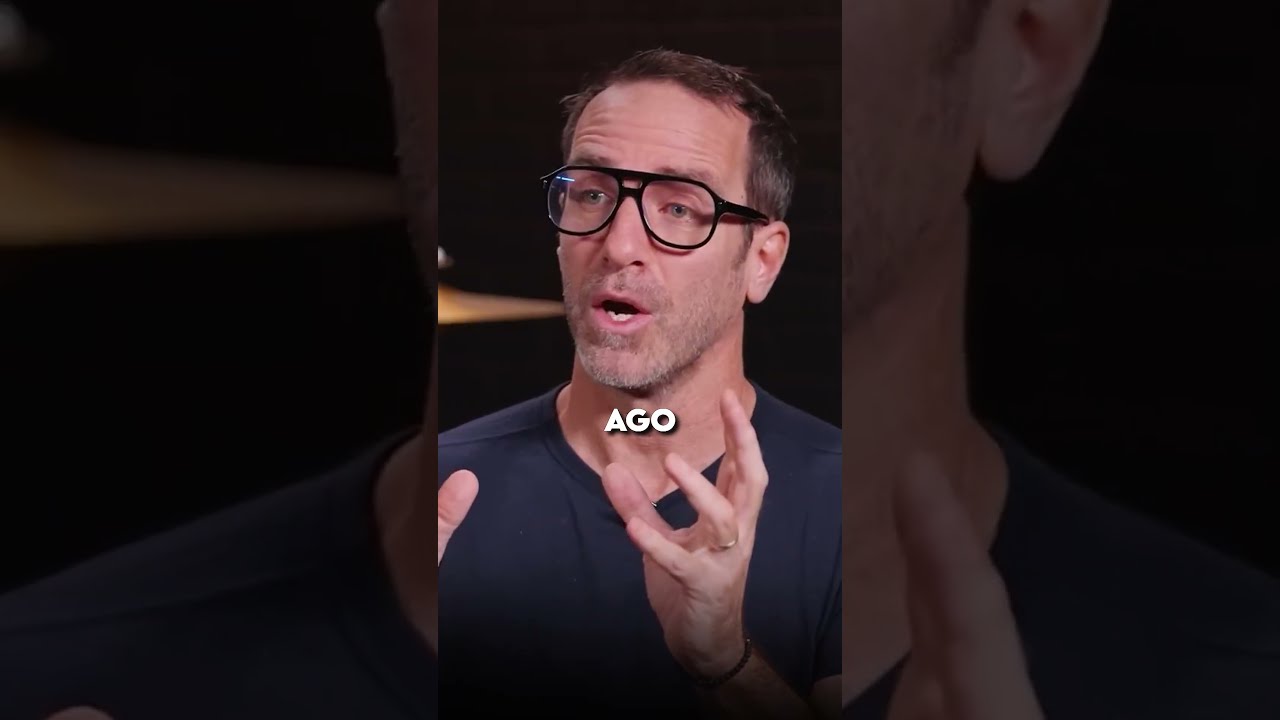
Become a monster: owning your darkness
Now Playing
Become a monster: owning your darkness
Transcript
220 segments
I'm Dr. Orion Taban and this is Psych
Hacks Better Living Through Psychology
and the topic of today's short talk is
become a monster.
So, this is an episode on personal
development as it pertains to embracing
the shadow. I'll begin by asking a
question. Have you ever had a nightmare
in which you were being chased or
attacked by some sort of monstrous
creature? Most likely the answer is yes.
Almost all of us have had this
experience or something akin to it at
some point in our lives. Maybe the
nightmare was so intense that it caused
you to wake up, your heart pounding in a
cold sweat. At this point, if you're
like most people, you probably thought
to yourself, "Wow, that was absolutely
terrifying. I had this dream and this
monster almost ate me."
Sounds natural enough, doesn't it? But
[snorts] the interesting thing about
this interpretation is that nearly
everyone identifies themselves with the
potential victim in the dream. Almost
certainly because this is the character
that they most obviously resemble. But
the truth is that in such a dream, the
dreamer isn't just the potential victim.
The dreamer is every single character.
How could it be otherwise? After all,
the dream takes place entirely within
the consciousness of the dreamer. So,
who else could these characters be? In
such a dream, you are yourself, yes, but
you are also the monster. You are the
recipient of fear and you are also the
cause of it. You are the unwilling
victim and you are also the violent
perpetrator. And if there are other
characters in the dream, you are them as
well. You are your father and your lover
and your third grade teacher and the
NPCs that observe the whole ordeal.
Again, how could it be otherwise? This
entire drama is unfolding in your mind.
Now, one way to approach this
realization is to consider these various
characters as representing psychological
archetypes that reside inside of you.
The you in your dream is likely your
self-concept. That's easy enough. But
your father could be your patriarch
archetype, which symbolizes all within
you that yearns to build and create and
maintain. Your third grade teacher could
be your high priestess archetype, which
symbolizes all within you that strives
to understand and to convey that
understanding to others. Even the NPCs
could potentially represent the
indifference of objective reality as you
construe it in your own subjectivity.
And finally, and most relevant to our
present discussion, the monster could
represent the beast inside of you, your
primal nature, your propensity to rage,
your capacity for violence, your
participation in chaos and destruction.
Trust me, whether you like it or not,
all of these qualities reside within
you. You're a human and you come
equipped with the capacity to experience
all that humanity in all its horror and
glory has to offer. The potential for
every human action, from the most vile
to the most noble, lives inside of you.
Now, most people are terrified of these
aspects of their own humanity. They run
away from them which ironically is
exactly what happens in nightmares like
the one I described earlier. They do not
want to come into direct emotional
contact with these aspects of themselves
and they are concerned about what the
presence of these aspects means with
respect to their perceived goodness and
respectability.
As a result, most people suppress,
repress, and deny these aspects of
themselves. As a consequence, they can
believe that these darker tendencies
have absolutely nothing to do with them.
Consciously, at least, they are them and
the monster is something else out there.
But that's not the truth. The truth is
that they are both themselves and the
monster. And in my experience, people
tend to experience dreams like this to
the extent that they haven't
acknowledged and integrated these other
aspects of their personality.
Introducing my innovative first novel,
Starry Night. Step into the [music]
world of painter Vincent Van Gogh.
Genius, sinner, prophet, madman. [music]
Relive the final 10 weeks of his life in
this breathtaking tale of art, love,
loss, and [music] meaning, and challenge
what you think you know about life and
relationships. Once you see through
Vincent's eyes, the world will never
look the same again. Starry Night. Order
your copy today. The links are in the
description.
This is the crux of shadow work. It is
the process by which one's deep and
complex humanity is explored, accepted,
and ultimately integrated into one's
conscious sense of self. When people
don't do this work, that is, as long as
certain parts of themselves remain
unagnowledged and disavowed, then they
will project these inner qualities onto
the outside world and respond in kind.
And let me say this in no uncertain
terms. Failing to accept your own
capacity for monstrosity perpetuates
evil.
This is because until you acknowledge
and integrate the monster within, you
will likely move through the world with
a dangerous belief system. to wit.
Almost every act of evil throughout
history, from small instances of
interpersonal evil to huge multinational
massacres, has been instigated by people
who convince themselves that the evil is
out there and that they, as agents of
good, are justified to use whatever
means necessary to ensure that evil is
vanquished,
lurking in every human heart. at least
as a potentiality and frankly speaking
often as much more are impulses to
violence, envy, destruction, cruelty,
and more. And if that is true, then the
best place for all of these impulses to
exist is in plain sight. When these
impulses are disavowed, they have the
habit of reappearing in the guise of
others like the monster in your dreams.
As previously discussed, this
contributes to the most common form of
psychopathy that exists on this planet,
namely responding to the projections of
your mind as if they inherit.
Like most people are psychotic in the
sense that they are actually reacting to
themselves as opposed to responding to
objective reality. However, this
particular form of psychosis is so
prevalent that we functionally
normalized it as a society.
So why bother? Well, as you embrace your
own monstrousness, you'll come to find
that you have much less to fear. Fear as
a psychossematic emotion has entirely to
do with the concepts that are activated
in your mind. What actually happens in
objective reality on some level has
nothing to do with you. It's just
molecules corroing around. But the
extent to which you fear any of those
molecules has to do with your perception
of that reality. When what you fear is
perceived to lie outside of you, it's
much harder to conquer because
ultimately what is arousing that fear is
always a mental construct. It's you.
Like in the dream, it's just a different
part of you. On the other hand, when
what you fear is understood to lie
within you, it's something that you can
kind of get a handle on because it's now
acknowledged to be within your domain of
control. This isn't easy, mind you, but
at least it is now possible given your
efforts. This is how you get a grip on
your darkness and your propensity toward
evil, which paradoxically makes the
world less horrific than it otherwise
would be. What do you think? Does this
fit with your own experience? Let me
know in the comments below. And please
send this episode to someone who you
think might benefit from its message. I
know you know someone who's interested
in shadow work because it's word of
mouth referrals like this that really
help to make the channel grow. other
value propositions. Anyone who wants to
join my free weekly newsletter for which
I write original content or book a paid
one-on-one consultation with yours truly
can do so through my website. There's
also my best-selling book, The Value of
Others, in which I explore my economic
model of relationships and my private
member community, The Captain's
Quarters, where, among other things, I
host live bimonthly group consultation
calls.
A lot of great value in all of these
resources. Check them out if you are so
inclined. The links to everything are in
the description below. As always, I
appreciate your support and thank you
for listening.
Interactive Summary
Ask follow-up questions or revisit key timestamps.
Dr. Orion Taban discusses the psychological concept of "embracing the shadow," using the common nightmare of being chased by a monster as an analogy. He explains that in such dreams, the monster, like all characters, represents an aspect of the dreamer's own consciousness—specifically, primal nature, rage, and the capacity for violence. Many people suppress these darker qualities, projecting them outward, which the speaker argues contributes to evil and a form of normalized psychosis. The video advocates for "shadow work," a process of acknowledging and integrating these internal "monstrous" aspects, leading to reduced fear and greater personal control over one's own potential for darkness.
Suggested questions
8 ready-made promptsRecently Distilled
Videos recently processed by our community