HomeVideos

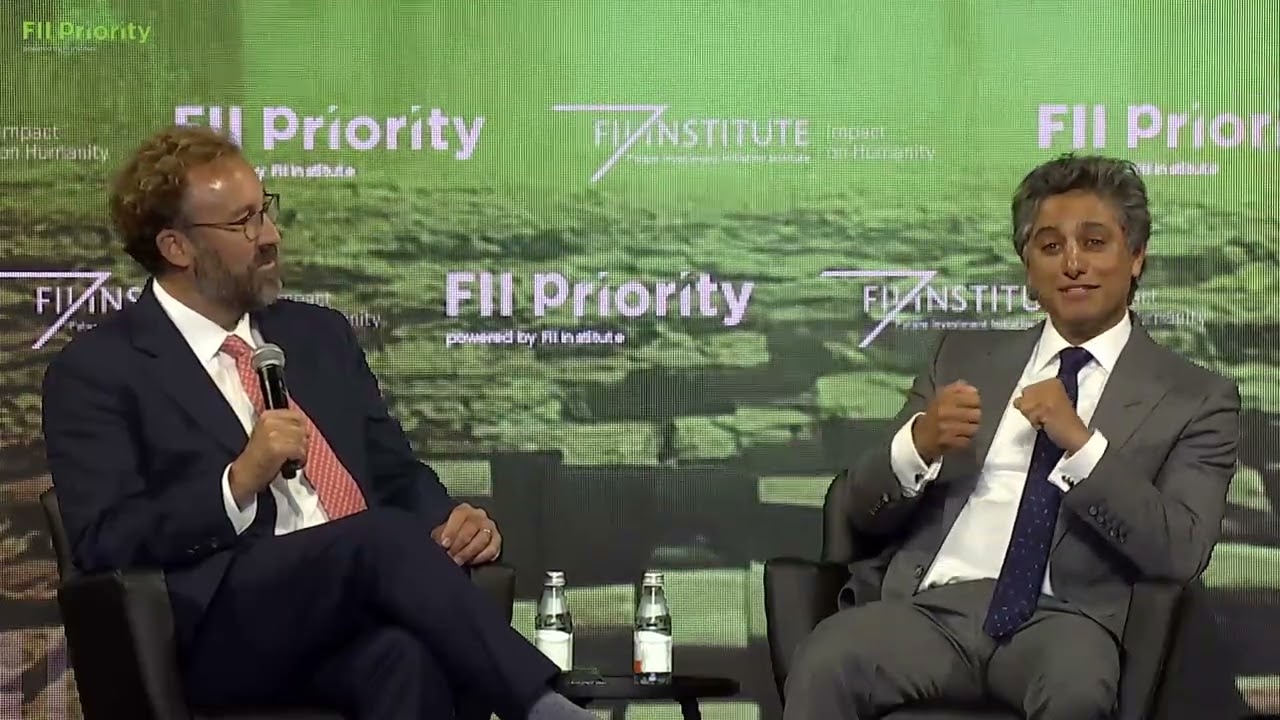
'50-50 Chance' Of A US-Iran Deal Says RUSI Chief

Now Playing

'50-50 Chance' Of A US-Iran Deal Says RUSI Chief

Transcript

95 segments

0:00

Do you think that the United States has just lost the war in Iran?

0:04

I don't think they've lost the ball, but they're certainly being pulled in a lot

0:07

of different directions. President Trump really wants a deal

0:10

ahead of the midterm elections. He wants the economy in a solid

0:13

position. He doesn't want to see inflation

0:15

increase when voters go to the polls. Uh, but there are other actors here.

0:19

There's the Republicans in the Congress. There is Israel, which has made very

0:23

clear that it's unhappy with the contours of these deal and wants, uh,

0:28

Lebanon and the ability to continue to strike Hezbollah in Lebanon, to continue

0:32

to be part of that agreement as well, rather than off the table.

0:36

So, uh, I don't think they've lost the ball, but there.

0:38

But he's certainly being pulled in different directions by different

0:41

stakeholders in this in this negotiation.

0:44

Rachel, I wonder how close you think the US really is to a deal here,

0:49

particularly on reopening the Strait of Hormuz.

0:52

We've heard positive language over the weekend.

0:55

President Trump yesterday saying that negotiations were proceeding nicely,

1:00

that perhaps contrasting to the picture we see this morning.

1:04

Iran obviously has a degree of leverage here, with the Strait of Hormuz perhaps

1:08

beginning to affect markets that closure.

1:10

Are we close to a deal or could Iran be holding out here?

1:14

Well, this war is not over. And we've seen this back and forth

1:17

before, where there are very positive pronouncements by the president and his

1:20

team that a deal is imminent, that a deal is close.

1:23

Only to find out that the two parties were quite far apart.

1:26

So I do not think we are close to a deal.

1:29

I was it's probably about 5,050% in either direction whether the deal will

1:35

be closed in some form or fashion, or whether strikes will continue to put

1:40

more pressure on Iran to come to the table in terms of safe passage.

1:44

I mean, this is what investors are focused on, um, whether oil can get

1:49

through the Strait of Hormuz. I mean, some are concerned that if that

1:52

doesn't happen within the next few days or weeks, that that's going to cause

1:55

global recession. Others reject that idea.

1:57

How close are we to that being feasible? And, you know, in the past we've heard

2:02

this idea of safe passage being facilitated by European countries and

2:07

others. How realistic is any of that?

2:10

Even if this conflict is resolved tomorrow and the street reopens.

2:14

There are thousands of ships waiting to pass through it.

2:17

There are refineries that have been hit. So global oil production and that flow

2:22

and that that balance that we're used to is not going to be restored overnight.

2:25

In terms of the ability to guarantee safe passage, that's something even the

2:30

United States Navy has not been able to achieve.

2:33

There have been small numbers of ships passing through, either because the

2:36

Iranians have allowed it, or because the United States has provided sufficient

2:40

authorities. But I don't see a will or an appetite on

2:43

behalf of the big shipping companies or insurance companies to go back to

2:47

allowing ships through at the pace and frequency, um, that we had before,

2:52

simply because they're not comfortable about the credibility of the deal and

2:55

that that ability to, um, to, to provide for safe passage.

3:00

And that's a dangerous precedent, not just in the Strait of Hormuz, but across

3:04

the globe, if we've got a country like Iran that is trying to charge tolls,

3:08

that is trying to mine the strait and create doubts around what what aspects

3:13

or parts of the strait are safe or not at any given time in terms of the world

3:19

as you see it now coming into this role now at Russi, what is your view about

3:25

the level of danger that we are in? I mean, there is talk in Ukraine, for

3:30

example, that, uh, Russia is running out of steam even though we've been at war.

3:35

You know, the Ukrainians have been at war for years now.

3:39

What is the state of of global security now and how much more elevated is that

3:44

with the Trump White House, with some worried that Cuba may be next?

3:48

Well, it's very easy to to say that, you know, the world's a dangerous place.

3:52

It's never been more dangerous. But I do think we are in a period of

3:56

unique disruption, coupled with the fact that nobody in particular is in charge.

4:01

We have a lot of actors, uh, who are trying to exert their influence.

4:04

And it's not just the big ones like the United States or China or the European

4:09

Union. Asymmetric actors like Iran have power.

4:13

They have leverage. They can complicate things for those

4:16

larger nations. And so I think for the foreseeable

4:19

future, we will see, um, you know, varying coalitions of nations coming

4:23

together to try to resolve issues. We will see a breakdown and have already

4:28

seen a breakdown in what people refer to as the rules based international order

4:31

and different countries trying to rewrite that.

4:34

And of course, you know, for for market watchers, that means volatility, which

4:38

offers both chaos and opportunity. Okay.

4:41

Chaos and opportunity. How does the UK fit into that?

4:45

Um, Bloomberg Radio spent a lot of time focused on defence spending in Britain.

4:49

It is not a conversation that has really been aired.

4:53

You know, there is an understanding that the UK needs to spend more, but where

4:57

that money comes from has not been answered.

5:00

Do you have any hope that any of the candidates who may take over from Keir

5:04

Starmer as Prime Minister actually have a better answer.

5:07

The UK is a really important piece of responding to this global chaos.

5:12

Whether I'm in Norway, in the High North, or at a NATO meeting, or I'm in

5:17

the Indo-Pacific talking to the Japanese or the South Koreans, or in the Middle

5:21

East, uh, having conversations with some of the Gulf countries.

5:24

They see the United Kingdom as a valuable and essential partner, and they

5:28

are really looking for the United Kingdom to help them diversify their

5:32

defence, security, political and economic relationships.

5:35

So we need a strong UK that does have a strong economy, growth and defence

5:39

spending. I don't think we're there yet.

5:41

Um, I you know, I hesitate to criticize any one politician.

5:45

Uh, but if we just look at the numbers, uh, if you've got a defence strategy

5:49

that says NATO first and you can barely meet that NATO target of 3.5% on core

5:55

defence spending, that's a problem at some point to your allies and partners

6:00

around the world are going to question your credibility and your ability to

6:04

come to their aid, uh, in a difficult situation.

Interactive Summary

This video explores the complex geopolitical landscape surrounding the potential deal with Iran, the impact of instability in the Strait of Hormuz on global markets, and the broader shifts in international security. The discussion highlights that while diplomatic efforts are ongoing, significant challenges remain due to the actions of various international stakeholders, the breakdown of the traditional rules-based order, and the urgent need for countries like the UK to strengthen their defense and economic capabilities to navigate this period of global disruption.
Suggested questions

3 ready-made prompts