Uri Gellar, James Randi and a ChatGPT Thought Experiment
139 segments
So when I was a kid, there was this guy called
Uri Geller. He claimed to be a psychic. He was
a big deal. He was on the John Carson show...
Johnny Carson... So like, imagine a show like Jimmy
Fallon
and Jimmy Kimmel and Colbert's audiences all
roll up into one. Uri was, of course, a fraud
because psychic powers aren't a thing, but he
fooled the CIA, professors, scientists,
parapsychologists, physicists, et cetera, et cetera.
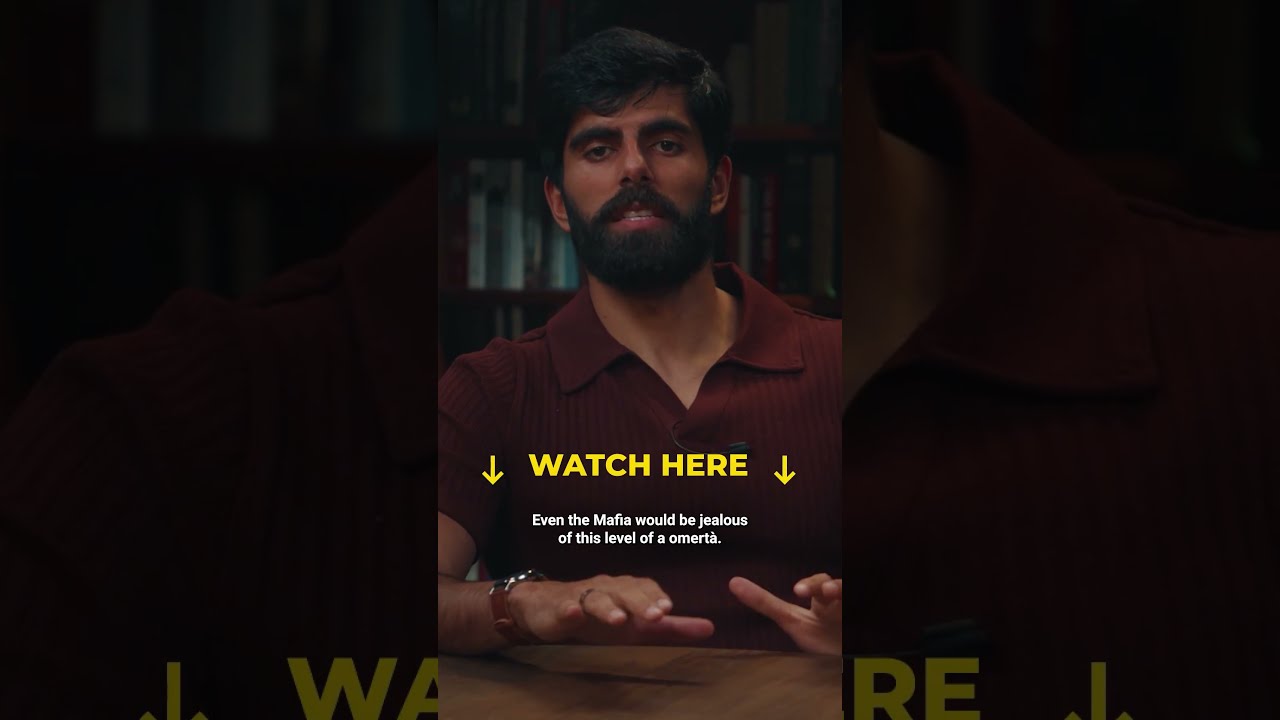
He was exposed by a guy named James Randi,
who wrote this video's featured book. Randi
wasn't a scientist. He was a stage magician.
Turns out that the secret to spotting a fraud
isn't asking the experts in the field in
question.
It's asking someone he knows how to reproduce
the result. So let's do a thought experiment
about ChatGPT. So imagine for a moment that
you wanted to build an online service that mimics
what ChatGPT does. For now, just worry about
the text part. Let's not worry about Dall-E or
Sora
or any of that stuff, but we want to do it
without using any neural networks or anything
that people
might normally consider to be AI. This has to
remain a thought experiment for reasons I'll
talk
about later, but let's go through it together.
It'll be an interesting exercise. So you want
to
build a conventional internet software startup
and you've got a handful of years to get a
product to
market. You don't have to care about revenue
and you have, I'm just going to pick a number
out of
the air, say $63 billion, $920 million of
investment money to spend on it. Do you think
that could be
done? Because I do. And I think there's a
decent chance there'd be enough money left over
to feed
all of the hungry people in the US for a decent
fraction of a year. So you start off by
building a
giant index of the web and, what the hell, while
you're at it throw in a few terabytes of pirated
books and journals. Now, we're not talking
about training a model or anything like that.
This is
straightforward text indexing the way Google
used to work back before they killed it. Now
you take
the query text, we're not going to call these
prompts although there would be a lot of
similarity.
And you use the standard text search algorithms
to find the top N similar matches. Might be
100
might be 1000, who knows. We would run experiment
later to see what number gives us the best
results.
Then we take the text that matched and we dump
it into some series of algorithms to extract
the
text, break it up in its parts of speech, find
permutations of it, move words around, replace
words
with synonyms, et cetera, and then decide what
word we ought to output next. There's a lot of
prior
art we could pull from. The act of outputting
similar text goes back at least to Eliza in the
1960s,
then there was a chatbot made by a few people
for a few thousand dollars. It supposedly
succeeded
in passing a Turing test in a competition in
2014. Siri reportedly cost Apple 200
million dollars
and we've got, what, 300 times that much money?
IBM supposedly spent four billion dollars on
its
Jeopardy winning Watson bot. And that wasn't
just to compete on the show. That also includes
all the
money they spent trying and failing to cure
cancer with it after it won Jeopardy. We have
16 times
more money than that. And unlike Watson or Siri
or the Turing test bot, we don't have to care
if it
answers the questions correctly. We'll just
stick a disclaimer at the bottom of the output
page that
says the bot hallucinates and the user is
responsible for verifying everything. How close
do you think
we could get to what ChatGPT could do? It's
hard to say because it could never ever happen,
both because no one would spend that much money
making a chatbot without being convinced that
it
might magically become an equivalent of a PhD
in every subject. And because we get sued into
homelessness by all of the people whose content
we were plagiarizing because we wouldn't have
the
defense of claiming that we "grew" it instead of
building it, and we can't be held responsible
because
no one can understand how it works. But I've
done a lot of data searching projects. And
given that
amount of money, I don't have a difficult time
believing we could get there. And I bet we
could
make it even easier by taking what has been
learned about the attention mechanism since the
2017
"attention is all you need" paper. And then retrofitting
that knowledge back onto non-neural
network vector encoding techniques like latent
semantic analysis or hyperspace analogs to
language.
And what would make it easiest of all is that
the hardest part of any such project,
making sure the answer is correct, no longer
applies, because we can just stick our fingers
in our ears and chant "It's just a hallucination!!!"
over and over anytime somebody complains.
At the very least, I think it'll be much more
technically possible that ChatGPT being PhD
level
smart in every subject. Just something to think
about. Thanks for watching. Let's be careful
out there.
Ask follow-up questions or revisit key timestamps.
The video discusses the skepticism surrounding modern AI by drawing a parallel to Uri Geller, a fraud who claimed to be psychic but was exposed by a magician rather than a scientist. The speaker proposes a thought experiment: building a service identical to ChatGPT using traditional search indexing and natural language processing techniques instead of neural networks. With a massive budget of $63 billion, he argues that such a system could be built by simply indexing the web and using a 'hallucination' disclaimer to avoid the responsibility of being correct, suggesting that the perceived 'intelligence' of AI might just be sophisticated text reproduction.
Videos recently processed by our community