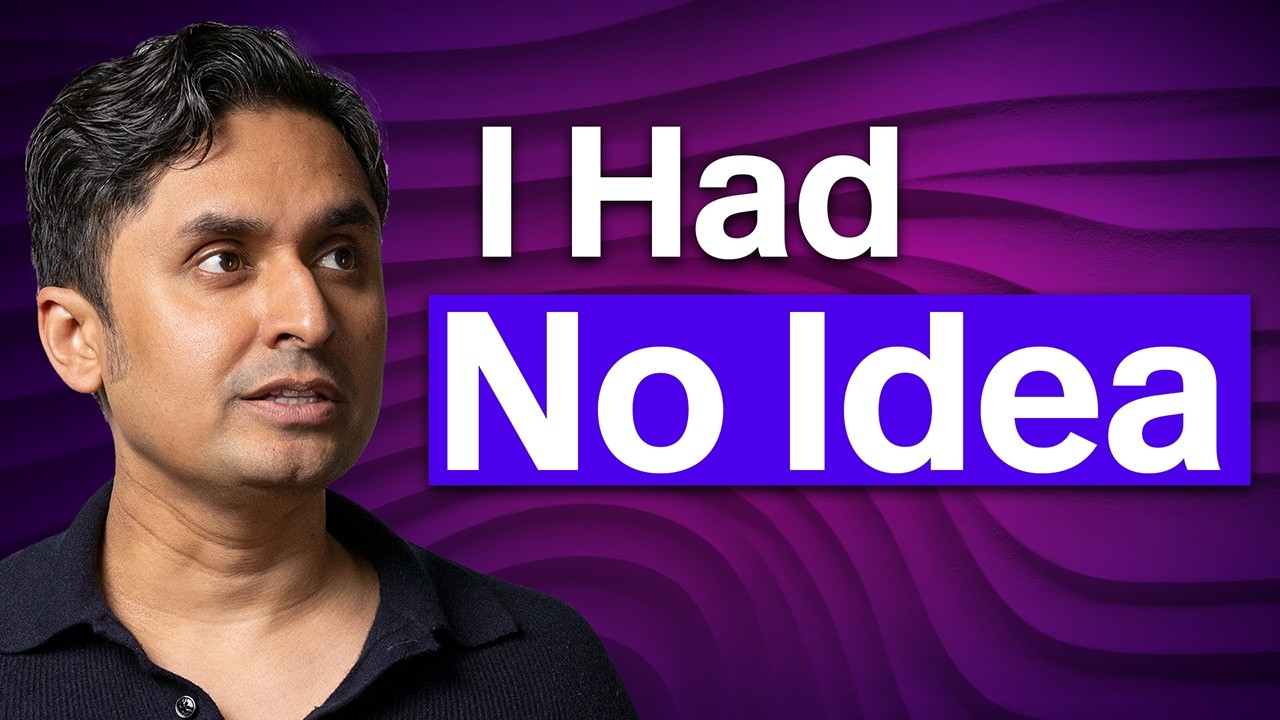
How to Future-Proof Your Brain from Dementia — Dr. Tommy Wood
Now Playing
How to Future-Proof Your Brain from Dementia — Dr. Tommy Wood
Transcript
3241 segments
Well, 45 to 70% of dementia is
preventable through lifestyle. Is that a
defensible statement?
>> 45%
comes from the most recent edition of
the Lancet Commission report on dementia
prevention looking at different risk
factors that have a consistent
relationship with dementia risk. And
there are other studies like there was
one big study done from the UK bio bank
data by professor Yintaiu that estimated
that up to 72% of dementias were
preventable. Tommy, Tommy, Tommy, nice
to see you.
>> Nice to see you. Thanks for making the
time.
>> Thanks for having me.
>> Absolutely. And as mentioned before we
started recording, this is just going to
be like our last conversation because I
wanted to reach out to you because
cognition, cognition, cognition, boy oh
boy is that on the mind and pun intended
on one level, but we are going to bounce
all over the place and I hope to give
people including myself a lot of
tactical practical recommendations.
Also being clear where the science is
solid and where the science is maybe a
little thinner ice, right?
>> Yeah.
>> Or something is plausible but not yet
proven out.
>> And you've got me chewing xylitol gum.
You got me looking at air purifiers. But
I'm skipping ahead. Let's go back to the
beginning and I want to give the good
old Dr. Chattery a nod here because it
came up in a conversation you had with
him and I was like, "Wow, I never would
have thought of that. Why are human
babies so plump? Why are they so fat
compared to other species? If you look
at human babies compared to pretty much
every other mamalian species, we are the
only species that's born fat, even
compared to other primates. And it's
thought that the primary reason for this
is that that fat
>> is a repository for things that the
brain needs in order to develop. And the
two that are probably most interesting
to you and seems to be particularly
important are DHA, the omega-3 fatty
acid,
>> and fats as a source of ketones for the
brain. when the brain is developing in
particular and I think this is also very
relevant to recovery from brain injuries
and other states. The preferred
synthetic precursor as in the thing that
the brain uses to make structure like
fats and cholesterol and that kind of
stuff which makes up a significant chunk
of the brain. ketones are the preferred
source particularly in the developing
brain but I think also later on in you
know various states as an adult and so
in order to support that very hungry
brain which it is particularly in humans
we're born fat so that we can generate a
bunch of ketones to support that brain
developing for the first you know
especially for the first few weeks but
maybe even for months after that.
>> Mhm. also have lots of, as I understand
it, beautiful bat, brown atapose tissue.
>> Keep them warm.
>> Keep those little hairless monkeys warm.
>> Yeah.
>> All right. So, we're going to talk about
because I think the
>> in a sense the extremes inform the mean,
but not the other way around. So, we can
talk about certain maybe edge cases,
things that people might not view as
immediately relevant to themselves. But
since we're talking about newborns, I'm
curious. You've looked at therapies,
various types of research into brain
injury in in newborns.
>> What do you do? What can you do? I mean,
what's the state of the art when it
comes to treating brain injury in
newborns or in infants? There's two main
brain injuries of babies that I study
and they're probably also the two main
brain injuries that are most broadly
studied just because of their their
impact. And so the first is pre-term
brain injury. So that's a baby's born
early. The earlier you're born, the
greater the risk of neuro development
impairment or you know some other kind
of neurological disorder, cerebal palsy,
other impairments later in life
and the other is something that we call
hypoxy schemic and sephilopathy which is
essentially you get to normal fullterm
something happens not enough oxygen.
>> Exactly. Not enough blood flow, not
enough oxygen get to the brain.
something happens usually during
childirth and people think about you
know the cord is wrapped around the neck
or you can get placental abruption right
the placenta kind of tears off the
inside of the uterus or like the uterus
can completely rupture but sometimes we
don't know what happened the baby just
comes out and like something has
happened in that scenario the second one
hie as we call it those babies are
cooled down so this was something that I
studied a lot in my PhD you take that
baby and as long as you start within a
few hours of birth you cool them down to
33.5°
C for 72 hours. And that significantly
reduces death and disability.
>> That's 92.3° F for you Yankees out
there.
>> Although even in the US, many of the
cooling machines are made in Europe, so
they still run on Celsius. So those
babies get cooled down, and that's
really the state of the art. Although
now we're starting to figure out that
there are still a whole bunch of
injuries where that doesn't help,
including pre-term babies. So if you're
born pre-term, cooling doesn't help.
Actually, it can be detrimental. And in
that scenario, one of the things that
they found recently, which is probably
most beneficial, is caffeine. Really?
Yeah. Caffeine is not given for neurop
protection. It's given because babies
who are born pre-term don't breathe as
well. they have this thing called apnea
prematurity. So they they don't have
like a normal respiratory drive.
>> Mhm.
>> So you give caffeine to stimulate that.
But the trials that used caffeine to
treat apnea prematurity saw significant
improvements in cognitive function.
>> And those were durable improvements or
just during treatment with caffeine.
>> When you do these kinds of trials,
usually you follow those babies up to
something like 2 or 3 years old. That's
mainly because an NIH funded trial or an
NIH grant lasts five years. So if you're
going to do a full trial in five years,
then you have a year or two to enroll in
treat and then you you have two or three
years to follow them up.
>> And so they see significant improvement
at that age, but then also, you know,
going into childhood, which is ideal.
You really want to look out as far as
far as you can. So then there's now
renewed interest in caffeine in other
brain injuries and babies and that's
something that we've tested in my lab.
There are some trials now starting in
other brain injuries. But beyond that in
both groups really the biggest impact on
later outcomes is the home environment
that kid goes back to. So yes, my
colleagues who are practicing
neonatlogists do a whole bunch of
amazing stuff to keep these babies alive
and keep their brains in good shape as
much as they can when they're in the
intensive care unit. But actually the
home environment is where the biggest
impact happens. And so then that means
that even if you have an imperfect start
to life, there's probably a lot that you
can do as a parent to help that brain to
develop and grow, you know, as normally
as possible. All right, we're going to
continue to talk about brain injury for
a little bit and then we're going to
talk about a whole lot of sort of
multiffactorial prisms around cognition
and whether or not you can
intervene with the fates to preserve or
enhance cognition
as an adult. Right? So, we're going to
get to that. But if we make the hop from
infant to adult, right? And if you
slipped on the ice and hit the back of
your head and suffered a severe
concussion, what would you personally do
after that?
>> There are a few things that I think we
can probably do and we actually wrote a
paper about this came out last year that
covered various nutritional strategies
and most of the strategies would be
nutritional supplements I would probably
lean on. And assuming that I didn't have
any control over what happened
beforehand, ideally I'd do lots of
things to improve the health of myself,
right? because I think that's going to
affect how my brain and body then
respond to the injury. But after that
point, then there's a couple of things
that I would do. One is I would manage
fevers. This goes back to the
hypothermia that we talked about in
babies. Lots of trials have tried
hypothermia for traumatic brain injury
in older humans and adults and they
haven't really shown any benefit. What
does seem to be beneficial is preventing
hyperothermia. So if you have
significant trauma, one of the things
that happens is the immune system gets
activated is you get a fever. And that
fever increases this gap between the
metabolic demand in the brain and the
supply of energy because the
mitochondria become damaged during the
injury. So if you increase that gap
because the you know higher metabolic
rate because you're hotter
>> Mhm.
>> that seems to make that injury worse and
this has been found in some animal
models but also in some human data. So
the most important thing to do is to
prevent fevers.
>> So get your flu shots etc. Other things
>> in this scenario you know if you need to
take Tylenol to prevent a fever.
>> I see. Take a cetaminophen.
>> Yeah. Acetaminophen paracetamol
depending on where you are in the world.
>> Yeah. Where you are. Maybe even there
are some devices where you can do some
neck cooling or head cooling. They
probably don't have as much of an effect
as some people think they do. But
whatever you can do to maintain your
body temperature and so antibiotics, so
things that help prevent fevers are
going to be helpful. I would then also
manage blood sugar.
>> The main thing being probably avoiding
things that are going to cause large
glucose spikes. So avoiding refined
carbohydrates.
>> Why does that matter acutely after you
whack your head? You see again in
multiple studies and we have to do this
experimentally. So some of this comes
from animal models but if you create
diabetes or the hypoglycemic during the
injury or immediately afterwards and
some of it is driven by the injury. If
you have an acute injury you're going to
get higher blood sugar. So some is cause
some is effect but it seems that these
high glucose spikes are again stressful
in that setting of an acute brain
injury. So just minimizing that as much
as possible. That doesn't mean that you
shouldn't eat carbohydrates, but just
like I would avoid refined carbohydrates
when I sort of worked with athletes at
high risk of concussions. Like if you're
being taken off the field, a lowrisk
thing is just to not chug Powerade as
you're being like taken down the tunnel.
>> Mhm.
>> Other things that are going to become
important with varying degrees of
evidence, but still good enough that
there's a high sort of positive
asymmetry, right? High possibility of
benefit with low risk. creatine
supplementation. Creatine is probably
more beneficial if you have it on board
beforehand,
>> but there's at least one trial in
pediatric TBI that showed creatine
enhanced recovery. Omega-3 fatty acids
uh the same would certainly include
those as well. And then the next thing I
would do is I would take exit ketones.
>> Mhm.
>> I have them, you know, at home. There
are things I've played with. I don't use
them regularly.
>> Mhm. But in this setting, again, I think
there's enough promise, right, to
suggest that they're worth taking. I
didn't include that in this paper
because we don't have good evidence for
it, but if I was if I had a brain
injury, I would take those ketones.
>> Yeah, I would. I would, too. And then
there are a few other things that have
an increasing amount of evidence for
them. So, there's some studies on some B
vitamins, particularly riboflavin,
branch chain amino acids seem to be
beneficial. Mhm.
>> And that seems to be by improving sleep.
Then if you have sleep issues, melatonin
has some evidence for it as well. I
would avoid caffeine actually in this
scenario. There's a little bit of
evidence that says that again it's
probably due to increasing brain
metabolic rate in that sort of early
early window similar to high
temperature. So I would avoid caffeine
particularly early on. And then probably
the most important thing that we have
evidence for is early return to physical
activity. So low level aerobic exercise
as soon as you can tolerate it at a
level that doesn't make symptoms worse
and then increasing that over time as
you get better. That's going to be an
important part of recovery as well.
What's the
supposed mechanism of action with the
return to physical exercise and the
impact that has on the recovery from say
concussion? There's probably a few
different mechanisms. And to be honest,
I don't think anybody really knows,
right? Again, the the evidence is best
in pediatric brain injury, particularly
pediatric sports related concussions.
That's where they've done most of these
like randomized control trials. But
there's a few things that are going to
be happening. You're going to be
improving cable blood flow. Probably
going to get a whole bunch of mioines,
exac during physical activity. We know
many of those can have a beneficial
effect on the brain. And then you may
also see improvements in sleep, right?
We know that physical activity helps
support sleep. So many of those could be
going on at the same time as long as
you're not doing a level of activity
that's then making symptoms worse.
>> All right. So, we're going to take a
moment, not for a commercial break, but
just for a topical break to ask a very
important question, which is when you
came in second at Washington's Strongest
Man in 2024, and then when you came in
the top 20 in the world's first ever
fully off-road iron man triathlon,
what were your weights? What was your
body weight in both of those cases?
>> Those two competitions were more than a
decade apart, I will say. So, in 2012 is
when I did the world's first fully
off-road Iron Man. It was initially
called X-Man and then Marvel sued the
company. So, it ended up being called
XTR 24. So, when I did that, I think I
was probably something like low 80 kilo,
82, 83 kilos. So, like, you know, 185
pounds, something like that.
>> Mhm. All right. And then fast forward a
decade when I was competing in
Washington as the Strongest Man, I
was in the middleweight class and to get
into that class, I had to basically diet
down and then do a water cut to get
under 198. So I was just under 90 kilos
on the day. Although you normally I' I'd
hang out like 15 pounds higher than
that.
>> Okay. Super interesting. We may come
back to that. We're certainly going to
talk about your own personal routines
and tricks of the trade that you apply.
Before we do that, I want to tie up a
couple of loose ends. Specifically,
infant baby, this thing you mentioned,
DHA and
why that
andor omega-3s more broadly speaking are
important. Right. And I, for instance,
I'd say one meal a day is probably right
now two cans of sardines or chub
mackerel mixed with some type of oil,
like olive oil or MCT oil with a splash
of apple cider vinegar. It's shockingly
good. It sounds like cat food. It's
actually better than it sounds with some
salt. But could you explain why this
DHA, etc. is important? You also
mentioned the omega-3 in the context of
recovery from brain injury. So why is it
important and what is the prescription
so to speak? Like how can people
translate that into something they
actually do?
>> When you think about again sort of the
structure of the brain?
>> Mhm.
>> And you're trying to develop the brain
in the first place.
>> Big pile of fat.
>> Big pile of fat. And a lot of that fat
is DHA. And actually, brain, if you
don't mind eating brain, brain is a
great source of omega-3s.
>> I tried it. I tried sheep brain in
Turkey. I'm going to tell you, the
presentation could have used some work.
It was just like straight out of the
formaldahhide jar, popped onto a plate.
It was a bit much for me to be honest.
But yeah, continue.
>> You can fancy it up if you want, but
equally brain consumption is not
required. So, DHA tends to concentrate
the sinapses of neurons. It seems to be
really important for like helping to
regulate the release of
neurotransmitters like being part of the
structural component of those synapses.
It also tends to accumulate in
mitochondria and the DHA content of
mitochondria is like positively
correlated with their like capacity for
energy production.
>> Some of it could be due to some weird
like physical as in physics properties
of DHA like how electrons move through
it differently from other fats. But
anyway, it seems that particularly for
mitochondrial function as well as
synaptic function, DHA is critical. And
so it sort of preferentially accumulates
in those areas. Very important during
brain development. So much so that the
mother will sacrifice her own DHA stores
so that the baby gets enough if you know
she's sort of borderline in terms of DHA
levels. And it's also why women in
general tend to be better at converting
shorter chain omega-3 fatty acids like
ALA to DHA and EPA. It's thought that
that's because that's going to be needed
for a baby one day more so than in men.
>> So, eat brains or find someone you can
breastfeed on. Am I hearing this
correctly?
>> Yeah, I'm just kidding.
>> Are those the only two options? I'm not
sure.
>> I'm kidding. Oh, wait. I forgot about
the fish. I forgot about some fish.
Optional third. Then we also know that
DHA in particular but also uh EPA and
these are the both the longchain omega-3
fatty acids they're important precursors
for various signaling molecules that are
important as it pertains to brain
function but also recovery from brain
injury.
>> What is an example of a signaling
molecule? Actually a lot of the various
molecules that have various functions in
our body activating receptors turning
genes on and off are derived from
different fats. And so in this setting
the ones I'm thinking about are called
like resolins, moresins, protectins that
are derived from these unsaturated fatty
acids. And so neuroprotectin D1 is one
that people are very interested in. It's
being tested as you you give it
exogenously after different brain
injuries. We're not at a point where I
would recommend that people take it, but
that's something that's being studied
right now. And neuroprotectin D1 is
derived from DHA. In the setting of
brain injury, these resolins and
protectins seem to be really important
for regulating the immune response. In
particular, switching off the immune
response, right? The immune response is
important, but we also need to be able
to switch it off. And that's probably
part of the role that they're playing.
When you look at long-term omega-3
supplementation, there was a study that
was done in football players where they
randomized them to different levels of
DHA across the season, and they found
that those taking 1 to 2 g of DHA a day
saw less of an accumulation of a marker
of brain injury in the blood called
neuropilament light across the season.
The thought being that you know all
these small sort of subconcussive
impacts that the kids experience on the
field is generating this sort of low
level of injury that accumulates across
the season and omega-3s or DHA seem to
protect against that. So all of those to
say that if you want, you know, to
maintain brain function, and we see if
you're omega-3 deficient, you're at
higher risk of dementia, cognitive
decline, that's dependent on other
things like methylation status, but it's
going to be an important component of
maintaining brain structure and
function. So, I think that kind of
level, you know, 1 to two grams a day on
average at least, this is going to, you
know, if you get two or three good
servings of seafood a week or a
reasonable supplement, that's going to
be probably enough to consistently hit
those levels. The other part of it is
that your body will actively sequester
extra up to a point. So, when people are
talking about different forms of DHA,
right, should you take your omega-3s as
a phosphoippid form or a triglyceride
form? And the trigger form is more
common in seafood. The studies that look
at these over long periods of time, what
happens is if you consume a lot of the
trigger form from seafood, your adapose
tissue is used as a storage place. So it
cycles through the adapose and then it
gets released and the brain can use it
afterwards. That probably requires you
to spend periods of time where you're
accessing your adapose tissue, right?
You're not constantly eating. So
exercise or periods of fasting may help
you access that depo. But that depo, you
know, allows us to then use these other
forms of of DHA that can sort of
accumulate in our bodies over time and
then we we use them as we need them.
>> All right. I'm wondering if there's
anything else and it may end up circling
back around as well. But is there
anything else related to omega3
specifically that you'd like to comment
on? And am I I could be hallucinating
here. It's not just AI that does it, but
omega-3
does that have Oh, no. It was B complex
which you brought up before perhaps
>> or maybe there is an interaction with
omega3 and homoyine.
>> Yes,
>> I'm trying to figure out where homoyine
fits into the picture with respect to
cognitive health.
>> There absolutely seems to be this
interaction between omega-3 status and B
vitamin status, particularly the B
vitamins that are involved in
methylation. So they affect the level of
something called homocyine and this is
something you can get a blood test for
and those who have inadequate B vitamin
status or inadequate methylation status
have an elevation of homocyine. There
have been multiple trials that happened
sort of two or three decades ago, you
know, maybe even in the last decade
where people thought, oh, omega-3s are
going to be the answer to dementia
prevention or B vitamins and homiciding
are going to be the answer to dementia
prevention and then they would give
people B vitamins or omega-3s and then
they didn't see much of an effect. What
we found out later, I mean the, you
know, the scientific Wii, was that both
are required in order to see benefit. So
this was probably first seen in the
vittog trial which was run by David
Smith at Oxford and they found in
individuals with elevated homocyine. So
that was a level above 13 giving B
vitamins to reduce homoyine
significantly improved rate of brain
atrophy and cognitive function only in
those who had an adequate omega-3
status. And the same thing was seen in
the B proof trial subsequently and then
the opposite
>> which was seen in the omega trial where
they gave omega-3 fatty acids but they
found they only saw benefit in
individuals who had a low enough
homocyine.
>> It's thought to be because if you want
DHA to be in a membrane in a cell in
your brain it needs to be attached to
some kind of phosphoipid right fats
don't just like float around. They're
they're part of these phosphoippids that
sit inside the cell membrane and that
requires it to be attached to a head
group. These head groups are usually
derived from choline or an ethanolamine
although those can be converted from one
to the other. And in order to do all of
that kind of biochemical attaching and
placement requires methylation
>> that is very methylation dependent. So,
it's thought that in order for DHA to do
its job, you need adequate methylation
status so that all those processes can
run. And if you only have one or the
other, then you won't see benefit. Got
it. Yet another reminder for long-term
listeners, this will come as no
surprise, but you got to get blood
tests, comprehensive blood tests, and
really track this stuff with trend lines
over time. But that's a much longer
conversation, but suffice to say, you
need the orchestra, right? where you
need multiple legs of the stool. It's
not just one leg of the stool.
>> Mhm.
>> All right. So, let's maybe return to I'm
going to use a term it's a little
dangerous to throw around, but kind of
first principles or fundamentals maybe
is a better way to phrase it. I'm
terrified as many people are of this
thing called Alzheimer's disease. And
you could throw in dementia, cognitive
decline in general, right? and
conversely very interested in
extending health span. I'm not totally
convinced that, you know, we're going to
get to 150 years, 200 years.
>> Yeah, me either.
>> Like all the tech billionaires might
want to have us believe, but it does
seem certainly if I look at my own
health span kind of local maximum right
now for myself, it's not really low just
capacity right now compared to prior
generations. I feel very good about it.
So I feel like I can extend that runway
>> and cognition for me is just one of the
most maybe the most
>> important pillars of that because having
seen multiple people disintegrate
>> cognitively they don't just lose their
ability to remember they basically lose
their identity right they lose their
ability to emote it's a loss of the self
I mean it's a death before death almost
in a way so really would love to do
anything possible with the right risk
benefit ratio to avoid it.
>> But fundamentals, should we talk about
I'm going to [ __ ] this up.
>> August deer. Augusta Dita data. How do
you say this name?
>> Augusta, I think.
>> There we go. Yeah. All right. Who is
this person because I'm guessing most
folks will not recognize the name.
Certainly, I didn't recognize the name.
Hadn't seen it until I got a couple of
notes from you prior to hopping on. So
August detail or if you read some of the
original papers August D was Alzheimer's
index patient. So Alois Alzheimer that
Alzheimer's disease is named after was a
psychiatrist in the early 20th century
and he took a particular interest in
individuals who had sort of rare or
unusual cases of precenile dementia. So
what we now call or what now most of us
call Alzheimer's disease which is sort
of a late onset dementia or what was
called a scenile dementia which just
meant that it occurred after 65 years
old. That was not what Alzheimer
studied. He studied unusual dementias
where people who were quite young sort
of in their you know 40s or 50s
experienced significant cognitive
decline and dementia and August diet was
one of them. He then after studying them
as a psychiatrist or working with them
as a psychiatrist after they died he
then looked at their brains under a
microscope. So he was the first person
to see amaloid plarks to tangles that
are now sort of pathomotic. They're like
what we consider to be sort of required
as part of Alzheimer's disease. But it's
just interesting that what we have now
is not what he studied. Though over time
people thought that the brains of
individuals who had this sort of early
onset Alzheimer's or these early onset
dementias that Alzheimer studied and
those who had this late onset dementia
that we now call Alzheimer's disease
those brains looked very similar under a
microscope. So they were kind of lumped
together although we do still have two
kind of broad forms. the early onset
Alzheimer's which is usually a single
genetic mutation in something like a
precinel gene or the amaloid precursor
protein gene
that then you know creates a picture
that's much more like what Alzheimer's
studied or the late onset Alzheimer's
which is what most people think about
when they think about Alzheimer's
disease is probably somewhere between 95
and 99% of cases of Alzheimer's and
there is a genetic component to risk but
it seems to be much more tightly tied to
lifestyle and the environment and other
lifestyle factors that that we have some
control over hopefully. And the reason
why Augusta is interesting to me is
because I don't think she actually had
Alzheimer's disease as we would now
think of it. So there have been groups
that have taken sections of her brain
from like you know Alzheimer's old
collections and they've done genetic
studies and she didn't seem to have any
of the genes that cause early onset
Alzheimer's disease or any of the
mutations that cause early onset
Alzheimer's disease. She wasn't an
appleoe carrier. I think she was 33 if I
remember correctly. So she didn't have
any of the genetic risk factors. What
caused this and caused this so young? I
think she was in her 50s, right, is
still actually unknown. Some people
think there have been some like recent
retellings of the story. Some people
think that she may have had
neurosyphilis and neurosphilis actually
causes amaloid accumulation. It looks
very similar to Alzheimer's disease.
>> Neurosyphilis meaning she had syphilis
and
>> it got into her brain.
>> Got it.
>> Yeah.
>> Mhm. And that can look very similar
>> under a microscope, especially 100 years
ago or more than 100 years ago when we
were just sort of first starting to look
at brains under microscopes. And then
others have suggested that it could have
been more sort of psychiatric. Nutrient
deficiencies certainly very common,
could have been, you know, just like the
other components of her environment. She
was by all accounts a sort of like a
downtrodden housewife that maybe didn't
get, you know, sort of much engagement
or stimulation or you wasn't
particularly well treated at home and
that could have sort of precipitated a
bit and we don't actually know,
>> but many of these things kind of it just
seems interesting that it's probably
quite likely she she didn't have
Alzheimer's disease at all.
>> Wild. All right. So, I'm going to take
this in a few different directions and
as per usual, turn it around to be self-
serving for yours truly. But I'm going
through some of the notes that I had for
our conversation. And I'm sure I will
have mentioned this in the bio and intro
at the very top of this show, but
I have this bullet in front of me and I
just want to make sure this is something
you feel is defensible. 45 to 70% of
dementia is preventable through
lifestyle. Is that a defensible
statement?
>> Yes. As far as we think it can be
defensible.
>> Yeah. I'm not trying to put you in the
hot seat. I'm just saying like I don't
know where that number comes from.
>> I can tell you where that number comes
from.
>> That sounds great. I mean that seems
very
>> that seems like a ray of sunshine in a
pretty gloomy
>> possible conversation, right? Where
people think you're just like, "Okay,
there's genetic determinism. You got
this thing. You're screwed. If you have
a bunch of it in your family, you're
also screwed, etc. But it seems like
there's a lot you can do to write the
ship for a period of time. Okay. So,
where does 45 to 70% of dementia is
preventable from lifestyle? Where does
that number range come from? 45%
comes from the most recent edition of
the Lancet Commission report on dementia
prevention which is overseen by
professor Jill Livingston and brings
together all these different experts in
dementia and its risk factors and they
sort of scour the research for
observational studies and then as much
as possible interventional studies. So a
lot of it is you know epidemiological
data.
>> Mhm. looking at different risk factors
that have a consistent relationship with
dementia risk. And then you do these
sort of statistical calculations to look
at something called population
attributable risk, which is essentially
saying if I eliminated this risk factor
entirely from the population, what
percentage of dementias would I expect
to no longer happen?
>> That's essentially what it means. All of
these different percentages add up to
45%. So it's uh a couple of percent for
smoking. It's 7% for low level of early
education. It's like a percent for
alcohol. Then there's hypertension,
hearing loss. Oh, sorry. High blood
pressure. Hypertension is the fancy
medical word. High blood pressure,
hearing loss, obesity, low physical
activity, and all these different
percentages add up to 45%.
There are some things that are on that
list or that aren't on that list that I
think should potentially be included. So
like sleep loss or poor sleep and
insomnia is not included. Late life
physical activity was discussed in the
report but was not included even though
there seems to be some good evidence
there. So actually that suggests that
there may be more than 45% that are
preventable. And there are other studies
like there was one big study done from
the UK bio bank data by professor
Yintaiu that estimated that up to 72% of
dementias were preventable. If this was
going to happen this would require like
a complete societal overhaul, right?
Because a lot of this risk comes from
low socioeconomic status, low
educational and work opportunities, like
all these other things that are kind of
baked into societal risk for dementia.
But others are things that we have more
control over like level of physical
activity, whether we smoke, whether we
drink. So some is directly under our
control, that's probably something like
15 to 20% maybe more. And some is kind
of driven by these maybe bigger kind of
societal risk factors. But if you did
all of that and we managed to completely
change how everybody lives and all of
these risk factors, the idea is that,
you know, maybe even up to three
quarters of dementia cases could be
entirely prevented. Now, that's very
different from saying that I could
guarantee that you will not get
dementia, right? That's not the same
thing. We're talking about this stuff at
the population level. And I have to say
this because if I talk about, you know,
physical activity or sleep or nutrition
and these are really important for
dementia risk, somebody will always say,
well, my family member did all that
stuff and they still got dementia,
right? And so, we're talking about
probabilities. We're not talking about I
can definitely guarantee that somebody
will avoid dementia, but I think we can
definitely say you can stack the deck
massively in your favor through a whole
variety of actions that should you
decrease risk long term.
>> All right. So, part of the reason that I
make this very self-interested is
because I'm self-interested.
The other part is that I think the
personal is very easy for people to
concretize right for themselves.
>> Mhm.
>> So they can interrogate
how they're behaving, what they might do
differently, what they might add, what
they might subtract.
>> Yeah. So, let me tell you some of what I
am observing and then some of what I'm
doing. And I would love for you to
identify or maybe speak to things that
are lowhanging fruit or like reasonably
accessible that are missing. Right.
>> All right. So, few things.
>> Lots of folks in my family currently
caring for in one way or another
deteriorating very quickly with what has
been called Alzheimer's. Again, kind of
a tricky diagnosis. Not sure how how
much they're actually looking at
>> whether it's beta amalloid tow or
anything else. But certainly in in some
cases, these blood relatives are ApoE33.
So I'm like, huh? Also raises the
question of is there an undiagnosed
infection? Maybe it's an STI. Who knows,
right? Like I don't know what the answer
is to that. And it's kind of another
line of of testing perhaps. And so I've
been trying to do a few things for
myself, recognizing that if someone
starts to really show obvious symptoms
that can't be easily explained away,
in their 70s, let's just say the process
probably started what, decades earlier,
right? I mean, things have started like
the cars have started to pile up, the
machinery has started to break a lot
sooner.
>> Yeah. So, it would seem like the earlier
you intervene with better lifestyle
changes, etc., the better off you'll be.
So, I've got the fasting and the
ketogenic diet and all of that stuff,
right? Which I do regularly. I've got
the exogenous ketones, which like you I
use sparingly. I don't use them all the
time because particularly like before
this conversation, I took 11 mill of a
ketone monoester. But I think once all
is said and done, it's basically 51%
13b butane dial. And I have some
concerns around
>> 13b butane dial specifically in chronic
use. Yeah.
>> Right. Or at sufficiently high doses,
say 30 plus per day. I tend to use it
for special occasions like this. You
know, toast, have a glass of champagne,
have some exogenous ketones, and off to
the races. All right, so there's the
ketone piece, which I think is
non-trivial.
There's the
by I would say for the most part
avoiding crazy glucose spikes all the
time, right? Occasionally I'll have like
Christmas. Sure, I had a bunch of
cookies. Like who cares? It's Christmas.
>> It's fine. Had a bunch of pie.
>> But I have a CGM on right now. I had a
continuous ketone monitor on at the same
time for about 28 days. I'm really
interested to look at all of that. But
I'm generally following like a slow carb
diet or Mediterranean style diet. I am
getting enough omega-3. I know that
because of fish intake and also when
needed supplemental intake.
I do seem to be a poor methylator. So
I'm taking like B vitamins,
lmethylolate, all of that stuff.
Tracking blood once a quarter. So I've
got super comprehensive stuff on that
side. Zone 3 training. I do find it as
boring as watching paint dry. even when
I'm listening to a podcast or watching a
Netflix miniseries or something, but
probably doing two to three sessions a
week of let's call it 30 to 60 minutes.
Walking every day, lots of walking and
we'll come back to that.
>> Mhm.
>> Actually, yeah, I can't resist. We
probably will come back to it, but
walking 4,000 plus steps a day reduces
dementia risk 25% optimal 10,000 steps
daily. And then reverses hippocample
shrinkage 2% increase versus expected 1
to 2% decrease. That's the bullet that I
highlighted.
>> And then weight training a couple times
a week. I could keep going. I'm not
going to like bore people to death with
this Dr. evil life story, but I will say
that I've also wanted to get a snapshot
of what things look like.
>> Mhm.
>> So, I'm going to be having a call. I
won't mention the company by name
because I haven't done all of my due
diligence. They have some scientific
advisers who I think are very credible,
but have done brain MRI. I've done the
blood draws, the DNA tests, everything
else. So, I'm APOE34.
>> Mhm. and looking at the brain MRI. I
mean, I'm a muggle, right? So, I
probably shouldn't be allowed to sort of
grab the wheel when driving on the MRI
reading, but I I wanted to look at the
data. It seems like, and who knows how
defensible this is, but my MRI predicted
brain age based on hippocample volume,
etc., etc., etc., is 46 instead of 48.
So, I wasn't thrilled about that. I'm
like, well, all right. Not sure what
else I can do. Maybe a flood dose of
Ibeane. That actually is pretty
interesting data around that from Nolan
Williams, but not something I would
recommend to most people, including
myself. So, there's that. Did a whole
battery of cognitive testing through
this startup.
>> Mhm.
>> Now, that came in at brain age of 20
years predicted, 28 years younger than
your chronological age,
>> but you can kind of beat the test. like
there there's some gamification so I
don't know how heavily to weigh this
right so brain Age of 20 years man
sounds great
>> there are certain aspects that are
harder to game like reaction time
testing okay so I had like 267
milliseconds basically versus 406
milliseconds okay great
>> mhm
>> there could be some training effect like
learned training effect but
>> then there's like number span focus
>> I won't bore everybody with that. But
word pairs, names, and face pairing with
pneumonic devices, if you train
yourself,
>> yeah,
>> you can really game the test. And TBD on
like proteomics, I'm like I'm I'm
getting all sorts of stuff drawn to try
to get a an accurate baseline of where I
stand now so that I can measure all of
the the effect hopefully of these
interventions over time. Mhm.
>> What would you say are like there are 20
things I could mention, but like here
are
three or four that I would also pay
attention to.
>> First, a couple of comments on all the
stuff that you mentioned about what
you're currently doing.
>> Yep.
>> I've already mentioned that I think that
there's a lot of promise for ketones.
>> Mhm. I'm not sure that ketones
necessarily have to have a place in
prevention
>> and I'm not sure that you would
necessarily need them from a prevention
standpoint.
>> There are some you reasonably good data.
So like the medium chain work from
Steven Canane's lab is quite compelling
in the Alzheimer's disease taking MCT
oil seems to increase the C2 acetate
uptake into the brain. This is
associated with improvements in
cognitive function
and this is overcoming what looks like
an energetic deficit in individuals who
have Alzheimer's disease. And this is
something that again it's one of those
things that are pathommonic, right? We
think that we see this and this is kind
of like part of the picture of
Alzheimer's disease. We see that like
this is Alzheimer's.
>> Can I pause for one second?
>> Yes.
>> Real quick, don't lose where you are.
We're talking about MCT oil. Number one,
if people want to play with MCT oil, be
close to a bathroom when you start. And
if you combine it with double espresso
and creatine
definitely have some depends around. Uh
the second is the ketogenic diet for me
just to briefly provide a little more
context is also for its I think
plausible anti-cancer effects and just
to kind of all cause mortality plus
mental acuity. I just think a lot faster
when I have more metabolic flexibility
with something like intermittent
fasting. That's another thing I do a lot
of
>> where my body is has just got the
machinery to produce ketones. But yes, I
hear you. Okay. MCTs, the thought being
here, right? There's a difference
between what you find works really well
for you versus what the listener thinks
they should have to implement for
themselves. And so I'm now going down
the road of why I don't think we all
need to be in ketosis to prevent
dementia.
>> Yep. I think from a therapeutic
standpoint it seems to be beneficial
overcoming this energetic deficit that
we see in in Alzheimer's disease
particularly early Alzheimer's disease
or maybe it's easier to overcome earlier
on and one of the ways we look at this
with something called a PET scan right
so you do an FTG PET you give labeled
glucose molecule you inject that you see
how much gets into the brain in
individuals with Alzheimer's disease
less glucose is is getting into the
brain
>> now we've traditionally come at it from
the point of that glucose can't get in,
right? There's some kind of metabolic
disease, insulin resistance. This is
where the idea of type 3 diabetes has
come from, right? Insulin resistance in
the brain. That glucose isn't getting
in. But a PET scan cannot differentiate
between the glucose can't get in versus
the brain isn't asking for that glucose
in the first place.
And there are actually some very nice
studies that looked at brain activation
and glucose uptake in response to
cognitive stimulus in individuals with
Alzheimer's disease. And what they see
is that yes, at baseline, there's less
glucose being taken up into the brain of
individuals with Alzheimer's disease.
But if you stimulate that brain
cognitively, it can take up glucose just
fine.
>> And so that you get into the range of a
normal healthy brain in early
Alzheimer's disease. Once you get to
like advanced stage dementia, it's too
late. But at that early stage, I think
part of the reason why we're seeing less
glucose uptake is cuz those parts of the
brain are less active because we're just
not using them as much.
>> And just like glucose uptake into the
muscles, which is demand driven, right?
You work your muscles, they ask for more
glucose, they take more up. The brain
seems to be the same, at least early on.
So I think we think a lot about the
supply side right the energetic supply
side but I don't think we think enough
about the demand side how to create
energetic demand in the brain such that
we are maintaining glucose uptake
maintaining energetic state and then
doing that also maintains all the
metabolic machinery that you really care
about in terms of long-term function.
>> Can I just muggle translate for a
second?
>> Yeah.
All right. So, if I'm hearing you
correctly,
this is something I've, you know,
chatted with Dom Dagino about, but I'm
wearing this CGM, right? So, I've got
this device on my arm that tells me what
my glucose levels are at any given point
in time with whatever 3 minute sampling
or something like that.
>> You got to calibrate that with a
fingerprint, by the way, folks.
>> Mhm. But if I eat a meal and then I
don't go for a walk, right, my glucose
spikes and I might conclude, wow, my
muscles are really not accepting
glucose. My muscles are bad at accepting
glucose. But that's not actually true in
my case, right? If I go for a walk or I
do some light exercise, I guess it's
like glute for transporters or whatever,
get all jazzed up and help that glucose
to be better disposed into muscle
tissue.
>> Mhm. And like you said, in the case of
the brain and people referring to
Alzheimer's as type 3 diabetes, it's
like, wow, the brain can't use glucose
>> or it's very bad at using glucose.
But if I'm hearing you correctly, the
additional question that they should be
asking is, is it just that or is the
brain not asking for glucose? Right.
Yeah.
>> The equivalent of the glute for
transporters, right? Like is the brain
basically offline? It's a car up on
blocks, but if you take it down, like,
yeah, it's going to use gasoline just
fine.
>> Yeah.
>> If that's the case, I guess it's just a
call to action for more stimulation
>> of the brain.
>> Yeah. When I was first just coming
across your notes that you sent prior to
this conversation, I went on chat GPT
and I was like, what are the most
glucose inensive activities for the
brain?
And they gave me a bunch of mental
exercises, which isn't exactly what I
was looking for, but I could have
prompted it better. And it said, but
even still, you know, the sort of
improvement or increase might be,
you know, plus less than 10%. Right? in
terms of the the total. And then I was
like, well, are there other activities
such as physical activities that might
increase glucose uptake in the brain?
And it gave me a whole list. But rather
than regurgitate that,
like are all types of stimulation
created equal or are there some sort of
8020 analysis like okay, there are some
tools that are better for the job. when
looking at this purely in relation to
glucose uptake,
those data don't exist, right? So, we're
going to have to extrapolate further
than that.
>> Yeah. Right.
>> And I think that's important because a
decrease in glucose uptake is just a
signal that that area of the brain isn't
as metabolically active, which means
we're just not using it as much at the
simplest level. Then if you think about
various activities that we could use to
stimulate the brain which do seem to be
protective in various different ways
both they can enhance cognitive function
in the short term and then protective
against dementia in the long term.
Actually this ties very nicely into the
comment that I was going to make about
your physical activity routine because
this is where I think some things could
be layered on
when you look at the different physical
activities or exercise and and how they
affect the brain. Different types of
exercise affect the brain differently.
So you certainly need a smorggas board
of all of them to kind of get global
support for the brain. But something
that seems to be particularly beneficial
is coordinative exercise or open skill
exercise. You plus or minus things that
have a navigational component.
And these are essentially
sports or activities where you're
constantly having to respond to the
environment and adapt. That's what makes
them open skill rather than closed skill
or unimodal exercise like going for a
jog or sitting on a bike or something
like that.
>> So when they compare
sports or activities that have the same
amount of physical challenge but
different amounts of cognitive challenge
because of the open skill nature you see
greater benefits in terms of brain
structure, improvements in cognitive
function and open skill just means high
level of unanticipated variety or
variety. What is that?
>> Both. It basically has a greater amount
of complex motor skill required.
>> Some of it can be learned. So, dancing
is one example, right? So, because you
you learn the steps of a dance,
>> single strongest activity for dementia
prevention. Am I overstepping there?
>> Yeah, probably. If you look at physical
activity and the effect that it has on
cognitive function and also mental
health
>> or one of the stronger
>> Yeah. But in terms of both mental
health, so studies in depression as well
as studies looking at different
activities that people do and their risk
of dementia and studies where they
randomize people to different types of
activity including dance. Dance seems to
have the highest sort of effect size.
>> Mhm.
>> Compared to other types of physical
activity, but there's multiple
components to dance, right? So you have
to learn the steps, but there's also a
social component, there's a music
component, right? All these things are
probably like part of the magic source
together. But open skill sports also
include, you know, board sports or ball
sports or team sports where you're
having to like react to the environment
and other people around you. Do you say
bull sports like rodeo? What are we
talking?
>> Ball sport. B A L L. Oh, okay.
It's not going to be good for the TBI to
get people on top of bulls, but Okay,
got it. Although, I think bull sports
would probably be good if you could
avoid the TBI. actually probably right
up there. Similarly, martial arts also
good as long as you don't get punched in
the head a bunch or kicked in the head a
bunch
>> or choked out too much
>> or choked out too much.
>> Beyond the physical strain that these
exercises have, they seem to have an
additional aspect of, you know,
requiring reaction speed,
>> challenging processing speed, learned
complex motor skills, they seem to have
an outsized effect in terms of cognitive
function.
>> Yeah. something else. This is kind of an
aside, but just based on the the
physical activity component when you're
looking at so more aerobic or you know
even like close skill unimodal running
cycling kind of sports the benefit seems
to be intensity dependent. So yes, if
you're not doing anything, then going
for a walk and walking a certain number
of steps a day is going to be great,
beneficial, decrease dementia risk,
absolutely. But looking at hypocample
structure and function, for instance,
which you mentioned, right, you're
talking about measuring your, you know,
measuring your hypocampus on an MRI
scan, higher intensity activities seem
to be better. probably the longest study
where they've ever did something like
this. This is an Australian study where
they had people do the Norwegian 4x4
protocol three times a week for several
months. Oh my god. And so for anybody
who doesn't know what this involves,
it's four sets of 4 minutes on a
treadmill at 85 to 95% of your maximum
heart rate with 4 minutes rest. You do
that four times. It is miserable. I
mean, that's like pretend like you're
being chased by wolves through the snow
for four minutes and then take a
four-minute rest
>> and then doing it again.
>> Yeah. Okay.
>> Four times,
>> right?
>> But they saw significant improvements in
hypocample structure and function that
were maintained for several years after
the end of the trial.
>> Several years.
>> Several years after the trial,
>> so a few months. Yeah.
>> And then sustained for several years.
>> Yeah. I think they followed them up for
5 years after the end of the trial. That
makes it much more interesting.
>> I think a lot of this is driven by
lactate.
>> When we talk about the various things
that support the brain through exercise,
we often talk about BDNF, brain derived
neurotrophic factor, which is increased
with exercise.
>> Mhm.
>> But the BDNF that you produce that you
can measure in the blood that's produced
by the muscles during exercise doesn't
really get into the brain very readily.
Most of the BDNF we have in the brain is
produced locally and it's actually
driven by things like lactate. So
lactate does get into the brain. The
more lactate you have in the blood, the
more gets into the brain and then that
acts as a histone dicess inhibitor that
activates the brush of BDNF. Ketones do
the same thing. Osteocalin which is
released when we sort of load the bones
structurally right released from bones
seems to do something similar. So
generating lactate seems to be
beneficial because probably because one
of the things it's doing is it's
generating more BDNF
>> that then is associated with
improvements in hypocample structure and
function. So as long as you're doing
sports that have some high degree of
intensity so you're regularly producing
lactate and then either in the same
sport or separately doing these sort of
high skill high reaction time open skill
kind of sports. That's probably going to
be beneficial from a exercise
standpoint.
>> I'm still completely stuck on the three
times a week basically V2 max training,
right?
>> Yeah.
>> For a few months is a few months like 3
or 4 months or how many months was it?
>> The study was either six or 12 months. I
can't remember the the intervention
period. It was one or the other.
>> And with durable effects over a
follow-up period of
>> 5 years,
>> 5 years or something like that. Like
that is a great investment. That makes
it a much more compelling sales pitch
for me. And like I've done plenty of V2
max training in the past, but like it's
not necessarily fun, right? No.
>> I mean, I will say if you can again
avoid getting your arms snapped, exhibit
A right here with my elbow surgery. But
if you can avoid the breaking limbs and
getting choked out too frequently,
>> yeah,
>> something like jiu-jitsu, right, is is
actually fantastic because you might
have 3 to 5 minute rounds and then you
take a break for a round and then you go
back in and chances are depending on who
you're rolling with, it's going to be
pretty intense. Obviously depends on how
competitive the gym is. But the
durability is just remarkable. That is
really, really, really, really
interesting. Now is the threshold for
sufficient intensity I imagine it varies
tremendously from person to person
depending on lactate threshold right
>> but like for you do you need to do
something approaching the Norwegian 4x4
>> to
cross the threshold sufficiently in your
mind or does something less suffice the
problem with having just one I mean it's
one very good study but just having one
study
on this is that we get really focused on
the protocol. But
>> I think that anything that is regularly
producing
you're getting above your lactate
threshold you're generating significant
you know several millles of lactate
>> I don't think people need to measure it
but you know if you're getting 6 7 plus
something like that right you're
definitely going to be in that range
>> is there something like a people use a
talk test for instance Peter Tia talks
about this for zone 2 training where you
can kind of have a conversation and be
labored short senses, but you don't
really feel like it as an indicator that
you may be roughly sort of in zone 2. Is
there an equivalent for that range of
lactate?
>> Not that I know of.
>> 10% from puking into a bucket.
>> Yeah, it's definitely going to be misery
related.
>> So, if I think about a lot of the
training that I did as a student, I was
a rower, right?
>> Oh, brutal. You love misery. I don't
love misery enough, which is why
probably why I wasn't as good a rower as
I could have been. But there are lots of
protocols where you're doing relatively
short sprints with relatively long rest
periods that still generate large
amounts of lactate.
>> Mhm. And so in studies where they've
done this, you know, you're talking
about like 30 seconds flat out on a bike
or a rowing machine with several minutes
of rest times 6 8 10 rounds by the end,
right, you can generate a lot of lactate
without having to do something
continuously for, you know, several
minutes at a time. I think I was just
reading that one of the favorite
training protocols for one of the like
world champion rowers was 45 seconds I
mean flat out like completely flat out
on the row machine within 6 minutes of
recovery for doing that you know several
times and then at the end right you're
generating several mill of lactate so
>> I think anything like that that's going
to get you in that zone it just requires
you know maximum effort for even just
like 20 to 40 something seconds, even
with several minutes break in between,
you're going to be hitting that.
>> So imagine the gold standard, you have
some guy in a lab coat and with a
clipboard who pricks your finger or
something and does these blood draws to
determine the miller concentration of
lactate. Is there a breathable option as
there is with ketones, right? where you
can measure acetone through something
that looks like a breathalyzer as
opposed to a finger brick for BHB. Does
anything like that exist?
>> No. They're working on continuous
lactate monitors. Some people do sort of
have those. They're near being
commercially available. So, some people
do have access to those already.
>> But equally, I would argue that it
doesn't matter that much. Just like go
and do something really really hard for
a short period of time and do that a few
times over and do that relatively
regularly. Like that's probably enough
majoring in the minors that you need to
do to kind of get get that benefit.
>> Sounds like my sled assignment. I do
love my sled pushing and pulling. You
can definitely
>> wipe yourself out with that stuff. Okay.
All right. Without necessarily the
impact of me trying to run from wolves
on a treadmill or something. Okay. I do
want to take a brief commercial break,
but it's not for any sponsor. It's just
to mention that and then then we're
going to kind of dive straight back into
the programming and discussion, but you
have a book that is coming out shortly
called The Stimulated Mind. Goes through
all the stuff we're talking about and a
lot more. People should pick it up.
That's Dr. Tommy Wood obviously, but the
stimulated mind. There's so much
horseshit and charlatanism floating
around out there in the world of
anything related to cognition and
memory. It's part of the reason it's
going to segue is a little awkward but I
was like that's part of the reason I
want to have you on is not to highlight
necessarily that but the antithesis of
it which is someone with real clinical
expertise research credentials
who is also a practitioner right it's
like you walk the walk and I wanted to
ask you you mentioned supplements
earlier and of course everybody loves to
hear about supplements but what are some
that may not be on the usual list of
suspects, so to speak. I mean, one I I
would love to hear you speak to is CDP
choline.
>> People might not think of xylitol as a
supplement, but certainly you could
argue that maybe there's a place for it.
>> Do you want to add anything to that and
just expand on those?
>> Sure, I can expand on those. I think
that the supplements that we have the
best evidence for you start with those
core nutrients that we could get from
the diet but if we don't then we
definitely should supplement. So we
mentioned omega-3s, the B vitamins
especially those involved in
methylation. So that's vitamin B12,
folate which is B9, rioplavin which is
B2 and then B6. Vitamin D obviously
critical iron supplementation
>> particularly if people are anemic. So
that requires a whole assessment for
like why are you anemic in the first
place but often particularly more common
in women and many of the symptoms that
women may experience around permenopause
are associated with inadequate iron
status. So getting your iron status
checked and addressed is really
important. Magnesium certainly critical
as well. If we're thinking about other
things that do seem to have both an
acute and long-term benefit in terms of
cognitive function, then all the kind of
antioxidant polyphenols are very
interesting, particularly those that
come from berries, but related ones and
coffee, tea, on the skins of roasted
nuts and seeds, they have similar
effects. And then so you mentioned
choline and right at the beginning when
we were talking about omega-3s I think
choline is critical because of
its importance as a head group for fats
to be attached to in membranes.
>> That's maybe one of the reasons why it's
important for the brain. And various
estimates suggest that we're becoming
increasingly choline deficient as you
know we stop eating things like eggs and
liver which are our richest sources of
dietary choline. But there were
randomized control trials in two
different settings that we've talked
about already. So one in older adults
already experiencing some degree of
cognitive decline where supplementing
with CDP choline which is also called
citicoline
seems to improve certain aspects of
cognitive function. And then again after
traumatic brain injury
there are met analyses that show that
supplementing with CDPC choline can
improve some neuroscychological outcomes
in particular after TBI. So I think most
of us can probably get choline from the
diet but in some of these cognitively
degraded states you might call them you
know something like 500 to,000 milligs a
day of choline seems to be beneficial.
>> Do you take it or do you just get it
from eggs and so on? No, I get it from
eggs and liver and some seafood.
Sardines have some choline in as do some
whole grains like oats have some, quinoa
has some.
>> Mhm.
>> So, all of it kind of adds up. I don't
supplement choline. I do supplement with
creatine. I don't have the perfect trial
that creatine is going to prevent
dementia, but I think we've seen enough
interesting data across
depression again, sleep deprivation.
>> Sleep deprivation. How many grams do you
take daily? What's your standard daily
dose?
>> I take 10 grams every day.
>> Single dose or divided, doesn't matter.
>> So, I take it all in one go in the
morning. There's some evidence that
suggests that once you get above 5 g,
you probably start to saturate creatine
up to transporters. So, maybe you don't
take all of it up. But the reason why I
take it all in one go is because I
remember to take it all of it in one go.
Another reason is that I find creatine
to be quite stimulating, like cognitive
stimulating for me. So, you took your
ketones. I took my creatine before I got
on this call. I took five grams of
creatine, too. And so, if I take
creatine later in the day, I don't sleep
as well. It's very noticeable for me,
but it's not that's not the case for
everybody.
>> Some people take creatine and they don't
notice a cognitive effect. They doesn't
affect their sleep. So, it's very
different from person to person. And so
those are the reasons why I just take it
all in one go in the morning. But
especially if you're going to take over
10 grams, 20 30 grams, you're probably
best splitting it up into several doses
so that you absorb more of it.
>> Yeah. Or 30 g at one go also is tempting
the guts to smite you with a really bad
bathroom situation. Yeah. So yeah, and a
lot of people do mention GI side effects
from creatine. I think some of that is
due to the quality of the supplement
that you're taking.
>> Yep, I agree.
>> So, if you're taking Creapure, creatine
monohydrate, that's what most studies
that have tested creatine have used. And
there was actually a systematic review
meta analysis that just came out that
found that across all the studies they
could find compared to placebo creatine
didn't have any additional GI side
effects.
>> But also, those studies use high quality
creatine. Also, not all of those studies
use 30 g. So you could certainly get to
a point where you're going to start to
have GI effects based on dose.
>> I think it also has to do with the fact
that my like polyarm in the morning when
I'm just getting booted up. It's like I
might be having the coffee plus the
creatine plus you know
>> the MCT oil
>> sardines with MCT oil. Yeah. I mean
there's a lot going into the cocktail of
potential disaster which you do
acclimate to. Quick question before I
forget. On lactate,
>> is there any argument to be made for
anything that you would ingest or
otherwise put into your body not to
avoid doing the intense exercise, but to
increase the amount of lactate that you
uptake into the brain? or is is that
something that people have looked at or
is that just risky business and to be
avoided because you'll end up in like I
don't know some type of acidosis or some
other problem. People have looked at
exogenous lactate itself, right? Usually
as lactate salts just like people have
looked at ketone salts.
>> You can bump up blood lactate a little
bit but similar to ketone salts that you
don't get nearly the the increases you
do with other compounds. You don't need
to do anything to increase brain uptake
of indogenous lactate because the brain
will generally just take up as much as
you've got similar to ketones, right?
>> Yeah, I think I misspoke when I was
asking the question.
>> Yeah,
>> I guess it was just increasing the
amount of circulating lactate so your
brain just sucks it up like a vacuum.
>> I think you can make plenty of lactate
yourself.
>> So, you know, another way to do it,
blood flow restriction is another great
way to produce lactate with low load.
And there were some studies where well
they had them do leg presses but like
sets of 20 leg presses wearing blood
flow restriction cuffs. Oh man,
>> that will get you up there as well.
Again, several mill of lactate lag. It's
not fun.
>> I think I'd rather do the Norwegian 4x4.
Uh yeah. Oh wow, that's intense.
>> That's another way to do it. If you for
whatever reason don't want to do sprints
on a row machine or you can you can
probably get up there
>> with some blood flow restriction under
low load and high rep. But no, I don't
think there's anything that I would take
to increase lactate.
>> Okay, got it.
>> Just because you can make it so easily
yourself.
>> All right, I want to hop on the blood
flow restriction. What make model do you
use? What's your kind of tool of choice
for the BFR stuff?
>> I use the B Strongs.
>> Excuse me.
>> The company is called B Strong.
>> Be strong Strong.
>> No, no. Capital B Strong.
>> Okay, got it.
>> I have no real
>> affiliation. I have no affiliation with
them other than like I know some of the
guys who work there, but I paid for my
device myself.
>> So, it has leg and arm cuffs, but it
comes with like a spigma monometer,
right? One of those blood pressure
things to kind of pump it up to get the
pressure. Those the ones I use.
>> Yeah. Nice and simple. I'm testing a few
different ones right now. So, when you
travel, right, people think of exercise
as this thing that involves potentially,
right, all sorts of machines and you
need your kit. There can be a lot of
excuses or things that people imagine as
obstacles that are not in fact
obstacles.
>> So talk to me about your exercise when
traveling with blood flow restriction.
What does it look like?
>> As my wife calls it, I have my gym in a
bag which I take everywhere I go when I
travel. And it is a set of blood flow
restriction cuffs and a set of bands. I
use the Black Mountain Products bands
which come with handles. And I like them
because they come with a lifetime
warranty. Like I break them and snap
them all the time and you just like
email them be like, "Hey, this broke and
they just send you a new one."
>> Yeah.
>> And they cost 40 bucks or something like
so super cost effective. Can I pause you
for a second just for people who are not
looking at Tommy? I mean, you're
freaking gigant. I mean, you look
gigantic. You're wearing like a very
thick sweatshirt and I can still see
your pecs moving around for God's sake.
What's What are your dimensions here?
Not to turn you into like a Playboy
playmate or something, but
>> So, I'm 6'2. usually 220 pounds. I
usually hang out somewhere around 12%
body fat.
>> Strong unit. Okay. But the reason that I
brought that up is not to flirt with
you, although I'm not against that
either.
>> I appreciate it. Yeah, I'm not against
it. Yeah.
>> No, the reason I want to bring it up is
people might think there's somebody out
there who's like an internet keyboard
jockey on Reddit who who's like living
in a basement and squats 135 and is
like, "Oh, that guy must be some pencil
neck dab." And it's like, "No, actually
not. He's pretty big." And yet like you
can get sounds like a decent workout
with bands that cost 40 bucks and blood
flow restriction. How's that possible?
What do you do
>> when I travel? Because I'm usually at
work, conferences, I'm doing podcasts or
whatever. Like I don't have 2 hours to
go to the gym, which I like to have if
I'm at home. I might do 10 to 15
minutes. And right, you put on the
cuffs, legs and arms. I'll do some
lunges, like body weightight lunges,
squats, presses, push-ups, and then
bicep curls and tricep extensions. And
that's probably it. So, a pretty
standard protocol, which is
essentially in 3 to 4 minutes, you
accumulate somewhere between 75 and 100
reps. So, 30 20 20 or 20 15
something like that with 30 seconds of
rest in between. try and do one body
part at a time, but you can superset
them if you're kind of short on time.
That's it. And kind of to your point,
when we moved into this house, this was
now 8 years ago.
I built my own gym here, but for a long
period of time, I didn't have a gym and
I was working from home and all I had
was bands and BFR cuffs. And then it
wasn't even the Beat Strongs. It was
like these really cheap ones that kind
of look like something that somebody
would use to kind of like draw your
blood.
>> Yeah. Like train spotting. Yeah.
>> Yeah. Exactly. It looks like a toric
like tie off your leg if you've like
blown off your foot. And again, they
cost like 20 bucks. They're probably not
the best, but anyway. So, I had some of
those and some like 40 buck bands. And
that was all I used to work out for like
four or five months. And I didn't lose
any muscle mass or strength. Like I just
got straight back into it afterwards. So
like you can maintain and gain pretty
well as long as you, you know, you have
to do some hard. It's not like BFR can
be, you know, a little bit painful if
you sort of push it, but also very very
safe. It's been used in rehab, right?
All these other things that frail
individuals.
>> And just for people who are like, what
the hell are they talking about?
>> I'll use an analogy. This isn't exactly
what's happening, right? But imagine you
had a small belt, tiny belt that you put
around your upper arms, right under the
shoulders, right at the top of the
biceps. Let's just say, keep it simple.
And then I guess close to the hip, right
on the legs.
>> Yeah, like right up in the groin.
>> And you're partially oluding blood flow,
right? So you're not totally cutting off
blood flow, but you're making it a lot
harder for blood to get to your arms and
your legs.
>> It's mainly blood to get out.
>> Blood to get out. Okay.
>> Yeah. You're not compressing the
arteries where the blood gets in, you're
stopping the blood from coming out.
>> The venus return.
>> Yeah. Yeah. Exactly.
>> Okay. Got it. Yeah. And the net effect
is if you're like Arnold Schwarzenegger
and you're like, "Ah, the pump. I feel
like coming." Yeah. It's if you want to
take that to like a 20x extreme and feel
very very very uncomfortable, BFR is a
great way to do it. And again, for
people who are like, "Come on, man. I
squat 315 or whatever." were like, I'm
guessing you probably squat like at
least 315 or more.
>> What do you squat? I'm curious now.
>> My best squat, it's a couple years ago,
405 is my best squat.
>> Yeah.
>> A better deadlifter than I am a
squatter.
>> What do you deadlift? What's your PR for
deadlifting?
>> 550.
>> Yeah, it's up there. All right. And I
think you would probably agree if you
put somebody in leg cuffs and you're
like, "Yeah, do proper lunges like knee
to the ground and go for like 100 yards
and come back." I don't even think most
people could do that, but it's just like
you're going to feel it, right? Like you
are absolutely going to feel it.
>> All right, gym in a bag. We'll link to
all this stuff in the show notes as
well. I want to list off a couple of
things here and then
>> talk about I mean, we can keep bouncing
around a lot. Well, on these
supplements, you know, I'm going to kind
of cut this short and we'll put things
in the show notes, but the periodontal
health, mouth health, and dementia,
right? The connection there, hence the
use of xylitol,
>> whether that's the gum, epic, kyum, or
air purifiers, mouthwashes. We've got
all this stuff. So, I'm going to link to
that in the show notes just in the
interest of time.
>> Yeah.
>> And certainly feel free to chime in. I
want to talk about cognitive
stimulation. Right. So, we spoke about
dancing earlier.
Could you speak to language learning and
music?
Cuz I'm realizing I think accidentally I
might have really helped my brain a lot
early, which is great as a surprise. but
also have next to me
an ohana ukulele which was gifted to me
that has basically just been gathering
dust and after
doing prep for this and then looking
into it I'm like you know what I should
spend a couple of minutes a day just
screwing around with this it seems like
a great use of time but could you speak
to music and language learning
>> so this actually if we include dance
this comes back to something that that
we kind of sort of talking about
earlier, which is you what are these
experiences or what are these activities
that you can do with the brain that kind
of maximally activate it or increase
glucose uptake.
>> Mhm.
>> And there was a really interesting study
that came out recently called creative
experiences and brain clocks.
>> Creative experiences and brain clocks.
>> Brain clocks. Yeah. Okay. I'll break
that down into there's different
components. kind of like when you did an
MRI scan for your brain
>> and all those other tests you did. There
are various different ways that people
can sort of like estimate how old the
brain looks,
>> right? And I don't know if that's hugely
BS or not. I don't know.
>> It's a bit of both.
>> But in this context, I think is is kind
of useful because when you think about
what happens to the brain as it ages,
there are a few things that happen,
right? The structure changes, different
parts of it get smaller, right? you lose
volume. But then functionally also
changes the different networks that we
have in the brain that have different
functions and activities.
They become less discrete and they
become more distributed, right? So you
get less of these kind of very functions
specific,
you know, tightlyk knit networks and
connections and then everything just
like just becomes a little bit more sort
of like loose and different areas of the
brain get connected together and it's
there sort of like a bit more of a
mismash. You get this increase in
entropy. Initially what we call is brain
entropy, right? It's not as discreet.
Entropy then decreases again as we get
towards the end stages of dementia just
because there's not much going on in
there unfortunately anymore.
>> Sorry.
>> Sorry. That's the best way I can put it.
And so when you look at different ways
to quantify how old this brain looks,
one way is to look at the structure and
the connectivity of the networks
>> and how like discreet they are. Things
like the frontal prioral network, the
salience network, right? the attention
network like these parts that are really
important for like executive function,
focus, attention, all this kind of stuff
>> and they tend to lose function as we get
older and the easiest way to do this is
with EEG. So electro and sephilogram
where you measure the electroactivity in
the brain and so in this study what they
did is they took a whole bunch of
different studies and they looked at
these different creative experiences. So
one was tango dancing, one was language
learning, then there was musicians, they
had artists and they also had video
gamers and they had an interventional
study where they had people learn the
video game and it was Starcraft was the
game that they used just in case anybody
was wondering. Although if we're talking
about video games as a cognitive
stimulus, the one that has the best
evidence is Super Mario 3D World just in
case you were interested. Lots of
studies for that actually. And what they
did is they compared amateurs to
experts. And then they also looked at
the effect of an intervention where
people actually you were trained in this
thing. And as you increase in expertise
in these different creative like complex
arts, you see improved structure and
discreetness of these like really
critical networks that are susceptible
to aging as we get older. But the effect
was similar in tango dancers versus
those who are bilingual versus those who
are artists versus video gamers. Right?
So there's some core effect
>> of these like complex like multi-ensory
stimuli that require us to gain
significant expertise and skill in order
to perform them that seem to have this
this broad effect. Right? So part of
this is probably because we're training
our brains to be able to focus and learn
and then part of it is just like the
actual engagement in this complex task.
And so when you look at say languages,
two very good colleagues of mine at the
University of Washington, Andrea Stockco
and Shantel Pratt, they study
individuals who are bilingual
and what they see they've done this from
both like measuring brain activity and
different types of cognitive function
and then trying to like model like
what's actually going on. And what it
looks like is that those who grew up
bilingual perform better on tasks
requiring executive function. So things
like response inhibition, which is you
kind of want to do something, but you
stop yourself just in time. Normally
when I talk about it, it's like, you
know, when you have these thoughts of
like, oh well, what would happen if I
just opened this window and jumped out
or you think something and you like stop
yourself just before you say it because
it's a really bad idea cuz it's like
your boss. How do they test that? Are
they using like a Stroop test as a I'm
just throwing something out there. So
often it's like a go no-go task, right?
So you're presented with different
stimuli and it's whether you react to it
or not.
>> But a strooper is partly an example of
that,
>> which is but people don't know what
stroop is.
>> You should explain it. Yeah.
>> So you get shown words that spell a
color and they are also colored and then
you have to respond based on whether
like the word spells the color you're
looking for or is the color you're
looking for. And so it like requires you
to juggle these multiple things. So
yeah, they use tests like that. But
basically, it seems that because you
spend your entire life having to
suppress one language while you activate
another and then move back and forward,
your brain becomes better at suppressing
these different
>> interesting.
>> But at the same time, interestingly, it
seems you become less good other things.
So it's like none of this is good or
bad, but people who are bilingual seem
to be less
responsive to what's immediately
happening around them in the outside
world. And that's probably again just
because of how their brains have adapted
to these different stimuli. But you do
see that those who grew up bilingual
have a decreased risk of dementia or if
they do get dementia, they get it later.
>> But you also see improvements if you
train in a language. even like using an
app on Dualingo. They've shown that in
older adults you use Dualingo
and of course you have to like actually
move through it not just like stare at
it for 30 minutes a day but that you see
significant improvements in executive
function
>> and you you see the same thing with with
music learning. So there is something to
these complex very human kind of skills
that have these carryover effects into
these core components of cognitive
function. I'd never heard about the
response inhibition with subjects who
are bilingual, but it might explain in a
totally separate battery of cognitive
testing that I did, which was much more
rigorous, I think, than what what I did
a few days ago.
>> Yeah. My digit string memorization
>> despite all my pneumonic trickery
is very bad because it's only flashed
for a second and then you have to do
your best.
>> Mhm.
>> If you gave me a bunch of time I could
use all my trickery, right?
>> Yeah.
>> But if it's just a flash and it's kind
of relying on I guess my hardware then
I'm very bad like to the point where
people might have some concern but I've
always been like that.
>> Mhm. Conversely, with something like
this, there was a test that was pretty
much exclusively the Stroop test, but it
but it had a few things that were very
similar, and I was like, I'm
exaggerating, but like 10 standard
deviations outside of the norm.
>> Mhm.
>> I was so much better that they were
like, why why are you so good at this?
Like, we've actually never seen
something like this. And it could be
studying all these different languages.
I don't know. Maybe. Who knows?
>> I'm actually the same. And like we're
kind of convincing ourselves that this
is real just because it is the case for
us. I often do cognitive function tests
on people we work with in studies and
that kind of stuff and we do this full
we do this full battery all the things
that you mentioned.
>> Yeah.
>> And on every test you know memory all
these other things. I'm just like I'm
perfectly average right and you kind of
you always think that oh I'm so smart so
therefore I should be at like what X
standard deviation. No I'm like
perfectly average on everything except
for response inhibition task or the
strip test. Then I'm like, and I also
grew up speaking multiple languages. So,
>> ah, maybe that's a thing. We don't know.
>> Look at that. Which languages for you?
>> I speak Icelandic. My mom's Icelandic,
so half my family were in Iceland. And
then I lived in Germany and France when
I was a kid for various periods of time.
And then I did my PhD in Norway. And I
taught in the medical school, so I had
to learn Norwegian so that I could teach
Norwegians medicine. Wow, that's
hardcore. Yeah, there's quite a few. For
people out there who are like, well, I
wasn't raised by or triilingual, I
didn't really even get started until I
was 15, 16.
>> Always assumed I was very very bad at
languages for reasons that were mostly
related to the schooling and not to any
inherent ability.
>> Yeah.
>> But I'm also thinking about, you know,
Tango as as an example because I spent a
lot of time doing Tango.
>> Mhm. I'm not sure if you're have any
familiarity with this chapter in my
life, but in 2004 basically spent like
six to eight hours a day doing tango in
Argentina and competing ultimately going
to the world championships and all this
craziness. But you have the physical
component, but like you said, it's
actually a pretty complex cocktail,
right? And in my case, sure you have the
dancing, but you also have Spanish,
right? I was learning Spanish at the
same time.
>> Yeah. And then you have the music. And
I'm wondering if studies have been done
looking at the effect of listening to or
having to track different types of music
versus producing music. Has anyone
looked at that?
>> Not as much. Certainly frequent music
listening is associated with lower risk
of of dementia and cognitive decline as
much as you can like get rid of all the
sociological pieces of that,
>> right? There are some studies looking at
training adults in musical theory which
requires actually listening to music and
then like pulling out the different
components
>> that seem to be again associated with
similar benefits to say learning to play
a musical instrument. So I think even
some of that attentive listening and
actually like engaging with the music as
a listener seems to have some of the
benefits in addition to like producing
the music yourself. With dance,
obviously, if you actually have a hope
of dancing, well, you have to listen
very, very carefully to the music. And
in particular, I mean,
>> you could have choreographed dancing,
but what interested me about tango,
which I didn't realize in advance of
getting to Argentina, is that the vast
majority of it, tango de Salon, is
improvised. So if you're going to
compete in that particular style of
tango, salon tango, you don't know what
music's going to be played and then they
just serve up whatever the songs happen
to be. So you're not only responding to
the music, but you're memorizing music.
>> Yeah.
>> And in any case, makes me want to get
back to Argentina.
>> Maybe it's all that time off is that's
why your hippocampus has been catching
up with you.
>> Yeah, exactly. Add that to my litany of
complaints.
So, I wanted to highlight something.
You've mentioned this. I don't think we
need to spend a lot of time on it right
now, but sensory loss,
>> you know, hearing, vision, right?
Getting AIDS/surgery
as soon as possible since those seem to
be so correlated
>> to
increased risk or onset of dementia. I
want to mention two things and then I'll
let you rip. The second one is now I'm
kind of paraphrasing here but like error
detection triggers adaptation. So like
the importance of failure.
>> Yeah.
>> Because with a lot of the handwavy
pseudocientific
>> games and this that and the other thing
that are sold for helping supposedly
right helping people with memory,
cognition, etc.
>> A lot of them don't seem to check that
box.
>> Yeah. So maybe if you could speak to the
sensory loss and then the kind of error
detection and defining that and the
importance of it. There were several
studies that suggest that sensory loss
particularly vision loss through
cataracts and hearing loss through age
related hearing loss presbyacus
are associated with an increased risk of
dementia and that this risk is
reversible. So if you have cataract
surgery then that increased risk is is
no longer there and if you get hearing
aids again that risk is no longer there.
Only of those two randomized control
trials have only been done with hearing
aids and they only showed significant
benefit in those who were at an
increased risk of dementia for other
reasons. So like poor health,
cardiovascular disease, these other
things. So it may be that it's kind of
exacerbating other underlying risks, but
equally we can think about two broad
reasons why sensory loss might lead to
cognitive decline and why, you know,
often as people get older, they're like,
I don't want to get a hearing aid
because like then I'm old, right?
>> Conceited defeat.
>> Yeah. And so this happened with my mom
actually and she recently got hearing
aids and I encouraged her. I was like,
as soon as as soon as there's a thing
that you need, you should get it.
>> Mhm. And it's had a dramatic effect on
our quality of life. And so we know that
if you lose an input to an area of the
brain, that area of the brain is going
to decrease function as a result, right?
It's no longer being used. And with the
process of, you know, allasis or
constantly adapting to the demands that
are placed on you, that part of the
brain is just going to diminish its
function. That's part of it. But I think
a bigger part is that when you lose
senses, you no longer engage in the
world in the same way that you did
previously. You go out of the house
less. You socialize less, you do less of
you do less tango dancing, right?
Because you don't feel like you can
engage with it in the same way. I think
there's a lot of benefit from recovering
lost senses. That's not the same as so
if you are born or you know if you never
had sight or you never had hearing
that's not associated with increased
risk cuz you learn to engage with the
world in other ways, right? So it's the
loss of that engagement that I think is
important. Then the error part, the
easiest way to think about this is if
we're trying to improve
function and structure of certain parts
of the brain, that allows us to have
greater reserve, you know, greater total
capacity and therefore if we do lose
some volume or some capacity as we get
older, right, we have more to lose. So,
you know, we're less likely to get to
the point where we have significant
deficits. In order to drive improvements
in structure and function, right, we
need to drive these processes that we
call neuroplasticity, right? New
connections, new branches, all the
supporting machinery, the other cells
that are necessary, right? We think a
lot about neurons, but there's a whole
bunch of other cells and stuff in your
brain that are really important as well
that like are part of this response to
stimulus.
But to drive neuroplasticity, you
essentially have to have a difference
between capacity and expectation. Right.
The best way to uncover that is with
mistakes or errors.
>> It's kind of like muscular training to
failure.
>> Exactly. If you don't ever get to the
point where you're no longer capable of
doing the thing that you want to do,
nothing needs to change.
>> Yeah. Exactly. Your body doesn't need to
adapt.
>> Exactly. You can already do it. That's
essentially it. And this is what becomes
important in dancing. learning
languages, learning music, right? Is
that you having these opportunities to
fail to kind of get beyond your current
capabilities and like that's what drives
the processes of learning and
plasticity.
>> So, what else do you have in your
personal regimen of kind of
non-negotiables, right? You got
obviously you're lifting weights.
>> Mhm.
>> You're doing your
blood flow restriction torture every
once in a while. I don't know if you're
much of a ballroom dancer.
>> I was a field raver in my youth, but I
was never much of a ballroom dancer.
>> Get that man some glow sticks.
>> So, a big part of the reason I got elbow
surgery was to get back into rock
climbing, which I think is just a
phenomenal phenomenal sport for mental
and physical development.
>> Mhm.
>> I mean, it's just a kinesthetic puzzle
on a wall. I mean, and was really
inspired over the last two years seeing
people in places like
Colorado, you know, Idaho, Utah, where
I'd go into these gyms and you see
people in their 60s and 70s who are
doing stuff that I can't even imagine
doing physically
>> and they meet a couple times a week and
I was like, "Wow, okay. If you can have
that kind of longevity in this sport,
like that seems like a great
investment." Plus, I just really really
enjoy doing it. What are some other
non-negotiables? Right? If you look at
all the possible things you could do,
all the things you do and you're like,
"All right, these are the things that
are meaningful and that I stick with
consistently. What falls in that
bucket?" Right? Because a lot of people
will get these like 27 things, 47 things
you can do to improve your brain health
lists or whatever.
>> Yeah. And even if they want to do all of
those things, there's no way they're
going to, right? So there's a question
of sustainability or or adherence as
well, right? So
>> yeah, what are some of the other
non-negotiables for you?
>> The one that we haven't talked about
that that really is non-negotiable is
sleep.
>> Yeah, let's talk about it.
>> I think this is the major thing that's
missing from these studies looking at
dementia prevention as as a risk factor.
And I think inadequate sleep, you know,
really seen in like so many studies now
is associated with increased risk of
dementia. So that's something that I
very consistently
make sure that I get enough of. That's
like the one thing that really is
non-negotiable. Like I don't mind if my
diet gets a bit crappy for a few days or
I don't mind if I can't get to the gym
for a few days. Like this stuff
integrates over months and years.
>> But if I can only focus on one thing,
then sleep is really critical for me.
But I will say one thing that I noticed
a lot was that historically
I used to really get in my head about my
sleep and I know this is going to be the
case for many people who who have
tracked their sleep or used wearables or
thought about the importance of sleep
right and so something that changed
recently particularly because I spent a
lot of time looking at the research and
this also affected me at home because my
wife was like if you don't sleep and
then you don't get your coffee like I
don't want to be around you because I up
a moderate heroin heaven.
>> A lot of it was honestly self-induced
because I I thought I didn't sleep well,
therefore I'm not going to function
well. I'm going to be grumpy. Like all
this kind of stuff, right? And we know
that this is influenced by outside
factors. It's influenced by our own
thought processes. There are studies
that have shown this, you know,
randomizing people to be told by their
wearable they didn't sleep well even
though when they slept just fine, right?
And what you see in the short term,
long-term, sleep is critical.
Absolutely. And any sleep you can get
more than you are having now, the
better. Right? So if you sleep 6 hours a
night, you can get 6 and a half, great.
Like don't think that you have to sleep
8 hours. Like if you can get an extra
half an hour, that's amazing. But in
short periods of time, actually sleep
deprivation doesn't have as much of a
negative effect on cognitive function as
we think. And this is just important so
that we can go about our day-to-day
lives and perform well when we don't
sleep well.
>> Especially when you have a chalk bag
full of creatine at your desk.
>> Yeah.
>> Yeah. The creatine helps. But equally,
like we travel, we have kids, right? All
this kind of stuff. Sometimes you're
just not going to sleep well. But in
short periods of time over like a few
days,
>> what happens is that processing speed
slows down, but accuracy doesn't. So the
quality of your work is just as good. It
just might take you a little longer. And
mood is affected much more than
performance. So actually we don't
perform less well. We just feel more
grumpy about how we perform. Actually
knowing this completely changed how I
approach my sleep. So if I didn't sleep
well I'm like do you know what I'm
actually going to be fine and then it
turns out I am fine. So that's like yes
sleep is critical but how we think about
these things I think is is really
important. And then another thing, so
like important factors are going to be
avoiding excessive alcohol, don't smoke,
but then two things that you've
mentioned we haven't touched upon fully.
I'll kind of like briefly talk about.
One is air quality and air pollution,
which is a significant risk factor for
dementia. A lot of these studies are
quite recent looking at say wildfire
exposure and things like that.
>> But even living near roads
>> Mhm. like in the short term is
associated with greater cardiovascular
risk, higher blood pressure, which you
can improve with having an air filter.
And of all the different metabolic type
risk factors for dementia, high blood
sugar and high blood pressure are the
two most important. You know, lipids and
other things are important as well, but
those are the consistently the highest
risk factors. So, managing blood
pressure is really important. And if so,
you live near somewhere where there's a
lot of air pollution, then air filters
certainly seem to help there. And then
oral health was the final one. So the
reason I say this is because I
appreciate that I'm British and I'm
going to tell you you should go to the
dentist.
Historically when I lived in the UK, I
did not go to the dentist very
frequently. And actually the first time
I went to the dentist here in the US, I
have this one metal crown from back when
I was a medical student and my dentist
looked at it and he was like, "You
didn't get that done in the US." That
was his first comment. But gum disease
to gingivitis especially if it advances
to perodontitis is significantly
associated with an increased risk of
dementia. This is probably both due to
an increased like systemic inflammatory
effect. Plus those bacteria can get into
the bloodstream. They're found in
atherosclerotic plarks in heart disease.
They've been found in amaloid plaques in
the brain.
So treating gum disease is really
important whatever that requires. And
that's why I mentioned xylitol to you
because there are several studies
showing that xylitol gum or xylitol
mouthwash can improve the oral
microbiota decrease some of these cavity
and perodontitis causing bacteria like
strep mutans and poor formon ginger. So
it's just like a a really low risk kind
of thing. There he is with his gum. I
got my p piece of gum in my pocket. a
various thing to consider and I don't
think they've looked at it by APOE4
genotype but things that have an
anti-inflammatory effect or decrease
inflammatory burden seem to have an
outsized benefit for those who are APO
E4 carriers. Yep.
>> And so gum disease would obviously be
one of those that's that's worth keeping
an eye on.
>> That's part of the reason not to keep
banging on this drum because I know it's
not the shoe that fits everyone, but
that's another reason for my
fascination with ketones.
>> Mhm. just remarkably anti-inflammatory
on a couple of different levels. So, for
folks who might be wondering, and we'll
put these in the show notes as well, air
purifiers. Do you mind if I just read
from this email that you sent to me? Cuz
of course, I'm such a stickler. I'm
like, what exactly? Make model. So, I'll
just read from this. The blood pressure
study I mentioned, this is I equals
Tommy used the healthmate. That's one
word. Jasper is good. That's JSP R. as
are most of the blue air one word blue
air models tailored to the size of the
room. The cooway c a y air mega is a
good budget option. So we'll link to all
these in the show notes.
>> This is one
god with travel. Such a pain in the ass.
>> Although I think it was James Nester who
wrote the book breath.
>> Yeah. who was giving me just some
horrifying quantified self data related
to looking at like CO2 concentration in
various hotels
>> and airplanes and so I don't think he'll
stay in a hotel that has sealed windows.
>> I think it's kind of part of his policy
these days.
>> Yeah. High CO2 really negatively impacts
sleep.
>> Yeah. So like lots of people in a small
room that's not ventilated that can
definitely negatively impact sleep. So
we always have a window open or
something.
>> Yeah.
>> For that reason.
>> Anything else that you do for sleep
besides not becoming too orthorexic
about it and like freaking out on the
wearables and stuff which is a real
thing for sure.
>> Yeah.
>> Besides recognizing that you're going to
be fine. Humans have been dealing with
this for a long time. What else would
you say? Right. I would imagine you know
there things people have probably heard
like keeping the temperature sort of
whatever it might be like 65 to 70° F
>> etc. Other things that you find
particularly helpful
>> things that have helped me a lot I stop
work before dinner. I don't do work
after dinner unless I really really have
to. And that helps a lot because I find
I ruminate a lot more if I if I do work
late into the evening.
A basic shutdown routine. I put on the
blue light blocking glasses. They're
probably just placebo at this point, but
like I put them on and like my brain is
like, "Oh, it's bedtime."
>> Mhm.
>> And then, you know, I read fiction
before I go to sleep. I have a quite a
recent purchase was an eight sleep,
which has been amazing cuz I tend to get
quite hot when I sleep. That's helped a
bunch. So, I kind of helped stay cool.
And then I wear an eye mask.
>> Mhm.
>> Which I really like for blocking out
light. There were also some very nice
studies on that. Like my one of my
favorite studies looking at eye masks.
Did you ever see this one where like in
the control group they had them wear
like a Zoro mask. So they were still
wearing a mask but like the eyes were
cut out.
>> No.
>> And this was during the summer when
light would come in early in the morning
would disrupt sleep and they saw
significant improvements in cognitive
function in those wearing the regular
eye mask versus like the Zor. Yeah. So
it's hilarious. That's probably my list.
Oh god. I'm going to ask you something
specific about sleep, but just because I
have it in front of me to ask you.
Vitamin K2. Do you supplement K2 or do
you get it from something else?
>> I do generally supplement.
>> Mhm.
>> Just like a few micrograms a day, maybe
15 or 20.
>> Mhm.
>> But
that's mainly because it comes with my
vitamin D that I would supplement
particularly in the winter.
>> Mhm. In the summer I get plenty of sun
exposure on bare skin, but in the winter
can't do that in Seattle, but I also
don't mind a little bit of natto or, you
know, some fermented foods that that
would have K2 in as well. So, don't need
to supplement.
>> Stinky spiderw webs. If anybody likes
the sound of stinky spiderw webs, try
natto nto. It's the one that Japanese
people like to give foreigners to watch
the face. Yeah, some people like it. I
can handle a little bit. I can handle a
little bit. I mean, I grew up eating
rotten shark in Iceland, so Oh, that
stuff is so
[ __ ] bad. I went to this place called
Hotel Ranga. I think it's Ranga to bring
my family, you know, my mom had always
her whole life wanted to see the
northern lights. And so we went there in
the middle of the winter. By the way,
folks, not a whole lot of light. It's
like twilight for a few hours. That's
all you get. But
there was some fermented shark
celebratory day and we drove to what
looked like and I think it was a gas
station but had a restaurant attached to
it and ate this fermented shark. How
would you describe it? It was like I
mean fermented shark as you would
imagine but like eating something soaked
in like ammonia like the pungency when
it hits your sinuses is like smelling
salt.
>> It is ammonia. So to to make Greenland
shark, which is the type of shark,
edible. So Greenland sharks don't have
kidneys. So their tissue, the body
accumulates ura, right? Cuz they can't
they don't pee it out. So in order to
make it edible, that ura has to break
down to ammonia and then it becomes
edible in quotation marks. And so it is
ammonia that you're tasting. It's got
the texture of tuna and the taste of a
really, really, really strong blue
cheese that you peed on.
I will say I wasn't really hankering for
a return trip to that particular gas
station to eat fermented shark, but
watching my brother try to eat it was
one of the most entertaining
moments I'd had in a in a long time. So,
you know, you're supposed to alternate
shark with brenavine, which is Icelandic
aquavine. And so, like you eat the
shark, then you use the brenavine to
take away the taste of the shark. You
use the shark to take away the taste of
the benavine, and then you just continue
that until
>> So, you just get hammered enough that
you don't care that you're eating
fermented piss shark.
>> Exactly. So, actually, I don't mind the
the shark that much. There's one thing
that's much much worse. If you ever have
a chance to try summing, which is a
Swedish fermented herring in a can, that
is the worst thing I've ever put in my
mouth. It's terrible.
If you look it up, there are all these
YouTube videos of people who like get it
in the US and they open it and like the
smell comes and they immediately throw
up. It's like you open the tin and you
like take out these like rotting bones
of herring that you kind of put on
bread.
>> Highly recommended.
>> Yum. All right. I don't know what I'm
doing for New Year's.
All right. So, sleep. Do you have a
position on doras
>> on dualin receptor antagonists? So I've
chatted with folks including Matt Walker
who's you know very credible in the
space with respect to sleep research
that the potential that Doras could help
with
the clearance of beta amalloid what is
it PA27 etc and possibly be of some help
in preventing the accumulation of things
that later contribute to Alzheimer's. I
mean it's it's not like the vote is in
and it's 100%.
>> Yeah.
>> But there seems to be a couple of
interesting publications around it
including in humans.
>> Do you have a position or any thoughts
on it?
>> So like very quickly we know that sleep
quality and quantity affect amaloid
accumulation in the brain that can be
seen over short periods and long
periods. And some of that work is from
from Matt Walker's lab. Mhm.
>> And he's even done studies that show
that later in life if you can improve
the amount of sleep that you get then
that's associated with a lower overall
amaloid burden.
>> Mhm.
>> I think that some of this like we get
very focused on amaloid. It's a part of
the picture of Alzheimer's dementia.
Just like you said it's not the full
picture, but I think we we look at it
and it's kind of it's a marker for all
the things that you should be clearing
out of the brain when you sleep that you
aren't. Right. Amaloid is one of those
things. There are probably many other
things as well. So the doras have now
several studies in different states you
know with in insomnia in sleep apnoa you
know these states where we know people
are getting lower quality sleep and they
certainly seem to improve that. I think
that in individuals who have some kind
of sleep issue be that insomnia
something else that's going to prevent
high quality sleep then improving that
is certainly going to be beneficial.
Right now the doors are now the best
option. Previously, you know, people
recommended Trazadone, which is like,
>> you know, we talked previously like the
least worst option cuz it doesn't
negatively affect sleep architecture
unlike many of the other sedatives that
people might use to help sleep. But if
you're sleeping fine or you manage to
maintain high quality sleep as you get
older, I don't think we need to start
taking doras to prevent Alzheimer's cuz
I think your sleep is probably already
doing the job that it's doing. And there
are studies that show that increased
cognitive stimulation in older adults
improves sleep quality or that engaging
in cognitively stimulating activities
helps to offset some of the potential
increased risk that we would have with
poor or less good deep sleep which is
when a lot of this clearance happens. So
I think a lot of the other things that
we mentioned already physical activity
we know improves sleep quality. So I
wouldn't jump straight to Doras, but in
somebody who does have insomnia and say
CBTI, so CBT for insomnia doesn't help
them or some of these other things that
we can do to improve sleep and those
don't work and you've ruled out anything
sinister then you know I think there are
now they're now our best option to help
support sleep.
>> All right, we have covered a lot. I want
to know why you decided to do something
very difficult which is write a book the
stimulated mind. What was the driver
behind this and who is the book for? I
like to joke that the book is for
anybody with a brain.
The subtitle is about preventing
dementia but really a ton of it is just
about cognitive function and cognitive
performance in general. So even people
who are younger and aren't thinking
about dementia yet. Although, like you
said, it's worth thinking about it
earlier than you think. So, I think for
most people who think about how their
brains work or want their brains to
perform better and or want to prevent or
decrease their minimize their risk of
dementia long term, it's got what I
think the big rocks and the tactics for
how to address those that we know
substantially increase dementia risk.
all those things we talked about earlier
that kind of contribute to those
dementias that are potentially
preventable. And the reason I wrote it
is because I didn't think that book
really existed. Like people might focus
on one particular area
or they might focus on everything,
right? There are books on dementia
prevention that are just like endless
tables of blood tests and supplements
and this stuff that just like most
people are never going to do, right?
It's not going to be sustainable.
>> I didn't really see a middle ground. But
equally, I wanted it to be very heavily
referenced. So, if people want to get
into the references, I have a reference
list. It's going to be 2,000 papers all
in humans like and it's cited in the
text, right? I have like little
superscript citations in the text. You
teased the subtitle a little bit. It's a
good subtitle. I so I want to give it
some real estate here. So, the
stimulated mind subtitle futurep proof
your brain from dementia and stay sharp
at any age. I'm looking at the Amazon
page for the first time. I hadn't looked
at it. I had no idea that you know Kelly
and Juliet Starret. Those are two very
close friends of mine.
>> Yeah.
>> And you got a very nice quote from Dr.
Kelly and Juliet for the book. That's
fantastic. I only really connected with
them about a year ago. But they've been
some of the most like I just have like
they've been so so helpful. Like what do
you do when you wrote a book and how do
you get it out there and how do you get
people to read it? Like they've given me
so much of their time and help. They've
just been they've been amazing.
>> They're fantastic. All right. So Dr.
Wood, that's you explains that a brain
that improves with age is the result not
of expensive pills, far off discoveries,
or strict lifestyle optimizations, but
rather of actions within my control.
diet, sleep, physical activity, social
connection, and stress tolerance. And
obviously, it goes on and on, but
clearly you have a lot of very
practical, specific advice that people
can implement. And what else makes this
book different?
>> Those things that I mentioned make it
different. I think it's it's very
practical and approachable, but very
science driven. And if people want to
like dig into the references, those are
available. And then I think like towards
the end right after I've given you like
there's all these different areas where
we talked about nutrition, sleep,
physical exercise. I give like how you
would approach each of those things in
terms of supporting cognitive function
and minimizing dementia risk. But then I
kind of bring them together in a model
of how I think people can implement this
in their daily lives. Like how do I just
pick one thing and actually does picking
just one thing help to support like the
overall function of the brain? And the
answer is yes, it does. Because
when you sleep better, so say if you
focus on improving sleep, right, you're
more sociable. You're more likely to
engage in cognitively challenging tasks.
Your blood sugar improves, your blood
pressure improves, right? So just
changing one area, suddenly the whole
network shifts in your favor. And that's
the case from almost anywhere you where
you kind of approach it. And I think
that means that people are much more
likely to actually start doing this
stuff and realize that it doesn't
require a ton of work to start moving
the needle and then these things, you
know, sort of compound over time.
>> All right, the stimulated mind. Folks,
go grab a copy. Obviously, you know, I
hate when people say obviously, but I'm
going to say it. Obviously, Dr. Tommy
would has the credentials, has the
expertise, has the bonafies with respect
to research in humans and has provided a
lot that you can use in this
conversation and a lot more is in the
stimulated mind. So check it out. Why on
earth is your ex account called Dr.
Ragnar?
>> Oh,
I first started blogging around the time
you first started podcasting. Mhm.
>> I remember listening to your like first
interviews with Dom Dagustinina back in
the day when I was like way back. Yeah.
>> In my PhD check, writing blog post, but
my middle name is Ragnar.
>> So like I created a website was Dr.
Ragnar. That was that was initially
where I did my stuff.
>> So let me think about this for a second.
I'm going to make myself probably regret
asking this question, but what is
Ragnar? Does Ragnar mean anything? So
now I'm thinking of Ragnarok and if
those two have any connection is does it
mean anything in particular?
>> No. So you're right. Ragnarok is like
the final battle of Valhalla, right?
>> Mhm.
>> And actually there are like some online
gaming accounts where I use the name
Ragnarok.
But I think what it means the
translation for the old Norse is like
wise counselor. I think that was another
reason why I picked it because it was
very self-important as a as a
30-year-old health blogger. But it was
my grandfather's name and then these
names sort of get passed down in the
family. Technically, it should have cuz
I was the firstborn grandson. It should
have been my first name, but my dad was
English and it was like people are just
going to make fun of him at school. He's
going to get bullied if he's called
Ragnar. It's very cool now, right?
Because of Vikings and like all these
other all these other TV shows where
Ragnar now appears. I mean, you could
make it work, but Dr. Ragnar wood also
is a little has kind of a strange combo
one two to it.
>> Yeah.
>> All right. Got it. Dr. Ragnar R A G N A
R on X for people who want to check it
out.
>> To be honest, I don't use X. So you can
follow me on X, but you won't see
anything.
>> But people can find presumably there's
something at drtomywood.com.
Dr. Tomtommywood.com. So that is the
home base online. And then
>> Instagram.
>> Instagram.
>> Dr. Tommywood again. Dr. Tommywood
>> at Dr. Tommy Wood. All right, folks. So,
you got it. Check out the stimulated
mind. I'm a huge fan of what you do. I
am going to try to improve my chesticle
and arm situation with more use of BFR
and bands. And is there anything else
you would like to say before we wind
this to a close? anything you'd like to
ask of the audience, point them to,
requests, complaints, anything that
comes to mind?
>> No, other than, you know, if you do
happen to pick a cop copy of the book
and you do have any complaints, do send
them to me. One of the reasons why I
wanted to make it so that like every
statement that I have in the book has a
citation. You can go, you can read that
paper. If you disagree with my
interpretation of it, I want to know.
Like I can't promise that I have all the
answers. So that will help me learn
more. So yeah, if you have a complaint,
just uh tell me about it.
>> All right, Tommy, I really appreciate
all the time, man. This was great. Took
tons of notes for myself, which is
always a good sign. So thanks for
carving out a bit of time to be on the
show. Really appreciate it.
>> Thanks so much for having me. This is so
much fun.
>> Yeah. And for everybody listening, as
per usual, we'll provide copious links
and show notes at tim.blog/mpodcast.
tim.blog/mpodcast.
And until next time, be just a bit
kinder than is necessary to others and
also to yourself. As Jack Kornfield
says, if your compassion does not
include yourself, it is incomplete.
Thanks for tuning in.
Interactive Summary
Ask follow-up questions or revisit key timestamps.
The conversation explores the preventability of dementia through lifestyle, ranging from 45% to 70%, citing the Lancet Commission and UK Biobank data. It delves into the critical role of fat, DHA, and ketones in early brain development, and discusses current treatments for newborn brain injuries, such as cooling and caffeine. For adult brain injury, immediate interventions include fever and blood sugar management, alongside supplements like creatine, omega-3s, and B vitamins, and early physical activity. The discussion highlights various types of physical activity, emphasizing 'open skill' exercises like dance and high-intensity training for cognitive benefits. Omega-3s and B vitamins are crucial for brain structure and function, particularly in methylation pathways related to homocysteine. The expert also touches upon the historical context of Alzheimer's disease and the "demand side" of brain glucose uptake, suggesting that cognitive stimulation maintains brain activity. Non-negotiable factors for long-term brain health include adequate sleep, good air quality, and oral hygiene, with specific recommendations for supplements (choline, creatine, polyphenols) and practical routines like blood flow restriction training. The importance of embracing challenges and 'failure' for neuroplasticity is also stressed, alongside maintaining sensory function through aids like hearing aids.
Suggested questions
10 ready-made promptsRecently Distilled
Videos recently processed by our community