The State of AI: Models, Moats, and the Consumer Renaissance
Now Playing
The State of AI: Models, Moats, and the Consumer Renaissance
Transcript
1124 segments
to help me break down all things uh
around this incredible abundance. I'm
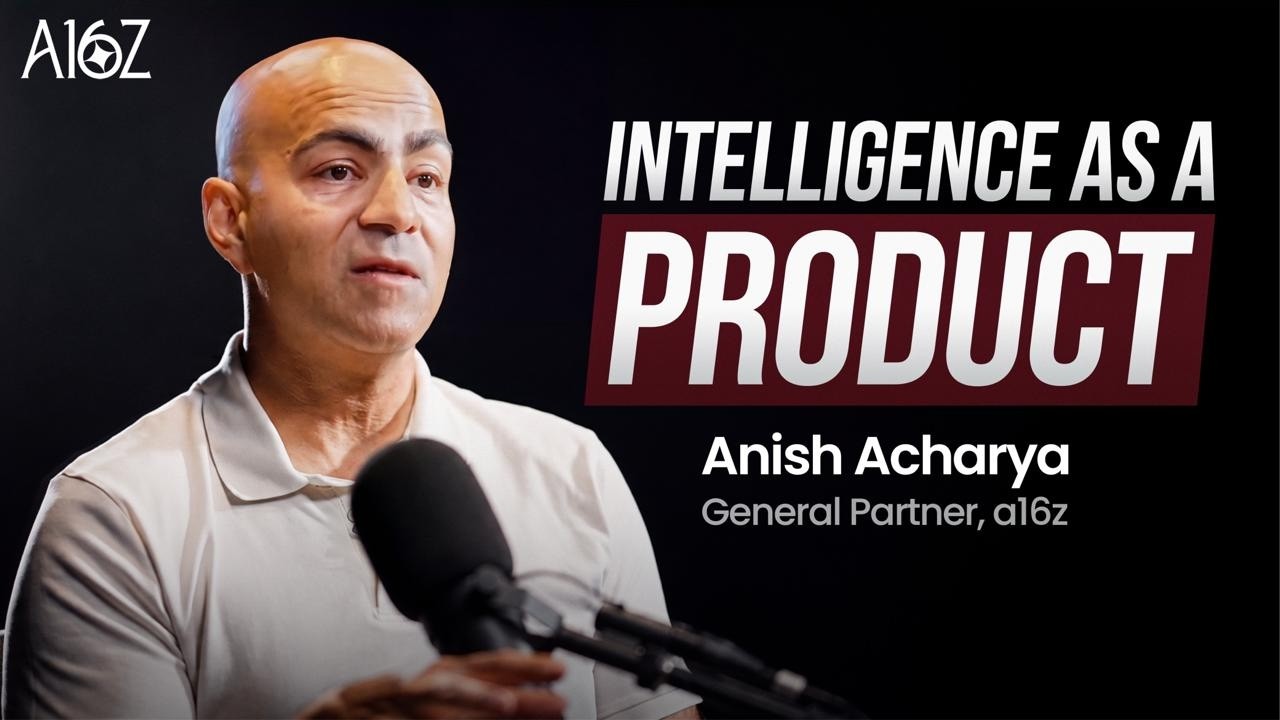
gonna bring up Anisha Charia.
>> Hi.
>> Awesome. Awesome. Awesome. Hey, Anish.
Uh Anish and I were at the at GP offsite
uh earlier this week and and he shared
with me that he's already running
Grockbot uh and has purchased a bunch of
jeans for him. So, Anish, do you want to
do you want to drop what you purchased?
>> True story. True story. Yes. So, I'm
going to reveal an important secret um
protected IP, which is that I mostly
wear frame jeans. Frame is a great
brand. Um,
>> and Grock Bots is an awesome product.
Actually, I'd say the kind of defining
characteristic of Grockbots is sort of
resourcefulness. You know, I went to bed
a few nights ago and said, "Hey, uh, buy
me a pair of jeans that are inspired by
these." I took a photo of my current
jeans. Um, I said, "Don't spend more
than $500 and get it done." I woke up in
the morning and it had researched, found
a pair, same fit, different wash, used
my credit card, purchased them and
they're on the way. So, I think that is
going to be something that we see more
and more of. We already have the
capabilities and now a lot of the kind
of unlock will come from resourcefulness
um and also the kind of product
architecture delivered in a way that
most consumers um can understand.
>> Awesome. Awesome. Awesome. Yeah, I told
my team that I'm going to set my bot to
finally take care of the pile of things
I've been promising my husband that I'm
going to sell [laughter] for the last
two years. That is the project for for
this weekend. Uh so Anish, we asked the
question earlier, which one of today's
AI leaders will be the clear winner in
three years from now? What's what's your
take?
>> I'm a many winners guy and I see I'm in
a you I'm in good company with many of
you. I mean, if you look at what's
happened in the last two weeks, um, you
know, XAI went from not even being a
real contender on the model side to
being, you know, one of three. So, we
extraordinarily went from a two- horse
race to a three-h horsese race. And, you
know, even more broadly over the course
of the year, we went from anthropic
feeling like they were so dominant, they
could do no wrong to OpenAI who's just
had an excellent three months. You know,
the new models are exceptional. The new
codeex harness and chatgpt desktop app
is very well done and we're seeing the
sort of specialization in different
directions of these labs. They're both
growing like crazy, you know, despite
each other's continued successes. Um,
XAI and as openweight does well. Um, so
I'm definitely in the many winners camp.
>> Yeah, it's interesting to see the
sentiment also on X, which is not always
a perfect, you know, uh, weather vein
for the future, but but oftentimes a
early indicator of at least where
developer sentiment is. And there's been
a lot of push back from Claude it seems
like recently on people uh in terms of
token usage etc. And so you know
developers tend to be fair weather fans
on these things they will go where the
latest and greatest and very best model
isn't and particularly the last six to
eight weeks I think we're going to see
some very interesting um traction in
terms of the flow of activity but
obviously anthropics going public uh
later this year um and also you know
there's a lot of lot of keen interest on
this. So with that uh that actually
brings us straight into the topic of
discussion today. So where where and
what is next in the next frontier of
intelligence.
>> Amazing. Thank you Jen. So let me tee
this up for everybody. Um and please hop
in if you've got questions. So let's
first cover the kind of macro and what's
happening um at a market level. Then
we're going to hop into the application
layer broadly and sort of talk through
why applications are the productization
of the intelligence primitive. And then
finally let's talk about consumer. you
know, with the launch of Grockbots and a
few other products, it's actually been a
very fun um couple of weeks in consumer.
Okay. Uh hopefully our our dear friend
Leopold doesn't mind me poking a little
fun at him here with situational
awareness, please. Next. Um all right.
Look, I think that the kind of case for
this being a bubble um is over sort of
discussed or at least fully discussed. I
think actually the out of distribution
topic that's less discussed is what if
we're insufficiently optimistic? And if
you look at some of the underlying
indicators, what they point to is
essentially infinite demand and highly
constrained supply. You know, things
like B200, which is a non sort of
cutting edge GPU prices going up on a
per hour basis. That is very uh strange.
Normally, we see these things be highly
deflationary and it sort of points to
very constricted supply and essentially
infinite demand. So we're thinking and
talking a lot about what's the kind of
informed case for optimism here given
some of these second order indicators.
The SAS bubble was a very or the SAS
sort of uh you know whipssaw was an an
interesting peak into market psychology.
You know back in February when we saw
this you know 30 to 40% draw down on a
bunch of SAS names. We said that the
market has oversold software. Lo and
behold here we are many of those names
are back up 40%. So I'm not quite sure
what we collectively accomplished, but
I'll tell you what we said then, which
is still true today, which is for the
enterprise, software spend is 8 to 12%.
It's just not a huge proportion of
spend. So the upside to vibe code your
own payroll or CRM is not particularly
high. The downside is essentially
unlimited. You know, obviously there's
all kinds of sort of compliance um
implications of not getting things like
payroll right. So most enterprise
software today demands a level of
precision that just isn't afforded by
coding agents. Um the the one thing that
has happened though is the sort of tide
has receded. So for a lot of SAS
companies had a ton of SBC and you know
things that distorted their economic
performance. I think that's very much um
visible now and they're going to have to
sort of accelerate or die. So, so less
bleak for the SAS uh sort of market than
perhaps we all collectively thought for
a few months there. But still some sort
of existential questions to address. You
know, there's been a huge sort of
discussion of moes. Are there any moes?
There's no more moes. And it's it's very
funny because if you actually study u
moes, which I think are most famously
codified in the book seven powers that's
one of my favorites. The vast majority
of moes actually are not affected by
abundant lowcost intelligence. You know,
when you think about network effects,
scale effects, which shows up in
distribution, brand effects, which we
tend to discount in Silicon Valley,
these things are as good as they've ever
been. You know, no amount of coding
agents is going to make Nike not Nike.
And Instagram, um, the power of
Instagram was never the complexity of
building the Instagram app. Of course,
it was the kind of network behind it.
So, you actually think the majority of
modes are as good as they've ever been
and and of course are still crit
critical to building compounding value.
There are a couple of modes that are
exposed. For me, the integration mode is
the most obvious one. You know, SAP is
is so famously complex to integrate into
and out of that it's a sort of
existential risk to even migrate from
one version of SAP to the next. Coding
agents makes this dramatically better. I
think there's a bit of an existential
question actually for SIS and gsis as to
what will their value be when they've
historically been this sort of point of
integration. So, I do think this moat is
a little bit at risk, but for the other
traditional modes, they persist and
they're as important as they've ever
been. Yeah, I think this is a really
important concept. You know, as you
start to think about what are the job
functions in the enterprise that are
alpha creating, it's typically product,
sales, engineering, research, and
conversely, what are the job functions
in the enterprise that are sort of maybe
administrative is is uh too uh too
bleak, but they are supporting other
functions, legal, um HR, finance, etc.
We really think that the kind of
rational architecture and the one that
is emerging is that for jobs that um
have unlimited upside like sales or
product you always want to use frontier
tokens. And the reason for that is you
just don't know what the value of the
new product feature or closing a
customer account is. It's effectively
unbounded and therefore it's
economically rational to pay almost any
price for a model that's even one IQ
point smarter. You know, your Fable 5 or
your Gro uh or your um GPT56.
Conversely, when you talk about
something like finance, you know, the
best way to close the books is
accurately. You can't close it, you
know, 10x better than accurately. So, as
a result, you kind of have this bounded
upside problem where it makes sense to
use openw weight models with
reinforcement learning for the kind of
paroefficient um cost curve. Maybe
before we we go off this one because
this is a big debate and and again when
Kimmy dropped a few weeks ago there was
a lot of consternation uh about this
this topic just given the relative cost
which was the focus of of the topic of
discussion. But you know um our our
founder Jesse Zang from Decagon dropped
this great post around the fact that in
some respects and and for a lot of
companies like Decagadon open source is
actually the only option. It's not just
cost. It's it's that they can actually
localize it, train, fine-tune it. And so
maybe unpack a little bit of that
configuration. Talk through the the
nuances there and why folks shouldn't be
concerned even though that is the case
for startups that there's a lot in the
way of abundance around this topic.
>> Yeah, I mean one of the big topics that
we're seeing or one of the big trends is
that there are just one there are sort
of comparative advantages of different
models. So and the models often have
sort of areas of focus that are almost
at um tension with each other. So you
see a certain set of models that have a
high degree of neuroticism. Like there
sort of autistic models. GLM52 and GLM53
are great examples of this where they're
very literal and they'll only do exactly
what you told them to do and nothing
more. Then we're seeing models like a K3
um that are just much more sort of open
and they're very presumptuous and
they're creative and there are roles for
both types of models in the organization
and and often the sort of shapes of
those minds if you will are at odds with
each other. So that is like one reason
you actually want to have multiple
models. The reinforcement learning is a
really important point. Um you know if
you actually have a problem that you can
specialize the model around with your
reasoning traces, you can start to
create this compounding advantage in
your domain for your customer base where
you're able to kind of shape the
intelligence to be better than any
general intelligence for your problem. I
know Harvey's had some great results
with this as well. Now the trade-off of
that kind of reinforcement learning is
you lose generality. So if you have the
best sort of model that's fine-tuned for
solving legal problems, it may not be
great at solving sort of theoretical
math problems and that's okay for
Harvey's uses or in the case of decagon
customer support. So this sort of openw
weight specialization property is
something that's very unique and one of
the reasons our startups are selecting
them. This is also a big topic. We've
learned so much since January. We should
really do this monthly gener. Yeah. I
mean honestly we there's just so much
changing. So in January February there
was a lot of discussion and it's it's
very idiosyncratic and interesting. You
know anthropic quad released what is
called a legal plugin. You know plugins
are just collections of skill files. You
can think of it as a zip of skill files.
Skill files are just prompts. They're
just long prompts. And there was this
huge panic and all of a sudden Thompson
Reuters and a bunch of other sort of uh
you know big legal names traded down
dramatically. But those were really just
prompts. And there's a lot of discussion
about if labs were going to integrate
vertically integrate up into the
application layer. Instead, we've seen
the very opposite, which is yes, they
are vertically integrating, but they're
vertically integrating down into
inference and compute. It's actually
logical now um in hindsight because the
workloads for inference are very
homogeneous. So, you can build enormous
scale in one part of the value chain.
Whereas when you think about the
application layer, you know, you've got
so many idiosyncrasies and unique needs
in terms of pricing, packaging, um, sort
of productization, how the market wants
to buy. So, it's actually a much more
challenging and opex heavy proposition
to move into the application layer
versus moving down into the inference
layer. And this is the point I alluded
to earlier, which is sort of this
discussion of model commoditization. And
you know if you use the models every day
which I do I sort of hold myself to a
standard of making something either
small or big with every model that comes
out you you start to appreciate the fact
that these things are are not
commodities that they have comparative
advantage at a domain level. So a great
example is open AI with their new um GPT
models are just so so good at knowledge
work. The harness is also very well set
up for knowledge work. You know if
you've used the chat GPT desktop app you
know what I mean. If you haven't please
install it. It's very very cool and
interesting and it's the perfect sort of
when I say harness I kind of mean kind
of product container like a browser. Um
it's the perfect product container to do
spreadsheets and slide presentations and
written documents and all of that type
of work. If you look at cloud code which
many of you I'm sure have used it's just
so oriented towards software engineering
you know it's in a terminal UI.
Everything from the small design
decisions to the areas in which it
specializes like code planning and code
testing is oriented towards the software
engineer and there are many trade-offs
both products are making for that sort
of respective specialization. So one
you've kind of got this domain level
specialization that's already occurring
and then two as I mentioned earlier
you've got this sort of I think of it as
the big five sort of personality traits
if if folks have studied that you know
you can't be both highly open and highly
neurotic. Um, and you know, sometimes
when you have an intelligence you're
applying to an accounting problem, you
want neuroticism. When you're applying
it to a design problem, you want
openness. So you actually have a need
for both types of minds in the
organization, which is why you would
select something like a GLM53 versus a
Kimmy K3. So definitely not commodities
in our view. This is an important point.
You know, there are many product
categories in which model aggregation
delivers a greater than sum of parts
outcome. And you know, a good metaphor
for this is Expedia. You know, it's so
much more useful to use Expedia than it
is to go to United, then to go to Delta,
then to go to Southwest. You just want a
single place where you can benefit from
seeing every airline's inventory.
Similarly, you know, in coding, we're
actually seeing this with cursor a ton
where you want to do a very frontier
model for planning, for example, but
then you can use a lesser model for
execution and you really need to have
one product harness or sort of product
architecture that lets you use multiple
models. Creative Tools is another great
example where you've got, you know,
models that specialize in different
modalities. So you've got something like
an 11 Labs which of course is incredible
at voice music as well and then you've
got something like Black Forest which is
doing such an excellent job in kind of
video and and creative direction and the
correct product is to bring all of these
together into one shell. And then
finally research and decisions. We see
this all the time where you know the
models are trained with sort of non-over
overlapping data sets often. So you're
able to just get more information by
running the same query through many
models adversarially and then having a
separate model sort of help you
converge. This is a place where the
application layer really shines because
labs of course are both incentivized and
structurally only able to provide their
own in-house models. You as an
application sort of aggregator can
provide the best of breed. Okay, let's
jump into the apps layer. Now the key
point about the application layer is
that you know intelligence is a
primitive just like buying cloud is a
primitive and what does Salesforce do?
It sort of takes the you know AWS cloud
primitive and turns it into CRM software
that delivers an economic outcome for
all of their customer segments. The same
thing is true of the AI application
layer. You know it's great to have the
raw intelligence primitive but you
really need Harvey to turn that into an
economic outcome for the legal industry.
Similar for somebody like credit unions
is a really interesting market segment
where they're so idiosyncratic in how
they want to buy products, how they want
the product sort of productized and and
the shape of the ambition for their
market. You know, most credit unions
don't want to uh decrease their
headcount by half. They want to double
it, right? And they want to double it
while having a an economically
performant business. So, it's just a
very um specific way that they see the
intelligence primitive playing out in
their market segment. and the
application layer's opportunity is to be
the one that kind of delivers that. This
is a bit of an advanced concept, but I
think an important one. If you look at
the kind of way that the evolution of AI
use um has gone, it's gone from
prompting models to putting models in
loops. You know, the the term agent is
overused, but agent is just a model in a
loop with sort of tools and memory and a
few other things. A great example of
this is coding. You know, we've all seen
this from um software companies, which
is a bug gets reported, it gets
reproduced, a fix gets generated, it
gets verified. If it's a low-risk fix,
it gets integrated and shipped and maybe
the customer gets an email saying your
bug was fixed. If it's a high-risisk
change, perhaps a human reviews it. But
that way, every bug that actually gets
reported to the enterprise now gets
autonomously fixed through this coding
loop. As you start to take that idea and
apply it to other parts of the business,
things like price optimization, things
like procurement, these are very natural
sort of business loops that occur that
can be fully automated by these models.
And then perhaps the most ambitious type
of loop is the business loop, which is
hey, you make a change that's very
crosscutting to the business and the
model comes back and says, hey, I think
we need to open a branch in Tijana. Now
the model can't do that autonomously but
it can make a change at the sort of
surface level of the entire business
which is extraordinary. This is how
enterprise automation is going to occur
through AI and I think for me coding has
just been over and over again an
illustration legal is another great area
of industries not markets. This is
something that Mark says and he's so
right which is if you look at
intelligence as a primitive let's think
now about coding intelligence as a
primitive. All of these products are
working in their sort of respective
areas of the stack. You know, Quad Code
does such an excellent job of kind of
exposing the raw hardware, so to say, to
the developer all the way up to replet,
which is a great abstraction layer for
the average small business owner that's
unfamiliar with code. These are
variations of sort of pricing,
producting, pack, productization,
packaging for the coding primitive and
intelligence and all of them are working
as a result. So, I think a big mental
model shift for us is ensuring that
we're assessing these as industries, not
necessarily simple markets. Okay. and
consumer consumers had a really cool
couple of weeks. You know, we've been
saying for, you know, for three years
that this is going to be consumer's
quarter, but I I think that this might
be consumer's quarter. Let's go into it.
The things that have actually held back
consumer um so far have been a couple of
things. You know, the first is consumers
don't love paying for software. We've
learned this lesson um over and over
again. And unfortunately, unlike the
sort of magic of software in the past,
um AI software has marginal costs of
distribution and engagement. And the
marginal cost can sometimes be very
high. you know, I built a an app I use
to help me browse my X timeline and it
costs $250 to onboard a new user. So, if
I'm a startup founder looking at that,
looking at a kind of $250, even with a
$0 TC onboarding cost, it's very hard to
make a mass market free product work.
That is changing now because of openw
weightight models, dramatically cheaper
and more performant. You know, the
second is we've never had an AI native
distribution channel. There's no app
store for AI. So, this actual product
cycle for consumer looks more like web
2.0 know where you have to kind of build
the channel alongside the product and
less like mobile where you actually have
the central point of distribution for
the entire ecosystem. Then the final
point I think is an important one. You
know command line is we're sort of in
the the DOS era of AI and for this
technology and its capabilities to sort
of fully be embraced by consumers. We're
going to need the windows so to say. So
I think there's just a ton of work to be
done around product and design craft to
ensure that consumers know how to
consume um all this magical new
capabilities.
two things are working. Um, so coding
agents is are extraordinary. I know have
been discussed. I think it's it's
interesting to think about how they work
for consumers. You know, if you think of
this concept of the digitally native
entrepreneur, if you're not a
programmer, the way that's historically
shown up is you're a YouTube creator.
And there's a whole moral panic that we
had, you know, 10 years ago about the
kids want to be YouTube creators, not
astronauts. But I would interpret that
instead as the kids actually who grew up
on the internet want to build businesses
on the internet and the only way to do
it again is being a creator. Now with
coding agents you can build a software
product that generates $100,000 of
revenue a year, a million dollars of
revenue a year. Now these are not
venturebackable businesses but it's a
sort of mom and pop SAS opportunity
which is emerging and I think very very
cool for the country. personal agents.
We had this collective moment of
excitement around openclaw um in January
and it was an extraordinary sort of
composition of primitives but it never
really crossed over into consumer. You
know it was sort of a developer oriented
thing more of the homebrew computing
club kind of energy. Um we're starting
to see with the emergence of Grockbot
and chat GBT work personal agents being
turned into software that consumers can
use. Anisha actually um do you mind just
pausing on this before we go to the town
demo because you know you you were a
founder um building in the last era of
the the consumer app experience and when
I even think about I was like gosh how
do you even define consumer today
because you know the plumber that
utilizes now Grockbot to completely turn
around their business end to end like is
that consumer or is that enterprise
because like it's very like it's almost
like a like PLG
>> movement but but it's coming from as a
consumer consumer that then cross over
into enterprise and and particularly
like the last era of consumer
application is more towards
entertainment as a way to to monetize
and so maybe unpack some of that and and
particularly where you've been spending
time as a part of that.
>> I mean our simple rule is if you cannot
justify acquiring the customer through
sales which usually means a 15k ACV you
have to acquire them through marketing
we think of them as a consumer which is
most small business owners. So I think
that the plumber is definitely the
consumer in our sort of investing mind.
Entertainment is huge and there's going
to be a bunch of AI native entertainment
companies. You know I would argue
character was kind of an entertainment
company. There's been a huge trend
around short form drama mostly in Asia
and that's starting to come over here.
Many of those are generative or sort of
generative assisted. So I look I think
entertainment is going to be massive.
Most people want to spend time not save
time and consumer is not that interested
in productivity. So that's definitely
going to happen. Um and probably worth a
separate deep dive. Okay. And I think
town for folks who have used it, it's
it's just such a magical experience. And
you know this is like the the number one
sort of um piece of advice I give to
everybody, friends, family, uh folks in
the industry is like please just use the
products because it's so easy to build
intuition when you see how they change
day-to-day. And town is an investment um
our partner Alex Rampel made. It's
really extraordinary uh productivity
product and you sort of see how the
compounding um improvement of the
product through memory advantages it
over time. So the first day you use a
product it doesn't know you that well.
It's sort of like an employee a new hire
who's just getting up to speed. By day
30 it's able to make excellent
assumptions on your behalf because it
just has soaked in 30 days of sort of
context, memory and skills. And this is
a pattern that we're seeing more and
more. The sort of compounding value
being delivered to the end customer
showing up as retention in the business
and sort of showing up as pricing power
on a per customer basis.
>> Yeah, this is a great one because uh
folks can utilize town for their
personal use case. Uh and it's a free,
you know, trial. They give you I think
something like 40 uh credits to start or
something around there. Um and so you
can kind of see it once you plug into
your personal email how productive it
actually is. Um, on the professional
front, I'm always inbox zero. On the
personal front,
>> my inbox is like 20,000. Uh, David
George is is probably cringing on the
inside here just because it's
unacceptable. However, uh, you know,
personal life things are common. So, if
you email me in my personal, I will
never respond to you. However, I plug
into it and like I don't even check
anymore. If there's something important,
town will surface it to me. And also, it
does all the scrubbing of like
subscriptions and all the things that it
can optimize and it's starting to now
self-improve upon itself. So like it'll
send you emails where it says like hey
this routine is costing this much like
here's how you could actually save your
credit swe. So it's sort of this this
unlock into what starts on the
productivity side and to your point
maybe people won't pay for that
personally but once it starts to get
locked in and then expand in terms of
the remit you're like okay I'll pay the
whatever x bucks you know just because
it helps to manage my life and I can put
it on autopilot.
Yeah, it's such a great point, Shannon.
Like my mental model for this is just an
experienced employee, a tenure employee
versus a new hire. You know, the new
hireer may be brilliant and may even
cost less than tenure employee, but we
all know the value of a tenure employee.
They're just able to make great
assumptions on behalf of the
organization and you. And you know, may
this is a little philosophical, but I
think this is where it all goes. Just as
we talked about kind of coding loops and
business loops for the enterprise, we
think there's a set of loops that are
informally defined that really um sort
of lay out a consumer's life. think of
um family, friendships, money, health.
These are all areas where you have sort
of changing information, decisions,
agency, execution, and then the loop
continues. So, we're starting to see
some of these sort of loops emerge
around self-improvement, kind of health
and finance are the two areas that
OpenAI is focused on. We've seen a bunch
of startups working on shopping, but we
think that like the kind of way that
this ends up playing out is a dramatic
quality of life improvement for the
consumer and um and that really follows
the shape of past product cycles where
80% of the surplus is delivered to the
mass market.
>> Do you think each that all of these uh
sorry maybe just going back to the to
the last slide there's a question here.
you know, when you think about these
personal agent examples, whether it be
town or ethos, etc., all point to, you
know, kind of one assistant having
context, but it seems like there's many
different options. Do you think it'll
end up being, you know, sort of one
dominant platform for this personal
aspect of your life as as time
management? Um, or will it be like an
operating system where you have many
kind of talking to each other and kind
of configuring on the back end?
>> I the comparative vantage point kind of
comes to mind. you know, I think the the
characteristics you want from your CFA
are different from the one that you want
from your sort of party planner. Um, and
that just the surface area is so broad
that I think that yes, there's
overlapping bits of context. And I think
Grock Bots has done a nice job of kind
of illustrating this in product or you
have many bots that are pointed in
slightly different directions that all
coordinate to deliver a globally optimum
uh optimal outcome.
>> There's a few questions. I'm going to go
back to topics you've covered earlier.
So if the application layer captures
economic outcomes, how do you think
about the competition from the model
companies um and what will they allow
value accretion to happen downstream and
and you know are companies at the app
layer able to compete with the frontier
labs going after that particular market?
>> I mean I I think so again I think that
we're we're underestimating the kind of
complexity of product pricing packaging
and how the end customer wants to buy.
you know, the way that um you know, a
teenager wants to consume the
intelligence primitive is different than
the way an marketing executive at credit
union wants to actually consume it. Um
and it's very heterogeneous. So to me,
it just makes less sense for um the labs
to move up to the apps layer than to
move down to inference. So, you know,
and that kind of permission point's an
interesting one. I think if we lived in
a world of 2023 when it was one model to
rule them all, it wouldn't even matter
if you had permission because the labs
would just take 100% of your gross
margin over time. But now because you've
got many options at all points in the
paro frontier, you know, the labs have a
harder time actually doing things like
that.
>> Awesome. There was a question just on
traction. So, do you fund anything where
there's um there there's no revenue at
this point just given how quickly people
have been making progress or is it
extremely difficult? um we try not to I
I certainly have spent less time um on
that strategy. Look, I I think that the
basket is majority investments that are
showing some signs of working. Certainly
from a product velocity perspective,
that used to be something we measure
pretty carefully. Like it's
disqualifying to not be showing a live
product in a pitch at any stage these
days because it's so trivial to build
stuff. So almost everything we we're
seeing are showing signs of you know
sort of some sort of breakout. I mean my
model is somewhat simplistic where I
just sort of look at once you have stats
sig sales and product if we extrapolate
from there um do we kind of like the
price that we have to pay to be a part
of it and the risks that we're taking
implicitly and that's I'd say the
majority of the work that we do look for
very talented experienced folks we do
kind of take a small call option which
looks like a pre- everything round um
but that's not the majority of what we
do.
>> Yeah. Yeah. Well, when you think about
the the um kind of competitive landscape
on this uh consumer has been unloved for
so long um are you seeing now this
reversion just given it's clear that
apps is sort of this next layer of value
creation like the model sort of layer
has been somewhat set and I say that
with a huge aster because there might be
new algorithmic breakthroughs you know
kind of kind of folks coming out from
left field as as we have in the
portfolio as well um but do you feel
like the shift from the competitive
dynamic shifting more towards
application
>> 100% I It's sort of a renaissance for
being a consumer builder because you've
got this extraordinary primitive that
you can work with. By the way, we now
have a primitive that can kind of
operate in the, you know, emotional
interpersonal domain. You know, you can
like have a conversation with claude or
openai or K3 and and feel feelings. And
we've had 40 years of technology that
really boosted our intellect and
productivity, but nothing that kind of
spoke to our humanity. So, it's a whole
different technology surface. It's very
wide. I think there are a set of
products that labs are just culturally
not set up and big tech not set up to go
after. You think about launching, you
know, a companion product at Google that
may disagree with you that may um have
sexual innuendo in it. Like these are
things that there's a thousand
committees at Google um are designed to
prevent. So startups have areas where
they're kind of uniquely capable and
then look finally the consumer sort of
excited to download new software,
excited to pay for it. It's like
Christmas 2009 with the iPhone. People
want to try try new apps, but unlike the
99 cents days, they're willing to pay
200 a month. So, it's sort of a
renaissance for consumer builders and
and yeah, I think that things have
changed.
>> Trying to come up with a joke that the
autist in San Francisco are keenly
keenly waiting for this moment for a
very a very long time. Uh
there's a there's a good um a question
from Michelle here. You know, how should
we think about the new economics of AI
apps companies because there's a great
there's a debate around unit economics
of of um apps companies, right? like for
example, they may may have lower gross
margins. They're just getting more
pressure just because they don't have as
much compute access. Um capital is such
a moat in this environment. Um it's it's
hard to be competitive. So how do you
think about the economics of of
underwriting returns in in um in
companies today?
>> I mean David wrote a great post on this.
I think that the kind of the margin
topic is a lot more nuanced than it once
was. I think it's actually rational in
many cases to trade away margin to have
wider product surface. I think the very
positive part of what's happening in
this product cycle is the willingness to
pay is extraordinary. And that's why the
exercise that we often do with founders
is like on the consumer side, for
example, is if $20 was the historic
ceiling, what's the $200 a month skew of
your product? And in fact, what's the
$2,000 a month skew? Like what's the
Birkin bag of software? I think we're
going to have this luxury software.
We're already seeing willingness to pay
for it. So the margin topic is more
nuanced, but the willingness to pay and
buy is higher than ever. So, you know,
it's a little bit of fog of war, but
we're we're thinking about all those
topics.
>> Anish dropping Birkin bag framed jeans.
Like, I had no idea you were such a
fashion. This is like your your butt is
helping you get up to to seat here, my
friend. Uh for a guy secret [laughter]
is a good steward of capital. Okay,
that's all that I am.
>> For for a guy I only see in quarter zip
ups. I'm just saying. Uh
>> um Okay, maybe one question for you on
just on the on the founders because I I
don't know if you remember this
conversation. This is probably 5 years
ago or so. Um where most of the founders
you saw saw more uh diversity in their
background in part because the software
and technology was way more
sophisticated. So you had a lot of
program managers spinning out of Google
for example and starting a company etc.
What are the type of founders you see
building an apps today? Are they do they
tend to lean you know more technical
more researcher derivatives? Are they
product managers? like what what kind of
archetype are you seeing at least the
early innings of apps come out from the
woodwork on?
>> Yeah. Yeah. Less MBAs, more researchers.
Um and they both have their kind of
strengths and weaknesses. I think the
business sophistication of the founders
are seeing today is lower, but the kind
of technical sophistication is
dramatically higher and the technical
sophistication is kind of upstream of
all the good things that happened. You
know, business sophistication can be
kind of taught and observed, but
technical sophistication typically not.
So, we're definitely seeing a much more
technical kind of earlier career
founder, but the things they're doing
are extraordinary because they don't
have any sort of preconceived notions
about what's possible. And so much of
what holds back senior founders that
don't quite get to the other side of
this product cycle is, you know, they're
not close enough to the technology and
they've got an idea that's rooted in the
past of what the ceiling is. And I think
the best thing about these young
founders is they assume everything is
possible. You know, we are at an offsite
where Ben was saying that the the
biggest risk in the past with the ideas
were too big and now the biggest risk is
that the ideas are too small. But I
think that's sort of illustrative of the
different founder archetypes.
>> Yep. Yep. And maybe on that similar
thread, it used to be that that if you
gave a founder too much money, it would
wreck the company because the founder
almost always has way too many ideas and
is a visionary and doesn't have the
talent to actually commensurately
land with all those ideas. Um and we're
seeing a whole new paradigm on that.
Maybe unpack that idea a little bit more
just uh because it was such a huge theme
of the offsite.
>> Yeah, I mean for sure this was a
historic wisdom. You know, why didn't we
give every seed company 20 or 50 or
hundred million dollars? You know, it
wasn't just the kind of riskreward, but
rather typically the constraining factor
was they just didn't have enough
talented people to work across $20
million of product surface at the same
time. They really had to focus on one
idea at a time and the capital was a
great way to enforce that focus. What
we're now seeing is you could make
different sort of product and model
trade-offs through more or less capital.
And there is a case for a company that
raises a hund00 million, uses it
productively and in a focused way and is
able to deliver a different value
proposition um than the very same team
would be able to do with 20. So I think
that that again like the sort of just as
we talked about sort of fog of war
around margins, I think this question of
what is the optimal seated around size
and how much capital can you put to work
effectively is a much more nuanced
topic. I mean, it's sort of this
embarrassment of riches, but I'd rather
have this problem than the problem we
had five years ago, which is, hey, my
fintech company is indirectly
subsidizing their customers through weak
underwriting, and we don't know the path
home.
>> Yeah. Yep. Yeah. The Chris Chris Dixon
model, which is you always want the
problem of supply, not of demand. Right.
Right now, we have to fix the supply
part, right? Uh but the demand is like
uh so so abundantly there that that uh
undoubtedly that will um the supply part
will will get fixed. Um maybe I'll close
on this one last uh question for Mosfa.
So um double clicking on theme sector
adoption of AI. So unlike large
enterprise the friction of adoption is
much less because they require less
change management. I agree with many of
that but uh not not all uh small small
uh medium businesses sometimes have uh
more habit change that you got to work
through. But the question is how do you
see the gotom market playbook for
startups targetingmemes and has that
changed in the age of AI? I mean a lot
of it for existing thememes I think it's
the same channels with which you
historically reach them. I actually
think that one of the interesting things
about marketing in the age of AI is that
all of the sort of existing networks
have been so trained on the methodology
of building new networks that they're
very careful to ensure no one does it on
their network. So Instagram, Tik Tok X,
it's very hard to build a new sort of
distribution channel off the backs of an
existing one. So what founders have to
do is actually build a product that has
the original network effect which is
word of mouth. So we're definitely
seeing more of a focus on word of mouth.
Yes, the kind of old channels for
reaching are still there. Actually think
the most interesting segment of the
market though is sort of new business
formation which is by the way at an
all-time high. I think it's the highest
it's been outside of a peak sort of
moment during COVID. These are people
who would have never otherwise been.
It's not the sort of 55year-old plumber.
It's a 25year-old who previously would
have been a YouTube creator and now is
building SAS for their, you know,
neighborhood or their city or their high
school or whatever else it is.
>> Yep. Yep. Awesome.
Well, thank you so much for listen. It's
always great to have you on. Uh now, I
know you're a fashionista and we're
going to be clipping that endlessly uh
on the socials. Um but uh but thank you
for that. And if folks have any
questions, you know where to find Anish.
Um and uh we'll follow up here for some
of the questions we weren't able to get
to as well.
Interactive Summary
Ask follow-up questions or revisit key timestamps.
The video features a discussion about the current state and future of the AI industry, focusing on the 'intelligence primitive,' the shift from model-centric to application-centric development, and the burgeoning consumer AI market. Experts share insights on the competitive landscape of AI models, the importance of resourcefulness in product development, and why they believe we are entering a 'renaissance' for consumer AI builders.
Suggested questions
4 ready-made promptsRecently Distilled
Videos recently processed by our community