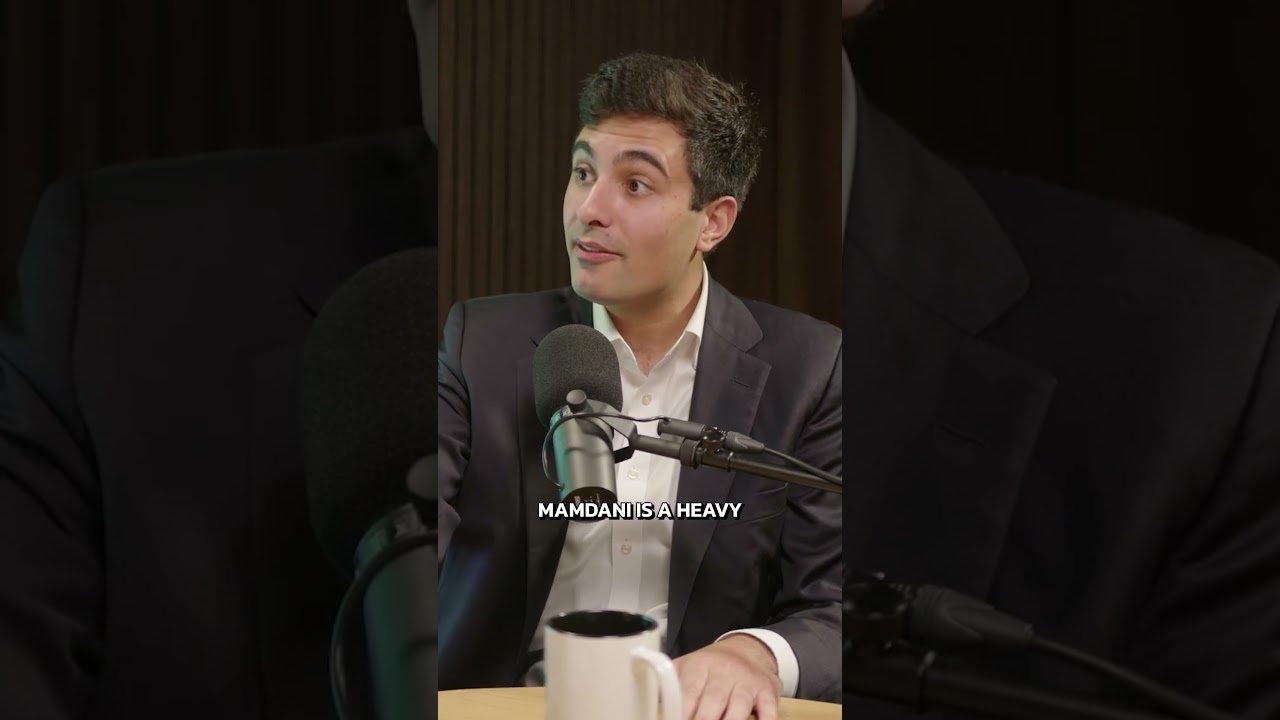
Credit Expert Explains What’s Happening in Lending | Oaktree’s Raghav Khanna
Now Playing
Credit Expert Explains What’s Happening in Lending | Oaktree’s Raghav Khanna
Transcript
1636 segments
I'm sure you're familiar with the term
adjusted IBIDA which is only getting
more and more adjusted. Your MMO needs
to be that I want to try and find every
single red flag and you should assume
there are red flags. If you look at just
the US and Europe, um I think energy
demand is going to grow 40% plus over
the next two decades and grids cannot
keep up. So there's going to be a lot of
need for financing uh energy and
infrastructure. I think investors are
looking to diversify away from the US
including from from a lending
perspective. We have to all appreciate
the fact that uh you know AI and large
language models it's a paradigm shift.
You have to recognize that paradigm
shift and I think caution is warranted.
>> Today's episode is brought to you by
Kaya NXT. Later in the show, you'll hear
more about how you can take the next
step for your clients with Kaya NXT's
alternatives education courses. But for
now, let's get into today's interview.
Very pleased today to be joined by Ragav
Kana, managing director within Oak's
global private debt strategy. Ragav,
welcome to Monetary Matters.
>> Thanks, Jack. Thanks for having me.
>> It's my pleasure. Ragav, I want to start
off by giving you my rough sense of the
credit world over the past few years,
and you can tell me to what degree you
you agree or disagree with it. My
characterization would be as follows.
that for the past several years, credit
has been performing extremely well and
judicious underwriting such as the type
that Oakree uh attempts to and does
engage in has has been uh performed well
and and has been rewarded and you know
obviously there are other judicious
underwriters within the credit world but
also uh credit's been performing so well
whether it's because inflation's been
high because company's cash flow is so
high or variety of other reasons credit
has performed so Well, that to an extent
um unjudicious lending and perhaps
reckless lending has also performed
extremely well and I would characterize
that that in my sense has been true up
until the summer of last year 2020 uh
25. Um to what degree would you say my
characterization is accurate? And to
what degree do you think we might be in
a new era where reckless lending is
punished uh as it as it has been
somewhat over the past few months and
that the ability to judiciously
underwrite is going to be a
differentiator in the credit world.
>> Yeah. Look, I mean you make a great
point and I would say I would even go
back further. It's not just the last
three years if you think about it,
right? like u uh certainly private
credit as opposed to uh you know high
yield or broadly syndicated loans is a
relatively newer asset class right like
um a lot of managers started off in the
early 2000s but it really took off in
earnest post the global financial crisis
right because of retrenchment from banks
because of DoddFrank and other
regulatory pressures and if you think
about it we haven't had what I would
call a real recession um since the GFC
right you had some uh you had some
volatility around 2014 16 with the
energy uh crisis. You had COVID which
was pretty short-lived if you really
think about it and then you had uh some
issues in 2022
uh where the market was concerned I
think rightly so for a period of time
about stackflation but then you know the
market if you look at kind of N2021 what
spreads were in in the liquid credit
market as a proxy for risk and where
they were call it end 2023 uh they were
basically flat uh over that time period.
So, uh, we haven't had a real recession.
Uh, we haven't had like, you know,
anything beyond a a, you know, a
dislocation is what I would say. So,
you're absolutely right that, um, the
market really hasn't been tested,
especially for private credit, which
doesn't have as long a history of
showing performance over cycles as, uh,
you know, certainly IG, but also in the
below IG market and high yield and
broadly syndicated loans. Now, you are
starting to see some of those uh,
issues, right, with what you call as
reckless underwriting. show up in the
news, in the media. Uh I'm guessing
you're talking about forest brands,
you're talking about triricolor. Um
there was a Sachs bankruptcy recently.
Um and you know what I would say is one
I don't think this is a like a systemic
issue where I'm seeing a lot of reckless
underwriting like through the system. I
do think these are idiosyncratic issues
and I also think these are idiosyncratic
issues which um you know certainly some
lenders managed to avoid completely um
and you know some were able to stay away
from all three of those situations. So I
would say that certainly uh not not just
with the benefit of hindsight but in the
moment there were enough red flags which
each with each of those three issues or
each of those three issuers where to
your point about you know judicious
underwriting if you had done the
judicious underwriting done the
appropriate background checks on you
know the founder of first brands or
trickleor uh and done other underwriting
you could manage to stay away from them.
Uh the other thing I would say which is
why you know I'm not concerned that this
is a a big like asset class issue.
Certainly there are certain managers
that I think will be punished more who
haven't done the right uh uh type of
underwriting is that if you look at it
you know asset class level um defaults
and like shadow defaults and you know we
can talk about that right like pick uh
as an example uh it kind of peaked out
in 2024
and I wouldn't say it's like
tremendously better but the the kind of
the the path is getting better in terms
of you know the what I would call like
risky assets in the industry
um overall
>> that's really interesting. Thank you.
that you at Oak Tree and other folks at
Oak Tree are always constantly uh
assessing risks and for example last
summer I was lucky enough to have on
Wayne Dah from Oak Tree and he talked
about how when the tariff thing happened
in in April of last year he and all his
colleagues you know sat around the table
and talked about okay what's the
exposure to these companies what's our
exposure to companies that have you know
tariff exposure and obviously that was a
very good practice to do but I I I don't
think it's fair to say that you know
that um that the tariff risk arrived in
credit. You know, I know in the stock
market it certainly hasn't. However,
when it comes to this first brand issue,
you know, I do know because uh chairman
of of Oak Tree, Howard Marx, wrote in a
November uh memo called uh cockroaches
in the in the uh in the in the Canary
coal mine or something like that. um
that that basically the implication was
uh that you know Oakree did a lot of
work on first brands in the summer and
again the implication was that they uh
exited that portfolio and and avoided
avoided that risk. So can you tell us
just about uh you know if you can any
any specifics on the potential red flags
that you or other colleagues saw within
first brand to avoid this massive
default and also just generally what is
the process to avoid those red flags and
what are red flags that uh you think
should should be avoided in the past but
also in the future.
>> Right. So, uh, you're right like, uh,
that was a pretty interesting memo from
from Howard and, um, big picture, there
were three red flags that, you know, if
if a manager had like picked up on,
frankly, any one of those three, u, they
would have stayed away from the first
brand situations. And, you know, if you
picked up all three, you certainly
wouldn't, you know, go any anywhere near
that that that company. The first red
flag was um, you know, for for for the
benefit of your listeners, First Brands,
they make aftermarket auto parts, right?
like windshield wipers, brake pads. Um,
not stuff that I would say is like
highly R&D engineered or has massive
barriers to entry. It's certainly not
like an, you know, Apple or like a
Facebook with like a very incredibly
strong moat. Uh, so given the barriers
to entry, you would expect that their
margins would be in line with other
similarly sized businesses in similar
industries. um and their margins were uh
uh several hundred basis points higher
at least the way they presented it. And
then again, you know, you kind of do
your basic like, you know, MBA first
year kind of thinking, you're like,
well, if the barriers to entry aren't
aren't incredibly high, if the moat here
isn't isn't isn't is in a big moat, then
there's no reason why they should be
earning these call it excess margins.
So, that was issue number one. issue
number two which um you know I'm
sympathetic to some managers uh in how
they did not see this but um but for
managers who invest in both liquid
credit and also private credit uh they
were able to pick up on the fact that
this company was constantly raising
financing
um in different markets that normally
the participants in those markets don't
talk to each other so as an example they
would go to the broadly syndicated loan
market which is dominated by CLOS's race
financing there. They would then go to
the private credit market to raise, you
know, a private loan against certain
assets and then they would go to the
asset back finance market to raise
financing against, you know, their their
their receivables or their inventory,
right? And for managers who are in all
three of those markets, they were able
to actually see that, wait a second,
one, this company claims it has
incredibly high margins and a lot of
cash flow, but second, it is going and
raising financing from these different
markets and is almost deliberately
targeting markets that for most managers
don't talk to each other. So, no one can
see kind of the full picture. Um, so
that was red flag number two. And red
flag number three was frankly just the
the the the founder. Um the fact that
you know the senior management team were
was a founder and like a bunch of his
family members, no professional like
outside management. Uh you know if you
did a background check on on the
founder, Patrick James, you would see a
lot of red flags there as well. So from
a governance perspective, if you did
that background check, you would say,
well, this is not a person uh that I'm
comfortable lending to. And then you
know for those managers who were able to
put all of these three red flags
together you know they were able to see
that you know clearly there was
something very deeply wrong with the
situation. Thank you Ragav. all of those
three red flags. Is it would it be fair
to say that for someone who's just
looking at um you know the the the six
statistic checklist of debt to IBIDA and
other debt coverage ratios that that did
pass that initial sniff test but that
uh there were additional additional
factors to to be considered.
>> That's absolutely right. um um you know
u when when when like in the credit
business um you know our job is negative
selection right um we don't have the
upside of equity um uh you know if
you're if you're making a loan even at
you know rates right now of like high
single digits you're really looking at a
1.2 2 to 1.3 times mock um because you
know these loans usually repay quickly.
Um so it's really about like managing
your losers or avoiding them completely.
And so certainly when you're doing that
as part of the underwriting you do look
at the KPIs, you do look at the metrics
um you do look at you know what is
leverage but then you also start digging
deeper into things like well I'm sure
you're familiar with the term adjusted
IBIDA which is only getting more and
more adjusted u and how different is
that from you know what the cash flow
statements uh show. So you then have to
look at well it's not just leverage that
I'm looking at and the debt service
coverage ratio that I'm looking at or
the LTV based on some implied sometimes
madeup number by the way um by the bank
uh or the borrower but then really start
to you know pierce into the three uh uh
statements the balance sheet cash flow
statement and the income statement to
really you know get a fuller picture of
what this business does from a cash flow
perspective because in the end you know
as we like to say you don't eat uh ibeta
you eat cash flow. Um, and then beyond
that, it's all of these, you know, other
non-KPI related uh things that I talked
about, which is you have to spend time
uh speaking to suppliers. You have to
spend time speaking with customers. The
other red flag that I did forgot to
mention with first brands is um when if
you spoke to their suppliers, they would
consistently complain about the fact
that they would be late on payments and
and ask for very aggressive terms which
were inconsistent with the rest of the
market. you have to speak with former
employees uh to try and turn up red
flags there. Um if anything, you know,
your MMO needs to be that I want to try
and find every single red flag and you
should assume there are red flags. Um
and and you know, it's only at the end
of that underwriting process, including
both the KPIs, but also some of these
like more subjective uh questions that
you have to raise including, you know,
governance uh that you can be
comfortable or not comfortable making a
loan.
>> Thank you, Ragav. So I'm, you know, I'm
quite familiar. I see all the time how
adjusted IBITA figures do sometimes
bamboozle investors in the equity
market. Could you tell us how they uh do
lead to some confusion perhaps in the
credit markets um and and how you try
and avoid that? Yeah. So adjusted IBIDA
um you know it's it's it's a concept
that's been used uh for several years um
u you know going back a decade um and
initially it was a somewhat innocuous uh
term because uh predominantly private
equity sponsors would use that to
normalize for you know truly one-time
events. Let's say they close a facility
which was underperforming. It cost them
some severance and some cost to you know
relocate equipment truly once in like
five years and they would say hey you
know this doesn't reflect my performance
my run rate performance so let me add
that those costs back uh but over time u
the adjustments that are being added
back to gap iittita have become one more
aggressive in the sense of you know the
number of things that are now being
captured and added as an adjustment and
they're becoming more reoccurring in
nature. So when you start seeing you
know adjustments which are you know
sometimes 40 50% of gap IDA and then if
you start seeing those reoccurring like
persisting year after year after year
you know talking about red flags that's
again a red flag and as a manager in
credit again where you have limited
upside and a lot of downside it behooves
you to start by looking at the cash flow
statement and build up to you know what
I like to call casha
Um and then look at you know how
different is that from the adjusted EBIT
figure. If you you know if managers just
did one thing if they started lending on
the basis of you know a cash IATA figure
uh perhaps normalized for you know truly
one-time events like a factory closure
uh as opposed to relying and levering
off an adjusted IA. I think that change
in behavior just that change in behavior
itself will lead to much better uh uh
default uh uh and recoveries uh for for
for credit managers.
>> Earlier you referenced shadow default so
pick or or payment in kind. So in other
words uh credit investors u lenders
being paid not in cash but in debt or
being paid you know the right more
bonds. uh describe the trend that rise
that that you saw over the past few
years and
did you say earlier that that rate
peaked actually in in 2024? Is that what
you said?
>> Yeah. So it peaked in 2024 and again I
wouldn't say it's down like a lot where
you know I would say hey there's no no
problems here like let's move on but it
is like moving in the right direction
and um a pick or like shadow defaults uh
you know what I mean by that is um and
this is frankly one of the uh critiques
of private credit and I think it's a
fair one uh whereby because it's private
because it's you know bilateral where
like there may be there's obviously one
borrower but there may be like a handful
of lenders on the other side. Um and and
there is uh there is sometimes
incentives on both sides where there are
issues with cash flows or
underperformance of the business. There
are sometimes incentives on the side of
the private equity sponsor that owns
that borrower but also uh on the part of
the lender who wants to manage how many
defaults they show to have a agreement
where they say look there's not enough
cash flow to service the debt. Let's say
the cost of debt is 10%. Why don't we do
this? Why don't we reduce the cash
portion of the 10% to making up numbers
here 2%. And let's say we pick the
remaining eight points every year. Um
the incentives are obviously clear. You
can still show this as a not a not a
defaulted loan from a lender
perspective, but for all intents and
purposes, you know, if you cannot
service your cash coupon and can only
service 2% out of 10, to me that's a
default. So when we look at you know the
health of the industry the health of of
the asset class we look at one just
nonacrruals which are true nonacrruals
but then second we also look at which
loans were originally designated as cash
paying loans and are now being
designated as pick loans and how much of
the coupon has migrated from cash pay to
pick uh to look at like what is the
overall health of the industry and
that's probably the portion that I think
is uh least understood by the market.
Yeah, I think it is uh not understood. I
uh was not familiar with it. So, I got
to ask a follow-up question just so just
so I can understand. So, you're saying
that the coup um the uh the principal at
the end of the day is still going to be
paid in in cash, but that you're being
the coupon that you're getting a
percentage of it is going to be paid in
cash, a percentage of it is going to be
paid in additional debt. And that's what
that's what you're describing.
>> Yeah. But it's it's actually slightly
worse than that in that there is a hope
like again using my example of a 10%
cash coupon being split into a two cash
and eight pick. The eight is really
think of that as a hope note
because at the end of year one if you
have $100 of debt and eight points of
pick at the end of year one uh your new
principal balance is 108.
So the reason it's a hope note is if
there's a situation where the borrower
cannot service $100, certainly the
expectation that they will service $108.
Um I I I I wouldn't have that
expectation. And so I think of that as
kind of a hope note where you know in
some ways you know it's a classic um uh
kicking of the can. You're just hoping
something miraculous will happen. uh you
know either someone will come in and buy
this business at a mass value or if it's
a cyclical business you're hoping that
you know the cycle will turn in favor of
the borrower but like again like you're
just hoping there's not not a not
necessarily a strategic plan and I think
of that pick portion as a hope note
>> and is the maturity of the pick note the
same as the m often the same as the
maturity of the principal.
>> Yeah. No, it is it's exactly the same.
The other thing we look at by the way is
you make make a good point which is uh
what's happening to maturities are
maturities being extended. Now if a loan
is uh cash paying uh but the matur
maturity is being extended it's usually
not a sign of you know an issue in
someone's portfolio. Um if the maturity
isn't extended but the coupon is turned
partly into pick that is an issue. I
think the worst uh sign the biggest sign
of an issue in a portfolio is when you
have both when you have a maturity
extension and you have you know the an
agreement to convert uh some or all of
the cash coupon into a pick
>> and those maturity extensions
I I know for a fact that they happen
because um you know company A had a loan
either to the leverage loan market in
the high yield bond market or a a
private credit lender and then another
private lender comes and refinances that
deal. I know that is maturity extension,
but were you hinting at a maturity
extension between an already existing
borrower where there's a little bit of a
um modification? In the banking world,
they call that modification.
>> That that's that's exactly right, Jack.
So, so the lingo in like private credit
is slightly different. Like the first
instance you described where a new
lender comes in and refinances another
lender, we just call that a refinancing.
So, that's like, you know, totally part
for the course. There's no issues there.
uh because a new lender again you know
assuming to use your word a judicious
lender is exercising caution that's
they're reandwriting the business and
saying it's a good business uh the issue
or the concern that I'm highlighting is
exactly what he talked about which is a
loan mod uh where the existing lender
not a new lender existing lender
existing borrower agree on a maturity
extension uh you know and if combined
with a uh a mod on the on the coupon as
well that's clearly a sign of okay this
is there's some stress in this business
>> and so you said that the rate of pick
had actually peaked in 2024 and is down
modestly not huge but modestly in terms
of the rate of loan mods what are you
seeing there
>> so again like you know when when we look
at shadow default rates we kind of
combine um you know all of these like
modifications um to kind of look at one
headline number and um the the the
stress in the system is um uh is is
getting better. Um, by the way, you
know, one important note is, um, I would
make a distinction between loans made in
2021
and loans made, uh, in subsequent years.
And the reason is, you know, some of
these loan mods, by the way, that we're
seeing are actually good businesses. Uh,
but what's happened is a lot of these,
you know, good businesses took on debt
in 2021 when rates were zero and there
was an expectation that rates would stay
at zero indefinitely. And so you know
those 2021 vintages um have pretty high
leverage for where rates are today not
for when what where rates were back in
2021. So uh you know a lot of times
these businesses were levered at six six
and a half times uh you know cost of
debt was it was labor back then plus
let's say 500. So Libbor floor was 1% so
6% cost of debt. So for obviously peaked
at you know five and five and a quarter.
Uh so you know in some cases the coupon
went from 6% to 10 11%. And these
businesses the underlying borrowers in
some cases they've like continued to
grow at a modest like 2 3%. Uh which I
would say is okay performance not great
performance but certainly not
underperformance but it's just the cost
of debt has gone up so much because
these are floating rate structures that
you know the earnings haven't grown in
line with the massive increase in cost
of debt. So um a lot of the uh the the
issues we're seeing in the asset class
in the industry is actually centered
around that 2020 and 2021 vintage. Um I
would say subsequent vintages are are
actually doing performing very well.
>> That's that's interesting and yeah uh
you know you framed it in kind of a
negative that okay a company was paying
6% and now it has to pay 11% but as from
a credit investor perspective that that
you know drastically enhances the the uh
return. So, it is it is a it is a
trade-off.
>> Yeah. No, it's a trade-off, but you
know, from a credit manager's
perspective, you have to balance and you
know, a lot of your questions were were
were kind of lead up to this, which is
you have to manage your coupon that
you're collecting, which is great. It
goes from 6 to 11 with your losses. If
in the uh if in the the change in the
interest rate rate regime you're going
from 6 to 11 but then you're starting to
see a lot of losses because you were not
careful about which companies you made
loans to and you'd made loans to
companies that don't have pricing power
for instance that can increase pricing
to accommodate this now higher interest
rate. Well you you get a lot of coupon
but then you kind of give it back on the
other side through a higher losses. So
the trick in really kind of any cycle,
whether it's an economic cycle or an
interest rate cycle, is is to be is to
make loans to companies that you think
can operate under different types of
business and macro conditions such as
tariffs. You mentioned tariffs, right?
Like that's another kind of big although
short uh shock to the system. Interest
rates was a big shock to the system. A
recession, which again, you know, we
talked about, but we haven't seen a real
one in a long time, would be probably
the biggest shock to the system. So, as
long as you're making loans to, you
know, good quality companies, um, you
may have some kind of, you know, bumps
in the road. You may have some issues,
but generally these businesses have
enough pricing power against tariffs or
interest rates where they can manage and
they can be okay. And then if you can
get that higher coupon and also manage
losses, that's the best of both worlds.
>> Now, I want to ask you about the general
ecosystem. uh you you've talked before
about how there's a merging between the
world of liquid credit uh you know high
yield bonds and and to some extent also
leverage loans and private credit talk
about that the the blurring of those
worlds the merging of those worlds and
then I am also curious about the
relationship and the ecosystem between
private credit lenders um such as
yourself and the sponsors so the private
equity companies that own the equity of
these companies whereas you would be
owning the credit of those companies
>> right Right. So, so uh um that's a
pretty interesting topic. So, happy to
talk about that. But maybe before that,
uh you know, I'll spend a minute just on
private credit because it's sometimes
confusing what is private credit and
which parts compete with the liquid
markets and which ones don't. So, it's
obviously, you know, and as an asset
class, it's grown a lot. Uh it's about
$2 trillion in size in just the below IG
part of private credit. Um uh that's my
focus. Uh but you know the IG part is
like multiple times bigger. Now within
um uh below IG private credit um excuse
me the biggest piece is senior direct
lending.
Now senior direct lending you know when
we talk about how private credit
competes with liquid credit or broadly
syndicated loans. It's really the senior
direct lending part of the private
credit uh universe that competes with
broadly syndicated loans. And that's
where you are seeing convergence. Uh
you're seeing convergence across uh
leverage. Uh you're seeing convergence
across u uh uh covenants or lack
thereof. And you're seeing convergence
across um credit agreement terms away
from covenants. Um where you haven't
seen convergence is that you still have
a 150 to 175 basis points premium uh in
senior direct lending. uh versus broadly
syndicated loans and you know that's
warranted like you need that premium
because obviously this is an illlquid
asset class so investors LPs need to be
paid for that illi liquidity premium but
u you know as broadly syndicated loans
have tightened from their 2022 wides uh
senior direct lending has also tightened
pretty much in lock step which is why
you know these are like very much
adjacent asset classes they're
predominantly used by private equity
sponsors or new LBOs Um but there are
other parts of private credit where
there hasn't been conversions and I
don't see that happening anytime soon.
So um the other flavors are you know
there's asset back finance um there's
real estate debt there's infrastructure
lending there's non-sponsored lending um
and so some of these areas are you know
previously were niche but they are
growing pretty rapidly in some cases
such as infraet and um asset back
finance but they have a high degree of
complexity
either from an underwriting perspective
or a structuring perspective and you
know oftentimes both where the barriers
to entry if you will to make loans in
these sectors uh uh uh in a risk control
manner is is much higher.
And so in these areas of the market you
will sometimes get you know 250 to 350
basis points premium over over broadly
syndicated loans. Now the interesting
thing is you know if you kind of push
that the thinking uh senior direct
lending will kind of move in lock step
with broadly syndicated loans but you
still get like a 150 basis points
premium which is okay. Um, but if you
can create a portfolio where you can
combine all of the elements of private
credit, not just senior direct lending,
and you have senior direct lending
giving you a little bit of yield
premium, but then you combine all these
other areas of private credit to create
a very diversified portfolio where
you're getting, you know, 300 base
points more than BSLs. Well, now you
have a portfolio which is one very
diversified, but second is is generating
call it, you know, 200 to 250 base
points over senior direct lending uh
over broadly syndicated loans, excuse
me. So that's like what's interesting
and that what's been interesting to uh
uh to to LPs. Um, in terms of
relationships with uh private equity
sponsors, I think the other trend we're
seeing is private equity sponsors want
managers that do not just everything in
private credit
um where they can lend to a you know a
regular way LBO but they can also lend
against uh certain you know hard assets
uh through real estate debt or lend
against you know some other assets that
they have. They want uh managers who
have all those capabilities so they can
be a one-stop shop. But the other thing
they want is they actually want managers
who can do private credit but also
liquid credit because to your question
right like in senior direct lending you
are seeing that convergence with broadly
syndicated loans. Uh there's about 60 to
80 billion dollars of paper annually
that moves from uh the broadly
syndicated loan market to the private
credit market and back and forth. and
they want lenders who can offer like
again a one-stop solution across not
just everything within private credit
but also liquid credit wor versus
private credit.
>> I hope you're enjoying today's episode.
As many of you know, the asset
management game is changing.
Increasingly, alternatives are eating
into both stocks and bonds and becoming
staples for all types of portfolios.
With over 25 trillion already in
alternative investments and 20 trillion
more projected in the next few years,
clients expect more than surface level
knowledge when it comes to alternatives.
That's where Kaya NXT comes in. It's a
self-paced learning platform designed
for financial professionals who need to
understand and speak credibly about
hedge funds, private equity, private
debt, digital assets, real estate, and
more. With Kaya, you'll learn directly
from the leading allocators and alt
managers shaping today's capital flows.
So, what you learn today, you'll use in
your next client conversation. Whether
you're an independent adviser or you're
trying to get ahead of your peers in a
larger organization, Kaya NXT gives you
the edge to stay relevant. Visit the
link in the description to get 10% off
and start mastering alts for your
clients today. Be future ready with
Kaya. Thank you for that. That's that's
really interesting. And in terms of the
relationship between private credit
lenders and that the private equity
sponsors, how important is the
relationship and does the relationship
and perhaps the scale and size and
pedigree and background of the sponsor
take into account? Let's say for example
I I uh you know I'm lucky enough to have
a giant private equity firm and I've
delivered extraordinary returns to my
investors and to lender companies who
have lent money to my companies I have
uh you know historically not defaulted
on that as well. How much would that
impact your analysis at if at all versus
just the pure raw underlying
fundamentals of the company? Yeah, look,
I think I think you make a great point
and and you know, we didn't talk about
this, but um if you if you think about,
you know, Jack, you or I like buying
buying something and getting financing
from a commercial bank, right? The
commercial bank uh like a Wells Fargo
will look at well, what asset are you
buying? Are you buying uh a primary home
versus a vacation home? there's a
different risk profile of the asset
you're buying, but they will also look
at, you know, yours or mine FICO score.
And what you're saying is, well, if you
think about uh the correlary to, you
know, private credit, um you have to
look at the fundamentals of the
borrower, the asset that the private
equity sponsor is buying, but you have
to quote unquote look at well, what is a
FICO score of the buyer, which is a
private equity firm. Obviously, there is
no such concept, right? like uh there's
no number that I that we follow or track
but there is a subjective FICO score
that you have to look at for the private
equity sponsor that's actually doing the
buying of the asset and you have to look
at their track record and um you know
again I think if you're a manager who's
been doing private credit or direct
lending for a long time because there is
no publish FICO score this knowledge is
very proprietary and built up over many
years and decades of relationships with
these private equity sponsors ers in
terms of you're absolutely right like
how do they behave if there's an air
pocket? Do they walk away or do they put
in more equity? Um do they engage in
what's known as and becoming you know
increasingly popular an LMT or a
liability management transaction? Uh do
they pit creditors against each other?
Do they you know take assets away? So
that kind of behavior is absolutely part
of the underwriting and the the part of
the uh questions that uh you know
private credit managers should be uh
should be asking on a deal-by-de basis
>> and the LME or LME uh and the LME or LMT
liability management exercise. Um I
thought that was creditor one uh having
a loan to a company and then creditor 2
comes comes in and sort of takes that
deal in a way that's unfavorable for
creditor one. Um, but you're you're
talking about a the actual equity
holder, the the sponsor doing that.
Describe what that might look like and
why that might be an adverse scenario
for a lender.
>> Yeah, so you're not wrong at all. By the
way, uh Jack, it is like creditor on
creditor, but in order for a liability
management exercise to happen, uh it has
to be initiated by the the the
management team, the board and
ultimately the equity owner, which is a
private equity sponsor. So you know two
common examples of uh LME uh one is you
you the being the sponsor use um the
lack of protections in the credit
agreement of the loan that you had
raised when you did the LBO to move
assets specific assets away from the
collateral package of the incumbent
lenders. And then to your point, um,
either an existing like kind of chosen
creditor or a new creditor more likely
comes in and and provides financing
against that that asset that has been
moved away from the collateral package
of the of the other uh lenders. Um, so
now obviously as an existing lender,
your collateral package has changed.
It's gone down. It's declined. And so
any recovery you were hoping to get will
be lowered if there's a if and you know
likely will be a restructuring. Um the
other uh common path is again initiated
by the equity where they say that they
will uh basically get to the same place
but through what's known as an up tier
where they will take again a chosen
group of creditors and move them higher
in the capital structure and leave the
other creditors behind uh in the
original part of the capital structure.
So again, now your the the capital
structure has been reoriented in a way
where if you're not part of the chosen
group, your recovery is going to be much
lower. Um but it it takes a you know a
willing lender either an existing or a
new one and a willing private equity
sponsor to actually engage in something
like this.
>> Okay, that thank you for clearing that
up. That's that's interesting. And
Ragav, how does it feel or uh what's the
experience like or does this happen at
all of
the private equity sponsors who I'll
just explain the the background for our
for our audience here? Um you know they
they in general have very high uh on on
paper returns. you you use the term MOIC
multiple uninvested capital but in terms
of the capital that they've delivered to
back to their LPs in investors in terms
of dividends that has been uh a little
bit lacking and there have been you know
widespread headlines about that fact and
so they're eager to deliver cash to
their shareholders
and to to their LPs their investors um h
talk about is there any sort of
competition for cash flow and does it
ever you know I know I know a lot of um
you know there are a lot distributions
from private equity and I know there are
a lot of payment in kinds in the
creditors to those private equity
companies but does it ever happen at the
same time and what's the experience like
of if if it is does happen of you know
being being told oh I can't pay you back
while at the same time the equity holder
is actually getting a a distribution
>> yeah that almost never happens um so you
know even though there are there has
been certainly loosening of terms in the
credit agreements of broad both broadly
syndicated loans and senior direct
lending
Um there are certain things that are
just like sacred and uh you know thus
far thankfully the the market the
participants in the market have not
given up on those you know what I would
call sacred rights and one is thou the
equity doesn't get paid before the
lender gets paid. Now of course there's
always like some level of distributions
that are allowed uh the equity may have
to pay some taxes and and whatnot. uh
but in general um uh you don't see
scenarios where uh a company which is
underperforming is also you know somehow
using its cash flows to pay out
dividends and enriching the equity. Uh
what you do see though is um there are
some highquality companies owned by
private equity and high quality private
equity sponsors um who say look um you
we have four turns of leverage today.
We've actually performed really well. We
had five turns of leverage when we did
the LBO. We've reduced leverage. Um we
ran a process. We hired Goldman Sachs
and we ran a process and we got bids
which were 10 11 times. But we think if
we can hold on to this asset for one
more year and do XYZ things, we can get
13 14 times. In the meantime, I have
pressure from my LPS as you just
described to return some capital. So
would you, the existing lenders give me
one turn of additional leverage so I can
make a one-time distribution to my LPs
and show, you know, good DPI. And in
that case, you know, you say, okay, you
know, this is fair. They did perform.
They de they delevered. I have this uh
sheet from Goldman Sachs that shows me
that, you know, they can clear 10 11
times. So, taking leverage up from four
to five times to pay a onetime dividend
is not that objectionable.
>> That that makes sense. And it's good to
hear that uh some things are still
sacred in the credit markets.
>> Yeah. when it comes to a few things uh
you you know two two years ago maybe
three years ago I think the following
things were unamiguously true about the
pre private credit market number one
recovery rates were higher so if a high
yield company defaulted a company that
had a high yield bond defaulted that
recovery rate would be X if a p if a
different company defaulted to a private
credits uh loan that the recovery rate
was was often higher than X um because
the covenants were stronger and the the
the second point is is following that
the covenants are were stronger than
they were in the high yield bond market
and the broadly syndicated loan market.
So those two things uh uh were true and
then also I might say that at least in
the regulatory community there was a and
I've heard this you know directly that
oh private credit is good the migration
of credit risk from the banking system
to the private credit ecosystem outside
the banking system it's good because
it's not in the banking system and it's
not levered. I know just looking at you
know some fundraisings uh in terms of
private credit funds and you know not
talking about anything your firm has has
done but just that often you know there
is a little bit of leverage in there. So
in terms of those three things um can
you talk about just the transition uh
over the past several years of recovery
rates of um uh what's it covenants and
also perhaps leverage of the underlying
private credit fund. Okay. So, uh taking
them one by one. So recovery rates in
private credit um and you know in
private credit uh you typically get
covenants with like smaller businesses.
As you get into really large businesses,
you know, 150 million, 100 million, IA
or higher, where again, you know, you
start to think about the adjacency
between the broadly syndicated loan
market, which has no covenants, by the
way, no maintenance covenants, and the
senior direct lending market because
they are converging uh they're also
converging from a covenant perspective
in that there are no maintenance
covenants in those truly large companies
that can straddle either the BSL market
or the the senior direct lending market.
uh when you look at companies that are
smaller let's say 50 million of IBA or
60 million of ITA that company is not
big enough to straddle the direct
lending market and the broader
syndicated loan market so they only have
like one market they can access so there
in those type of size and you know
certainly as you get even smaller you
start to see maintenance covenants and
as you get smaller and smaller um you
you as a lender obviously need more
protections because you know arguably a
smaller company um is more susceptible
to issues in a recession than a larger
company. Right? So that trend hasn't
really changed. Um the only change I
would say is again as senior direct
lending as an asset class is getting
bigger and bigger and is willing to
finance larger and larger companies and
you know provide financing as big as 56
billion. It's competing head-on with
senior and with broadly syndicated
loans. So you've seen a convergence in
terms of uh covenants there. Um, in
terms of recovery rates, um, I would say
you still get slightly better recoveries
in, uh, uh, in private credit. Um, but
with a one notable nuance, which is it's
not because private credit recoveries
have gotten better over time. If
anything, I would say they're flat, but
broadly syndicated loan recoveries have
gotten worse.
>> And the reason is again, you know, this
this new thing of liability management
transactions. So um you know
historically BSL first leans would
recover 70.75 cents now they're 40 to45
cents for a first lean and again nothing
has changed except that you know you are
just lower in the capital structure by
the time the company actually files or
you know restructures. Um so that's on
covenants and uh and and uh and recovery
and I apologize Jack what was your other
question? um leverage how you at least I
don't know whether this was ever true
but but you know several years ago I
know top regulators top former
regulators would say oh we welcome the
migration of credit risk from the
banking system to the private credit
firms because it's not in the banking
system and it's not levered but I I have
made in my you know personally observed
that leverage is a little bit more
common now
>> uh you're you're right like especially
in the senior direct lending part of the
market you get typically all of the
managers when they're raising funds and
accounts, they're levered. Uh in in
certain like other areas of private
credit, uh because the unlevered yields
are so high, uh you as a manager may not
need need leverage or the LP may not
want leverage at all. But again,
focusing just on senior direct lending,
um u most of those uh managers do lever
and they use about one to one times
leverage. So $1 of debt uh and $1 of
equity.
um you know you would describe that as
well you lever basically you know two to
one you have $2 of assets $1 of equity
um the reason I I think and again you
know I'm certainly biased as a manager
in private credit but the reason I think
that's better um than banks is because
you know I'm sure you know this banks
are lever 10 to1
the other benefit of you know from a
kind of societal and economy perspective
for having these loans in the non-bank
bank sector is that uh you saw this with
Silicon Valley Bank right and and
Signature Bank is that managers are
raising close-end funds or they're
raising evergreen funds where they have
the ability to control redemptions.
So you have longdated capital uh to
support longdated assets because private
credit loans are you know typically 3,
four, five, six year loans. With banks
you have an asset liability mismatch in
that the biggest source of financing is
deposits checking deposits saving
deposits time deposits uh which are very
shortdated liabilities financing you
know what are very longdated assets so
both the leverage is lower in in in the
non-bank sector but then also I think
just as equally important there's a true
m matching of assets with uh the
liabilities
>> thank you ragav so with regards to
sectors you know I think I and maybe
some people watching they think oh
private equity they own a lot of
industrial businesses the steel mills
you know certainly that was true and to
some extent it is true but uh I think a
lot of private equity companies are own
a lot of software businesses and as a
result a lot of private credit lenders
direct lending to those sponsor back
companies make loans to software
businesses and you know ragup I would be
you know very reluctant to take some
minor you know move in the stock market
and ask uh you know experienced credit
investor such as yourself about it But
there is, you know, the bid for software
companies in the equity market is is
definitely down on on the fear that, oh,
all these companies are, you know, going
to be vibe coding their own apps. So,
who needs software names? Um, and then
there was another, you know, not Oak,
but another high-profile credit shop
that actually came out with a, I think
they said they're underweight, uh,
software as a sector. So just you know
your personal view uh just where do you
think uh of of of that of the view that
software is going to be challenge as
well as particularly lending to to
software is it as a favorable risk award
as it was several years ago
>> u you make a lot of very astute
observations including the fact which I
I think many people don't realize that
uh to your point Jack private equity
firms you expect them to be buying
healthcare industrial businesses and
they are but they are uh certainly like
uh you know very heavily indexed to
software especially SAS software as a
service. Um I think you make some good
points and I think you know we have to
all appreciate the fact that uh you know
AI and large language models it's a
paradigm shift and you know I know
there's a lot of questions about what is
the ROI on this spend and like the
trillions of dollars that on data
centers and whatnot but regardless I
think it's a paradigm shift and I think
again you know as a as a lender capp
upside a lot of downside you have to
recognize that paradigm shift and I
think caution is warranted.
Um and you know I think there are three
concerns that the market has and we as
lenders have around you know SAS
business s software as a service
businesses. One is um you know maybe not
right now we're not seeing it but
certainly I think we will see it
customers will start to move their spend
away from the traditional SAS businesses
to AI native companies.
Second is um you know if you think about
SAS businesses their revenue model is
seat based which is how many employees
at XYZ firm are like actually using the
software they charge them on a per head
or per seat basis and I think you're
going to see uh disruption potentially a
lot of disruption to that revenue model
because that revenue model uh you know
under the threat of uh agent AI will
have to move to more of a consumption or
more of an outcomesbased model. So, you
know, customers of software companies
can actually see a real ROI as opposed
to paying on a per se basis. And then
third is, you know, VIP coding, you're
you're right. I mean, I think the
switching cost away from software,
incumbent software is lower now because
AI can, you know, create software and
create lines of code more more easily.
So, I definitely think, you know, uh
caution is warranted. I think software
and SAS businesses I think there will uh
be uh uh there will still be plenty of
winners. Um the ones uh you know that I
think are going to win are the ones that
can show that they have a high ROI uh
and have a lot of integration with a
with a company's overall IT stack. And
then finally, our use kind of day-to-day
like like something like Bloomberg um
you know, it's something that I use rely
on very heavily and um uh you're going
to have to rip it away from my from my
dead hands.
>> So the daily usage and the level of
integration into a company's and an
employees workflows that matters a lot
because think about it right like
software is not just lines of code. It's
also the packaging around it. It's also
the delivery of that software, the user
interface and then the customer support.
It's all those elements that have to
come together. So there will be
companies that especially from a lending
perspective will be okay. I think you
make a good observation that uh there
are question marks around the terminal
value of some of these businesses. You
see Adobe, you see Salesforce, their
multiples have gone down a lot uh
because of questions around the terminal
value. the, you know, kind of the nice
thing from a lending perspective is if
you're lending at 30 40% loan to value,
as long as you didn't get the original
value completely wrong, you know, that
can go down 20 30%. Uh, it will hurt the
equity, but you as a lender uh should be
okay.
>> Thank you. I want to ask about the parts
of private credit that are not direct
lending. So, um, assetbacked finance,
nonh sponsor deals, so lending to
companies that are not backed by private
equity. and then real estate uh deal.
What just what does those three three
worlds kind of kind of look like? And
and would you include real estate loans
as asset back finance or is that
something different?
>> Uh it's typically uh typically
different. So so asset back finance, you
know, think of these as again you're not
lending to a single corporate like a
software company. You're lending against
a pool of assets. So think of it as like
loans, leases, receivables is kind of
what your assets are. Now the nice
things are nice thing is that you know
these the collateral itself the assets
you're lending against they themselves
are you know cash paying uh self-
advertising assets so you get paid down
very quickly and you basically as a
lender take a lot of your basis off
pretty quickly that's from a structure
perspective from an end market
perspective you can you know create
asset back finance deals in all kinds of
different sectors you could do it with
autos uh you could do it with consumer
loans you could do it with uh equipment
uh leasing things. So that's the nice
thing about assetback finance is one is
um the structure is very good in that
you are being paid down uh very quickly.
Uh but then second you can create a lot
of diversification across end markets.
Um that's been a pretty big area of
growth. Um uh certainly in the IG part
of the market but also in the below edgy
part of the market and the reason is you
know those are areas that banks are
stepping away from and have been pretty
dramatically in some cases just selling
off whole different uh whole whole like
business segments. Um so that's been an
area of growth. The other two areas you
mentioned so one is non-sponsored
lending. The biggest area uh um uh the
biggest area of growth uh for us at
least is life sciences. Uh life sciences
is a very highly specialized area of
lending. You need a lot of subject
matter expertise. It's also interesting
from an overall multistrat private
credit portfolio in that life sciences
is asyical, right? Like you're not tied
like the performance of your drug is
tied to the performance of you as a
management team and your R&D team, but
but it's not tied to the overall
economy. Uh so that's an interesting se
segment. And the last one is um which
where I think we're going to see a lot
of growth is uh energy and
infrastructure.
Um, you know, I was listening to Fared
Zakaria over the weekend and you know,
he was talking about, I don't know if
you saw this, he was talking about the
fact that a 5-second AI generated video
requires 3.4 million jewels, which is
the equivalent of running a microwave
for an hour.
>> Wow.
>> And look, if you look at just the US and
Europe, um, I think energy demand is
going to grow 40% plus over the next two
decades. And grids cannot keep up. So
there's going to be a lot of need for
financing uh energy and infrastructure.
Um and there's just a lot of things that
are happening in our economy which are
changing including obviously AI but also
just general electrification. And so I
think that's the other area that's very
interesting. The last one I'd mention
quickly is um away from US senior direct
lending
Europe and Asia developed marketing Asia
are very interesting and it's for two
reasons. point is um this shouldn't be
controversial but I think investors are
looking to diversify away from the US
including from from a lending
perspective. Um and then second is you
don't get a huge premium in Europe or
Asia. It's call it 50 basis points in
Europe and 100 basis points in Asia in
developed market Asia markets like
Australia or Singapore. But the nice
thing is those markets are early enough
where some of the things you asked about
maintenance covenants, you get them.
LMT LME protections, you get them.
Leverage is typically lower. Uh LTVs are
typically lower. Docs are just much much
better. So you get a slight premium in
pricing, which doesn't look like it's
big enough, but on a risk adjusted
basis, I think you're getting a a very
good pricing uh uh both in in both those
markets. And that 50 basis points or 100
basis points premium in in Europe and
Asia. Is that on an hedge basis or an
unhedged basis? Because I know from my
interview with Wayne Doll of Oakree that
at least for dollar investors, Oak Tree
always or almost always hedges the
currency risk.
>> Correct. Yeah. Yeah. So that's on an
unhedged basis. So then you obviously
pick up uh you know a little bit uh on
the hedge as well. So u uh but you're
absolutely right like it's Europe is
pretty interesting. Uh the other nice
thing in Europe is um you know
especially in Germany there's been like
a massive regime change. they've lift
lifted their fiscal break um and not
seeing it necessarily in like full year
2025 numbers but you start looking at um
uh higher velocity KPIs about the
economy I think Germany and broader
Europe um some of the like Trump
administration noise aside I think is
going to have a lot of growth and a lot
of interest in private capital from uh
from uh from from from lenders.
>> Thank you Ragav. Earlier you said
something to the effect I'm going to
paraphrase that the nondirect lending
parts of private credit so asset b uh b
ass assetbased finance and uh um
non-sponsor lending that you said you
didn't expect those spreads to compress
anytime soon. Could you tell us a little
bit why you said that? Yeah, it's
because um u you know these areas of
lending um they require a lot more
expertise
uh again from either a uh industry
perspective like like infra and energy
like you cannot be a generalist right
you have to have a lot of subject matter
expertise same thing with real estate
debt uh or there's a lot of structuring
complexities such as in asset back
finance that you also need and you need
to have that over you know multiple
cycles to be able to do those in a risk
control way that's different from um US
uh or senior direct lending where um
again you know the barriers to entry in
looking at a business services business
which is providing janitorial services
that's very different from a very
complicated you know life science deal
or an infra deal uh where there's a
construction element to it or a asset
back deal where you have to have a lot
of structural protections. So the
barriers to entry in those areas have
are just much higher. The other reason
why you should have persistently higher
spreads in those markets is those deals
take a lot more time and effort to be
able to underwrite. uh if a direct
lending deal takes let's say you know
two to three weeks to diligence um some
of these more niche areas could take you
know 6 weeks in some cases 6 months to
diligence and negotiate and so the
return on time is actually quite poor
and so uh in order to compensate that
like you need and you get a much higher
uh risk adjusted return because the
return on time is poor
>> that makes sense ra my final question
for you is as you know there have been
several uh I guess financial service
providers as well as one asset manager
that uh but in this instance it's not
asset manager it is trying to uh index
and connect all the data points of all
the private credit ledgers. So you know
oak tree has it I'm sure all these
internal docs and all the relationships
and all all this data they're saying
we're going to now do that so everyone
can become a private credit lender and
there's going to be so much more
transparency in the private credit
markets. How optimistic are you that
that is materially going to happen and
be a real change over the next uh uh
several years? And how might that change
the process if if it does happen?
>> Uh sorry, Jack, could you share a little
bit more? I'm not sure what this is.
>> Oh, yeah. Yeah, sure. like um you know
MSCI and uh BlackRock and S&P are saying
you know we're going to not just do
ratings on Moody's do ratings on private
credit deals but we're going to have an
index so that uh you know everything is
is trackable and basically increase
transparency if if if you don't know
what I'm talking about then that
concerns me because maybe I'm just
completely wrong.
>> No, it's it's a I have heard about that.
So I think look I think the one I think
greater transparency is a good thing. Uh
because again as I mentioned like this
critique about private credit not being
transparent is is a is is a fair one. Um
but uh you know I think if you where you
start to see transparency will probably
start with the private IG market
and the reason is you know these
corporates uh will almost always have
like uh uh public corporate bonds. So
from a tracking perspective um from a
ratings perspective it's easier to
create a an index or a shadow rating for
their private loans that they might be
doing uh often times these companies are
also publicly listed where the equity is
publicly listed so they have to file
cues and case right so if if I were to
track and like create a database right
like it's much easier for me to do it
for private IG issuers because they also
have public uh IG issuance and they have
all of the financials out there on the
sec.gov website. I think it's harder to
do um with below IG private issuers
because often times they don't have a
comparable rated bond or loan. There is
no like you know rating that you can
like point to already and then uh the
financials are not available like you
have to be a lender uh an existing
private credit lender to access of those
financials.
Um, you know, there there have been
other ambitious uh uh things as well
such as, you know, trying to create a
trading market for private credit loans.
>> I'm a little less confident that any of
these initiatives will actually take off
in at least the below part of the
market.
>> That's interesting. And in investment
grade private credit, that refers, I
believe, to two things. Number one, a
private credit loan that has been rated
investment grade. Or number two, a loan
to an entity that has publicly traded
bonds that are themselves investment
grade.
>> Yeah. And I'm uh that's that's a good uh
uh nuance you you point out. I'm talking
about the ladder.
>> Okay.
>> Where a company already has a rating and
it has like, you know, uh something you
can point to and say, okay, this is the
spread for this company uh for a liquid
credit. And then you can say, okay,
well, am I getting uh uh properly
compensated for the same credit risk,
but in an illquid instrument? Am I
picking up that illquidity premium?
>> That makes sense. Ragav, thank you so
much for for joining us.
>> Thanks. Thanks for having me. I
appreciate it.
>> Thank you so much for joining, Ragav.
Thank you everyone for watching. Please
leave a rating and review for Monetary
Matters on Apple Podcast and Spotify.
And don't forget to subscribe to the
Monetary Matters YouTube channel. Thank
you. Thank you everyone for listening.
Remember to check out Kaya NXT to level
up your knowledge of alternatives today.
Visit the link in the description to get
a 10% discount and learn about what's
next for your clients.
Interactive Summary
Ask follow-up questions or revisit key timestamps.
The discussion with Ragav Kana of Oaktree's global private debt strategy covers the evolution of credit markets, emphasizing the shift from reckless to judicious lending. Ragav details red flags in underwriting, using the First Brands case study to illustrate issues like inflated margins, complex financing structures across disparate markets, and poor governance. He highlights the importance of analyzing actual cash flow over adjusted EBITDA and the risks of "shadow defaults" (PIK loans) and loan modifications, particularly for 2020-2021 vintages. The conversation also explores the merging of liquid and private credit, different segments of private credit (senior direct lending, asset-backed finance, non-sponsored, infrastructure), and the growing importance of a private equity sponsor's track record. Finally, the discussion touches on the impact of AI on software lending and the high-growth sectors like energy, infrastructure, and life sciences, noting trends in recovery rates, covenants, and leverage within private credit. Ragav expresses skepticism about widespread transparency in the below investment grade private credit market.
Suggested questions
5 ready-made promptsRecently Distilled
Videos recently processed by our community