HomeVideos

The Export Controls Are Working - Dylan Patel

Now Playing

The Export Controls Are Working - Dylan Patel

Transcript

44 segments

0:00

So, China today, if we sort of level set

0:02

back to 2022, the US [music] was adding

0:04

about 45% of the world's compute. China

0:07

was adding about 30% of the world's

0:10

compute, [music] and the rest being

0:11

taken up by the rest of the world. Since

0:12

2022, we've had big regulations against

0:15

China

0:15

>> [music]

0:15

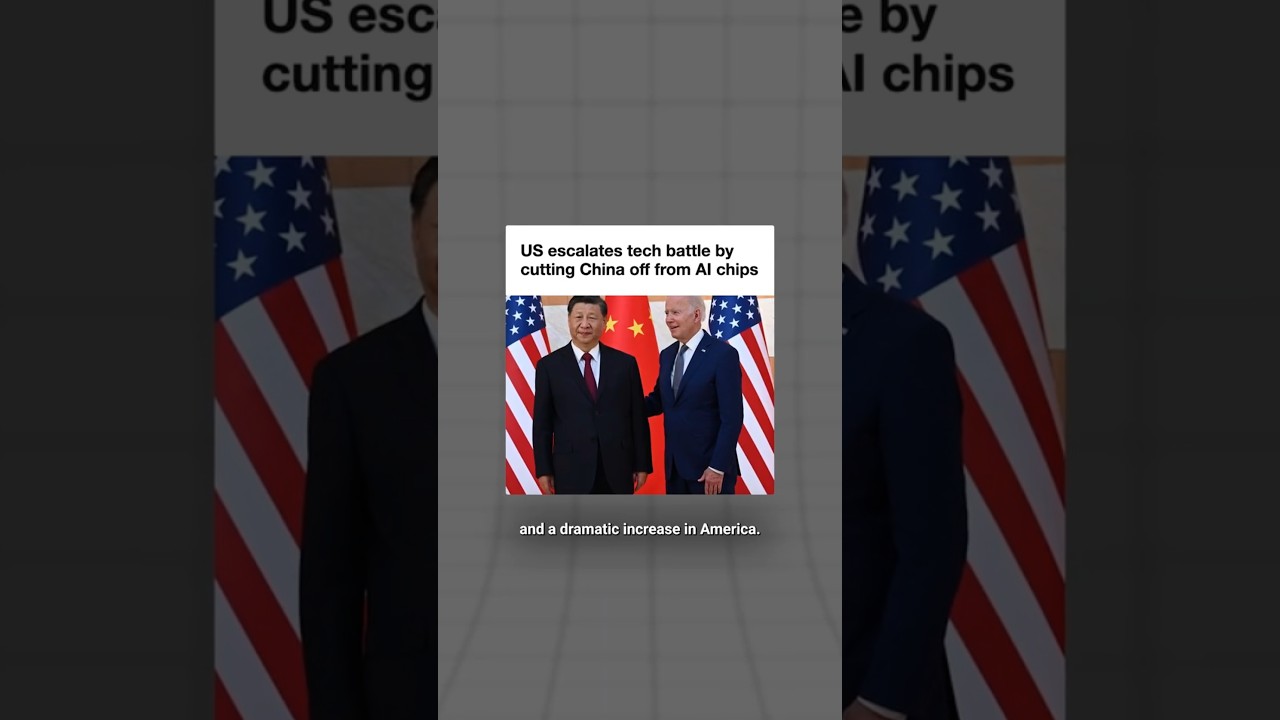
>> and a dramatic increase in America. So,

0:17

today, 70% of watts are being deployed

0:20

in America. And, you know, China is is

0:22

really a very small number. It's [music]

0:24

sub 10% of watts being deployed for data

0:26

center AI compute is in China. And as we

0:29

step forward, [music]

0:30

they're still at a very small number.

0:32

So, in 2028, it might start to inflect

0:34

up, [music] I think, but it's pretty

0:35

easy to say China will have like 30

0:36

gigawatts of AI compute or less.

0:39

>> Wait, during 2028?

0:39

>> Yeah, in 2028.

0:40

>> Honestly, when I interviewed Jensen and

0:42

asked about export controls, [music] I

0:43

was still manning what is like the

0:45

opposite view that he has. But, I'm

0:47

like, yeah, maybe there's a world where

0:48

we if we just cooperated with China, it

0:49

would be better for us, [music]

0:50

especially since they control so much of

0:51

the supply chain and the other things

0:53

that will be needed for robotics and

0:54

other things. But, I didn't realize the

0:56

compute situation was as [ __ ] as

0:57

you're saying. [music] If they ship the

0:59

amount that you're saying, that's a huge

1:00

difference. By the time we have

1:01

automated coder and even getting into

1:03

like automated researcher, China is like

1:05

way far behind on the compute stock. If

1:06

that ends up being the case, that

1:08

[music] would have worked. I I think

1:09

that's actually a notable success.

Interactive Summary

Die Analyse zeigt eine signifikante Verschiebung bei der globalen Verteilung von Rechenkapazitäten für KI-Rechenzentren. Während China 2022 noch etwa 30 % der weltweiten Kapazität stellte, ist dieser Anteil aufgrund von US-Regulierungen und einem massiven Ausbau in den USA auf unter 10 % gesunken, mit der Prognose, dass dieser Trend bis 2028 anhält.

Suggested questions

2 ready-made prompts