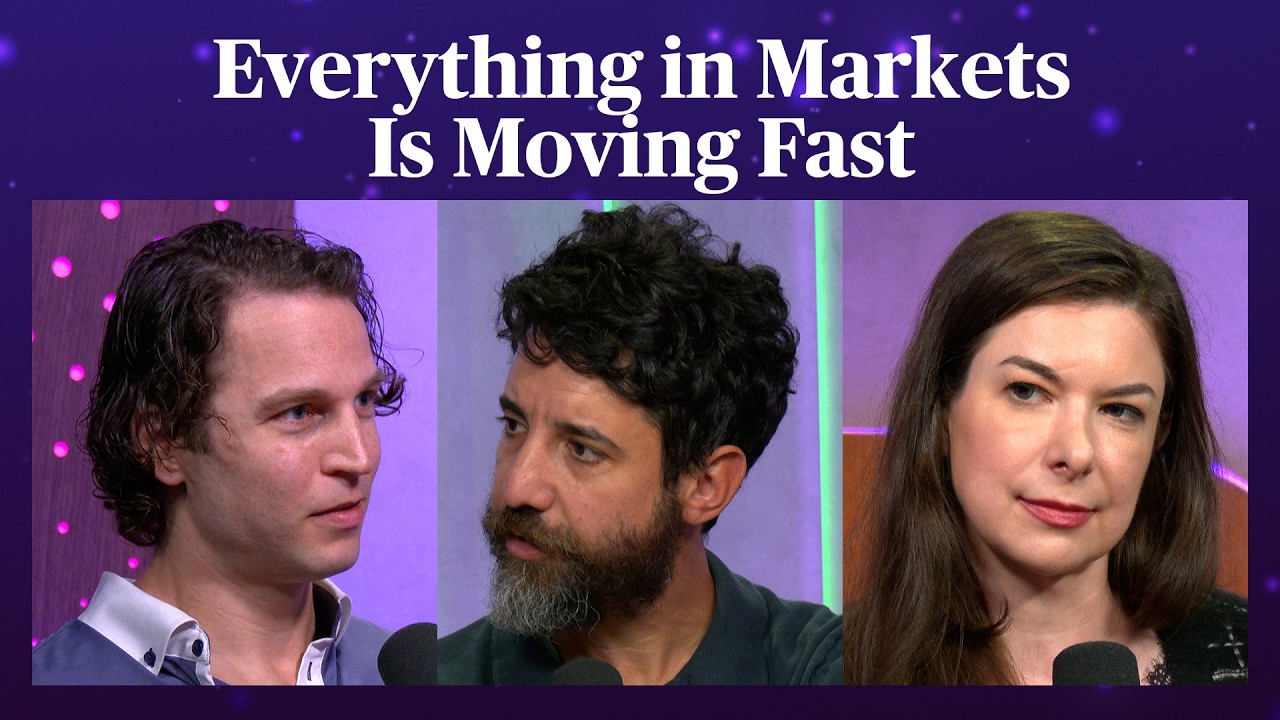
These Foreign Markets Are Crushing US Stocks | Jack & Max
Now Playing
These Foreign Markets Are Crushing US Stocks | Jack & Max
Transcript
1234 segments
macro and geopolitical events were going
to cause an outflow of capital from the
United States. It's not that
foreigners stopped investing their
marginal dollar into the United States.
They did at a nearly record pace. US
assets did extraordinarily well in 2025,
but they underperformed many foreign
markets. They underperformed the world,
both in terms of the stocks not going up
by as much and also the dollar itself
was a drag. Today's show is brought to
you by Fiscal AI, the fastest growing
stock research platform on the internet.
Many of the charts and tables we're
going to be using today and showing on
screen are from Fiscal AI is where my
market day starts and ends. The link is
in the description for 15% off. I'm
joined by my friend and business partner
Max. Max, good to see you.
>> Good to see you, too. Everyone was
saying in 2025 that the dollar's
dominance is over and that basically uh
tariff policy and other macro and
geopolitical events were going to cause
an outflow of capital from the United
States and it would be severely bad for
US assets. And I I think Max
superficially
that appears to have not been the case.
uh because you look at just how
incredibly well-performing the US stock
market has been, how incredibly well
performing the US credit markets have
been. We all we all know that. And then
in particular, we could show later a
chart from Joseph Wang showing that at
least for the first three quarters of
2025, net foreign flows into were about
six or 700 billion dollars. So the
capital kept on coming. So that's that
that's not a question. What what's
interesting is just that the hedge ratio
increased. So basically it's not that
foreigners stopped investing their
marginal dollar into the United States.
They did at a nearly record pace, let's
say, but in they just hedged that a
little bit more. So they were a little
bit more cautious and they uh as they
deployed records amount of capital into
the US uh bond and equity market they
just on the margin hedged that currency
risk a little bit more. So that is what
2025 looks like. So we can say Max that
oh this narrative of the dollar the
death of the dollar it it didn't happen
in 2025 or Max is have we have I spoke
it too soon because I know you've done
some work on just showing a different
different picture and how the rest of
the market actually in some ways kind of
did crush the US. So so take us through
the statistics Max take us a tour of
2025 by country. What does it show? It's
always interesting in years like 2025
when you have US equity markets
performing well. Uh the big tech stocks
leading the way. You know, we had the
S&P 500 up in the high teens. You had
the NASDAQ up a little over 20%. Um and
of course you had the Russell 2000 up
but not nearly as much. Um up around
like 12 and a.5%. And so when you see
that, you tend to hear, oh well, the US
continued to dominate. As you said, we
had record record flows into US markets.
But when you actually step back and you
look at the performance of major global
equity benchmarks and as well some of
the individual countries, the US was not
the only game in town. We've been
hearing that the US has been the only
game in town and that's why everyone is
so overweight US equities. Well, that
was not the case in 2025. And you can
look at the broader indices like the All
Country World Index. And I'm looking at
the ETFs and total returns here because
it does a nice job of taking care of all
of the currencies and as well accounting
for dividends. And the All Country World
Index was up 22.4%. So, it beat the S&P
500, it beat the NASDAQ. If you go even
further because obviously the all
country world index includes the US and
you look at EM the emerging market MSEI
ETF you're up 34%.
And then when we actually go look at
some of the individual countries and
look there are lots of different uh MSCI
indexes out there that cover all sorts
of countries. We just took sort of the
top 15 or so markets by global uh by
market cap and looked at them. So, Jack,
what do you think the best performing
market was last year?
>> South Korea.
>> Yes, you're right. South Korea was up a
whopping 95.3%.
So, the the South Korean market in
general just absolutely dominated
everybody else in the world. You also
saw China did very very well. I believe
China, the M MCHI ETF was up 31%.
So, you really saw a ton of countries
outperforming the United States. You
look at most of the European countries
on the list, they outperformed the
United States. There were some dogs out
there in terms of major equity markets
that underperformed. Jack, of those top
15, what do you think was the worst?
>> I know India did relatively badly.
>> India was pretty bad. India was only up
2.7% on a total return basis. The INDA
which is the Msei India ETF which is
again one of the reasons you should look
at the total return and look at the ETFs
is because India's currency actually
fared pretty badly this year and so if
you look at just the index returns in
rupees it's not going to look as bad. Um
the actual worst performing country was
the Kingdom of Saudi Arabia. So the KSA
ETF was down 8.2%.
There were not many countrywide indices
that were down on the year. That was the
only one in that top 15. Everybody else
was up and I would say the overwhelming
majority actually outperformed the S&P
500. So whether you're talking about
emerging markets, developed markets,
after adjusting for currencies, after
adjusting for dividends, you would have
been better off outside of the US not
investing in Nvidia or or the rest of
the MAG7. So I think that's just a
little bit of a narrative violation
that's important for people to look at
and just in general this is a process
that is good to do not just at year end
but all the time right like you hear
these market narratives you hear people
talking about price performance but
until you actually go look at the
screeners that are available out there
and say well what is leading the way
what are the best performing stocks best
performing markets uh it's very easy to
just believe the the narratives that you
hear and then when we're just talking
about equity markets when we go as you
said start to look cross asset look at
silver gold and other assets that um
that had spectacular years in 2025 it's
pretty clear that uh it was not just
Nvidia and the MAG 7
>> and Max what about Europe and Japan
>> looking at the EWJ 25.8% 8% performance
total return in 2025. So higher than the
NASDAQ, higher than the S&P 500,
let me see here.
Then the ETF that I chose for Europe,
which does include the UK as well as the
European Union, that was 35.6%.
So that's kind of what I was saying that
it's not just an emerging market
phenomenon. It is a true exus
phenomenon.
>> So the bull market is global. US assets
did extraordinarily well in 2025, but
they underperformed many foreign
markets. They underperformed the world
in both in terms of the stocks not going
up by as much and also the dollar itself
was was a drag. Max, I I took it a
little bit further and I looked into we
don't want to talk about micro cap
stocks. Let's take a $5 billion market
cap. So decentsized companies. What are
those companies over $5 billion market
cap that are up over 100% in 2025? Most
years there aren't a ton of them, but of
course last year huge bull market, there
were a lot of them. So Max, so in total
there were 297 companies. Take a guess.
What are the top three countries where
they're from and and and roughly uh you
know how many companies?
>> Well, I imagine the US did very well. We
already determined that South Korea was
one of the tops. Um you know, I know
Japanese stocks did well. I I would say
that it's the US and Asia um that are
probably topping the list. Did the US
keep the lead? No. The US was number
two. China was number one at 81
companies in China. Mark cap of over $5
billion that were up over a 100% in
2025. Most of these companies, Max, you
and I had not heard of these and I'm
guessing that many in our audience had
also not heard of these companies as
well. In the US, there were quote
unquote only 43 companies that exceeded
the giant bogey of of 100%. And then the
third was South Korea. It's really
interesting. China has 81
companies. I think there's a massive
bull market in China. And also, Max, you
said Msei China was up whatever percent.
I think that might somewhat under
undercover it because the Msei
um waiting like it has a lot of dogs and
it it has a lot of companies that like
went public in 1998 that are not really
doing much. Active managers might be up
even even more in China. Now the reality
is maybe there aren't that many active
managers uh you know western investors
who are investing in China because they
just got obliterated over the past 10
years. And also on and index waiting
point max. Yeah. So you you said S&P was
up X and AQE was up like one or two% of
above that. I think that like of the Aqu
like 60% of it is the US. So yeah, you
got to look at like XUS and yeah the
point is foreign markets do really well.
Gold and silver have absolutely trounced
it and uh they are up just in an
enormous amount. So it's it's gold,
silver, the rest of the world,
semiconductors, AI, in particular, Max
Memory. One of the reasons South Korea
did so well, it's biggest waiting by is
SKHix, a a memory company. These
companies are just destroying it. Um
they are up 300 400%. And I'll be
honest, I don't know a bunch about the
memory things. Obviously, there is a
shortage right now. Uh it can be tough
to bet on the shortages. I shortages
often, maybe always, result in gluts.
There will be a time when everyone isn't
scrambling for high bandwidth memory and
uh these these stocks probably come back
to earth but that that moment is not now
max and you know I I they're ridiculous
numbers over last year's performance but
max we're recording only a handful of
few days into 2026 already these memory
companies SanDisk Western Digital Lamb
Research has you know more than semis
less less memory but it seems like this
AI trade just keep keeps on going
>> and I did want to make one clarification
ation on the company returns is that we
were looking at one year backwards total
return. So technically these are not the
calendar returns from December 31st to
uh December 31st and 2025. We are
including just a few days of 2026 in
those total returns when we're talking
about the indexes uh that we were
looking at the index ETFs that was true
calendar year. Um but Jack I also think
it's important to look at the sectors.
So, I know you also took a look at the
S&P 500 and just those 11 gigs sectors.
Uh, naturally, it I think we can all
determine that tech was one of the best
performers, but was it actually the
leader when all was said and done?
>> It was the leader. There are 11 sectors
in the S&P. Um, take a guess. So, tech
was the leader. What was the second
best, third best, and what was the
worst, second worst, third worst? Take a
guess. I know a lot of consumer stocks
did well. Um, as far as
what was third best, I couldn't really
hazard a guess. I mean, in terms of
worst performing, I got to put energy in
there. I think, uh, is real estate its
own sector?
>> It is.
>> Yep. I think real estate probably did
bad. Lots of expectations for rate cuts
that didn't quite come to fruition. Um,
and then
who's
I'll put utilities down there just
because utilities never move. So if in a
market in a bull market, utilities
probably didn't do well. The only thing
you were truly wrong about was uh the
first thing you said consumer
discretionary was actually not strong.
Consumer discretionary was up a mere
7.4%. The biggest holding being Amazon.
Consumer spending is not as hot as many
other things in the stock market and in
the economy. I know Amazon
underperformed the S&P last year. So,
that was what you're wrong about. Okay,
now here's the good news. Um,
communications was was the second best.
Third best was industrials and you
basically nailed the worst performing.
The worst performing was actually
staples, not utilities. So, normally
Max, in a totally risk-on year,
utilities is the boring thing. And
normally, you know, we've had many
risk-on years we've covered together,
Max. Like everything crushed and the
underperformers were staples and
utilities because they're riskoff
trades. So when there's uh every
everything that's risky is doing well,
these things lag. But Max, utilities is
a bit of a risk-on trade now because
there are these independent power
producers, IPs, that are slightly, you
know, less regulated. So they can sell
electricity at uh high rates to these
data centers. And so stocks like Vistra
and um constellation energy those stocks
are up massively. So utilities actually
did did quite well. You were right about
real estate and uh you were also right
about energy. Energy was the third
worst. I also m notice max like it's
just when we're going through in in in
the screeners like it's amazing how some
of the best performing stocks vast
majority of them are either like
materials so gold and precious metal
mining maybe some copper mining or AI
like the companies designing the chips
so the semiconductors the like there's
this company called Victory Giant that
was up like 650%
over the past year they make the printed
circuit boards so there's basically a
ton of companies in China that make a
lot of things involving with data
centers that there's a shortage of and
they're up just hundreds of of percent
and uh many people including myself had
had not heard of of that. So, it's
really those are the big themes.
>> We're talking about these like companies
that are up over 100%. Like most of the
market like lives in a more normal range
and as well the bigger companies, it's
just hard for a company that is over a
trillion dollars to add a trillion
dollars in in market cap in a year. So,
you're just not going to see that. So,
when we talk about, oh, these markets
outperformed, that doesn't mean that
more market cap was created or or more
value was created at the end of the day.
So, you know, the US market was trailing
EM, but you think about like the total
total value created. The US still
created more value, but we as investors
who are not beholden to the capacity
constraints, we get to look at all of
the different fish in the sea uh for for
opportunities. That's something that,
you know, Noris Bank just doesn't get to
do that. Um, and that's that's what
really controls the flow. So I I do
think it's it's important to put it in
consideration. But yeah, I mean a lot of
the names that that were the best
performers of the year, you look at it
and there's plenty of good fundamental
reason. Some of the other names like
just the the top two companies that we
came across were Hong Kong based NASDAQ
listed companies. One is Regenel
Bioscience Holdings. QMM holdings was
another one. So yeah, QMM Holdings, they
do AI avatars, which is something I
think we've all seen. It's certainly
something that's happening. Is that a
$6.8 billion business? I don't know.
Regenel Bioscience holdings. I just went
to the news tab for it and there were
only three news stories and one of them
was like investors are suing uh Regenel
Biosciences. Interesting to see that
oftentimes the best performing stocks on
the year. um there's little to no
fundamental bearing uh beyond narrative
in many cases just looking at QMM
holdings revenues in 2022 less than 2021
2023 less than 2022 2024 less than 20
2023 last 12 months less than 2024 so
its revenue has declined for five years
in a row four years in a row needless to
say anything that Max and I say on this
program we're you know you and I are not
recommending stocks but we are
especially not recommending QMM holdings
Jesus and also Max, I'll say I think
this is typical of late cycle behavior
of you have these huge run-ups in in
very speculative stocks that um are not
making money in some instances are not
making revenue and in some instances
have no plausible reality where they
ever can make money. Max, what comes to
mind is quantum computing uh that you
know this technology that uh is real but
the commerciality of it is is not there.
And um from what I understand, from what
I've heard, like the market, the the the
near-term 5 to 10 years, what it can do
is hack Bitcoin, which could be very
valuable. You know, people like Lyn
Alden and Luke Roman have talked about
that as a threat to Bitcoin. And you
know, Lynn thinks that Bitcoin is going
to be okay and it it can, you know, kind
of dodge and weave and bob and weave and
be fine. But basically, other than
hacking Bitcoin, it has is, you know,
basically no near-term use cases.
Martinia said over the next 30 years, he
doesn't think it's going to make really
any revenue at all. And these stocks had
been absolutely mooning for way beyond
fundamentals probably because real
companies like Nvidia and Lamb Research
and all these other companies had gone
up so much they say, "Oh, hey, we're
we're futuristic computing, too, and we
do this blah blah blah blah." Um, and
you know, in the frenzy of the summer,
those stocks had go had gone up and
surged to tremendously high levels. Um,
they they now appear to be coming back
to Earth. So, like today, all these
companies I posted like Lamb Research, a
real company, very profitable, you know,
mo uh duopoly triopoly very profitable
and you know funding what is powering
this global economic boom of of AI
whether that boom is sustainable or
whatever setting that aside so lamb
research was up today and quant the
quantum stocks are down and I think that
on the margin is healthy when you have
real stocks going up and fake stocks
going down I should disclose that you
know I am actually short some some
quantum names in very small size and you
know long some what I perceive to be
real semiconductor names
>> as you said we've already had some
pretty crazy trading to start the year.
What else are you looking out for in
2026? I know you've been talking to
people about what is next in 2026. Max,
I I'll talk about 2026 in a sec. I do
want to shout out our sponsor fiscal AI.
Uh it is a tremendous platform for
researching what really drives companies
and stocks at the end of the day in the
long term, which is company
fundamentals. Um so you know all the
three statements their multiples their
trailing multiples their forward
multiples they have se segments and KPIs
which is data from actual uh filings
that it you know is very non-GAAP but I
I think is really cool as well and they
also have unlike a lot of other
platforms incredibly in-depth
international data. So a lot of you know
platforms like oh US is the only game in
town and if you look up some company
like they barely even have the stock
price of of that that company. Fiscal is
not that. So they you know we talked at
the beginning just about opportunities
internationally and how internationally
was uh the the best performer last year.
I think for people with an international
focus uh it is it is a lot of value
there and people can get 15% off with
the link in the description. Okay Max.
So 2026 I don't think the AI I mean
caveat you know who who am I? I'm just
some guy. I don't know what happens.
Caveat, I don't think the AI trade is
over. I think that there's an enormous
amount of proyclicality in this trade uh
that ultimately will and you know a be a
boom that we are in and ultimately a
bust. So I I am not oh this is going to
grow at 15% every year very very
gradual. No, I think that this is going
to be a dramatic uh boom that we are in
probably the mid to late say fifth sixth
inning. Who knows? I mean saying fifth
or sixth inning is kind of like that
hedge of saying I think there's going to
be a 40% chance of a recession because
you know you can't it doesn't make you
look wrong but I I where I will stick my
neck out on this is on this
procyclicality like um you know it's no
secret I've been you know a little bit
of a bull on on the AIS in the semis um
you know you you know I've talked about
this over the past year but I did share
some concern like I guess in November I
guess because I'm like okay is OpenAI
going to be able to raise all this money
like if OpenAI can raise this money I'm
It's it's the the the trade continues.
Um the madness continues if you think if
you think it's madness and they're just
going to continue to spend money on
Nvidia chips as well as throughout the
ecosystem. And it's going to benefit not
just the semis but the companies
supplying the electricity, the random
companies in Asia that are making the
little adhesives that uh connect
everything on the printed circuit
boards. Boom. Boom. Boom. Okay. Um that
that I think that the party continues.
Um and OpenAI in December was announced
it's going to raise a hundred billion
dollars at over $800 billion value
valuation. It announced that there were
reports of that it's trying to but I I I
think if it can't raise and there's
truly no bid for you know the VC at
OpenAI and they do a down run that's
when I start to get concerned but uh
based on my reading of news reports
that's just um not where it's going to
happen. So I feel like that max it is a
secular trend but you could have a
higher level of confidence um that like
the trend is going to continue. I where
in precious metals you know where I've
also been involved you know you and I
talked about silver in October which
time-wise was not early but in terms of
price-wise for silver it was actually
you know somewhat early. Um there I'm
just like who knows? I mean I think
there's a looking at supply and demand
of of silver it's uh there is a shortage
if you count that physical bar coin and
bar demand as as true demand and gener
the thing about silver is also pro
cyclical because people buy coins and
bars when the price is high and rising
there was a brutal brutal precious
metals bare market from 1981 to 2000
basically and there even though the
price went down you you know people
weren't seeing value they were selling
and melting their silver every single
year and every single year it went down
and they melted more silver. So I think
these things are tremendously pro-
cyclical. Um I still would lean on the
the bullish side on silver and gold. Um,
I've been involved in kind of a very
very safe or safer way, which is the
precious metal streaming companies where
I feel like, you know, if if someone
were to buy this or if I were to buy
this today at uh, you know, and then
wake up 20 years later, like these
companies are going to be in a good
place just because they have such low
costs and uh, extraordinarily high
margin. So even if the price of silver
were to go down 60%, you know, these
companies are going to be around. You
can't say that about a you know some
some silver miners which is you know a
much more risky business and even in uh
you know gold and silver mining even in
2022 oh inflation's here gold's going to
do well price of gold went down and oil
went up and oil was a huge inflationary
cost for all these gold gold miners
which is somewhat um underappreciated. I
think silver is also industrial use
case. It uh it's used in a lot of
electronics. Solar I think it also is
going to be used in AI based on my
preliminary research. Um used used in
AI. There are some things that only
silver can be used for. Uh and then
there's a question of okay silver gets
so expensive. Are they going to replace
it with copper? Some things they can
replace it other things they can't
replace it. Um, Al, Alex Campbell, who I
actually haven't interviewed, I think, I
believe, uh, you know, former head of
commodities at at Bridgewwater. Um, but
I'd love to interview him. He was so
early on silver, he's absolutely nailed
it. He had a post where he said that
actually the demand destruction for
silver for the solar companies doesn't
even begin until $125, which sounds
pretty extreme to me, but I think there
it's there's no real secular trend. I
guess the the trend is so the trend is
the trend is solar and the trend is
there's a supply uh shortage and this
and the trend is that silver is mined
primarily as a byproduct from other
metals. So it's relatively inelastic
supply. Um so you know copper and zinc
prices go up then silver supply will go
up because everyone's going to be be uh
mining silver as a byproduct. But you
know, silver prices could go up a ton
and silver supply wouldn't necessarily
respond as long as copper and gold and
the other things that are you know from
which silver is mined as a byproduct
stays uh safe stable.
>> We've been talking about opportunity.
We've been talking about all these
stocks that are up. Uh what about the
risks and what about the losers?
>> So in terms of risk, it's funny. Lisa
Bramitz posted on Twitter from
Bloomberg. She posted a chart from
Deutsche Bank showing a poll of
investors. What do you think the biggest
risks to market stability in 2026 is?
And Max, do you want to take a guess
what investors thought uh, you know,
recorded in the middle of December, what
investors thought the biggest, you know,
top three risks would be?
>> Top three risks. Um, I mean, always
valuations, right? Valuations are high.
It's always going to be valuations and
inflation. That's always a favorite. Uh
inflation. Um
and then private credit. Come on, right?
Private credit crisis. Those are those
have got to be the the big three. So,
two out of three. The first one was tech
valuations plunge and AI enthusiasm
waines. So, it was a valuation point,
valuations contract. But it really is
the broader point of AI is a bubble and
it's going to pop in 2026. 57% of people
pled investors pled said that that was
their biggest risk. The next one didn't
really make sense. New Fed chair pushes
for aggressive cuts and causes market
turmoil. If there's a new Fed chair who
pushes aggressively for cuts and there's
a lot of cuts, I think the market
turmoil is going to be
>> higher. That's not
>> That's the bond vigilantes. That's like
we we lo the Fed loses credibility.
Yeah, that that's that just never
happens though. Like I mean, you know,
literally that's never happened.
>> Well, we've never had we've never had a
Fed chair who pushes for something that
you know, you could argue that they
misinterpret the data from time to time
or they're not looking at a full
picture, but you've never had we've
never had a Fed chair who's just
entirely politically motivated in their
decisions.
So Max, there was a giant bond bubble
2020 2021 and and before then and bond
market thought you the implied thoughts
of the bond bond market has no thoughts
but the implied thoughts of the bond
market was that inflation was low and
transitory and we're just global
deflationary bust global disinflation
demographics etc etc. But you know that
that was wrong obviously with the
inflation of 2022. And so you had you
had a genuine bond bare market that was
brutal uh in 2022 and to a much less
extent 2023. But these general bond
vigilante points max like generally I
see you know it caused the tenure to go
from 4.2% to 4.4%. And if you're a
leverage investor and you're you know a
macro uh hedge fund trader or former
hedge fund trader like you can make a
lot of money and congratulations on that
trade. But just as someone who's kind of
like calling balls of strikes of what is
significant and what's significant to
the market, the tenure going from 4.2%
to 4.4% is is not is not serious. And I
have never seen this. The Fed is uh the
bond market has lost control. The you
know the government has lost control of
the bond market. Like I just never seen
that happen other than in 2022 when
there was just this huge inflationary
shock. But that was
>> it happened in the UK.
>> True, true, true, true.
>> It happened in I meant US. I meant US
>> and and there look I it's not market
risk and
end of all times are very different
things and so a lot of times when people
say like what is the big risk like the
size of the valuation bubble uh argued
out valuation bubble for AI is so large
that people are like if that pops it's
going to be huge
but yeah I mean the idea 2022 is exactly
what you're talking about that that
stocks and bonds stopped to do what they
normally do together and the
deleveraging that that caused is
arguably what led to the markets
underperforming as much as they did.
Absolutely, Max. But there was a huge
inflationary shock. I if in if the
investors pled thought that that was the
risk, I think I assume they would have
said inflation to 6% or to 10%. You
know, inflation went to 9% in 2022 as
you know. What they're saying is that
the Fed is going to cut by so much that
the bonds market sells off. And Max, you
know, okay, we saw that to a tiny degree
in um in 2023. No, no, no. Yeah. 2024,
the Federal Reserve cut in September and
everyone thought this is what's going to
get mortgage rates down. This is what's
going to go to the 10-year down. But the
10-year and mortgage rates and the
30-year actually went up because the
curve steepened massively. Okay, sure.
But that's the 10 year goes from 4.2% to
4.6% or 5%. That's not relevant, you
know, that's not I don't I don't think
that if the Fed cuts massively and then
tenure goes to 5%. I don't think that's
a risk to to the uh the stock market. I
think um I think the short end matters a
lot more than many claim. If you look at
like where real estate in where
commercial real estate and business
finance from bank financing a lot of it
is at the five-year rate and in and in
some cases literally sofur like all this
private credit lending is lit you know
98% 99% sofur. So uh people say the the
Fed has no control because it only
controls the short end and it's the long
end that matters. Okay, that's true for
housing, for mortgage housing, but for
much of uh business finance and uh
capitalism, if you could use that word,
you know, the Fed, the Fed controls a
very very very relevant le letter. So,
I'm just, you know, I'm not making fun
of anyone. I'm just kind of disagreeing
with that. Number two, you Max, you
nailed it. Uh the risk of number three
is crisis and c private capital, private
markets. Um I think that that makes a
lot of sense. We've covered, you know,
uh, Max, the issues that private credit
has had with with, uh, uh, first brands
and other, uh, blowups in private
credit. Many people, particularly on
YouTube, Max, were very interested in in
this topic. The issue is, you know,
we're not talking about now is there's
really been no news. And this is the
kind of thing, you know, I know you did
an interview today where private equity
was was addressed as a topic. Um, it's
uh, that that can can be kicked down a
road. You have no many time you have no
idea how how many times that can can be
kicked down the road and you have no
idea how long the road it's it's a long
long road. So you know it's possible
everyone who's naysaying private credit
is absolutely right but you know it
doesn't happen until uh 2028.
Interesting to me Max is that uh okay so
by the way the risk number four is bond
yields rise more than expected. That's
somewhat similar to risk number two. I
think um I think I've shared my views on
that. I don't I don't think that's a a
very likely option. Again I could be
totally wrong. Like I feel like
sometimes I worry that I'm sound
arrogant, but that just podcasting it's
just shorthand, you know. Okay. Um me me
saying I don't know it's it's it's
unnecessary. It goes goes without
saying. Okay. But um the the interesting
the 10th risk is a US hard landing. Only
9% is a US hard landing. So basically
there are nine risks that investors
think poses a bigger risk to market
stability in 2026 than a hard landing or
a recession. I think that's crazy. Max,
you look at the just the slowdown in the
rates of growth. It's been going on
since late 2021, early 2022
spending in terms in nominal terms, sp
consumer spending, um, uh, uh, uh, GDP,
uh, earnings, all they've continued to
go up, but the rate of growth has gone
down and down and down. Income, job
growth, it's all just declined very,
very, very slowly. and in a way that
corporate profits could still increase
because you know as inflation declined
from 2022 in real terms everything got a
a second wind a real boost and that's
you know what's that's been the fertile
ground for this bull market that we've
been in over the past three years but
like the trend is down for these rates
of growth and as much as you know I've
I've pushed back on people saying growth
rates are collapsing like you know the
consumer spending is only growing at 4%
instead of you know it's only growing at
6% instead of 10% it's like 6% is still
high that trend is still going down. So
I I think that um on I don't know what
would populate my my 10 risks or the you
know Jack Farley's biggest risk to
market stability in 2026 but a US hard
landing and a you know US recession is
definitely higher than number 10.
>> What do you think?
>> Well I I would say that six on the list
kind of encompasses that. It just adds a
cause like AI causes a noticeable impact
on unemployment and markets extrapolate.
Like I would argue that that could be
lumped in with the hard landing. Um,
it's just saying that AI adoption
impacts employment rather than it just
being a general slowdown.
>> Max, I'm so glad you said that. That is
the I think one of the most relevant
things in the market right now. First uh
touched on my interview with Dan Krauss
who really opened my eyes on this. He
looked at the relationship between the
job market, so unemployment or or
payroll growth and profits showing
normally that profits grow as the labor
market grows. So uh you know as the
economy is strong companies hire more
people those people make more money they
spend money on more things those things
that people buy and services that people
buy pads corporate profits and it's a
virtuous cycle and so it makes sense
that normally those things are
correlated but over the past I don't
know let's say 12 to 18 months some
people can check out the interview it
came out in November that that that has
diverged that trend and actually the
labor market has weakened a lot more
than you'd think if Look at corporate
profits and corporate profits have been
soaring while the labor market has been
stagnating. And you know the Fed use
likes to use this word softening. The
labor market has been softening. But you
could really say it's been weakening.
And so you look at corporate profits,
you think the labor market would be way
stronger than it is. You look at how
weak the labor market, you think
corporate profits would be way uh lower
than they are. So there is a real
divergence. And the question is, is that
because of AI? And are we going to live
in a world max in 2026? Are we going to
encounter a world where the the the job
labor market has recessionary
readings but corporate profits are up
15%. Um that's possible. Actually, you
know, I recently interviewed um Catrini
of of Catrini Research and um
[clears throat] his one of his trade
ideas for 2026 was uh uh he called it BS
jobs, but it it's LLM layoffs, you know,
large language model layoffs that
basically white collar employment uh is
very weak as companies uh maybe they
don't fire people, but they just cease
they slow down their hiring, which on
the on the margin, you know, net net is
basically the same thing. and that
basically stock market can soar, profits
can sore as the labor market is really
really really weak. And you know I think
he he cited um how Levis's you know the
gene makers uh they they their profits
went up when they when they uh shipped
all the jobs overseas and to to Asia and
started manufacturing their genes
exclusively not in the US. Obviously it
has you know very very deleterious
social uh uh consequences in the US but
just from a corporate perspective um you
know the profits go up. So, I think that
is a possibility um in in 2026. Uh a
definite possibility.
>> Yeah, Jack. Now, I I do want to ask
about one story that was a big 2025
story uh that nobody really seems to be
talking about anymore and and that was
tariffs. Um we talked a lot about
tariffs in the first half of the year
and now we don't seem to be talking
about them at all. And it certainly
seems like in terms of US foreign
policy, there is a new shiny object to
play with uh being Venezuela. So it
doesn't even seem like something that
you're going to hear about from the
administration uh despite the fact that
the market has moved on from it.
>> Yeah, Max. Um, you know, when when
President Trump shocked the market on
that liberation day, April, you know, I
I really thought many investors thought
that it could cause a recession and
prices would go up, profits would go
down. Um it [snorts]
I I think that on the one hand I'm going
to be you eating my humble pie as I ate
all throughout 2025 you know once I
realized that the it had reversed that
um you know that that didn't happen and
I was wrong to be worried you know I've
talked to institutional investors and
I've actually shared oh I was wrong I
was wrong and they said Jack you you
know you we we were all wrong to be
worried because we thought that tariffs
you know would be 30 or 40%. the
effective tariff rate now is about 17%.
There's this chart from from Wells
Fargo. Um, and you know, so 17% is a
huge increase from 2% where they were
where they were before the US effective
tariff rate, but um, they're probably
headed headed lower and let's say it's
called 15%. Now, Max, I would have
thought 15% tariffs. If you told me uh a
year ago Trump's going to raise tariffs
to 15%, I'd say, "Oh, the stock market's
not going to like that at all." And on
the margin that will be net net negative
for for stocks. Um I would have been
surprised if you told me the S&P was up
you know close to 20% and the rest of
the world was up uh uh over 20%. I mean
China you Trump was going to go so hard
on China and raise tariffs on China. The
last thing you could possibly own is
Chinese equities. You know you you gave
the number before about how Chinese
equities have massively crushed it uh in
in 2025.
And um I mean I I think that a lot I I
think number one the US sector you you
know was is a lot more uh service
dependent and in particular the profits
of the S&P 500 in particular are much
more concentrated on the service sector
than good sector. I mean if you told me
that a year ago I'd be like oh yeah
that's true but I you know it often it
takes pain and it takes you being wrong
to really learn something and have that
you know imprinted on you. And uh I
definitely I definitely learned that
from from being wrong. It's like, yeah,
if um you know, if if if tomatoes and
apples are a little bit more expensive,
um that doesn't really matter to
Microsoft. Like Microsoft is going to be
fine, you know, and Apple, you know, it
was time, you know, you know, Max, you
me and a couple other, you know, hedge
funds got a little little bearish on
Apple, you know, for for a few days, few
weeks there in April. But, um Apple was
fine. They got they got an exemption
from China.
>> Yeah. I I I think that it's it's partly
uh you know the haters were wrong that
the doomsayers were wrong that tariffs
is going to be a disaster. A it's partly
that for sure. Um I think it also is
that President Trump the effective
tariff rate was a lot lower than it was
initially announced to be. I'll give the
president credit on this that he has
convinced the market that a 15% tariff
rate is low because he threatened them
with a 40 to 50% tariff rate. So now we
all think 15% tariffs that's so low
whereas a year ago we thought we were
used to a 2% tariff. It's amazing no
one's talking about it at all. I still
think I still think it matters and I
think also that it has very slow effects
uh that remain to be seen. I do think
when it comes to yeah prices I mean
prices have uh you've not seen a large
inflationary effect of tariffs
definitely and I I think that's because
uh corp corp corporate profits have
taken the heat but again it's like the
the company that take the heat was a
random industrial supplier that has 10
people you know it's not it's not
Microsoft you know so and and if if
Microsoft and all these other companies
took a little bit of the heat they uh
you know they could definitely afford it
with how much money they're making.
Definitely. I also say Max I mean I was
briefly short I know I lost you know a
few percentage points in like being
short you know all these importers like
Walmart um uh discount uh sorry Five
Below which you know sells stuff all
from China uh Toys R Us um which you
know toys mostly made in China all these
all these companies like it's amazing
how how uh all these companies that are
hugely imp dependent on global trade and
you think that their profits would be
massively hurt by it and their stock
prices would be hurt. It really it
really didn't happen. So yeah, it
definitely was uh was surprising. And
yeah, you you were referencing
Venezuela, I assume, Max.
>> Yeah, I was definitely talking about
Venezuela. Uh certainly last year you
saw um as the war in Israel got more
attention. uh the administration started
to focus more on that aspect of foreign
policy and now with what's going on uh
with Venezuela and the arrest of Maduro.
Um that is definitely what's getting
most of the press uh I imagine that that
will will certainly take up most of the
spotlight, but just felt it important to
to put a bow on tariffs for 2025 as we
look forward to 26. Is there anything
else on your mind for 2026?
Well, I mean, the Venezuela thing
matters. Uh, hasn't like impacted the US
stock market that much. I I do think we
didn't talk about in the interview, but
um, Catrini in his 26 trades for 2026
did list as a trade idea, I think it was
called geopolitical special situations.
Venezuela and and the if Maduro gets
removed from power or exits power. Uh
you know he put together a basket uh of
oil comp companies that are in the oil
services business that you know going to
get more business um because the the the
oil could could uh begin to flow again
and and interestingly Venezuelan bonds
as well. And so that Venezuelan bond
trade in particular uh had had performed
uh quite well. So there's I I'm I really
like my interview with Satrini, 26 trade
ideas for for 2026 and people should
check that interview out. I I think um I
think the vast majority of people if
they listen to that interview will uh
will find will find it interesting.
>> Yeah. And on my side I interviewed uh
Harley Bassman for monetary matters. I
will add um on some of his trades. So he
does a stocking stuffer write up every
year where he goes through some macro
trades and he's the convexity maven.
He's a bond guy. So uh whereas a lot of
the trades for Catrini were thematic
equity, these were all very much your
classic uh interest rate and bond trades
that you would expect from Harley. And
so he had one for if you're somebody who
thinks the Fed is going to take rates
dangerously low. He had one there. He
had one. If you think rates are going to
uh skyrocket and um as well some trades
for steepening of the yield curve, which
based off of what we've talked about um
that that we are likely to see interest
rates fall with a new Fed share, but
that the market might not really like
that at the long end. He gave some
interesting trades for front-end levered
um investment vehicles like BDC's, some
of the high- quality BDC's, closed end
funds and REITs that are going to
benefit from the fact that um they have
not been making money on their leverage.
Uh but now they they would be making
money on that leverage. So, um some
interesting trades for the more
macro-minded people out there.
>> Yeah, I mean the bond market does
matter. I don't want people think Jeff's
saying bonds don't matter. I uh I mean
Harley is a is a brilliant brilliant guy
and uh it's interesting on on those
trades. Yeah, BDC's they will benefit as
interest rates go down. in particular, I
think agency mortgage um a agency
mortgage rates in particular will will
benefit as interest rates go down
because on the BDC's they're like
borrowing but then they're also long
floating rate products mostly that that
whereas whereas the the MREs they're
long mostly you know fixed rate um fixed
rate products. Uh we'll leave it there.
People can find um me on Twitter at
Jackfarley96.
Uh, Max, tell people where they can find
you, where they can find your podcast,
Other People's Money, and tell them a
little bit about fiscal. Give them a
reminder.
>> All right. Yeah. So, you can find me on
Twitter, Maxy. Um, as well, Other
People's Money. You can listen to it on
the Monetary Matters feed on the same
YouTube channel if you're watching us
right now. Um, and then in 2026, uh,
there are just too many people for us to
interview. So, Jack was very, very busy
in 2025. Uh, we at Monetary Matters do
not want to take our foot off the gas.
So, I'm just going to do more
interviews. So, you'll see me outside of
these Jack and Max episodes. If you're
Monetary Matters listeners, Harley
Bassman was the first interview I did.
We've got more coming up. I'm doing
another interview tomorrow. We're going
to start to get into Venezuela and some
of the stuff that's happening in the
energy markets um, and as well AI and
how that's impacting the demand for
certain energy natural resources. So,
I'm not going to spoil the guest, but
that should come out later this week.
Going to be a quick turnaround. Um, and
uh, yeah, as far as fiscal goes, you
know, just a reminder that all the
charts, most of the charts you looked at
today are coming from Fiscal AI. Um,
it's the fastest growing equity research
platform on the internet. And whether
you are uh an individual investor who
just wants to play around in the
platform or you are a professional
investor who needs to be able to
download data, they're able to offer
this equity market data to you at a
fraction of the price of many of the
incumbents because they own the data.
They're using AI to gather this data
directly from the filings. It's also
part of the reason that they have such
great coverage of international markets
because they're not putting all of their
they're not having to buy this data and
they're not having to employ people
thousands and thousands of people all
around the world to do that. So, that's
how they're able to offer this to you.
And at the link in the description, you
can get 15% off.
Interactive Summary
Ask follow-up questions or revisit key timestamps.
The video discusses the performance of global markets in 2025, challenging the narrative that the US was the only significant market. While US assets performed well, foreign markets, including emerging markets, Europe, and Japan, often outperformed. South Korea, in particular, saw a remarkable 95.3% gain. The discussion also touches upon the AI trade, its cyclical nature, and the potential risks and opportunities in sectors like semiconductors, memory chips, and commodities like silver and gold. A significant portion is dedicated to analyzing investor risks for 2026, with AI valuations and potential market turmoil being primary concerns, while a US recession is surprisingly ranked lower. The conversation concludes with insights into the impact of tariffs, geopolitical events like Venezuela, and various investment strategies for the upcoming year, highlighting both traditional and unconventional trading ideas.
Suggested questions
5 ready-made promptsRecently Distilled
Videos recently processed by our community