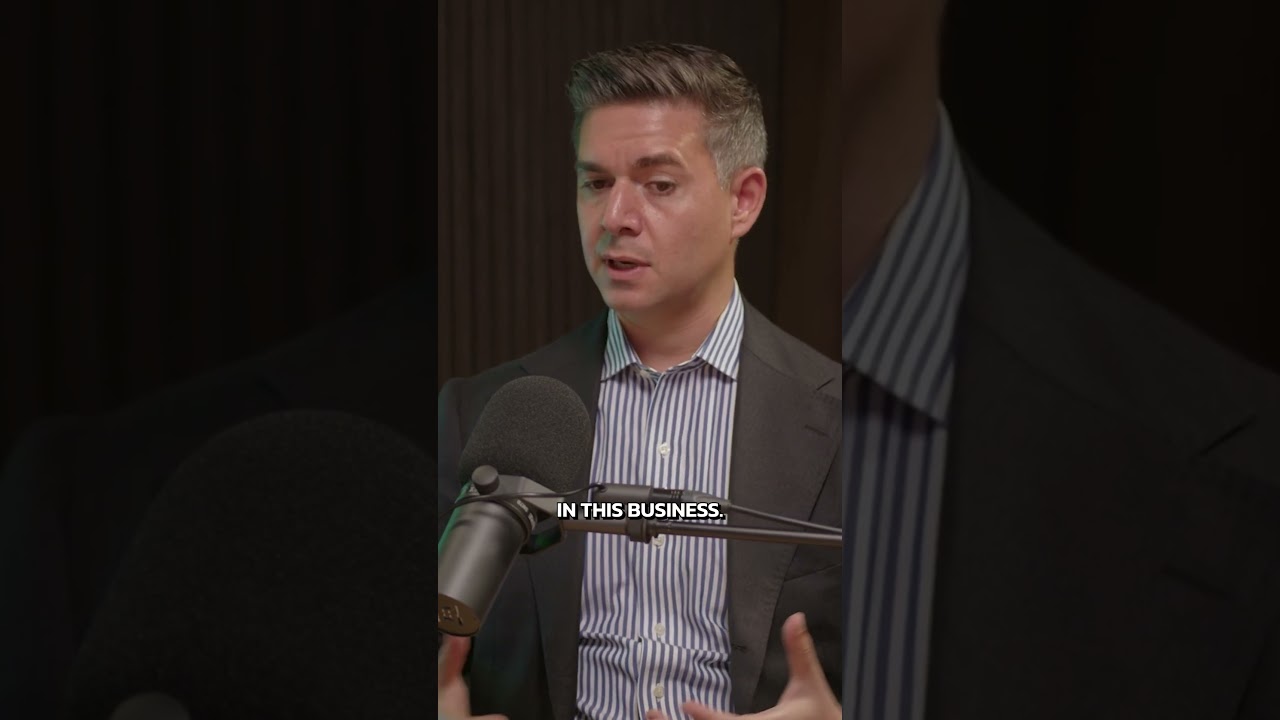
Why 20% of Hedge Funds Fail After One Year - Claudia Quintela on Why Managers Need Business Sense
Now Playing
Why 20% of Hedge Funds Fail After One Year - Claudia Quintela on Why Managers Need Business Sense
Transcript
1530 segments
Claudia, thanks so much for doing this.
>> Oh, Ethan, thank you for having me.
Thank you for having me.
>> You raise money for startup hedge funds,
for startup hedge fund managers. Let's
say I'm starting a hedge fund. I'm
trying to sell my own product. What's
the first question you ask me,
>> Ethan? That is how how long have you
got? Um, so I would start by saying the
following. You know, if you think that
hedge fund assets are at what, 5
trillion now, and that the last I've
looked at around three and a half
trillion of those assets were held by
550 firms
that have over a billion dollars. So,
the billion dollar club. Yeah. And also
you know about 20% of funds fail on the
first year and around 50% fail by year
five. I want you to explain to me why. I
want you to tell me why. Why are you
doing this? Because it's tough. It's
really hard to be an early stage manager
and um the numbers are heavily skewed
towards the the larger managers
and we're getting into a situation where
the winner takes most kind of scenario.
So why do you want to go into this? Do
you know how hard it is? What are the
reasons? because he who has a why can
withstand almost any anyhow right uh so
I think that is very important and
there's no right or wrong answers to
this but I need to understand why
>> let's say my answer for that question
because I'm trying to play out an you
know an example I guess a story in my
head let's say my answer to that
question is I've got a strategy that I
think can scale that performs very Well,
and I want to turn it into a wealth
creation vehicle for myself and for
others, right?
What questions from that point are you
asking me?
>> There's many things I would ask. Um,
no particular order of importance, but
you have a strategy that you think
works.
Explain to me why you think it works,
how you've proven it works, how you've
developed
what you need to make it work. Yeah. So,
what are the conditions that you need
for this to work? Okay. Um, and what's
your background and your expertise in
managing that strategy?
Then I would ask you, is your passion
really
uh laying with managing that strategy?
So, are you a markets person or
are you a business builder?
Because again there's no right or wrong
answer but I want to understand where
your passion is. A lot of people are not
business builders. Entrepreneurship is
hard. Going from being an employee to an
entrepreneur is it's really not for the
faint of heart. Um and so I would like
to understand exactly what you have. Um
I would like to understand
what infrastructure is required to
implement all of this that you've built.
Um and um
I want to understand what's your runway,
how long have you got until you give up.
I want to understand
how long can you stay in it without
making
without paying yourself.
And so if you're going to run a
business, I want to understand how long
are you going to be able to be in here
if you don't perform, if you have to if
you have a a company, if you have to pay
other people before you pay yourself,
because it's going to take a while. So I
need to understand all of that. Um,
obviously the strategy needs to make
money, but for instance, if you're
walking in and saying, "Oh, I have a
strategy and I have a proformer or back
test or whatever." Have you ever seen a
bad back test?
So, so tell me is it is this do you come
with a track record that comes a
previous track record? If so, how can
you prove those numbers? Who can who can
who can prove those numbers? Are they
audited? Are they you know are they
portable? How are they you know how were
they achieved? What did you need to
achieve those numbers? What information
what resources did you need to achieve
those numbers?
>> There's a lot in what I've said that I'm
curious about. Before I dive deeper into
the different aspects that you laid out,
I want to just push this kind of
roleplay further. Um, so that our
audience can see, you know, in real time
how someone like you would be thinking
about this. Um let's say I've been
running the strategy for cult two years
um on my own personal capital and let's
say that that cap and
let's say the capital actually I think
it'd be more interesting let's say it's
a it's a big piece of capital let's say
uh I've been running my own money or
family money um and over 10 $10 million
let's say right and I have a two-year
track record um a a strong sharp ratio
I'll call it over 1.5, right? What other
like what else are you thinking
>> when you say you have a track record?
Where's that held? Who can witness that
track record? So, who can back that up?
So, if an investor is going to do due
diligence on you, how can you showcase
those numbers
and and who can back those numbers up?
That would be one of the things. The
other thing that I would be asking you
would be um
what is your strategy? What markets are
you trading
and what capacity when you say strong
track record that strong is a a
qualitative qualitative word right? I
would like to see the numbers. I would
like to see um so you say it's two years
that you've been managing it. Um I would
like to see the P&L you've generated on
it. Um I would like to see the draw
downs. Um 10 million sounds like a lot
but for most institutional investors or
it's not. So then the question is where
where is that capital? Is that all your
capital or is that just friends and
family? And if you want to start as well
um what access to markets do you need?
What access to data do you need? And
what do you need to make this scalable?
When you say that the performance is
great, what what is the capacity for
this? So are you managing a strategy
that is not really scalable where you
can take this to 150 million and with a
great sharp a great sortino maybe let's
say 250 million okay so that will remain
like a very niche boutique strategy
and that means that the type of
investors that you will approach is very
different than if you have a strategy
that can run eventually 500 to a
billion. So that would be the first
differentiation I would make because
that's where you know the road splits in
two approaches. Um and then goes back to
you wanted to make this a vehicle of
wealth creation. If you want to make
this a vehicle of wealth creation,
one of the ways that you could do this
is keep trading it and just manage more
friends and family money,
right? And just keep trading your own
money. It all depends on what you want
to achieve. If you are going to take
third party institutional money, your
life is going to change and the way the
things that you're going to have to do
are going to change. You're going to
have to report um numbers on a monthly
basis. It's the the monthly dictatorship
I usually call it, right? So, so all of
a sudden all of these things become very
very different. you are going to have to
have legal and compliance and all of
these that these infrastructures that
you have gonna have to be regulated
though all that has costs that 10
million is not going to cover that. So,
uh 10 million is great. Um
but really, you know, to be marketable
to a lot of other people, you need to
have more. Don't, you know, don't get me
wrong. I I've worked with people who had
zero to get them the first dollar, but
just I just want to be really realistic
about what are you doing and what do you
want to achieve? And again, what do you
want to do with that 10 million? Are you
a markets person? So, do you want to
keep trading it and get a bigger and
bigger pool of capital so that you can
just focus on that because that's what
you enjoy or do you dream of having your
name on the door and having a bunch of
people working for you and and having a
firm that is well known and being an
well-known asset manager and so on. So,
what are your dreams and aspirations?
Uh what's your lifestyle as well? So the
other thing as well a lot of people
don't ask but it's it depends the stage
of life that you're in. So for a lot of
people that imagine they have family
commitments and so on. So how long can
they
run without again without paying
themselves and without u all of those
things have an impact into how I would
talk to early stage managers and these
are not early conversations uh Ethan
like I've had I remember couple of years
back I had um a manager um walk through
my door they're lovely people and uh
I've been talking to them for a while
And it they were looking for seed. They
had zero. They were looking for seed and
um and there were two partners and I
remember them talking and talking. This
was like I don't know how many meetings
we've had. And then at a certain point I
said okay guys um have you guys had this
conversation of how long you can you can
sustain this without assets how long you
can go without pay. And one of them goes
oh no I'm good. I'm good for 3 years and
the other one says I'm good to till
September and then I'm out. We were in
June
and that was a very uncomfortable
situation, a very uncomfortable
conversation of these people that had
been working together for a while and
had not had that discussion of look, how
long can I go without getting paid,
right? So, um, I was in the middle of
that conversation very stressed because
I thought, "Oh my gosh, um, this is a
situation where you want to escape the
meeting and let them just jam between
themselves and you know, this
conversation between two partners, I
shouldn't be involved." Thankfully, this
has a happy a happy ending. So, I raised
that manager 150 million in the
following three or four months. So, that
was fine. Um, but it was a very
uncomfortable conversation. And so
people need to have these conversations
of look if you're managing a business
and businesses will go through periods
of of bad performance and if you talk to
managers who have been around for 30
years. I remember talking to some
managers who've been around for 30 years
and they say well remember here's where
we took the art off the walls. You know
they had to you know the years were
tough and um you need to endure and you
need to pay your staff. You need to make
sure that if you want to survive, you're
able to keep the people that will make
the firm turn around and not everyone
can do that.
>> Very philosophical questions. I'm really
sorry.
>> No, no, no, not at all. It's all those
questions though they are making me
think and um
one of the things that I have learned
from starting this podcast from speaking
to managers especially ones who've
walked me through leaving even a pod
shop right one of the big funds um who
clearly know how to manage money of the
best pedigree in the world right they
still go and they still say to me how
hard it was in those early days. Um,
and distinguishing
the money management side of the
business to actually the business
building and please elaborate.
>> Oh my gosh. Um, you're asking me really
difficult questions because we can talk
about any of these questions for days
without end. Okay. Um, and I was just Do
you know Justin Welsh?
Do you know if Justin is
>> okay? Justin Welsh is a massive creator
and he just yesterday posted something
or yesterday or today posted something
on LinkedIn that um most people it's
about most people don't want to be
entrepreneurs because they they don't
have what it takes in terms of if you
have your own business, no one cares.
No one cares about you. So you're not
going to get a gold star. you're not
going to get, oh, you know, student of
the year award, you're not going to get
a promotion, you're not going to get any
of that stuff. Um, and owning a business
is really, really hard. So, it's a
little bit if you think about, you know,
you're going to if you want to do a
marathon, why do you want to do a
marathon? Because you want to say that
you've done a marathon or because you
actually enjoy running? Because if you
don't enjoy running, do not go and train
for marathon. You're going to get
injured. like you are going to get hurt.
So you need to enjoy the ride because
it's about the ride
there. It will get really really tough
and there will be moments where you will
be really lost and you have to survive
those moments. This is true for hedge
funds. This is true for any business.
When it comes to hedge funds in
particular, okay, because that's what
you are asking me. Um and again I'm
saying this hedge funds a hedge fund
could be a vehicle but it could be SMAs
it could be you know people managing
alpha type strategies and liquid type
vehicles so not private equity and so on
so that kind of stuff um there's several
elements to this one of them is
performance which is what they think is
required but I was telling you before if
you think a table has four legs
Performance is one of the legs.
Yeah. So before we get to performance,
I want to know that
you actually have that you are business
savvy, that you have business acumen,
that you you know what you're going to
have to face. And you're going to have
to face problems with prime brokers.
you're going to have to face problems
with or deal with regulators, deal with
compliance, deal with Johnny's upset
with with, you know, Jamie and they're
not talking to each other and the
investment committee didn't go so well
because they they had a massive row
before or whatever, right? So, staff
issues. Um, you're going to have to deal
with the monthly dictatorship of the of
the performance and performance
reporting. You're gonna have to be
talking to investors when your
performance is down. And you're going to
have to explain and give them access and
and be open and transparent in moments
when you're going to feel you really
don't want to be having these
conversations because maybe you you
yourself feel down. You don't want, you
know, you don't want your performance to
be down. So, you're probably upset. Last
thing you want is but you need to do
that because those are your investors.
So, you need to do that. So all these
there's all these aspects of running a
business. Um and I'm not just talking
about the cost and the when I've asked
you about the runway. The runway is one
of them, right? One of the questions
that a lot of investors will ask you is
about the business um the break evens
and um and and the business plan. So
what's your break even point and what's
what's your plan to grow the company as
revenues increase and all of that. So
that business being business savvy is
one of the elements of it. Performance
is another element. Um
transparency
is another element of it. So being able
to
um really disclose what you're doing
and what the numbers are, what the risk
management is, what the markets are that
you're trading, what are the, you know,
the markets where the strategies
probably are likely to perform or
expected to perform and when the
strategy is not expected to perform.
when you did not do well and what you've
learned in the process. Um, all of those
things. So, you have to think this is a
people business and being a people
business there's an element of trust
and an investor will have to look you in
the eye and and feel like they really
trust you and that does not come from
one meeting. This is a process. I really
trust you and that you're being
transparent about what you do. It's very
simple. Do what you said you would do
when when you when you said you would do
it. And that's very simple. It's very
hard to do, right?
>> Yeah. Sorry to interrupt. Um but what
you just said there is something I hear
from um from you know very senior people
at hedge funds that I don't think is
talked enough about the full
transparency and really being honest
with the allocators about or with the
investors about when strategies will
perform as expected and when not. Can
you like boil that down some more? Um,
AQR, in spite of their, you know, subpar
performance in recent years, um, Cliff
Aes and the team were able to
communicate why their factors weren't
performing as expected and they're still
in business and still doing great. So, I
guess can you can you explain that some
more, please?
>> Oh my gosh. Um, yes. Let me just mention
something and then we go back because
there's this one back on what you've
said. So we talked about three legs of
the table. I just wanted to bring the
fourth one and then I'll come back to
this. So the fourth one that I think is
very important is the communication and
your ability to communicate with other
humans and articulate what you do. This
is not about transparency.
This is about storytelling.
This is about being able to sell. If you
have a business, regardless of what that
business is, even if you're a plumber,
if you can't sell your services, you
don't have a business. You don't need a
legal entity to have a business. You
need one client,
right? You don't need a website. You
don't need a legal entity. You need
clients. To to have clients, you need to
sell what you have. So, and to sell, you
need to communicate and articulate and
tell the story. So, um, great hedge fund
managers, and you just, you know, gave
an example of AQR, excel at
communication,
at telling a story, at staying top of
mind with their investors. Okay? And
that is not about transparency. that is
about articulation
of what you're doing and ability to
get the message across in a way that
people remember.
Yeah. So now going back to your question
about performance, I think there's a
couple of elements. One of them is that
for very large funds,
this is harder to unpack because some of
these funds and names of in the same
uh level at AQR um have very limited
capacity. So it will take really quite a
lot for investors to redeem from that
because if you have capacity with some
of these shops and you redeem
you are not going to get back. So just
bear that in mind that's it's a
different game. Yeah. So, and also a
firm that has been around for a very
long time that has a very long history
and has a very long history of surviving
downturns
will have a lot more goodwill of in with
investors
for them to weather the storm. Yeah. So,
that's one element of it. So it's
different for a smaller manager than it
is for the very large managers who are
really top tier that have very limited
capacity
in the markets. Now for a smaller
manager which is what you were talking
about that is I think it's crucial that
they explain and that they are able to
articulate what they're good at and what
they're crap at because let's just face
it, no one is excellent at everything.
Everyone has weaknesses
and I much rather know from the start
what they are because if you think that
an investor also has investment
committees they have to explain this
internally and so on. The better
informed that investor is the better he
can defend he or she can defend that
position internally as well. So it is
really really important that when you're
not performing you explain. I remember a
friend of mine, she was um a co at a
quant hedge fund many many years ago and
she's she called me that they were at a
massive draw down. She's like geez
Claudia I had such a diff difficult day
today. I just saved another investment.
So you know they were performance was
bleeding and her role was communicating
communicating communicating not to
gather assets but to save those assets
to prevent them walking out of the door.
Right. And and and there you're very
tempted as a manager when performance is
down to not report it to
the you know the different databases.
There's managers who don't report a bad
month or that wait a few months to
report a bad month. I would say that
communication needs to be, you know,
when you're doing when you didn't do so
well. Communication needs to be even
better. And people need to understand if
they're going to give you money,
when do you perform, when do you not
perform so that they know exactly how to
fit. Of course, they're going to do
analysis with your data. They're going
to slice your data 10,000 ways. They're
going to interview you
several several times. You and your team
and several members of your team.
They're going to dissect what you said,
how you said it. Your body language,
your eyes, your energy, your vibe with
the other people in your room, in the
room. Uh, but tell me when do you think
you're not going to do well and why do
you think you're not going to do well
during those periods? And then if you
had periods when you didn't do well,
were those expected or were they
unexpected? And if they weren't
unexpected,
why? Tell me why. Tell me what happened
leading into it. Tell me how much you
lost. Tell me what you've learned and
how you've changed. So I have an
investor assess. Oh, great. You've had a
massive draw down. You've lost someone
else's money, not my money. Tell me
about what you've done about it.
So, you know, I he was used to say, I
love people who've had draw downs before
because then they they've learned and
there's um it's not just an operational
side, there's a mental side of surviving
that, right? People who have traded
through very hard markets and they've
made it through, there is a mental
element, there's psychology element of
it. Even if you're systematic, right,
it's bloody hard. What are the traits?
So, not just skills, but traits that
startup managers who succeed have
that are often underappreciated
or people don't realize are necessary
for their success. We touched on this.
One of them
is that they are excellent communi
communicators.
outstanding communicator. I am assuming
that we're coming from a place where a
manager who
is doing well performance is like is the
first filter. You you need to perform
that's let's just assume that the
performance is there right so you're
telling me what makes manager A
different from manager B when they have
the same performance.
Yeah. And so all else equal and and and
I would say um
the and putting the strategy aside as
well because the strategy is what it is.
Obviously if you if you're trading trend
following medium-term trend following
it's a very different strategy than if
you're tra trading short-term intraday
with a sharper four, right? I mean come
on they're different things. So let's
just look at the traits beyond the
strategy. psycholog psychological
traits, personality traits, uh business
traits and
communication,
ability to communicate with the very
different stakeholders.
So, if you were in a pot shop, um
the odds are that you
didn't have to communicate with with
investors and or with depending on on
your level obviously, but um there's
going to be several stakeholders and
you're going to have to sell the firm.
You're going to have to sell the firm to
prime brokers and prime brokers have a
get out of bed price, right? So, you
need to everyone has a get out of bed
price. Um and so you you need to um
convince people to take your business if
your business is not proven yet. So you
need to articulate the story uh and you
need to negotiate these terms. So being
able to communicate, being able to
negotiate and negotiate
um
terms across different providers,
compliance providers, prime brokers, um
brokers, um investors. So uh there is a
lot of even when an investment is
let's say approved from the perspective
of uh the investor loves the investment
strategy the business side everything
there's still you still need to decide
how you going to structure the economics
of it and there's a lot of negotiation
involved and you need to be able to have
negotiation skills and you need to be
able to think outside of the box because
there's many many different ways you can
slice as a buy. Yeah. And and it's it's
hard. Um
some some sometimes you need to be
creative to to make things work. Yeah.
So that would be one of them. Um you
need to if you're managing a team, you
need to be able to hold the team
together.
So, and we were cracking this joke
before we we started, Ethan, that I I
used to have a CIO that used to say,
"What do you want? Do you want to manage
assets or do you want to manage assets?"
Um, and it's
Oh, you say that all the time. And I'm
like, but he said that with a really
straight face, like poker face, and it
is such
an important thing. So you need to
really know that you need to manage a
business. A business needs to be
managed. It's not just the book or the
portfolio. The business needs to be
managed. And people who come from the
money management side, they think about
oh they think about the risk, they think
about portfolio, they think about that,
but they don't think about the business.
And the business needs to run on its
own. and and one of the major mistakes
that I see is people thinking that they
can be
CIO and CXO so they can do everything
else and they become jack of all trades
and master of none and and you need
someone else to run the business. If
you're managing the portfolio, just
focus on the portfolio. Um the other
trait that I would say is real honesty.
real honesty to yourself about
what you know and what you know that you
do not know.
Right? So, I'm great at this. I'm crap
at that. So, I'm going to have to hire
for that because that's a blind spot and
it's hard. Um, so I think that that and
that that is a level of self-awareness
because sometimes people come with big
egos,
but you know, everyone has weaknesses
and it's very important to know what
your weak spots are. Um, so that you
can, you know, take tick the box with
with other people that are strong on on
that. Um, and um,
again, I I think of this what is it? A
players are hire A players and B players
are higher C players. So you know
>> if you want if you are an A player and
you know what your weakness is on
Samaria, hire someone else to do that.
Um so that would be one one of the um
one of the elements. Another element is
it is hard but it's humility.
Like if you're trying to sell this to
investors, why should they care about
what you do? Uh so just bear in mind of
the the the stats of you are just one of
the five to 600 meetings that an
investor does every year. So what do you
have that is different? What do you
bring to the table?
you and I think it's very important to
bear in mind that investors have a lot
of a lot of choice um and that they get
called on by very many many many
managers and and you are not aware of
how many managers are up there probably
the investors have a lot more knowledge
than you on that so those would be some
of the things that um that I would say
it's probably you caught me on that I
hadn't thought about that before but I
hope that answers that question.
>> No, it it it does. And
and I think it's
it's interesting. I think it's very easy
for someone,
say, in the audience who's an analyst or
a PM at a at a hedge fund to hear these
things and go, "Yeah, that makes sense."
But obviously, it's a completely
different thing to actually do it,
right? To to actually communicate
clearly,
>> oh my gosh,
>> the strategy should work or not.
>> Yes. Yes. Yes, absolutely. And look, I
think that we are in a time that is many
we are in a very special moment in time
when if we're talking about
communication skills, okay, we are in a
critical crossroads right now because
you have a ridiculous amount like AI has
moved so much, right? And if you think
about this communication skills in
particular, many years ago when I was in
banking, um HR used to organize some of
these public speaking um trainings and
these external companies would come in,
they would put them put you in a room
with a massive video camera at the back
and you'd be record and then that was so
awkward and then you know a lot of it
was it was really really like intrusive
and some of the learnings were about you
know then you would watch that and then
you criticize that and then you train
you know obviously there would be a
coach and then they would train you on
how to improve that. Um nowadays we
don't need like we have the luxury of
having so many tools where we can do
that ourselves but a lot of these
managers are not using these tools.
They're not analyzing how they present.
They're not analyzing how they
communicate. They're not thinking how
they communicate.
Um they're not thinking about marketing
materials. They're not thinking about
their meetings. Um and there's no reason
nowadays with the tools that we have
available for them not to think about
that because a lot of learning could be
done from just recording your meetings
and analyzing all your meetings,
right? There's there's no reason for you
not to do that nowadays.
Um, record your meetings, learn, see,
again, it it it requires vulnerability
because you're not going to like what
you've seen, but
look at it and learn. And be strategic
about keeping notes of what you do with
investors. Don't you be sequential when
you're starting out. Don't do, you know,
do one investor meeting. Think about it.
What did we do well? What did we not do
well? what we need to improve for the
next meeting. If you after each meeting
you implement one of these things, I'm
not even saying five. One thing,
yeah, you will get to the end of six
months way way better than what you were
before. And but no one is doing this. A
lot of these early stage managers, they
don't have a CRM. They don't have
meeting notes. they have no tracking of
how many meetings they had, of how what
was asked. Um, and so look, it is hard.
It's a numbers game and I think the
numbers are if you look at um asset what
it takes to so I think a lot of them
underestimate what it takes to raise
assets, right? Um so if you think that
some of the numbers they say 20 to 100
meetings to get an investment for early
stage managers you're looking at 50 to
100 meetings to get an investment.
Yeah. And then if so have you done those
meetings? Uh have you followed up in
those meetings? What did you do when you
were at the meeting? A lot of managers
go to the meetings
and a meeting is um an introduction to a
relationship.
The process is a trust process. It takes
a while. So
can you kindly be a human and be
interested in the person that is on the
other side and and and ask them
questions? So I often see managers going
into a meeting and speaking for an hour
and walking out and feeling like, "Oh,
this was such a great meeting." And it
was not. It was a really bad meeting if
you spoke to an hour for an hour because
you you should have just let the
investor speak. Learn about this person
that you want to go into business with.
Learn about them. Learn what they want.
Learn about what is worrying them. What
are their objectives? Ask them about,
you know, what do they want to get of
their time with you? What's important
for them to take out of this first
meeting? How do they want to follow up?
What is their process like? It's it's,
you know, the objective of the first
meeting is to get to the second meeting.
It's not to get a check. So, um, it's a
little bit like football, right? Um and
um
and you have now tools to do a lot of
these things if you bear in mind that a
lot of these meetings are on Zoom.
So there's no reason why you should be
speaking for more than 50% of the time.
I'd argue even, you know, 30 if you're a
manager.
You should be listening more and
learning more and implementing more.
>> That is something. Sorry, that is
something
I've never heard before. That this
specifically in a meeting, you're the
one pitching and you're saying you
should be speaking not more than 30% of
the time. Can you break that down for me
some more?
>> Well, you're going to meet you go to
meet someone.
Don't you want to know what that person,
who that person is, what they do,
why they wanted to meet you, what is
important for them to take away from the
meeting.
Wouldn't that improve your odds? Your
odds on open, right? Wouldn't that
improve your odds at meeting?
>> Right? So, if you if you go and meet
someone like first of all, most people
are not even prepared for that first
meeting. I know people who are who do
the homework. Again, this is goes back
to nowadays preparing for a meeting
should not take you more than 15 minutes
if you have the right tools. Like you
can build automations for all of this,
right? And and you know, you get your
LLMs plugged into your calendars,
plugged into your CRM, and every Sunday
night you get um an alert saying, "Okay,
these are your meetings for the week.
this is your briefing man based on you
know the last meeting you've had with a
person the person's public profile the
company the last discussions and blahy
blah so honestly this is not rocket
science you nowadays you have no excuse
for that not to be prepared for the
meetings then um because it is a lot
quicker to do these things with the
tools that we have available today that
we didn't have two years ago. Yeah. Then
when you do the meetings, if you can
record the meetings, again, not
expensive. I use tools like Fathom. It's
it's incredible. I if you have all your
meetings record and then you can run a
bunch of analysis on this and it's very
simple sometimes just looking at
the words that investors are using to
describe things. And you may be talking
about the same things, but you may not
be using the same words to describe the
same pain.
>> So maybe you should change the wording.
Or if an investor asks you if the new
the same question is coming up five or
six times in meetings,
maybe you should preempt the question
because if you pre if you know that
people are going to ask you that, maybe
can you avoid that? Can you pre-explain
so that then you don't waste 10 minutes
answering that and you can spend your 10
minutes in a better way, right? if it's
a frequently asked question. Um,
and um, and then
yes, if it's it's it's another person in
the other side, you want to know you
want to know what their process is. You
want to know that you're talking to the
right type of investor. A lot of people
are not talking to the right type of
investors for the the the life cycle
that they're in, especially we're
talking about early stage managers,
right? So, so you want to know that
they're able to invest, that they like
the type of strategy that you have or
they have experience in it. You you want
to yeah, listen to them.
Listen before you speak
>> and then analyze
and ask questions at the end and um read
the body language, read the room.
If someone is
saying yes and their eyes and their face
are saying no. The answer is no. So it
wasn't clear. So I explain it in a way
that is clear. Yeah. This is often with
systematic managers. Sometimes there's
the processes have more intricacies. And
some people may be perhaps a bit shy of
saying, "Oh, that wasn't very clear." Uh
but you can see in their face that it
wasn't. So maybe explain it in another
way so that you can see their facial
expression changing
and um yeah and and and ask them at the
end as well what do they need to receive
from you? What is the next step like?
What is it like to work with them as an
investor?
That all those things are very important
for you to have if you're a manager. If
you want to really develop longterm
relationships, if someone invests in
you, it's a long-term relationship. The
sooner you get to
understand this person and what moves
them as a human being and as a
professional, the better you can address
their their question. Would you say that
many startup hedge fund managers
don't take the business processes nearly
as seriously as they take their
investing processes?
>> I would say that they start first
thinking about the investment process.
Um they do have more and more now. I
mean if you like I've been in this for a
very long time. Definitely things
changed
um a lot after maid off um in terms of
processes and and and risk processes and
so on. So the ops DDS have really
changed the way that
>> they're done. Um, so they do pay
attention to their business processes,
but they what I would argue is that
sometimes they don't pay as much
attention to their marketing process, to
their communication processes with with
clients.
>> How many touch points do you have to
have with an investor before they
invest,
right? And they often do not think about
that and they think that the investor is
just going to call them one day and say,
"Oh, look, there's a check." It's not
like that. But it does not work like
that. An investor doesn't have to give
you the money. So you have to ask for
the business. You have to keep in front
of the investor. Stay in front of the
investor. Stay top of mind
and and keep articulating. Keep
communicating. Not be a pain. Don't be a
pain. Everyone's busy. That be think
long term. You have to think long term.
This is an ultramarathon.
An investment process can last for an
early stage manager 9 to 18 months and
it's a due diligence process right so
from meeting to getting an investment it
can be say it goes well 9 to 18 months
it's a long time
so be prepared for it and and
have the data use the data use the tools
that you have available nowadays to do
these things um the other thing as well
is a lot of them are not communicating
properly regarding their strategy. So
they may have marketing, they may have a
presentation, they may have a newsletter
and the newsletter is probably just a
fun fact sheet or a strategy fact sheet
which has you know performance for the
month um some overview of the markets.
If you're a discretionary manager, if
you're a systematic manager, we'll
probably have a bunch of stats on
allocations, risk contributions, um, and
and return contributions for for the
month and for the year and sector
allocations, things like that, right?
Um,
if you're an investor,
I I I've never asked this to an
investor, but how many of these fact
sheets do you receive every month? It's
it's probably in the thousands, right?
So why is yours going to get opened?
Maybe your strategy to communicate with
investors should be something different.
>> Yeah.
>> Maybe there should be something else
that you send to investors, not with the
objective of
um telling them what your numbers are,
but just within the
objective of keeping them engaged,
keeping them in touch without wasting
their time. I hate wasting people's
time, but um just I was having a
conversation with um an investor a
couple of days ago um at lunch and I was
asking him
in terms of fact sheets and and
newsletters and so on what he really
liked and he says, "You know what?
There's one that I started receiving
recently. I never received this. And
then I started receiving this from a
very very very large manager. And they
sent something which is just um a daily
kind of thought of the day.
Annie was saying I never
never read that before and it always
makes me think I it's always something
so interesting. So it has nothing about
performance but you know every day that
particular person or almost every day
that particular person is opening that
email and reading that email.
>> I think what you've said there
about
I mean what you've articulated with this
specific manager sending out a thought
of the day to his LPs.
I mean, the signal that's sent is I
value you. I care about you and I'm
sending you genuine insight. I'm sending
I'm giving you insight into my mind
because I really appreciate you being
here. And
I think that it's with money management.
I guess it's very easy to just think,
well, I'm giving you a great investment
product. You should be happy.
>> No. Um,
>> there's thousands of great investment
processes, investment processes out
there. So, show me how you think and
that is not performance-wise. So, a lot
of the process is show me how you think.
Show me what your approach is. Um, and
the show me is usually difficult to
show, right? It's a conversation
exposure through the manager. The
investor sees how the manager approaches
business, markets, and life, right?
because it's those three things, right?
Um how do you treat people? If you're if
you're a manager that you have a team,
what's your ability to retain that team?
Um how do you
um is that does that team seem stable?
Uh is the compensation structure proper
and so on, but do they seem happy when
them when the investors are talking to
them? Think about investors. A lot of
investors will have several rounds of
interviews with with these people. So,
they're going to be analyzing a lot of
elements that are human elements.
They're not just numbers, and people
forget about that. There's a human on
the other side. It's a people business.
So, this is important. Um, I think this
is really important.
>> Claudia, how long you been in capital
raising? How many years?
>> I'm very old.
25 years.
>> 25 years. a very long time
>> in those in those 25 years of raising
money um called for hedge funds for um
for all sorts of products.
Has there ever been a moment where you
thought a particular manager was going
to succeed? Um, this guy, this girl
ticked all the right boxes um and then
somehow someway um made a fatal error
like is have there been any anecdotes
where you've really been surprised where
something blew up and and
what can we learn from those situations?
I don't have enough fingers and toes to
count the occasions.
There's been so many times uh for so
many reasons. Um
look, I I've worked with managers that
were doing
absolutely brilliantly and got caught in
CO.
Um and then it's sometimes it's just a
spiral, right? you have one event and
that triggers you have managers that are
doing brilliantly. So for instance, if
you think that some of these strategies,
think of commodity managers and you
know, I've been around for a while. So
I've seen them ride the commodity the
commodity super cycle and then I've seen
them also
do the the ride down, right? What
happens when all the um sovereign wealth
funds and so on redeemed completely
eliminate their commodity exposure and
all these funds disappear? They are no
longer, right? they're multi-billion
dollar houses and they are no longer. So
you see those things which you probably
didn't expect. Um
volatility funds that were very large
and exploding obviously. Look I I was
around when made happened right and one
of the things that I I was and I
remember being in Geneva and having
investors crying on my shoulder. I I kid
you not. Crying on my shoulder. Um and
you realize
the extent of what people how people did
due diligence at the time and how how
they did not do due diligence at the
time. Um, so I've seen so many stories.
Um, a lot of stories
of people who survived and weathered the
storm though, and I like to think of
those, um, are people that had been
around. So, they had, again, this goes
back to the runway. If they've been
around for a very long time, they had
made enough money that a couple of years
down is not going to kill them. They
just continue. A big chunk of it is
their own capital. So they just
subsidize the firm for a couple of years
until things turn around. So those are
the good stories. Those are the people
who survive. The people who don't
survive usually they don't have that,
right? Because if the founder does have
the funds and can continue subsidizing
to to weather the storm, then these
funds don't go out of business.
Obviously, there's loads of scandals as
well or no, I don't want to say loads,
that's that's the wrong there's
situations where there are exposure
issues, there are, you know, fraud
issues, whatever, right? Um, and I don't
I don't want to highlight those too
much. Thankfully, the area where I work
doesn't have a lot of those and macro
CTA effects guys don't there's but there
were big players that completely
disappeared and I was very surprised
that they disappeared. I never thought
they would. And there are small players
that had everything to really go well
and then there's some sometimes just a
staff issue is enough for it all to
crumble down. for those smaller managers
who
actually I'm going to frame this
question differently because you've seen
like 2008, right? You've seen the
volatility of 2020. Um you saw 2022 and
you've worked with managers through
those periods of time. for someone like
me who's young and doesn't hasn't
actually seen those situations
from the vantage point
where
I act would actually know what it's like
you know knowing what the what the pain
is like um when when everything is kind
of let's be let's be frank it's burning
right um what advice would you give for
someone young regardless of what sector
they enter but within the financial cial
sector. How do you deal with those
volatile periods where to be honest
there's no real clear answer to the way
things are going to turn out? You know,
everyone in '08, in 22, in 2020, um,
everyone's thinking this is the end of
capitalism as we know it, right? What
advice do you give to someone who's
never experienced that and will for sure
in the future?
>> Oh my goodness. Uh, how long's a piece
of string? Um,
>> it
it really depends on the perspective
you're asking me.
Look, I was working for UBS in 2008.
It was tough. It was really hard. It was
It was hard for a very long time. Um, so
and and
I remember when Lemon disappeared
and all those people started walking
through our door and so on and having
conversations, some of them starting
funds and and things like that. Oh my
gosh, there's there's so many things I I
could say to you. Um, as a individual,
as an individual,
um, I'm going to say something to you
that I
think very strongly about,
which is financial literacy.
Okay? And this will make it to make you
or break you. Um even though we work in
finance, there's a lot of people who are
completely illiterate in terms of their
burn rate is much higher than their earn
rate. Right? So if you have a long
career, the odds are that at some point
you're going to be out of a job or out
of work rellated income.
Right? So,
and I remember in 2008, I'm not going to
say his name, but I need to thank him
because he really made a difference to
me. I remember in 2008 a a friend of
mine saying in a trading floor because,
you know, equities were having a um a
town hall and I was in FX says, "Oh,
Claudia, let's go over. It's 5:00. Let's
go over." Uh so, we went to Equities and
you know, we we listened to that and it
was not a good speech. It was the um
there's not going to be money to pay
bonuses to anyone's speech and there's
going to be, you know, a lot of people
are going to lose their jobs speech,
right? And my friend said to me,
Claudia, take a very good look around.
This is the world's largest trading
floor. In a couple of months, most of
these people will be bankrupt. They'll
be selling their houses and taking their
kids out of school.
And I never forgot that.
I never forgot that. And that shaped me
because I made decisions
there and then that have shaped the rest
of my life. I've always invested
aggressively.
Um I've always saved aggressively and
invested aggressively and that has given
me tons of options. One of the options
is that I could start my own business
and I don't have to to work. So that
that is something as a young
professional that I would say learn
about finances, learn about managing
your finances because
you know look it's time in the markets
and and that allows you that gives you
choices. We go back to the runway.
What's your runway? If you want to run a
business, if you want to do that gives
you the ability to make choices. It
gives you freedom.
Freedom to do things that you enjoy. So
I would say this is absolutely essential
to anyone that is in their 20s.
Okay. And that would allow you to
weather these storms that happen in the
markets because out of these storms
there's job losses, there's, you know,
P&L reduced, there's risk, there's a lot
of stress. So if you eliminate the money
stress, a lot of the other stress goes
away. Yeah. now and I don't think you
were asking me specifically that but you
know like I I I I had to address that
because being at the age you are right
that the big difference and I I still
see it you know there there's people who
there's there's people who make
seven figures and are living paycheck to
paycheck right so so that get your
finances in order learn about financial
literacy and that is also important if
you're managing a business. Now, the
second thing is
these moments are going to come. You
don't know when, but they're going to
happen.
So, um to weather the storm,
there's a bunch of things that you can
do as a professional. Uh so, keep
learning, you keep being relevant, keep
your network um and in your reputation.
Make sure again goes back to do what you
said you were going to do when you said
you were going to do it so that people
recognize you for it so that you always
have opportunities coming to you
regardless of what the markets are like.
Yeah. So now the other thing that I
would say is that there are a bunch of
skills that are
really
very relevant now. Um and so abilities
to read a room, communication skills, we
spoke about this when we were talking
about managers early. So your ability to
read a room, that's a portable skill,
right? You can take this anywhere
regardless of what happens in the
markets. Um, your ability to communicate
with other people, your ability to sell
to sell to to tell your story. So,
storytelling, agency,
being high agency, solving your own
problems, uh, not relying on other
people. Again, is very important if
you're managing a business and if you
you you go through these periods. That's
super important. And none of these
skills have anything to do with the
markets.
So, you've asked me what advice do I
have regarding these things? I don't
know when the next one is going to
happen, but I know it's going to happen
and it's going to be painful. So,
prepare to weather it regardless of the
field that you're in. You know,
that's and I'm very I guess I'm I'm very
passionate about this because I think
that I I see so many of my old
colleagues stuck doing things that they
probably wouldn't do anymore if they
were given the choice because they
didn't make these hard choices in the
beginning. Some of these things are not
easy to do. They're easy to talk about,
but they're not easy to do. Right? We
were talking about reviewing
uh say for instance reviewing your
meetings with investors. It's not
complicated to do
but it's not exactly
easy to do
>> either, right? It takes a bit of
vulnerability and so on and
self-awareness. So be very self-aware.
Again, these are all psychological
traits and personality traits.
>> Yeah. So I mean Yeah. constantly grow
and not easy.
>> Simple but not It's exactly it. It's
exactly it, Ethan. Um, simple but not
easy. And always be learning. always be
networking outside
of your own bubble because
um
I think in finance
people are and this happens to you know
in health in finance in fi in in legal
you you find a people network only
within their little kind of bubble right
it's it's a very homogeneous
>> it's a very homogeneous circle that you
have and I will challenge you
to break that and go outside of that and
go and meet people that do other things
that will challenge the way you see the
world and um and that will challenge the
way that you do business and you conduct
your life and and that is really really
important and most people in finance
don't do that. They also, you know,
look, it's they work really long hours.
It's hard. It's if you're going to
network, you normally networking with
you go to conferences and so on. But I
would challenge you to do that um very
early on. So if I was in my I didn't do
this in my 20s and um
most of see for instance last year
I'veworked a lot outside of my own
bubble and I was things that are rocket
science to me are so basic for someone
else and just spending sometimes an hour
with someone who know that it's you get
this aha moment and you see the world in
a completely different way in the same
way that things that are so kind of
bread and butter to you, like you could
do it with your eyes closed. And for
someone for someone else that has never
thought of it that way, it's like a
pearl of wisdom. Oh my gosh, that is
rocket science.
>> So if you think about, you know, the
world of hedge fund managers for a
marketer perhaps looking at those human
elements,
it's just basic day-to-day thing, right?
for um a quant researcher.
It's rocket science.
>> Indeed it is. Indeed it is.
>> You all have you all have different
skills. So So
and
always be learning, always be meeting
new people, always be learning because I
have clients and I have investors that
I've known for nearly 30 years.
And I have people that I it took 20
years to do business with them. So it's
a long marathon
and um
so those relationships you know relation
don't see relationships as
transactional.
So that would be another advice that I
would that I would say and this is very
important. You see this in early stage
managers a lot that they go into a
meeting and they see things as very
transactional. No, if it's very
important that you get to know the other
person even if that the odds are they're
not going to allocate to you
but they may give you feedback that is
absolutely precious for you to have.
>> They may say something in a meeting that
is a complete aha moment to you. they um
can maybe their investment maybe that
investment is not for them but for many
many reasons. We talked about um what
kind of chocolate do you like right
chocolate, dark chocolate, chocolate
with nuts, whatever, right? So, so not
everything is for everyone, but maybe
they say they have a meeting with you,
the investment strategy is not for you,
and they say, "Well, you know what, but
I'm very impressed with you. So, maybe
you should talk to so and so."
>> They open doors for you. So, look at it
as a very
networking and and knowing people is a
very open road,
right? and very long road.
>> Very, very long road. Life has lots of
twists and turns.
Don't burn any bridges.
>> I love that. And I think that's a
perfect way to end the the podcast.
Thank you very much for coming on Odds
on Open. I learned a lot, Claudia.
>> Yeah. Oh gosh. Thank you. No, thank you
for having me, Ethan. I really enjoy the
conversation. Thank you for the
opportunity. Um, I don't think we talked
a lot about markets. I feel like we
talked more about psychology, right?
>> Yeah. But I think uh
um but I think that's that's something
that's underappreciated by people um I
guess by early stage managers. I think
it's not something that's often spoken
about, but as you've said, it's these
simple but not easy, high value
behaviors that are hugely advantageous,
and I learned a lot.
>> Okay, thank you again. Thank you for the
opportunity.
Interactive Summary
Ask follow-up questions or revisit key timestamps.
Claudia, a capital raiser with 25 years of experience, discusses the critical factors for startup hedge fund managers to succeed beyond just investment performance. She emphasizes the difficulty of entrepreneurship in the hedge fund industry, where many fail, and highlights that success depends on more than just a good strategy. Key aspects include strong business acumen, transparent communication, the ability to sell and articulate a story, and crucial soft skills like self-awareness, negotiation, and humility. She advises managers to understand their 'why', manage their business holistically, prepare thoroughly for investor meetings by listening more than speaking, and leverage modern tools for communication and relationship tracking. Claudia also offers personal advice for young professionals on financial literacy, building a strong network outside their immediate field, and developing portable skills to navigate volatile market periods, stressing that relationships should be seen as long-term and non-transactional.
Suggested questions
10 ready-made promptsRecently Distilled
Videos recently processed by our community